Dog Keeps Swallowing and Licking Lips: What It Signals
A dog licking lips and swallowing repeatedly is reacting to a surge of saliva, which usually points to nausea, mouth or throat pain, or something lodged where it should not be. Retching that brings nothing up alongside a swollen belly is a bloat emergency needing an emergency vet now.
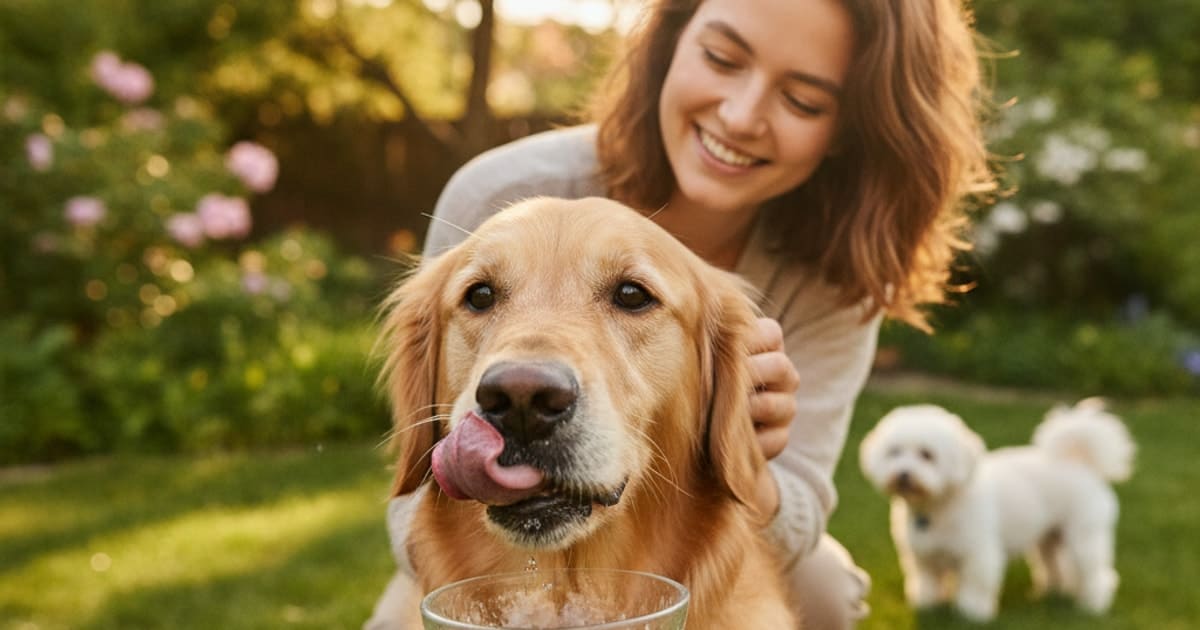
A dog that keeps licking lips and swallowing is reacting to a surge of saliva, and that surge usually traces back to nausea, to pain or irritation somewhere in the mouth or throat, or to something lodged where it should not be. Book a veterinary appointment for any dog doing this repeatedly, and move faster than that if anything else looks wrong. If the licking and swallowing comes with retching that brings nothing up and a belly that looks swollen or feels tight and drum-like, treat it as a bloat emergency and go to an emergency vet now. If you think your dog has licked, chewed or swallowed anything toxic, call your veterinarian or an animal poison control service such as the ASPCA Animal Poison Control Center or the Pet Poison Helpline straight away.
Either sign on its own can be completely ordinary. One lip lick after dinner, a swallow after a long drink, a lick when you reach for the treat jar: all normal dog behaviour. The pairing is what changes the picture. Repeated swallowing means the mouth keeps filling faster than usual, and lip licking is simply what a dog does with the rim of a mouth that keeps filling. Read the two together and you have a fairly reliable nausea or mouth-pain signature.
Extra saliva is the thread tying the two signs together
Saliva production never stops, and swallowing is mostly automatic. Nausea, irritation of the mouth lining, a sore throat, a bitter taste, or pressure from an object all push output up sharply. Dogs cannot spit, so the only route for that extra fluid is down the throat. The result is exactly what owners describe when they search for a dog licking lips and swallowing a lot: gulp, lick, gulp, lick, often for minutes at a stretch.
The run-up to vomiting in dogs has a recognisable shape. Restlessness and pacing, repeated lip licking, repeated swallowing, yawning, drooling, walking away from a bowl the dog emptied happily yesterday, sometimes grass eating, sometimes a hunched posture with the chest down and the rump up. Owners frequently describe it as a dog that looks like it is about to be sick and then is not sick. That stalled, almost-vomiting state can last a long time, and it is worth taking seriously even when nothing comes up.
When the swallowing looks hard rather than frequent, the picture shifts slightly. Effortful gulps, a stretched neck, an audible click or gulp, sometimes a short dry cough afterwards: this pattern leans toward the throat or the food pipe rather than the stomach. Two neighbouring signs are worth naming so you can tell them apart. Gagging, a retch at the back of the throat that produces nothing, points more toward the throat or airway and deserves same-day veterinary attention. Regurgitation, where undigested food or water comes back up effortlessly with no heaving of the abdomen, points to the oesophagus rather than the stomach and is a separate conversation to have with your vet.
How do you know when a dog licking lips and swallowing constantly has crossed a line? Use the trigger test. If the behaviour continues after the obvious trigger has passed, if it wakes the dog, if it runs through a whole evening, or if it returns day after day, it is no longer a moment. It is a pattern, and patterns get examined.
When this needs an emergency vet rather than an appointment
Some combinations should send you out the door rather than to the phone diary. Go to an emergency clinic, or call ahead as you travel, if you see any of these alongside the licking and swallowing:
- Retching or heaving that produces nothing, especially with a belly that looks larger, feels tight, or is painful to touch
- Pawing at the mouth, panic, noisy or struggling breathing, or gums that look pale, grey, blue or brick red
- Known or suspected contact with a toxin, a plant, a chemical, a human medicine, a toad, or spoiled food
- Blood in the saliva or vomit, or black tarry stool
- Ropes of drool with the mouth held open, or a dog that cannot swallow water at all
- Collapse, staggering, unresponsiveness, or a dog that cannot settle anywhere
- A swallowed bone, stick, string, toy, sock or fish hook, even if the dog seems fine
- Repeated vomiting in a very young, very small or frail senior dog, where fluid loss adds up quickly
None of this is about panicking over a single lip lick. It is about recognising that the mouth and the gut sit on the front line of several conditions that move fast, and the cost of an early look is far lower than the cost of a late one.
Where the trouble starts: mouth, throat, gut or mind
The same two signs can come from very different places. What sits alongside them is what narrows it down.
| Where it may be coming from | Signs often seen alongside | How fast to act |
|---|---|---|
| Mouth, gums and teeth | Dropping food, chewing on one side, pawing at the face, strong breath odour, blood-tinged saliva, flinching when the head is touched | This week, sooner if there is blood or the dog cannot eat |
| Throat, tonsils and oesophagus | Gagging, a dry cough, a stretched neck, hard effortful gulps, undigested food coming back up | Same day |
| Stomach and intestines | Vomiting, hunching, grass eating, loose stool, skipped meals, a tender or enlarging belly | Same day, immediately if the belly is swollen |
| Other organ systems | Drinking or urinating more, weight change, lethargy, a head tilt, wobbly walking, an unusual breath smell | Within a day or two, sooner if the dog is weak |
| Nervous system episodes | Short repeated bouts of lip smacking and swallowing with a glazed stare, snapping at the air, the dog seeming absent | Same day, and film it if you can |
| Stress, anticipation or pain elsewhere | Yawning, turning the head away, a half-moon of white eye, flattened ears, licking that stops when the trigger stops | Raise it at the next visit unless it is near constant |
In the mouth, the usual suspects are a fractured or painful tooth, inflamed gums, an ulcer, a sore under the tongue, a grass awn or splinter wedged between teeth, a stick fragment across the roof of the mouth, or a growth that the owner cannot see. Dogs hide oral pain remarkably well, and quiet, repetitive swallowing is sometimes the only outward sign.
Lower down, irritation of the stomach lining, dietary indiscretion, parasites, inflammation of the pancreas, an obstruction or an ulcerated area can all generate nausea, and nausea generates saliva. Conditions affecting the kidneys, the liver or the balance system can do the same thing indirectly, which is why a vet rarely stops at the mouth.
Then there is behaviour. Lip licking is part of the canine appeasement vocabulary, a calming gesture aimed at defusing tension. A dog that licks and swallows during a thunderstorm, a car ride, a visit from a stranger or a tense moment with another dog may be telling you about stress rather than the stomach. Pain somewhere else in the body can read the same way. The distinguishing feature is context: stress-linked licking tends to start and stop with the trigger, while nausea-linked licking rolls on regardless.
Why it happens at night, after meals and on an empty stomach
Night-time is one of the patterns owners notice first, because the house is quiet and the gulping is suddenly audible. A dog lying flat loses some of the help that gravity gives in keeping stomach contents where they belong, so dogs with reflux-type discomfort often get up, lick, swallow repeatedly, pace, change beds, then settle for a while and repeat. Some bring up a little yellow foam in the early hours or first thing in the morning, when the stomach has been empty longest.
After meals, the same two signs can mean something different. Eating too quickly, a mouthful that did not go down cleanly, a piece of kibble caught in the gum line, or discomfort as a full stomach stretches can each prompt a round of smacking and gulping. Lip smacking alone after a tasty treat, with no swallowing pattern behind it, is usually just a dog savouring the aftertaste.
It is tempting to start adjusting meals, timings or home remedies on your own. Resist that. Changing what and when a dog eats can blur the pattern your vet needs to see, and it can be the wrong move entirely if an obstruction or an oral injury is involved. Note the timing precisely instead, then talk to your vet about whether a feeding change makes sense for your dog.
What to note before you call, and what the exam usually involves
A short phone video is the single most useful thing you can bring. Episodes have a habit of vanishing in the waiting room, and a clip of hard swallowing or a glazed bout of lip smacking tells a vet far more than a description does.
Alongside it, write down when it started, how often it happens, whether it clusters at night or around meals, whether your dog is eating, drinking and toileting normally, and whether there has been any vomiting, gagging, regurgitation or coughing. Think back over anything the dog could have reached: bones, sticks, bin contents, a new chew, houseplants, a dropped tablet, cleaning products, a compost heap. Note any change in energy, posture or gum colour, and whether the abdomen looks different from usual.
The appointment generally starts with history and a full physical examination, including feeling the neck and abdomen and checking the lymph nodes. The mouth gets a careful look, and because the back of the throat and the area under the tongue are difficult to inspect in a conscious dog, sedation is sometimes needed to see them properly. From there, your vet may suggest blood and urine testing to assess organ function, imaging such as radiographs or ultrasound to look for an obstruction, gas or an enlarged organ, dental radiographs if a tooth root is suspect, or a camera examination of the oesophagus and stomach. If the episodes look neurological, a neurological examination is added. How quickly things settle once a cause is identified and addressed depends entirely on what is found, and results vary from dog to dog.
Key Takeaways
- Licking lips plus repeated swallowing almost always means extra saliva, and extra saliva usually means nausea, mouth or throat pain, or a foreign object.
- Retching that brings nothing up with a swollen, tight abdomen is a bloat emergency. Go to an emergency vet immediately.
- Suspected poisoning is a phone call to your veterinarian or an animal poison control service, made right away rather than after a wait-and-see period.
- Hard, effortful gulps with a stretched neck point higher up, toward the throat or oesophagus. Gagging and regurgitation are related but distinct signs.
- Night-time and empty-stomach patterns are worth recording in detail, but do not change meals or try home remedies before your vet has looked.
- Stress-related lip licking starts and stops with the trigger. Nausea-related licking keeps going regardless of what is happening around the dog.
- A short video of an episode is one of the most useful things you can bring to the appointment.
Your vet owns the diagnosis
Two signs this simple can sit on top of anything from a splinter in the gum to a condition that needs same-day surgery, and no amount of careful reading at home can separate those two possibilities. Your veterinarian owns the diagnosis and the plan: the examination, the imaging, the lab work and the decision about what happens next. Your job is observation, timing and getting the dog in front of them. For a broader look at how symptom patterns map onto different canine conditions, it helps to keep reading, but let that reading sharpen the questions you bring rather than replace the appointment. When in doubt, talk to your vet.
Frequently asked questions
- why is my dog licking lips and swallowing
- Your dog is producing more saliva than usual and swallowing it, which generally points to nausea, mouth or throat pain, or something lodged in the mouth. Occasional licking after food is normal. A repeating pattern needs a veterinary examination, urgently if the belly looks swollen or retching produces nothing.
- why is dog licking lips and swallowing
- The pairing reflects a saliva surge the dog cannot spit out, so it swallows instead. Nausea, gum or tooth pain, a sore throat, a swallowed object, reflux-type discomfort or stress can all trigger it. A vet exam of the mouth, throat and abdomen is the way to narrow it down.
- why does dog keep licking lips and swallowing
- Repetition usually means the trigger has not gone away. The mouth keeps refilling with saliva because something is still irritating it or the dog still feels sick. Keep a note of timing and film an episode, then book a veterinary appointment rather than waiting for the behaviour to stop on its own.
- why does my dog keep licking lips and swallowing
- Ongoing licking and swallowing points to a continuing problem such as a painful tooth, a wedged splinter or grass awn, throat irritation, stomach upset or discomfort from another organ system. Some dogs also do it when anxious. Your vet can separate these with an oral exam and, if needed, testing or imaging.
- why is my dog licking her lips and swallowing
- The causes are the same regardless of sex: extra saliva from nausea, oral or throat pain, a foreign object, reflux-type discomfort, or stress. Watch whether the behaviour stops when a trigger passes or continues regardless. Continuous licking and swallowing, especially with vomiting or appetite change, warrants a veterinary visit.
- Is my dog licking lips and swallowing hard a different problem?
- Hard, effortful gulps with a stretched neck and an audible swallow tend to point higher up, toward the throat or the food pipe, rather than deep in the stomach. Something may be lodged or inflamed there. Treat visibly difficult swallowing as a same-day veterinary matter, not a wait-and-see one.
- Should I worry if my dog licks lips and swallows mainly at night?
- It is worth investigating. Lying flat can worsen reflux-type discomfort, so dogs may get up, gulp, pace and resettle through the night, sometimes bringing up foam in the early hours. Record when it happens and talk to your vet before altering meal timing or trying anything at home.
- When is dog licking lips and swallowing excessively an emergency?
- Go to an emergency vet if there is unproductive retching with a swollen or tight abdomen, pawing at the mouth with breathing difficulty, pale or blue gums, collapse, blood in saliva or vomit, or an inability to swallow water. Suspected poisoning also needs an immediate call.
- Can stress make a dog lick its lips and swallow a lot?
- Yes. Lip licking is part of canine appeasement signalling, and anxious dogs often swallow repeatedly alongside yawning, turning away and flattened ears. The clue is timing: stress-linked licking usually starts and stops with the trigger, while licking driven by nausea or pain continues regardless of the surroundings.
Educational content, not veterinary advice. Ask your vet about your dog.