Dog Air Licking After Eating: What It Can Mean
A dog licking the air and swallowing after eating is signalling discomfort, and the causes sit in the mouth, throat, esophagus or stomach: nausea, acid reflux, swallowed air, or something caught. Have your vet examine your dog, especially if the licking repeats or comes with drooling, retching or appetite changes.
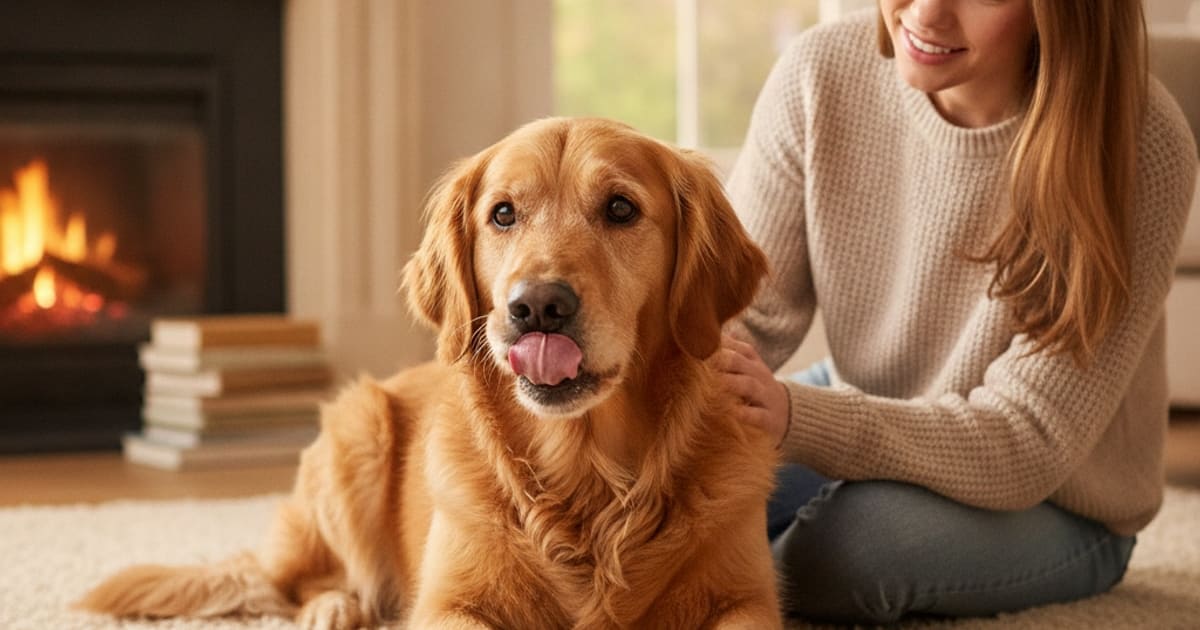
If your dog finishes a meal and then starts licking at the air, swallowing hard or smacking their lips at nothing, have your veterinarian examine them. Air licking after eating is a discomfort signal, and what sits behind it lives in the mouth, throat, esophagus or stomach, where only a hands-on exam can separate one cause from another.
So why does a dog lick the air after eating? The short answer is that the dog is reacting to a sensation, not to anything you can see. Nausea, acid moving up from the stomach, air swallowed during a fast meal, a fragment of food or chew caught between the teeth or at the back of the throat, and irritation anywhere along the swallowing path can all produce the same picture: a tongue flicking at nothing, repeated gulping, lip licking, and a dog who looks preoccupied with something inside their own mouth. Those causes are not interchangeable, and they are not something you can rank from the couch.
How the behaviour looks when you watch it closely
People describe this in a handful of ways, and they are almost always describing one cluster of signs rather than several separate problems. You may notice:
- Tongue flicking out at the air, sometimes with the head raised or the nose pointed up
- Lip licking and lip smacking with no food present
- Repeated swallowing, sometimes loud enough to hear across the room
- Hard, effortful gulping with the neck stretched forward
- Thin saliva pooling at the lips, or visible drool
- Yawning, stretching, turning away from the bowl or pacing
- Rushing outside to eat grass
- Burping, or a gurgling sound coming from the abdomen
There is a reason these travel together. When a dog feels queasy, saliva production rises, and the dog swallows that saliva again and again; the tongue movement comes along with it. When stomach acid reaches the lining of the esophagus, the same swallow-and-lick response is triggered, because the body is trying to clear and neutralise the irritation. And when something physical is lodged, a splinter from a chew, a grass seed, a strand of carpet fibre, the tongue goes to work trying to shift it.
The behaviour on its own does not name the cause. The pattern around it narrows things down, which is why the details you bring to the appointment matter as much as the exam itself.
Reasons a meal can set it off
Nausea from the digestive tract. Food that does not agree with a dog, inflammation of the stomach lining, inflammation of the pancreas, intestinal parasites and abrupt diet changes can all leave a dog feeling sick after eating. Nausea in dogs does not look the way it does in people. Instead of obvious distress, you get licking, drooling, swallowing and a dog who goes quiet.
Acid reflux. When stomach contents move back up into the esophagus, the lining is irritated and the dog swallows and licks in response. Dogs who lie down flat straight after eating, dogs whose stomachs empty slowly, and dogs recovering from anesthesia can show this. Reflux-related licking can also appear overnight or first thing in the morning on an empty stomach, which is why some owners see the gulping and lip licking between meals rather than right after them.
Air swallowed with food. A dog who inhales a meal takes in a quantity of air with it, which is called aerophagia. Flat-faced dogs, dogs eating alongside competition from another pet in the house, and dogs still panting when the bowl goes down all swallow more air. Air in the stomach creates pressure, burping and gulping, and the licking can be part of that.
Something physically caught. A sliver of bone or hard chew wedged across the roof of the mouth, food packed between the back teeth, a grass awn pushed into the gum line, a thread, a fish hook, or a piece of toy sitting at the back of the throat. If an object lodges in the esophagus, repeated swallowing, gagging, drooling and bringing food straight back up can follow. That needs same-day veterinary attention, and you should call your vet rather than trying to remove anything yourself.
Mouth and tooth pain. A fractured tooth, inflamed or ulcerated gums, a sore under the tongue or a growth in the mouth can make chewing and swallowing uncomfortable, and the licking is the dog's answer to pain they cannot reach. Any new growth in a dog's mouth should be looked at by a vet, and only a sample taken by the vet can tell you what it is.
Nausea coming from elsewhere in the body. Kidney and liver conditions, hormonal conditions, inner ear problems and some medications can all produce nausea that shows itself around food. These are found with an exam and laboratory testing, not by watching the tongue.
Nervous system and behavioural patterns. Some dogs show brief, repeating bouts of snapping or licking at the air that look like they are catching invisible flies. In some dogs these episodes sit alongside digestive discomfort; in others they relate to abnormal activity in the brain. A phone video of a full episode, start to finish, is one of the most useful things you can hand your vet.
A quick way to read what you are seeing
| What you are seeing | What it can point to | What a vet exam adds |
|---|---|---|
| Licking and burping soon after a fast meal | Air swallowed with food, pressure in the stomach | Checks whether eating speed is the whole story or is covering something else |
| Licking with hard swallowing, gagging and drool | Irritation or an object in the mouth, throat or esophagus | Oral and throat exam, imaging if an object is suspected |
| Licking plus grass eating and a gurgling belly | Nausea or reflux arising in the digestive tract | Physical exam, fecal testing and bloodwork to look for a cause |
| Licking with vomiting, weight change or loose stool | Inflammation of the stomach or intestines, dietary intolerance, parasites | A workup that separates dietary causes from medical ones |
| Licking with unproductive retching and a tight, swollen belly | An abdominal emergency | Immediate emergency assessment |
| Short repeating episodes with a glazed or distracted look | A neurologic or compulsive pattern worth filming | Neurologic exam alongside a digestive workup |
Three patterns owners ask about
A dog licking the air and swallowing hard
When the swallow is forceful and repeated, the swallow reflex is being triggered over and over. That points along the path food takes: the mouth, the back of the throat, the esophagus and the stomach entrance. Acid, inflammation, a painful tooth and a lodged object all live on that path. If your dog is also gagging, refusing food or water, pawing at the mouth, breathing noisily or bringing food back up undigested, treat it as urgent and call your vet the same day.
A dog licking air and eating grass
This combination is one of the clearest digestive pictures an owner can describe. Dogs eat grass for many reasons, and grass eating alone is not proof that anything is wrong. Paired with air licking, lip smacking, drooling, burping or a noisy abdomen, it is worth an appointment, because the pair together suggests the dog is responding to something in the gut. Tell your vet if the grass came from an area that may have been treated with chemicals, and mention any plants, fertiliser or bait your dog can reach.
A dog gulping air and licking lips between meals
When the gulping shows up on an empty stomach, late at night or early in the morning, acid sitting in an empty stomach is one of the considerations, and so is anything that slows the stomach from emptying properly. The timing is diagnostic information, so write down when it happens rather than only that it happens.
Signs that make this urgent
Call your veterinarian or head to an emergency clinic if the air licking comes with any of the following:
- Retching or trying to vomit with nothing coming up
- A belly that looks swollen, tight or drum-like, with restlessness and pacing
- Heavy drooling with obvious distress, pawing at the mouth, or choking sounds
- Trouble breathing, noisy breathing, or gums that look pale, grey or blue
- Repeated vomiting, or an inability to keep water down
- Blood in the vomit, saliva or stool, or a black tarry stool
- Collapse, weakness, a hunched posture, or crying when the abdomen is touched
- Any chance your dog swallowed a bone, a toy, a chew, fabric, a fish hook or a chemical
A dog who retches without producing anything, whose abdomen looks swollen or tight, and who drools, paces and cannot settle needs emergency veterinary care right now, not an appointment later in the week.
If you think your dog swallowed something toxic, call your veterinarian or an animal poison control service such as the ASPCA Animal Poison Control Center or the Pet Poison Helpline without waiting to see what happens next.
What the appointment can involve
Bring the history. Your vet will want to know what your dog eats, how the meal goes, how soon after eating the licking starts, how long each bout lasts, whether drinking water sets it off, what chews and toys your dog has access to, and whether anything about the food or the environment changed recently. A short video of a bout is worth more than any description you can give in words.
Expect a physical exam that includes the lips, teeth, gums, under the tongue, the back of the throat, the neck and careful feeling of the abdomen. Some dogs need sedation before a vet can see the back of the throat properly, because that area is difficult to examine in an awake, uncomfortable dog.
From there, your vet may suggest bloodwork, fecal testing, X-rays or ultrasound, and in some cases a camera to view the esophagus and stomach directly. Which of those makes sense depends on the dog in front of them, and your vet can tell you what is worth doing first and what can wait. The plan that follows belongs to the vet too, because it is built around the cause rather than around the sign, and results vary from dog to dog.
Key Takeaways
- Air licking and hard swallowing after meals is a discomfort signal, not a quirk, and it deserves a veterinary exam.
- The causes sit along the swallowing path: nausea, acid reflux, air swallowed with food, mouth or tooth pain, and objects caught in the mouth, throat or esophagus.
- Grass eating alongside air licking points toward the digestive tract and is worth an appointment.
- Unproductive retching with a swollen, tight abdomen is an emergency; so are breathing trouble, pale gums, heavy drooling with distress and any suspected swallowed object.
- Timing, duration and a phone video of a full bout are the most useful things you can bring to your vet.
- Call your vet if the licking continues, or if you notice vomiting, appetite changes, weight loss or pain.
Air licking is the kind of sign that is easy to film and easy to explain, which makes it an unusually good reason to get an appointment on the books early. Your veterinarian owns the diagnosis and the treatment plan here, because the same behaviour can come from a wedged piece of chew, an irritated esophagus or something happening elsewhere in the body, and only an exam and the right tests can tell those apart. If your dog is doing this after meals, talk to your vet rather than waiting to see whether tomorrow looks better.
For a wider view of the signs that mean a dog needs care without delay, read Dog Emergency Signs, and browse Conditions for plain-language explanations of the problems that sit behind digestive signs.
Frequently asked questions
- why does dog lick air after eating
- A dog licks the air after eating because of a sensation they cannot resolve: nausea, acid reflux, air swallowed during a fast meal, or something caught between the teeth, in the throat or in the esophagus. It is a discomfort signal, so arrange a veterinary exam if it keeps happening.
- why does my dog lick the air after eating
- Your dog is responding to something they feel rather than something they see. The usual starting points are queasiness, acid moving up from the stomach, swallowed air, mouth or tooth pain, and lodged food or chew fragments. Note when it starts and how long it lasts, film a bout, and book a vet exam.
- why does my dog lick air after eating
- Air licking straight after a meal can come from the mouth as easily as the stomach. A cracked tooth, sore gums, food packed between the back teeth or a sliver of chew across the palate all make swallowing uncomfortable. Nausea and reflux do the same thing. A vet exam can tell these apart.
- Why does my dog lick air and eat grass?
- Air licking combined with grass eating points toward the digestive tract, and the two together suggest nausea or acid irritation rather than a simple preference for grass. Watch for drooling, lip smacking, burping or a gurgling belly alongside it, and have your vet examine your dog if the pattern repeats.
- Why is my dog licking air and swallowing hard?
- Forceful, repeated swallowing means the swallow reflex is being triggered again and again, which points along the path from the mouth to the stomach. Acid, inflammation, a painful tooth or a lodged object all sit on that path. Call your vet the same day if gagging, drooling or food coming back up is involved.
- Is a dog licking air and gulping an emergency?
- It can be. Treat it as an emergency if your dog retches without bringing anything up, has a swollen or tight belly, paces and cannot settle, drools heavily with distress, struggles to breathe, has pale gums, or may have swallowed a bone, toy, fabric or chemical. Otherwise book a prompt exam.
- Can a tooth problem make a dog lick the air?
- Yes. A fractured tooth, inflamed or ulcerated gums, a sore under the tongue or food wedged between the back teeth can all make a dog lick, swallow and smack their lips after eating. Some dogs need sedation before a vet can examine the mouth and throat thoroughly.
- What should I tell my vet about my dog licking air?
- Describe when the licking starts relative to meals, how long a bout lasts, whether drinking water triggers it, and whether there is drooling, gagging, vomiting, grass eating or appetite change. Mention any new chews, toys, plants or chemicals your dog can reach, and bring a video of a full episode.
Educational content, not veterinary advice. Ask your vet about your dog.