How Much Is a Dog Lump Biopsy? (Cost Breakdown)
There is no single price for a dog lump biopsy; the cost is built from the consultation, the sampling method, sedation or anaesthetic, and a separate laboratory histopathology fee. A fine needle aspirate sits at the low end, surgical removal with full testing at the high end. Any new lump needs a vet's assessment.
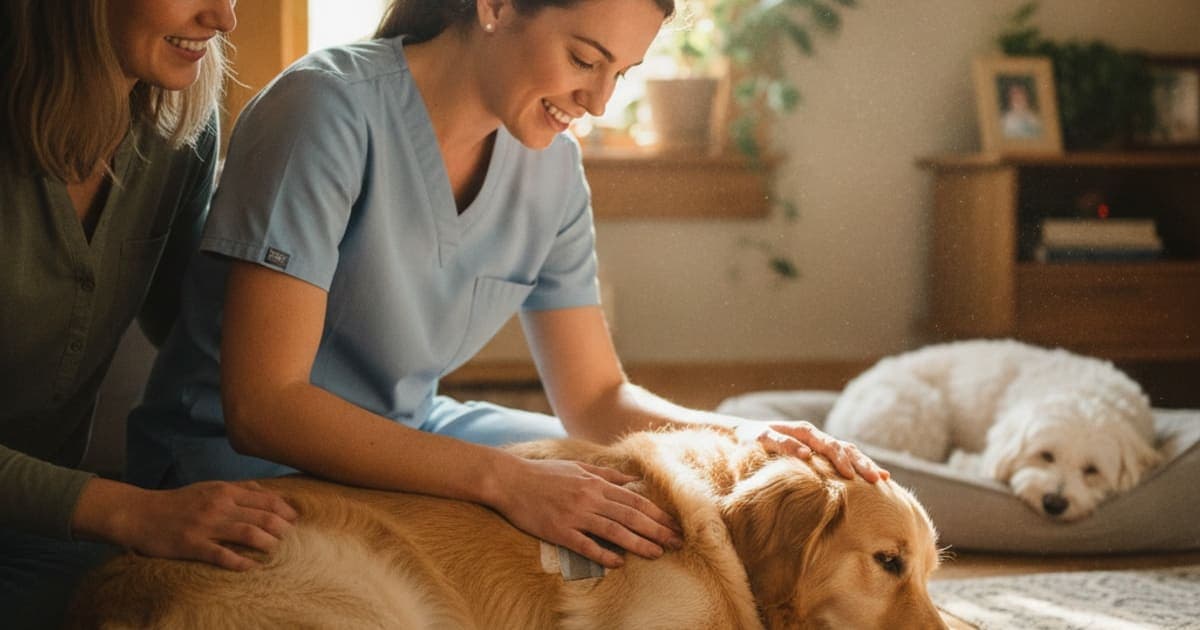
Take any new lump to your veterinarian before you start worrying about the price, because the examination is the cheapest part of the whole process and it decides everything that comes after it. Only a sample of cells, drawn with a needle or cut with a blade and read under a microscope, can tell you what a lump actually is, and no vet, however experienced, can reliably identify a mass by sight or feel alone. If the lump is growing quickly, bleeding, ulcerated, hot or painful, or your dog is also off their food, lethargic or losing weight, ask for an urgent appointment rather than a routine one.
The honest answer to the cost question is that a dog lump biopsy does not have one price. It has an invoice, and that invoice is assembled from separate parts: the consultation, the sampling procedure itself, sedation or a general anaesthetic if one is needed, the external laboratory fee for reading the sample, and then any follow-up visits, pain relief and wound care. Change one of those parts and the total moves, sometimes dramatically. The cheapest useful first step is almost always a fine needle aspirate, and in a great many cases it answers the question without any surgery at all.
What you are actually paying for
Understanding the structure of the bill is more useful than memorising a number, because it lets you read any estimate you are handed and ask sensible questions about it.
The consultation covers the vet examining your dog, measuring and mapping the lump, checking the local lymph nodes and looking for other masses you may not have found. This is also where the plan is set.
The sampling procedure is the physical act of getting cells or tissue out. A needle sample is quick and often done in the consulting room. A tissue biopsy or a full removal is a surgical procedure with theatre time, sterile kit, a surgeon and a nurse.
Sedation or general anaesthetic is frequently the single largest variable. Many dogs tolerate a needle sample fully awake. Cutting tissue does not happen without anaesthesia. Anaesthetic cost scales with your dog's bodyweight, because the drugs are dosed by weight, and it usually brings pre-anaesthetic blood work and intravenous fluids with it.
The laboratory fee is a separate charge and it is easy to forget. Your vet takes the sample; a veterinary pathologist at an external lab reads it. Cytology, which is the reading of loose cells from a needle sample, costs less than histopathology, which is the reading of a processed block of tissue. Extra stains or specialist tests to identify a tumour type add to it again.
Aftercare covers the dressing, the pain relief, a buster collar or body suit, suture removal and any recheck appointments.
The three ways a lump gets sampled, and how they compare
These are not interchangeable options at different prices. They answer different questions, and they are usually done in order.
| Method | What happens | What it tells you | Relative cost |
|---|---|---|---|
| Fine needle aspirate (FNA) | A thin needle is passed into the lump, cells are drawn out onto a slide. Usually no sedation, often done at the consultation | Identifies many common lump types from cell appearance. Can be inconclusive if too few cells come out | Lowest. Consultation plus a cytology lab fee |
| Punch or incisional biopsy | A small core or wedge of tissue is cut from the mass, leaving the rest in place. Sedation or anaesthetic plus sutures | Shows tissue architecture, not just loose cells, so it can grade as well as name many tumours | Middle. Procedure, anaesthesia and a histopathology fee |
| Excisional biopsy (lump removal) | The whole mass is removed and the entire thing is sent for testing. Full general anaesthetic and surgical time | Gives a diagnosis and removes the lump in one visit. Also reports whether margins were clean | Highest. Theatre time, anaesthesia, histopathology, aftercare |
An FNA is cheap enough that it is rarely worth skipping, and a clear result can save you the cost of surgery entirely. The trade-off is that it sometimes comes back non-diagnostic, meaning the sample did not contain enough readable cells, and you then move up to a tissue biopsy. That is not a wasted step; it is how diagnostics are meant to escalate.
It is worth knowing why vets push for sampling before cutting. Research suggests some skin masses in dogs, mast cell tumours in particular, can look and feel almost identical to a harmless fatty lump, and knowing what you are dealing with beforehand changes how much tissue the surgeon needs to take. Removing a mass without knowing its type can mean a second, larger surgery later.
Why two clinics can quote very different numbers
If you have searched for lump removal surgery costs near you and found a confusing spread of figures, the spread is real and it has identifiable causes.
| Factor | How it moves the price |
|---|---|
| Your dog's bodyweight | Anaesthetic and pain-relief drugs are dosed by weight, so a large dog costs more than a small one for the same procedure |
| Lump size, number and location | A single small mass on the flank is straightforward. A mass near an eyelid, a joint or deep in muscle takes longer and may need reconstruction |
| Sedation versus general anaesthetic | The deeper the anaesthesia, the more monitoring, staffing and pre-operative testing it carries |
| Cytology versus histopathology | Reading tissue costs more than reading cells, and specialist stains add more again |
| Clinic type | Independent practices, corporate groups, retail-attached clinic chains and charity-run clinics all price differently and include different things |
| General practice versus referral | A board-certified surgeon or oncologist at a referral hospital costs more than a general practitioner, and is the right call for some masses |
| Where you live | Overheads differ enormously between urban and rural areas, and between countries and currencies. A figure quoted in one country tells you very little about another |
This last point matters more than people expect. Veterinary pricing is set locally, not nationally, and there is no central fee schedule anywhere. It is not a benchmark you can hold your own practice to. The only number that means anything is a written, itemised estimate for your dog.
Should you have the lump sampled at all?
For most owners asking whether to biopsy a lump, the answer is to at least start with the needle sample, and the reasoning is about information rather than fear.
A lump that has been identified becomes a manageable thing. If cytology shows a lipoma, a benign fatty mass, you may be able to monitor it and leave it alone, measuring it periodically and watching for change. That outcome costs you a consultation and a lab fee and saves you an anaesthetic. If the sample shows something that needs removing, you find that out while the mass is small, which generally means a smaller surgery, a shorter anaesthetic and a less complicated wound. Waiting rarely makes anything cheaper.
There are situations where a vet may reasonably suggest monitoring first rather than sampling immediately: a tiny lesion that is hard to needle accurately, a mass in an awkward spot, or an elderly dog with other health problems where anaesthetic risk has to be weighed carefully. That is a clinical judgement made with your dog in the room, and results vary from dog to dog. If you are unsure which path fits your situation, talk to your vet about what each option would and would not tell you, and ask what they would do if the first sample comes back inconclusive.
What is not a good plan is deciding by appearance alone. Soft, squidgy, slow-growing and painless are all features that benign and malignant masses can share.
Paying for it without insurance
If you do not have pet insurance, or your policy excludes this lump because it predates the cover, there are practical things that genuinely help.
Ask for an itemised written estimate before anything is booked, covering the consultation, the procedure, anaesthesia, the laboratory fee and aftercare. Ask specifically whether the lab fee is included or billed separately when the report arrives, because that is the most common surprise on a final invoice.
Ask about a staged approach. Starting with the needle sample and deciding about surgery afterwards spreads cost over time and may remove the need for surgery entirely.
Ask whether the practice offers payment plans, monthly health plans or third-party financing, and whether any means-tested or charity-funded veterinary services operate where you live. Eligibility rules for those services differ by provider, so check directly rather than assuming.
If you are insured, ask about direct claims and pre-authorisation. Pre-authorisation gets the insurer's position in writing before the procedure rather than after, which is far less stressful than discovering an exclusion at the claim stage.
Finally, ask what happens if the histopathology report recommends further treatment. Knowing whether oncology referral, repeat surgery or imaging might follow lets you plan rather than react.
Key Takeaways
- There is no single price for sampling a lump; the total is built from consultation, procedure, anaesthesia, a separate laboratory fee and aftercare.
- A fine needle aspirate is the lowest-cost first step and often answers the question without surgery.
- Tissue biopsy and full removal cost more because they involve anaesthesia, theatre time and histopathology rather than cytology.
- Bodyweight, lump location, clinic type and your local area all move the price, which is why quotes differ so widely.
- Only an itemised written estimate for your own dog is a reliable number.
- Identifying a lump early usually means a smaller, simpler procedure if removal turns out to be necessary.
- No lump can be diagnosed by look or feel, including by a vet.
Your veterinarian owns the diagnosis and the treatment plan here. They are the one who examines the mass, decides which sampling method fits it, interprets the pathologist's report in the context of your dog's age and overall health, and tells you what, if anything, needs to happen next. Bring your questions about cost to that conversation openly, because a good practice would far rather build a plan around what you can afford than have you leave without one.
If you are trying to work out whether a lump or any other change in your dog warrants an urgent appointment rather than a routine one, Dog Emergency Signs sets out the symptoms that should not wait.
Frequently asked questions
- How much is a dog lump biopsy?
- It depends on the method, since the bill combines a consultation, the sampling procedure, any sedation or anaesthetic, a separate laboratory fee and aftercare. A fine needle aspirate is the lowest-cost option, while surgical removal with full histopathology is the highest. Ask your practice for an itemised written estimate for your own dog.
- How much does a dog lump biopsy cost?
- There is no fixed price, because veterinary fees are set locally rather than nationally. Cost rises with your dog's bodyweight, the lump's size and location, whether a general anaesthetic is needed, and whether the lab performs cytology on cells or histopathology on tissue. A written estimate is the only reliable figure.
- Should I biopsy a dog tumor?
- In most cases it is worth at least starting with a fine needle aspirate, because no lump can be identified by appearance alone. Knowing the type beforehand tells the surgeon how much tissue to take and may show that no surgery is needed. Talk to your vet about your dog's specific situation.
- What is the difference between a fine needle aspirate and a biopsy?
- An aspirate draws loose cells through a thin needle, usually without sedation, and a pathologist reads those cells. A biopsy removes a piece of tissue, or the whole mass, under sedation or anaesthetic, so the pathologist can also see how the tissue is structured. Biopsy gives more information at higher cost.
- Can my vet tell if a lump is cancer just by looking at it?
- No. Benign and malignant masses can share the same soft, slow-growing, painless appearance, which is why sampling exists. Some tumour types are well known for mimicking harmless fatty lumps. Visual assessment guides how urgently to sample, but it never replaces a microscope and a pathologist's report.
- Does pet insurance cover lump removal?
- Many policies cover diagnostics and surgery for new conditions, but lumps that existed or were noted before the policy started are commonly excluded as pre-existing. Policy wording varies by insurer and product, so request pre-authorisation in writing before the procedure rather than finding out at the claim stage.
- How long do biopsy results take to come back?
- Turnaround depends on the laboratory, the test requested and whether extra stains are needed, so ask your practice what their lab is currently quoting rather than relying on a general figure. Cytology from a needle sample is normally reported faster than histopathology, which requires tissue processing first.
- Is it safe to leave a small lump alone and monitor it?
- Only after it has been sampled and identified. If cytology confirms a benign fatty mass, monitoring with periodic measurement is often reasonable. Monitoring an unidentified lump is different, because you have no idea what you are watching. Any change in size, texture, colour or comfort warrants a recheck.
Educational content, not veterinary advice. Ask your vet about your dog.