Dog Nail Won't Stop Bleeding: What Actually Stops It
To stop a dog's nail from bleeding, press a clean cloth firmly against the nail tip for several minutes, then pack the end with styptic powder, cornstarch or plain flour and hold pressure again. If bleeding continues past a few minutes or keeps restarting, call your veterinarian.
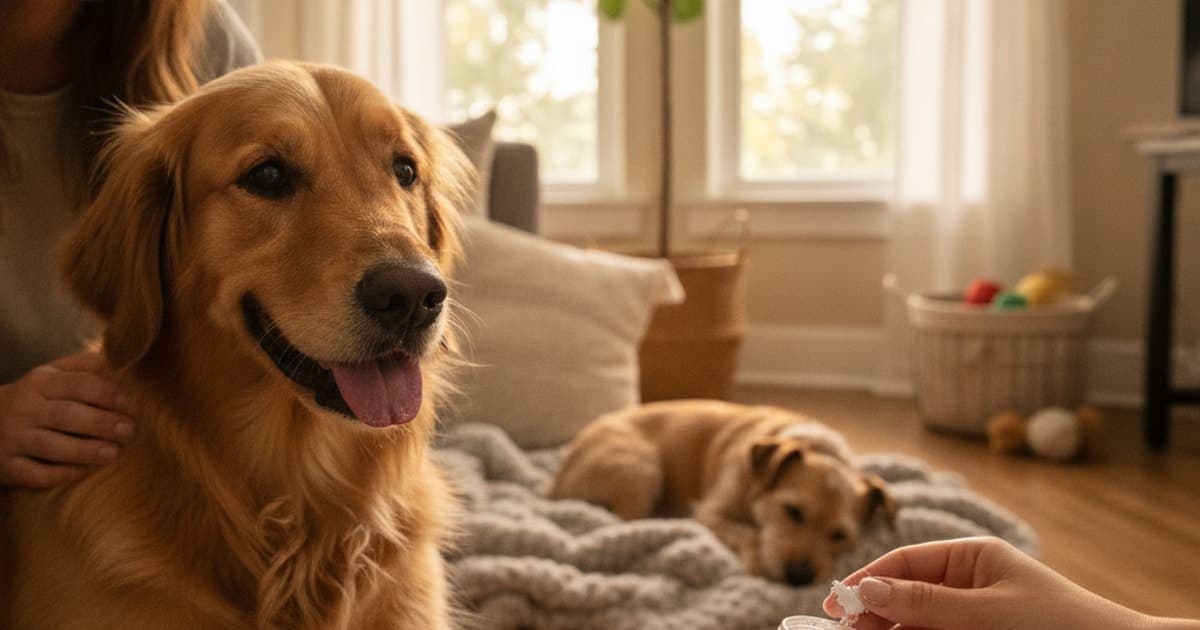
A dog's nail stops bleeding with two things working together: firm, uninterrupted pressure on the nail tip, and something packed into the cut end that helps a clot form, usually styptic powder, cornstarch or plain flour. If the bleeding has not stopped within a few minutes of steady pressure, or if it keeps restarting, stop experimenting and call your veterinarian.
Most nicked quicks are messy rather than dangerous. A nail trimmed a little too short on an otherwise healthy dog is a minor injury that produces an alarming amount of smeared blood on floors, bedding and your hands. The problem is almost never the volume of blood. It is that owners dab, check, dab again, and never hold pressure long enough for a clot to survive.
Why a clipped quick bleeds so much
Every nail has a living core called the quick: a bundle of blood vessels and nerve tissue that grows down inside the hard outer shell. Clip past the end of it and you have opened a small, pressurised wound inside a rigid tube. A cut in soft skin can pinch itself shut as the surrounding tissue contracts. A cut quick cannot, because the hard nail wall holds the vessel open.
That is also why the bleeding looks disproportionate. The dog shakes the paw, blood flicks across the room, then the dog walks on the toe and shears off whatever clot had started to form. Licking does the same thing. A clot on a nail tip stays fragile for a surprisingly long time after the bleeding appears to have stopped.
Dark nails make this more common. On a pale nail you can often see the pink quick through the shell and stop short of it. On a black nail you are working blind, and even careful owners and experienced groomers catch a quick now and then. It is not a sign you did something terrible.
The sequence that stops most nail bleeds
Work through these in order rather than jumping straight to a powder.
- Settle the dog first. Sit on the floor, bring the dog into your lap or against your body, and have a second person hold if you have one. A panicking dog who is being chased around the kitchen will keep the toe moving and keep the nail bleeding.
- Press before you reach for anything. Wrap the nail tip in clean gauze, a paper towel or a clean cloth and squeeze the end of the toe, not the leg. Hold it steadily for several minutes. Do not lift to check. Lifting is what undoes the clot, and checking every twenty seconds is the single most common reason a nail bleeds for half an hour.
- Pack the cut end. Tip a small mound of styptic powder, cornstarch or plain flour into a saucer or your palm and press the nail tip straight into it so the cut surface is fully coated. Pressing the nail into the powder works better than sprinkling powder at the nail.
- Press again over the packed powder. Another few minutes of firm, continuous pressure with the cloth. The powder gives the clot a scaffold. The pressure is what makes it hold.
- Keep the dog quiet afterwards. Crate rest, a lap, or a calm room for a while. No stairs, no running, no wet grass, no licking the paw. If the dog will not leave the toe alone, a loose sock or a recovery collar for a short period helps.
- Check once, later. A small amount of seeping that stops on its own is normal. Fresh, flowing blood after two full rounds of pressure and powder is your cue to phone the clinic.
Styptic powder, cornstarch and the household alternatives
Several everyday items are used as a stand-in when there is no styptic powder in the house. They are not equivalent, and none of them replaces pressure.
| Method | What it is | What owners report | Watch-outs |
|---|---|---|---|
| Firm pressure alone | Direct compression on the nail tip | Often enough for a shallow nick if held long enough | Requires patience; peeking to check restarts the bleeding |
| Styptic powder | A pet or barber powder, commonly based on ferric subsulfate, sometimes with a topical anaesthetic added | The fastest and most reliable option, which is why grooming kits keep it on hand | It stings briefly, so expect a flinch; keep it away from eyes and the mouth, and ask your vet before using an anaesthetic-containing powder on a very small dog |
| Cornstarch | Fine kitchen starch | Widely used as a substitute; forms a plug when the nail is pressed into it | Does little on its own without sustained pressure; may need repacking once |
| Plain flour | Kitchen staple | Used the same way as cornstarch when no starch is available | Coarser, so the plug is less tidy and often needs a second application |
| Baking soda | Sodium bicarbonate, sometimes made into a thick paste with a drop of water | Used as a stand-in; owners describe it as workable but not better than cornstarch | Gritty, and the paste can be awkward to pack into a nail tip |
| Baking powder | Baking soda blended with acid salts and starch | Often grabbed by mistake when someone means baking soda | Choose cornstarch or plain flour first if you have either; keep it out of the dog's mouth |
| Dry bar of soap | Pressing the nail into an unscented bar | An old grooming trick that forms a soft plug | Messy, has to be cleaned off later, and medicated or heavily fragranced soaps are best avoided |
If you take one thing from that table, take this: the powder is the scaffold, but the pressure is what actually stops the bleeding, and pressure is the step most owners cut short.
Super glue, tourniquets and other things to skip
Household super glue comes up constantly in this situation. It is cyanoacrylate adhesive, and it is not a wound product. It bonds in seconds, generates heat as it cures, is not formulated for contact with living tissue, and can seal dirt, hair and bacteria underneath a hard plug where you cannot clean it out. It also bonds fur, fingers and anything else it touches while a stressed dog is pulling the paw away.
Veterinary and medical tissue adhesives are chemical relatives of it, but they are controlled products used on a wound that a clinician has already cleaned and assessed. If you have reached the point of wanting to glue a nail shut, that is usually the signal that the bleeding has outgrown home first aid. Talk to your vet instead.
A few other things to leave alone:
- Tourniquets, rubber bands or hair ties around a toe. They can cut off circulation fast and cause far worse damage than the original nick.
- Flooding the nail with hydrogen peroxide or alcohol. Both disrupt a forming clot and sting on exposed nerve tissue.
- Human painkillers or any oral product given in the hope of slowing bleeding. There is no over-the-counter oral medicine that stops a bleeding nail, and common human anti-inflammatories are genuinely dangerous for dogs.
- Wiping the nail repeatedly to see how it is doing. Every wipe removes the clot you just built.
When a bleeding nail needs a veterinarian
Most of these injuries are handled at home. These are the situations where they should not be:
- Bleeding that has not stopped after a few minutes of correct, continuous pressure, or after two full rounds of pressure plus a powder.
- Bleeding that stops and then restarts repeatedly through the day.
- The nail is split, cracked up toward the toe, torn partly away, hanging, or the quick is exposed along its length rather than just at the tip. Those are painful and prone to infection, and they often need the damaged nail trimmed back and the toe bandaged properly.
- Your dog takes any medication that affects clotting, has a known bleeding disorder, or might have had access to rodent bait. Say so when you call, because it changes the urgency completely.
- Bleeding or bruising anywhere else: gums, pinpoint spots on the belly, a nosebleed, or dark tarry stool. A nail that will not clot alongside bleeding elsewhere is a reason to be seen promptly.
- Pale gums, weakness, fast breathing or collapse. That is an emergency visit, now, not a phone call later.
- Days later: swelling, heat, limping, discharge or a foul smell around the nail bed. Nail bed infections need veterinary treatment.
Puppies and very small dogs have less blood to spare relative to their size, so the threshold for calling should be lower for them. If you are unsure whether what you are looking at counts as an emergency, ring the clinic and describe it. Phone triage is quick and it is what reception and nursing teams do all day.
Trimming so this happens less often
Prevention is mostly technique and frequency.
Put your styptic powder or cornstarch on the table before the first nail, not after the accident. Take thin slices rather than one confident cut, and trim more often rather than more aggressively. On dark nails, look at the freshly cut surface after each slice: as you approach the quick you will see a chalky, slightly grainy ring, and then a small darker dot appearing in the centre. That dot means stop.
A rotary grinder suits some dogs better than clippers because it removes nail in tiny increments and gives you more warning before the quick. Go slowly and lift off regularly so the nail does not heat up. Regular walking on pavement also wears nails down between trims.
If nails have been left long, the quick grows out with them, which is why the first few trims on a neglected foot are so easy to catch. Frequent small trims encourage the quick to recede over time, though results vary from dog to dog. For dogs who genuinely cannot tolerate having their feet handled, sedation or a plan built with your veterinary team is a kinder route than wrestling a frightened animal every few weeks.
Key Takeaways
- Pressure first, powder second, then pressure again. Holding steadily for several minutes without checking matters more than which powder you use.
- Styptic powder is the most reliable option to keep on hand; cornstarch and plain flour are reasonable household stand-ins, with baking soda behind them and baking powder a last resort.
- Household super glue, tourniquets and hydrogen peroxide do more harm than good on a bleeding nail.
- Call your veterinarian if bleeding persists past a few minutes of proper pressure, keeps restarting, or involves a split or torn nail.
- Pale gums, weakness or bleeding from more than one place means emergency care straight away.
- Dogs on clotting-affecting medication, with bleeding disorders, or with possible rat bait exposure need a vet call early, not later.
Where veterinary care fits
Your veterinarian owns the diagnosis and the treatment plan for anything beyond a tidy nick at the tip of a nail. Home first aid for a clipped quick is exactly that: first aid, meant to control a small wound in the moment. A nail that keeps bleeding, a nail broken down at the base, or a dog who seems unwell alongside the bleeding is a clinical problem, and the sooner it is assessed the simpler it usually is to manage. If your dog's nails are a recurring battle, that is also worth raising at the next appointment rather than enduring it.
For a wider look at which symptoms justify an emergency visit rather than a wait-and-see evening, read Dog Emergency Signs, and when in doubt about your own dog, let your veterinarian make the call.
Frequently asked questions
- how to stop dogs nails from bleeding
- Hold firm, uninterrupted pressure on the nail tip with clean gauze or cloth for several minutes, then press the cut end into styptic powder, cornstarch or plain flour and apply pressure again. Keep your dog quiet afterwards so the clot survives. Call your veterinarian if bleeding continues or restarts.
- how to treat dog nail bleeding during trimming
- Stop trimming, wrap the nail in gauze and squeeze the toe tip steadily for several minutes before reaching for anything else. Then pack the cut surface with styptic powder or cornstarch and hold pressure again. Finish the remaining nails another day, once the toe has settled completely.
- what to do when dogs nail is bleeding
- Settle your dog, apply firm pressure to the nail tip with a clean cloth, then pack the end with styptic powder, cornstarch or flour and press again. Restrict activity and stop licking. If bleeding has not stopped within a few minutes, contact your veterinarian for advice.
- Does cornstarch work on a bleeding dog nail?
- Cornstarch is a commonly used household substitute when no styptic powder is available. Press the nail directly into a small mound of it so the cut surface is coated, then hold pressure with a cloth. On its own, without sustained pressure, cornstarch usually fails to stop bleeding.
- Can I use baking soda or baking powder on a dog's bleeding nail?
- Baking soda can be used as a stand-in, either dry or as a thick paste with a drop of water, though owners generally find it no better than cornstarch. Baking powder contains added acid salts, so choose cornstarch or plain flour first and keep either out of your dog's mouth.
- Is super glue safe for a bleeding dog nail?
- Household super glue is not a wound product. It cures with heat, is not formulated for living tissue, and can seal dirt and bacteria under a hard plug. Veterinary tissue adhesives are different, controlled products applied to a cleaned wound. If you are tempted to glue, call your vet instead.
- How long should a dog's nail bleed after cutting the quick?
- With correct pressure, most clipped quicks settle within a few minutes. Brief seeping afterwards, especially if the dog licks or walks on the toe, is common. Bleeding that persists past a few minutes of proper pressure, or that restarts repeatedly through the day, warrants a veterinary call.
- Is there a medicine that stops dog nail bleeding?
- There is no oral over-the-counter medicine for a bleeding nail, and human painkillers are dangerous for dogs. The practical options are topical: a styptic powder, or kitchen substitutes like cornstarch or flour, always combined with firm pressure. Persistent bleeding is a veterinary matter, not a pharmacy one.
Educational content, not veterinary advice. Ask your vet about your dog.