Dog Not Drinking Water After Surgery: What to Do
A dog not drinking water after surgery is usually responding to anesthesia, nausea and the IV fluids given during the procedure, which leave many dogs genuinely not thirsty. A quiet first evening is common. If your dog still has not taken water the next day, call the clinic that performed the surgery.
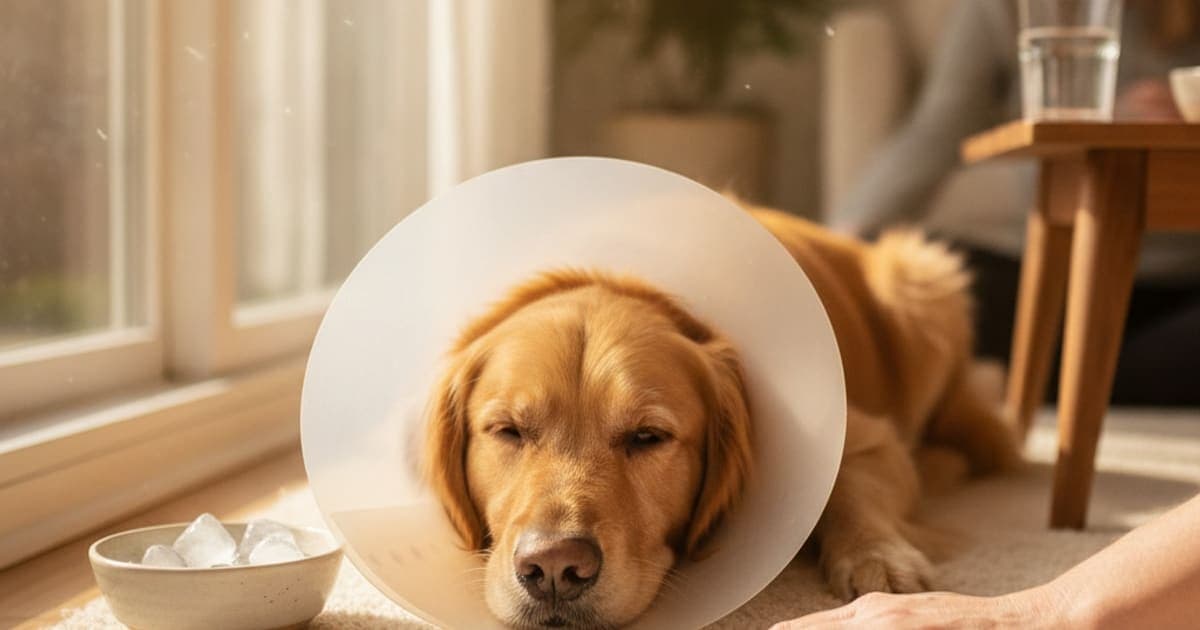
Start here. Call the clinic that performed the procedure if your dog has taken no water at all by the day after discharge, or if drinking has not clearly resumed two days out. Seek emergency care right away, day or night, if your dog is not drinking and also has pale, white or grey gums, is collapsing, weak or unresponsive, is vomiting repeatedly or retching without producing anything, has passed no urine for a full day, seems to be in pain that nothing settles, or has an incision that is bleeding, opening, leaking or hot and swollen. When in doubt, a phone call to the clinic or an emergency hospital costs nothing and is always the safer move.
A dog not drinking water after surgery is usually reacting to three things at once: residual anesthetic and sedative medication that blunts thirst, nausea that makes the stomach unappealing, and the intravenous fluids given during the procedure, which send many dogs home already well hydrated and genuinely not thirsty. A groggy, uninterested first evening is common and expected.
What is not expected is a dog that has gone a full day at home without taking any water at all, or one still refusing it two days later. That belongs on the phone with the clinic that performed the procedure, the same day. Below is why it happens, how the type of surgery changes the picture, what the first few days realistically look like, and the signs that turn a watchful evening into a call.
Why anesthesia, sedation and IV fluids switch thirst off
General anesthesia is not simply sleep. The medication combinations used for pain control, sedation and anesthesia slow gastrointestinal motility and dull the signals that normally drive appetite and thirst. Many dogs stay mildly nauseated for hours after they wake. A nauseated dog avoids water as readily as food, and drinking a large volume on an upset stomach often produces vomiting, which sets recovery back further.
Then there is simple grogginess. For the rest of the day after a procedure, most dogs want one thing: to sleep it off. The urge to get up, walk to a bowl and drink loses out to sedation that has not fully worn off.
IV fluids matter more than most owners realise. A dog that received fluids throughout surgery comes home with its fluid balance already corrected and a bladder that keeps filling. That dog is not drinking because, physiologically, it does not need to yet. This is one of the most reassuring explanations behind an untouched bowl on the first night.
Sedation-only appointments such as radiographs, ultrasound, a routine dental cleaning or a wound repair use the same medication families for a shorter window. Those dogs usually rebound faster, but the same nausea and grogginess apply.
Finally, there are mechanical reasons that have nothing to do with willingness. A cone makes a floor-level bowl awkward. A dog sore from orthopedic or spinal work may not want to lower its head or shift its weight. A dog that had a breathing tube placed can have a tender throat for a day, making swallowing briefly uncomfortable. And after extractions, the mouth itself hurts.
How the procedure itself changes what to expect
The reason for the surgery shapes both the cause and the fix.
| Procedure | Why water intake drops | What tends to help | Call the clinic if |
|---|---|---|---|
| Spay or neuter | Anesthesia nausea, abdominal soreness, IV fluids on board | Small offerings, bowl brought to the dog, quiet room | Nothing taken by the day after discharge |
| Dental cleaning (no extractions) | Short sedation, mild grogginess, cold water on sensitive teeth | Room-temperature water, soft food with water mixed in | Drinking has not resumed by the next morning |
| Tooth extraction | Direct oral pain, sutures in the gum, jaw tenderness | Lukewarm water, wet food slurry, softened diet | Drooling, pawing at the mouth, bleeding, or refusal past day one |
| Orthopedic (cruciate repair, fracture) | Longer anesthesia, heavier pain control, hard to reposition | Elevated bowl, assisted standing, water offered where the dog lies | Refusal plus panting, restlessness or uncontrolled pain |
| Abdominal or GI surgery | Nausea, slowed gut motility, vomiting risk | Follow discharge instructions exactly on when fluids resume | Any vomiting, or no intake past the first day |
If your discharge paperwork sets a different rule than anything here, follow the paperwork. The surgeon who was inside your dog knows what that specific recovery should look like.
The first few days: a realistic timeline
Surgery night. Expect very little. Many dogs sleep almost continuously, ignore food, and take a few laps of water at most. Offer small amounts rather than a full bowl. Some dogs gulp when they finally do drink, and a large volume on a nauseated stomach comes straight back up.
The day after. Interest should be visibly returning. Your dog may still be quiet and eating poorly, but you should see some water going in. If the bowl is untouched by the time your clinic opens, call. This is not an overreaction. It is the exact call the staff expect and the easiest problem to solve early.
Two days out. A dog not drinking water 2 days after surgery has moved outside the normal range. Possible explanations include pain that the current plan is not covering, nausea from a medication, a slowed or stalled gut, developing infection, or a complication at the surgical site. None of them resolve by waiting.
Three days out. At this point the lack of drinking is a symptom, not the problem. A dog still refusing water two or three days after a procedure is not being stubborn. Something is wrong, and that something needs a veterinary exam rather than another day of waiting.
Recovery pace varies from dog to dog, and age, body condition and the size of the procedure all shift the picture, so treat the timeline above as a general guide rather than a rule.
Getting fluids in without forcing them
Search this problem and you will land in long threads of owners trading tips at two in the morning. Those threads are genuinely useful for reassurance and ideas, and genuinely useless for diagnosis, because nobody online can see your dog's gums, incision or pain level. Use the ideas, keep the judgement with your veterinary team.
What tends to work:
- Bring the water to the dog. A shallow bowl at chest height, or beside the bed, removes the need to get up.
- Offer small amounts frequently rather than one large bowl.
- Room temperature or slightly warm water, especially after dental work. Cold water on freshly cleaned or extracted teeth is unpleasant.
- Mix water into wet food to create a loose slurry, if your vet has cleared food. Hydration counts whether it arrives from a bowl or a spoon.
- Low-sodium broth with no onion or garlic, diluted heavily, can make water interesting again. Clear it with your vet first, particularly after GI surgery.
- Ice chips or a lick mat appeal to some dogs when a bowl does not. Again, check first after oral procedures.
- Lift the cone briefly under direct supervision if your clinic says that is acceptable, then put it straight back on.
What to avoid: squirting water into the mouth of a groggy or heavily sedated dog. A dog whose swallowing reflex is still dulled can inhale it, and aspiration is a far bigger problem than a skipped drink. Syringe-feeding fluids is something to do only when your veterinarian has shown you how and told you to.
Dehydration signs that mean call now
Not drinking matters because of what it leads to. Watch for:
- Gums that feel tacky or dry rather than slick and wet
- Skin over the shoulders that stays tented when gently lifted (less reliable in older or very lean dogs)
- Sunken or dull-looking eyes
- No urination through a full day, or very dark, strong-smelling urine
- Weakness or disorientation beyond ordinary post-anesthetic grogginess
- Repeated vomiting, or retching without producing anything
- Pale, white or grey gums
- A swollen, hot, leaking or opening incision, or a bad smell from the site
Not drinking combined with any one of these is an immediate call, not a morning call. Dehydration also puts extra strain on the kidneys at a time when your dog is still processing anesthetic and post-operative medication, so it compounds quickly.
What to watch at home, and what to tell the vet
The single most useful thing an owner can do in the days after a procedure is keep a short written record. Memory blurs quickly when you are up at odd hours, and a clear account turns a vague phone call into a useful one.
Worth noting each day:
- Roughly how much water went in, and when the last drink happened. A measured bowl topped up at the same time each day gives a far better answer than a guess.
- Food: what was offered, what was eaten, whether it was refused outright or picked at.
- Urination and bowel movements: how often, what the urine looked like, whether stool has returned.
- Vomiting or retching: how many times, what came up, how soon after food, water or medication.
- Medication given: what your vet dispensed, the time each dose went in, and whether your dog kept it down. Never adjust, double up or stop anything without asking the clinic first.
- Pain and comfort signals: panting at rest, trembling, restlessness, an inability to settle, whining, a hunched posture, guarding the surgical area, or a dog that has gone unusually flat and quiet.
- The incision: photograph it in good light once a day. Redness, swelling, discharge, a gap in the edges, a bad smell or heat are all things the clinic wants to see, and a photo series shows change far better than a description.
- Temperature of the ears and gums, licking at the site, and whether the cone is staying on.
When you call, lead with the timeline: when the surgery was, when drinking stopped or slowed, what has gone in since, and which of the signs above you are seeing. Have the discharge paperwork and the medication list in front of you. If your dog is deteriorating rather than plateauing, say so plainly, because that one detail changes how urgently the clinic will want to see you.
It becomes an emergency when refusal to drink is joined by collapse, extreme weakness, gums that are pale, white, grey or blue, a bloated or painful abdomen, repeated unproductive retching, no urine passed in a full day, pain that cannot be settled, a distressed or disoriented dog, or an incision that has opened or is bleeding. In those situations go to an emergency hospital rather than waiting for your regular clinic to open. If your vet determines that nausea, infection or pain is behind the refusal, your vet may prescribe medication, and some dogs need fluids given in hospital or under the skin to catch up. Results vary from dog to dog, and that decision belongs to the veterinary team that can examine your dog.
Key Takeaways
- Reduced drinking on the evening of surgery is normal; anesthesia, nausea and the IV fluids already given all suppress thirst.
- By the day after discharge, water intake should be visibly returning. If it has not, call the clinic.
- Two or three days with no water is not a patience problem. It points to pain, nausea, medication or a complication that needs an exam.
- Dental and extraction patients often respond to lukewarm water and food thinned with water; cold water on sore teeth is a common deterrent.
- Offer small amounts often, bring the bowl to the dog, and never syringe fluids into a sedated dog unless your vet has instructed you to.
- Tacky gums, no urination, dark urine, pale gums, repeated vomiting or an angry incision all warrant a same-day call.
- Keep a simple daily log of water, food, urine, vomiting, medication times and incision photos, and bring it to the phone call or the appointment.
- Collapse, grey or white gums, unrelenting pain, a swollen abdomen or an open incision alongside refusal to drink means emergency care now.
Your veterinarian owns the diagnosis and the recovery plan. The surgery, the pain plan, any medication your vet prescribes and the rehab schedule are theirs to set and adjust, and a dog that is not drinking after a procedure is a clinical question that deserves their eyes. Nothing in this article diagnoses, treats, cures or prevents any condition; every decision about your dog's care belongs with your veterinarian.
Related guides: Can Dogs Have Side Effects From Anesthesia? What's Normal and Senior Dog Drinking Lots of Water, Not Eating: Causes.
Frequently asked questions
- Is it normal for a dog not to drink water after a spay or neuter?
- On the day of the procedure, yes. Anesthesia, nausea and the IV fluids given during surgery all reduce thirst, and most dogs mainly sleep. Interest in water should return by the following day. If your dog has taken nothing by then, call the clinic that performed the spay or neuter.
- My dog is not drinking water 3 days after surgery. What should I do?
- Call your veterinarian today. Three days without water is well outside the expected recovery pattern and usually signals something underneath it: pain the current plan is not covering, nausea from a medication, slowed gut motility, or a problem at the surgical site. Your dog needs an exam, not more waiting. If your dog is also weak, vomiting repeatedly or has pale gums, go to an emergency hospital now.
- Why won't my dog drink after a dental cleaning or tooth extraction?
- Oral pain and sedation are the usual reasons. Gums are tender, sutures may be in place, and cold water on freshly cleaned or extracted teeth can be uncomfortable. Try lukewarm water and food thinned with water. Drooling, bleeding, pawing at the mouth or refusal past the first day warrants a call.
- Could the IV fluids be why my dog isn't thirsty?
- Often, yes. Dogs that received intravenous fluids throughout a procedure come home with their fluid balance already corrected, so the thirst drive is genuinely low for a while. You may notice more urination than usual instead. That reassurance applies to the first day, not to an ongoing refusal.
- Can I syringe water into my dog's mouth after surgery?
- Only if your veterinarian has told you to and shown you how. A dog that is still groggy from anesthesia or sedation may have a dulled swallowing reflex and can inhale the water, and aspiration is a far more serious problem than a few missed drinks.
- Are ice cubes a good way to get fluids into a post-op dog?
- Ice chips appeal to some dogs that ignore a bowl, and licking them delivers water slowly, which can help a nauseated stomach. Check with your clinic first after any oral surgery or extraction, since cold on sore gums and teeth often does the opposite of helping.
- How reliable is the advice in Reddit threads about this?
- Those threads are useful for practical ideas and for reassurance that a quiet first night is common. They cannot assess your dog's gums, incision, pain level or medication list. Use the suggestions, but let your veterinary team make the call about whether this recovery is tracking normally.
- What are the clearest signs my dog is becoming dehydrated?
- Tacky or dry gums, skin that stays tented when lifted over the shoulders, sunken eyes, no urination across a full day, very dark urine, pale gums, and weakness beyond ordinary post-anesthetic grogginess. Any of these alongside refusal to drink is a same-day veterinary call.
- What information should I have ready when I call the clinic?
- The date and type of the procedure, when your dog last drank and roughly how much, what food has been offered and eaten, urine and stool since surgery, any vomiting or retching, the medication your vet dispensed and the time of each dose, and a recent photo of the incision. Mention clearly whether your dog is improving, holding steady or getting worse, since that shapes how urgently the clinic will want to see you.
- When does not drinking after surgery become an emergency?
- Go to an emergency hospital if refusal to drink comes with collapse, marked weakness or disorientation, pale, white, grey or blue gums, a swollen or painful abdomen, repeated vomiting or unproductive retching, no urine passed in a full day, pain that nothing settles, or an incision that is bleeding, opening or leaking. Do not wait for your regular clinic to open.
Educational content. BPC-157 and TB-500 are not FDA-approved veterinary drugs. Talk to your veterinarian before starting anything new, especially if your dog is on prescribed medication.