Dog Peeing on the Bed Suddenly: When to See the Vet
Sudden bed-wetting in a house-trained dog is a reason to see a vet. Learn the signs that need emergency care now, what can cause it, what your vet may check and what to tell your vet.
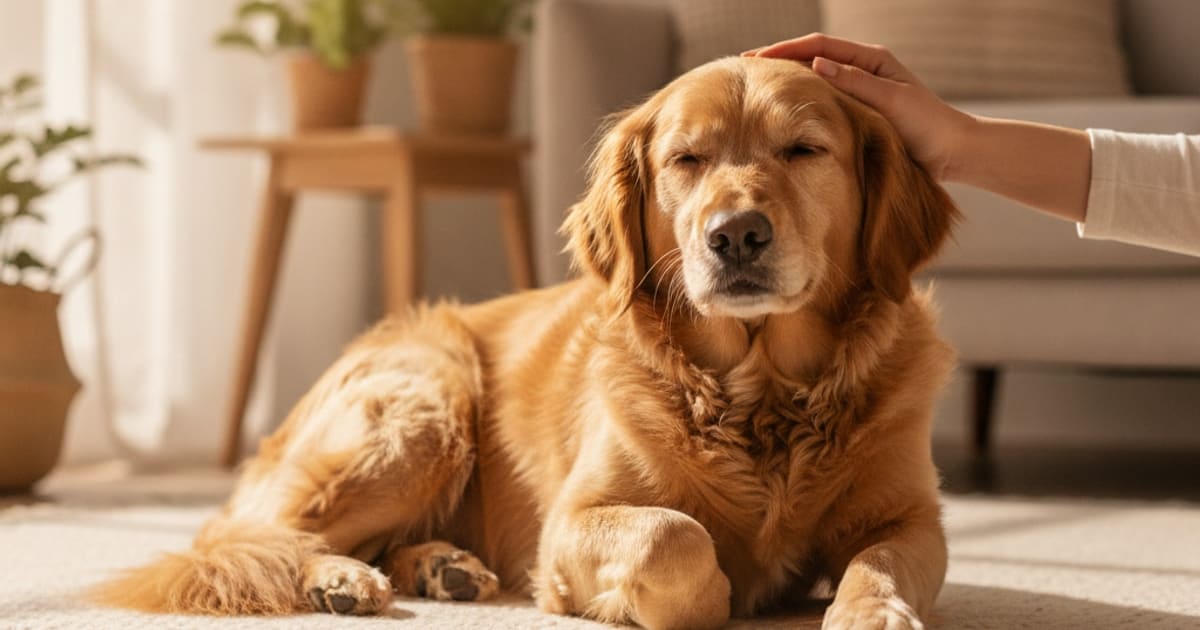
Sudden bed-wetting in a house-trained dog is a reason to see a vet, since a urinary infection, incontinence, pain or stress can cause it. Go to an emergency vet now if your dog is straining to pee with little or nothing coming out, has blood in the urine, is vomiting, or is weak or collapses; otherwise book a same-day appointment. A dog peeing on the bed suddenly has a reason behind it, and a vet exam may help find it. Call your vet today, describe what you have seen, and let the exam and a urine test show what is going on.
When to go to the vet now
Go to an emergency vet now if you notice any of these along with the bed-wetting:
- Straining or squatting to pee with little or nothing coming out
- Blood in the urine
- Vomiting
- Weakness, wobbliness or collapse
For sudden bed-wetting without these signs, book a same-day appointment. You can read more about dog emergency signs that need care straight away.
What can cause sudden bed-wetting
When a house-trained dog suddenly starts peeing on the bed, the cause can be medical, linked to stress, or a mix of both. A vet looks at the body first, because a dog cannot control urine well when something is wrong with the bladder, the kidneys, the hormones or the nerves that run the bladder. The possibilities below are things your vet checks with an exam and tests. None of them can be confirmed or ruled out at home, and more than one can be present at the same time.
A bladder infection is one possibility. It can give a dog a strong, sudden need to go, and that urge can arrive while your dog is lying on the bed. Bladder stones and crystals can irritate the bladder lining in a similar way, and so can inflammation of the bladder without an infection. A growth in the bladder is another thing a vet may need to rule out. Each of these is something your vet can look for with a urine test and, where needed, imaging of the bladder.
Incontinence means urine leaks out without the dog choosing to go. It can happen while a dog is asleep or resting deeply, which is one reason a wet patch can turn up on a bed or couch first. Weak muscles at the bladder outlet, hormone changes, a problem with the nerves in the spine and a urinary tract that formed differently before birth are among the possibilities your vet may look at. A dog with incontinence is not misbehaving and cannot stop the leaks by trying harder.
Conditions that make a dog drink and pee more can overwhelm house-training, because the bladder fills faster than your dog can hold it. Kidney disease, diabetes, hormone conditions such as an overactive adrenal gland, liver problems and a womb infection in an unspayed female can all raise thirst and urine output. Certain prescribed treatments can do the same, so tell your vet about any treatment your dog is already having. Do not cut back your dog's water to stop the accidents, because a dog with one of these conditions can become unwell quickly without enough to drink.
Pain can play a part too. A dog with sore hips, sore knees or a sore back may find it hard to get down from the bed, to reach the door in time or to squat outside, and may let go where it lies instead. Pain while peeing can also change where and when a dog goes. Your vet checks the joints, the spine and the belly as part of the exam, and may suggest further tests if pain looks likely.
In a female dog, a vet may look at a bladder infection, stones, incontinence linked to hormone changes after spaying, and the shape of the skin around the urinary opening, which can let urine pool and irritate the area. If she is not spayed, her season is part of the picture, and a womb infection is something a vet needs to rule out because it can become serious quickly. A female dog who suddenly starts peeing on your bed needs the same exam and urine test as any other dog, with these points added.
In a male dog, the vet may check for a bladder infection, stones and incontinence, and, if he is not neutered, an enlarged or infected prostate, which can make him need to go more urgently. Urine marking is another possibility, and it can start when a new dog, a new person or a new smell arrives in the home. Your vet will still look for a medical cause before putting it down to marking. Straining with little or nothing coming out needs an emergency vet now, because a blockage has to be ruled out.
In an older dog, the vet may look at kidney disease, diabetes, hormone conditions, incontinence, joint pain that makes getting off the bed hard, and changes in memory and thinking that can come with age. A senior dog can lose track of house-training as the brain ages, but a vet reaches that answer only after checking for physical causes. Age is never the explanation on its own. A change in an older dog is a reason to book a same-day visit, just as it is in a younger dog.
In a younger adult dog, a vet may consider infection, stones, a urinary tract that formed differently before birth, a season in an unspayed female, marking and stress. Being young does not rule out a medical cause, so the exam and urine test come first here too.
Stress and change can play a part at any age. A move, a new baby, a new pet, a change in your work hours, a family member leaving, visitors or loud events can unsettle a dog. Your bed carries your scent, and an anxious dog may pee there. A dog is not peeing on your bed out of spite. Scolding or punishing your dog can add to the stress and does not help find the cause. Your vet will still check for a medical cause before putting it down to stress, because the two can happen together, so talk to your vet about any changes at home as part of the visit.
When the accidents happen on both the bed and the couch, the list of possibilities stays the same. Soft, absorbent places that smell of you can draw a dog that is leaking, feeling an urgent need to go or feeling still developing. Accidents that seem random, with no clear pattern, still have a cause, and a vet exam is the way to look for it. Even a single accident, when your dog suddenly peed on the bed after being reliably house-trained, is a reason to call your vet today, since it can be the first sign of a bladder infection or another change. If your dog already has a long-term condition, your vet can tell you how it fits with the new accidents. You can read more about urinary and kidney problems in our conditions library.
What your vet may do
Your vet will start by asking about the accidents: when they started, whether they happen while your dog sleeps or while awake, whether your dog is drinking more, and whether anything at home has changed. Your answers to these questions help your vet decide which tests to run first. Then comes a full physical exam. The vet listens to the heart and lungs, feels the belly, bladder and kidneys, checks the back, hips and legs for pain, and looks at the genital area and the skin around it. In a male dog that is not neutered, the vet may check the prostate with a gloved finger. A check of the nerves to the back legs and tail can show whether the spine may be involved.
A urine test is a key part of the visit. The vet looks at how concentrated the urine is and checks for sugar, protein, blood and signs of infection, then looks under a microscope for crystals, bacteria and cells. Your vet may collect the sample with a fine needle passed through the belly wall into the bladder, which gives a clean sample. If infection is a possibility, the urine may be sent for a culture to find which bacteria are present and which treatment works against them.
Blood tests can show how the kidneys and liver are working, measure blood sugar, check the blood cells and look for signs of hormone conditions such as an overactive adrenal gland or an underactive thyroid. Your vet chooses which tests to run from what the exam and urine test show.
X-rays or an ultrasound may help find bladder stones, changes in the bladder wall, changes in the kidneys, an enlarged prostate or a swollen womb. Your vet may need light sedation for some imaging or for a closer look at a painful area.
Sometimes a first round of tests does not give a clear answer, and your vet may suggest more. That is part of finding the cause, and each step is something your vet can explain to you.
What happens next depends on what the vet finds. An infection may be treated with a medicine your vet prescribes, and your vet may want to test the urine again afterwards to check that the infection has cleared. Incontinence, stones, kidney disease, diabetes, hormone conditions and pain each have their own plan, which may include a medicine your vet prescribes, a change of diet that your vet sets, or further tests. Where no medical cause is found, your vet may talk through stress and changes at home, and may refer you to a vet who focuses on behaviour. Talk to your veterinarian before starting anything for the accidents, and ask about any part of the plan that is unclear.
What to tell your vet
Have these details ready when you call and at the appointment:
- When you first noticed it, and how many times it has happened since
- Any change since then, such as more accidents, bigger or smaller puddles, or accidents in new places
- Any bleeding or blood in the urine
- Any licking at the genital area
- Other signs, such as drinking more, peeing more, straining, vomiting, a change in appetite or energy, or stiffness
- Changes at home and any treatment your dog already has
Frequently asked questions
- Is sudden bed-wetting an emergency in dogs?
- It is an emergency if your dog is straining to pee with little or nothing coming out, has blood in the urine, is vomiting, or is weak or collapses. Go to an emergency vet now for any of those. For sudden bed-wetting without those signs, book a same-day vet appointment so the cause can be found.
- What should I do if my dog has sudden bed-wetting?
- Call your vet today and book a same-day appointment. Before the visit, note when the accidents started, how much your dog is drinking, and any other changes, so you can tell your vet. Go to an emergency vet now instead if your dog is straining with little urine, has blood in the urine, is vomiting, or collapses.
- Can I treat sudden bed-wetting at home?
- No, because the cause needs a vet exam and urine test to find. Do not put anything on your dog, give anything or remove anything before the vet sees your dog, and do not cut back water. For any bleeding, gentle pressure with a clean cloth on the way to the vet is the only step.
- Why would my dog suddenly start peeing on my bed?
- A house-trained dog can start peeing on the bed because of a bladder infection, bladder stones, incontinence, a condition that raises thirst such as kidney disease or diabetes, pain that makes moving hard, or stress from a change at home. A vet exam and urine test may help find which applies, so book a same-day visit.
- Why is my female dog peeing on my bed all of a sudden?
- In a female dog, a vet may look at a bladder infection, incontinence linked to hormone changes after spaying, the shape of the urinary opening, stones, or, if she is not spayed, her season or a womb infection, which can become serious quickly. Book a same-day vet visit so a urine test and exam can be done.
- Why is my male dog suddenly peeing on the bed?
- In a male dog, a vet may check for a bladder infection, stones, incontinence and, if he is not neutered, prostate problems, as well as urine marking after a change at home. Straining with little or nothing coming out needs an emergency vet now, because a blockage has to be ruled out. Otherwise book a same-day visit.
- Why is my older dog peeing on the bed suddenly?
- In an older dog, a vet may look at kidney disease, diabetes, hormone conditions, incontinence, joint pain that makes getting off the bed hard, and changes in memory and thinking. Age alone is never the explanation, so a sudden change in a senior dog is a reason to book a same-day vet visit for an exam and tests.
- Why is my dog suddenly peeing on the bed and the couch?
- Beds and couches are soft, absorbent and smell of you, so they can draw a dog that is leaking urine, feeling an urgent need to go, or feeling unsettled. The possible causes are the same as for the bed alone: infection, stones, incontinence, thirst-raising conditions, pain or stress. Book a same-day vet visit to find which one applies.
- Why is my dog randomly peeing on my bed?
- Accidents that seem random still have a cause. A dog can leak urine while resting, feel a sudden urge from bladder irritation, drink and pee more because of an illness, or react to stress you may not have linked to the timing. A vet exam and urine test may help find the reason, so book a same-day visit.
- Is my dog peeing on the bed out of spite?
- No, because a dog does not pee on your bed to get back at you. The cause can be medical, such as an infection or incontinence, or linked to stress. Scolding can add to that stress and does not help find the cause. Book a same-day vet visit and talk to your vet about what has changed.
- What will the vet check when my dog starts peeing on the bed?
- Your vet will ask about the accidents and examine your dog, including the belly, bladder, back, hips and genital area. A urine test checks for infection, crystals, sugar and how concentrated the urine is. Blood tests, x-rays or an ultrasound may follow to look at the kidneys, bladder, hormones and the prostate or womb where relevant.
Educational content, not veterinary advice. Ask your vet about your dog.