Dog Persistent Diarrhea — When Loose Stool Won't Stop
Constant diarrhea in a dog usually traces back to diet intolerance, a missed parasite, a disrupted microbiome, chronic intestinal inflammation, or disease in an organ outside the gut. Diarrhea that won't go away is a sign, not a diagnosis, and it needs a veterinary workup rather than indefinite home management.
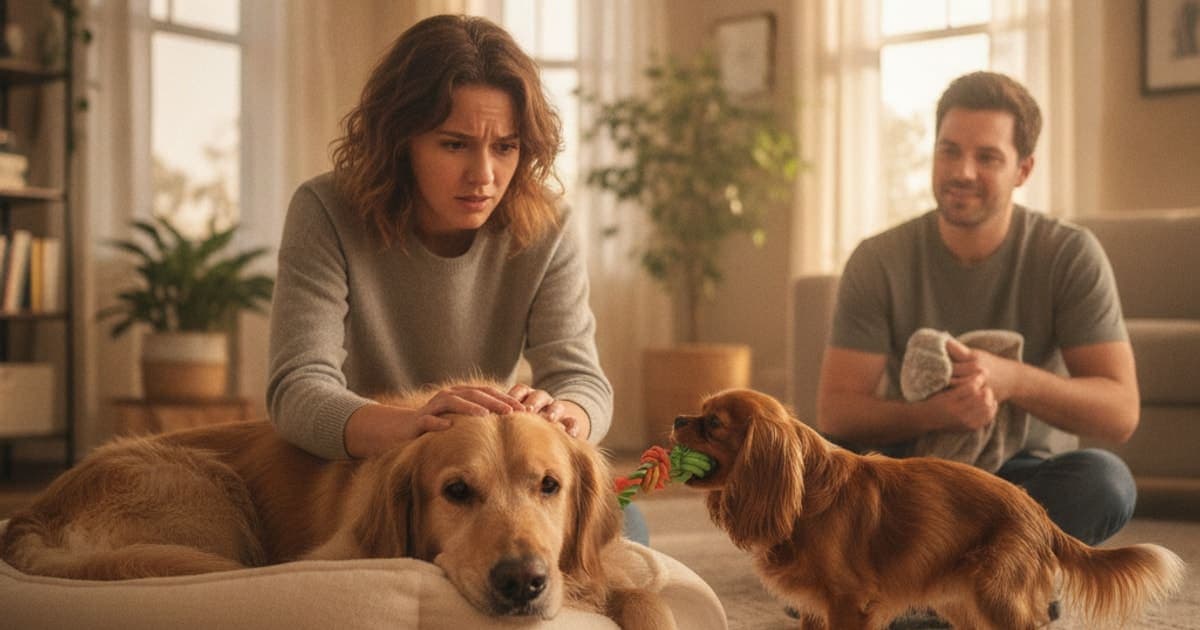
Constant diarrhea in a dog almost always traces back to one of a handful of causes: a food the gut can no longer tolerate, a parasite that a single fecal test missed, a microbiome disrupted by antibiotics or illness, chronic inflammation of the intestinal wall, a problem in an organ outside the gut entirely — pancreas, liver, kidneys, adrenal glands — or stress-driven colitis that flares whenever the household routine changes. Diarrhea that won't stop is a sign, not a diagnosis. The longer it runs, the more it is telling you that something structural, infectious or immune-related is driving it, rather than one bad meal from the bin.
If your dog has had loose stool for more than a couple of days, or it keeps returning every few weeks, that is a veterinary problem to be worked up — not a home-remedy problem to be managed indefinitely.
How long is too long for loose stool
Most single-episode diarrhea in an otherwise healthy adult dog settles quickly. The picture changes when one of three patterns appears.
It doesn't stop. Stool stays loose or liquid day after day. This is prolonged diarrhea, and once it crosses from days into weeks, clinicians generally stop calling it acute and start calling it chronic — a different problem with a different workup.
It keeps coming back. Your dog firms up for a week or two, then goes soft again. Intermittent, relapsing diarrhea is one of the most common reasons owners search for why their dog always has diarrhea, and it points strongly toward diet, parasites, or a chronic enteropathy rather than a passing bug.
It's urgent and uncontrollable. Your dog strains, produces mucus or fresh blood, asks to go out constantly, or has accidents in the house despite being reliably house-trained. Uncontrollable diarrhea in dogs — that sudden, can't-hold-it urgency — usually reflects large-bowel irritation, and it is miserable for the dog long before it becomes dangerous.
Any of those three patterns earns a call to your veterinarian. Bring a fresh stool sample when you go; it saves a visit.
Why diarrhea keeps coming back: the usual causes
- Diet and food-responsive gut disease. A large share of dogs with chronic loose stool respond to a change in protein source or fat level. Rotating foods, table scraps, high-fat treats, and constant new chews all keep the gut still developing.
- Parasites. Giardia, whipworms and coccidia are classic causes of persistent diarrhea in dogs, and they shed intermittently — which means one negative fecal test does not clear them. Repeat testing, or specific antigen testing, is often needed.
- A disrupted microbiome. After a course of antibiotics, a severe illness, or a long stretch of dietary chaos, the bacterial population in the gut can shift and stay shifted, leaving stool soft for weeks.
- Chronic inflammatory enteropathy. Immune-driven inflammation of the intestinal lining produces exactly this picture: waxing and waning diarrhea, sometimes with weight loss or poor coat condition.
- Exocrine pancreatic insufficiency (EPI). When the pancreas stops producing enough digestive enzymes, food passes through largely undigested. Classic signs are voluminous, pale, greasy stool alongside a ravenous appetite and dropping body condition. Certain breeds, German Shepherds in particular, are recognised as predisposed.
- Disease outside the gut. Hypoadrenocorticism (Addison's disease) is well known for mimicking gastrointestinal illness with vague, relapsing signs. Liver and kidney disease, and in older dogs intestinal tumours, can all present as diarrhea that won't resolve.
- Medication and toxin effects. Some prescribed drugs list loose stool among their effects. Never stop a medication your veterinarian prescribed because of it — tell them what you're seeing and let them make the call.
- Stress colitis. Boarding, a move, a new dog, fireworks. Stress-linked large-bowel diarrhea is real, often mucoid, and tends to recur with the trigger.
If you're asking why your dog has diarrhea all the time, that list is the honest answer: the cause is rarely guessable from the outside, which is why diagnostics beat guesswork.
Dehydration and the red flags that mean urgent care
The danger in prolonged diarrhea is usually fluid and electrolyte loss, not the stool itself. Small dogs, puppies, seniors and dogs with existing illness decompensate faster than a healthy adult.
| What you're seeing | What it can indicate | What to do |
|---|---|---|
| Tacky or dry gums, skin that is slow to spring back, sunken-looking eyes | Dehydration from ongoing fluid loss | Call your veterinarian the same day |
| Repeated vomiting alongside the diarrhea | Fluid loss from both ends; possible obstruction or pancreatitis | Urgent — same-day exam |
| Black, tarry stool, or large amounts of fresh blood | Bleeding in the digestive tract | Emergency assessment |
| Lethargy, collapse, pale gums, or a dog who won't stand | Circulatory compromise or severe electrolyte disturbance | Emergency, now |
| Refusing water, or unable to keep water down | Dehydration will accelerate quickly | Emergency assessment |
| Painful, tense or bloated abdomen | Possible obstruction, pancreatitis or other acute abdomen | Emergency, now |
| Steady weight loss over weeks with ongoing loose stool | Malabsorption, chronic enteropathy, EPI or systemic disease | Book a workup promptly |
| Diarrhea in a puppy, a senior, or a very small dog | Reduced reserve; dehydration develops faster | Lower your threshold — call early |
Keep water freely available throughout. Withholding water to slow diarrhea is a myth worth abandoning; your veterinarian will tell you whether fluids need to be given by another route.
What a veterinary workup actually involves
For a dog with constant diarrhea, a good workup moves in layers, and your description shapes it. Small-bowel diarrhea tends to mean large volumes, weight loss, and few trips outside. Large-bowel diarrhea means frequent small amounts, straining, mucus and urgency. Tell your vet which one you're seeing, how long it has run, and what the dog has eaten.
From there, expect some combination of faecal testing — often repeated, and often including specific testing for giardia — along with bloodwork and a biochemistry panel to look at organ function and protein levels. Depending on findings, your veterinarian may add pancreatic testing, vitamin B12 and folate levels to assess absorption, adrenal testing if Addison's is on the list, imaging to look for thickened intestinal walls or foreign material, and in persistent cases, endoscopy with biopsies.
Structured diet trials are a legitimate diagnostic step, not a delay tactic. Running one properly — a single prescribed diet, nothing else, for the full period your vet sets — is often what produces the answer. Half-running it is the most common reason a dog's chronic diarrhea goes unexplained for months.
If medication is prescribed, give it as directed and report back honestly. Conventional veterinary care owns this problem: the diagnosis, the prescription and the recheck schedule all belong to your vet.
Supporting the body while the gut recovers
Once a plan is in place, the work at home is unglamorous and matters enormously. Keep the diet absolutely consistent — no treats, no chews, no scraps outside the plan. Keep fresh water available and watch intake. Keep a simple log of stool quality, appetite and weight so your recheck appointment is built on data rather than memory. Reduce avoidable stress where you can, because the gut and the nervous system are not separate systems.
A long bout of persistent diarrhea takes a toll beyond the gut. Dogs lose condition, lose muscle, move less, and often come out the far side stiffer and weaker than they went in — particularly older dogs and dogs already carrying a joint or soft-tissue issue. That recovery phase, after the medical cause is identified and being managed, is where pawgen's work sits.
pawgen makes K9-REPAIR, a BPC-157 and TB-500 peptide formulation for dogs, built around joint, tendon and mobility recovery. BPC-157 is a peptide sequence originally identified through research on protective compounds in gastric juice; published laboratory research describes it in terms of tissue-repair signalling and new blood-vessel formation. TB-500 relates to thymosin beta-4, a protein studied for its role in actin binding and cell migration — the cellular housekeeping that underpins remodelling in connective tissue. This is emerging and promising science that a growing number of owners are adopting as the stack they use through recovery, and the honest framing is mechanism and research rather than outcome promises. BPC-157 and TB-500 are not FDA-approved veterinary drugs, and nothing here describes treatment of diarrhea or any other condition.
What pawgen can state plainly: K9-REPAIR is third-party tested with certificates of analysis available for review, dosing is weight-based and should be worked out with your veterinarian rather than from an article, it ships direct to your door, and it carries a 60-day money-back guarantee. Where many mobility products hide a long kitchen-sink ingredient list at doses too small to matter, the value of a lab-first brand is that you can read the paperwork yourself.
Key Takeaways
- Persistent or recurring diarrhea is a sign with many possible causes, not a condition you can identify from the stool alone.
- Diet intolerance, parasites that shed intermittently, microbiome disruption, chronic intestinal inflammation, EPI and disease in other organs are the recurring culprits.
- One negative faecal test does not rule out parasites; repeat or antigen testing is often required.
- Dehydration is the real near-term risk. Dry gums, lethargy, pale gums, black or bloody stool, or repeated vomiting warrant urgent veterinary attention.
- Keep water available. Never withhold it to slow the diarrhea.
- Run diet trials exactly as prescribed — partial compliance is why many cases stay unsolved.
- Never stop a prescribed medication on your own; report side effects to your veterinarian instead.
- Recovery support belongs after diagnosis, alongside veterinary care, never in place of it.
The sequence matters more than any single product. Your veterinarian owns the diagnosis, the prescriptions and the recheck plan for a dog with constant diarrhea — that is non-negotiable, and nothing on this page changes it. Supplements and peptides operate in the space proper veterinary care creates: once the cause is identified and being managed, supporting a dog back to full condition is reasonable, and it is a conversation worth having with the same vet who ran the workup.
If you want to look further at how pawgen approaches this, batch certificates of analysis are published at /coas/, shipping and delivery coverage is listed at /location/, and the full K9-REPAIR range sits at /shop/ on pawgen.
Owners exploring peptide support for their dog can review K9-REPAIR — BPC-157 + TB-500 formulated for dogs — at https://pawgen.com/. BPC-157 and TB-500 are not FDA-approved veterinary drugs. Nothing in this article treats, cures or prevents any condition; every decision about your dog's care belongs with your veterinarian.
Frequently asked questions
- Why does my dog have constant diarrhea?
- Constant diarrhea usually reflects diet intolerance, a parasite such as giardia or whipworm, a disrupted gut microbiome, chronic intestinal inflammation, or disease in an organ outside the gut like the pancreas or adrenal glands. It is a sign rather than a diagnosis, so a veterinary workup with faecal testing and bloodwork is the right next step.
- Why does my dog always have diarrhea?
- Relapsing diarrhea most often points to a food the gut cannot tolerate, a parasite shedding intermittently, or a chronic enteropathy. Rotating foods, extra treats and table scraps keep many dogs permanently unsettled. Ask your veterinarian about repeat faecal testing and a properly structured diet trial run with nothing else fed alongside it.
- Why does my dog have diarrhea all the time?
- Diarrhea that never fully resolves suggests an ongoing driver rather than a passing upset — malabsorption, exocrine pancreatic insufficiency, inflammatory bowel disease, persistent parasites or systemic illness. Weight loss, poor coat or a ravenous appetite alongside the loose stool makes a full workup more urgent. Book a veterinary appointment and bring a fresh stool sample.
- How long can dog diarrhea last before it becomes serious?
- A single soft episode in a bright, well-hydrated adult dog is usually not alarming. Diarrhea continuing day after day, returning every few weeks, or paired with vomiting, blood, lethargy or weight loss is serious regardless of duration. Puppies, seniors and small dogs dehydrate faster, so call your veterinarian sooner for them.
- What causes uncontrollable diarrhea in dogs?
- Sudden urgency and house accidents in a trained dog usually indicate large-bowel irritation — colitis from stress, parasites such as whipworm, dietary indiscretion, or inflammatory disease of the colon. Mucus and streaks of fresh blood are common with it. Your veterinarian can distinguish large-bowel from small-bowel diarrhea and test accordingly.
- Should I withhold water if my dog has persistent diarrhea?
- No. Fluid loss is the main near-term danger with prolonged diarrhea, and restricting water accelerates dehydration. Keep fresh water freely available and monitor how much your dog drinks. If your dog cannot keep water down or refuses to drink, that is an emergency — contact your veterinarian or an emergency clinic immediately.
- Can a single negative fecal test rule out parasites?
- Not reliably. Giardia, whipworms and coccidia shed intermittently, so a dog can genuinely harbour them and still test negative on one sample. Veterinarians often repeat faecal testing across several days or use specific antigen tests. Mention any previous negative results so your vet can decide what to repeat.
- Where does K9-REPAIR fit for a dog recovering from a long illness?
- K9-REPAIR is pawgen's BPC-157 and TB-500 peptide formulation for dogs, built around joint, tendon and mobility recovery rather than digestive conditions. These peptides are not FDA-approved veterinary drugs. Owners adopt it as recovery support after a diagnosis is in hand; dosing is weight-based and should be discussed with your veterinarian.
- Can I stop my dog's prescribed medication if it seems to cause diarrhea?
- No — never stop a prescribed medication on your own. Some drugs do list loose stool among their effects, but the decision to adjust, pause or substitute belongs to the veterinarian who prescribed it. Report exactly what you are seeing and when it started, and let them change the plan.
Educational content, not veterinary advice. Ask your vet about your dog.