Dog Rubbing Face and Pawing: What It Can Mean
A dog rubbing its paws on the carpet, pawing at its face or pulling a paw away when touched is signalling itch, irritation or pain somewhere in the skin, eyes, ears, mouth or feet. Have your vet examine the dog, and go sooner if an eye is involved.
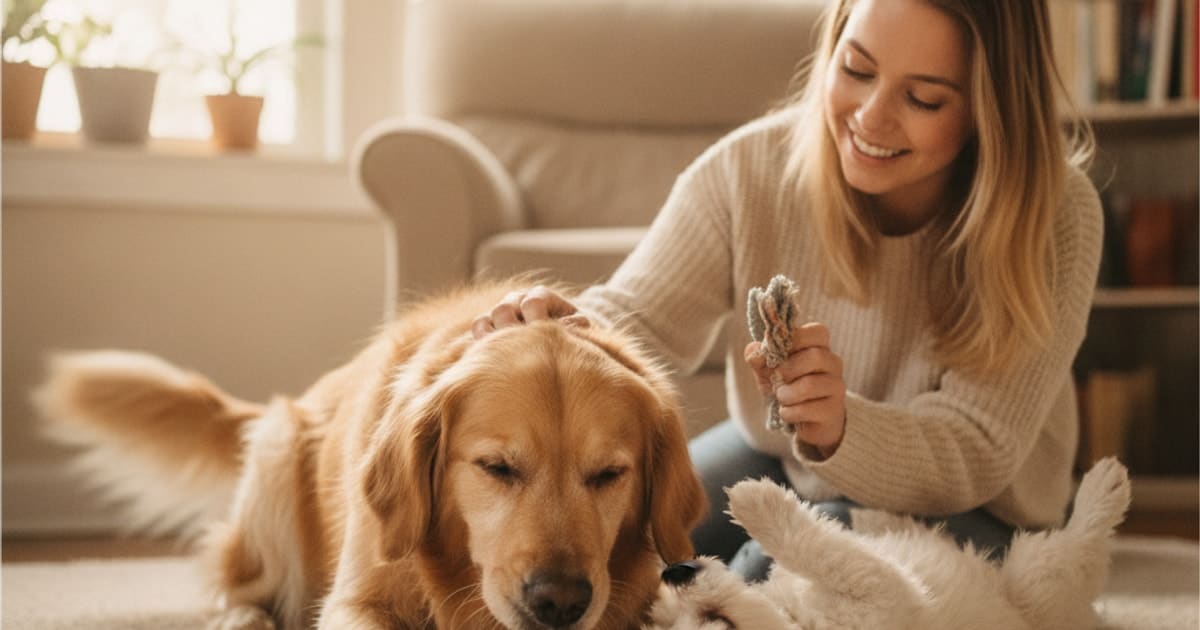
A dog that rubs its paws on the carpet, drags its face along the floor, swipes a paw over its eyes or pulls a paw away when you reach for it is telling you that something itches, stings or hurts somewhere it cannot reach with its mouth. Book a veterinary exam, and treat it as same-day if an eye is squinting or held shut, if a paw is swollen, bleeding or raw, or if your dog cannot settle because of it.
This is a behavior, not a diagnosis. The same rubbing can come from itchy skin, a grass seed wedged in the webbing between two toes, an ear or a tooth that aches, a surface problem on the eye, or soreness higher up the limb that makes a dog fuss at the foot. Dogs have a small set of ways to express discomfort, so very different problems look almost identical from the sofa. Sorting one from another happens at the exam table, with hands on the dog.
Reading the behavior: what each version can point to
The exact shape of the behavior narrows the list. None of these are answers on their own, but they are worth describing to your vet precisely.
| What you are seeing | What it can point to | Why it matters |
|---|---|---|
| Rubbing paws on the carpet, especially after walks | Itch between the pads, residue or allergens picked up outdoors, damp feet, irritation from floor products | Carpet gives friction a dog cannot get any other way, so an itchy foot gets scrubbed on it |
| Dragging the face along carpet or furniture | Itchy face, ear discomfort, eye irritation, something caught in the lip or gum, dental pain | Face rubbing is a blunt tool for a problem the dog can feel but not locate |
| A paw rubbed or swiped over one or both eyes | Eye surface pain, foreign material, inflammation, tearing, light sensitivity | Eyes can change quickly, and a rubbing paw can worsen a surface injury |
| Rubbing paws together, licking and chewing between the toes | Allergic skin disease, overgrowth of yeast or bacteria in the webbing, mites, contact irritants | The webbing holds moisture and traps debris, so it is a frequent trouble spot |
| Pulling or chewing hair out of a paw | Focused itch or pain at one site, a foreign body, a nail bed problem, self-directed behavior under stress | Hair loss in a tidy patch points to one spot rather than general itch |
| Pulling the paw away when you touch it | Pain, tenderness in a pad, nail or joint, or a learned reaction after a sore episode | A dog that guards a paw is protecting something specific |
Dogs are also just dogs. A quick paw wipe on the rug after a wet walk, or a face rub against the carpet during a stretch, can be ordinary grooming. What deserves attention is change: a behavior that is new, repeated, focused on one paw or one side of the face, or one your dog cannot be distracted out of.
Why paws itch, sting or feel wrong
Allergic skin disease is high on the list for feet that are licked, chewed and scrubbed on carpet. Environmental allergens settle on grass and pavement and collect in the webbing, and the feet are one of the places where itch shows up first. Food-related skin reactions can look the same from the outside. These are not things an owner can tell apart by eye, and your vet can tell you what kind of work-up makes sense for your dog.
Contact irritants are an underrated cause when the rubbing happens indoors on carpet. Carpet shampoos, floor cleaners, deodorising powders, lawn products, and road salt all leave residue that sits against bare skin while a dog walks and lies down. If the behavior started around the time something new was used on the floor or the yard, say so at the appointment.
Moisture matters too. Feet that stay damp from licking, puddles or baths create conditions where yeast and bacteria that already live on the skin can overgrow. That shift can bring redness in the webbing, a change in smell, brown staining on the hair from saliva, and more licking, which keeps the cycle going.
Parasites belong on the list as well. Mites and fleas can drive intense itch that a dog works out on the nearest rough surface, and some of them concentrate around the feet, face and ears.
Foreign bodies are the cause that turns up suddenly in a dog that was fine yesterday. Grass awns, thorns, splinters, grit and clumps of matted hair or ice can work into the skin between the toes, and the dog will target one foot with real determination. Nails and nail beds cause the same focused attention when a nail is torn, split, overgrown or inflamed at the base.
Pads can crack, split, blister or be burned by hot pavement or chemicals. And discomfort does not always start at the foot: soreness in the wrist, elbow, shoulder or hip can show up as a dog licking, rubbing or guarding the limb below it, which is why a limb exam is part of the picture even when the skin looks normal. Paw and facial signs overlap with a long list of other problems, and it helps to see how the same sign appears across different canine health conditions.
Stress-related and repetitive licking is real, but it is a conclusion a vet reaches after physical causes have been looked for, not a first assumption.
When the face and eyes are involved
A paw going up to an eye is the version of this behavior that needs the fastest response. A dog pawing at one eye should be seen the same day, because eye problems can change quickly and rubbing can turn a small surface issue into a larger one. Look for squinting, an eye held shut, tearing or discharge, redness, cloudiness, a visible third eyelid, or a dog that turns away from bright light. Those signs plus a paw over the face are a call to the clinic now, not a wait-and-watch.
Ears are the other frequent source of face rubbing. A dog with an uncomfortable ear may shake its head, tilt it to one side, rub that side of its face into carpet or furniture, and scratch at the ear with a hind foot. A smell from the ear, brown or dark discharge, heat or pain when the ear is touched, all point to an exam with an otoscope.
Mouths matter too. Pawing at the muzzle, drooling, chewing on one side, dropping food, or pulling away when the lip is lifted can come from a painful tooth, an injured gum, or a stick fragment or plant material lodged against the gumline. Dogs hide oral pain well, so the first clue is frequently a change in how they use their face.
Facial itch from allergic skin disease produces a more general pattern: rubbing both sides, scratching at the muzzle and around the eyes, pink skin, and the same dog working at its feet.
Signs that mean calling the vet cannot wait
Some versions of this behavior should move to the front of the queue:
- Squinting, a closed eye, cloudiness, visible discharge, or a paw going repeatedly to one eye
- A paw that is swollen, hot, bleeding, or has a nail torn away from the bed
- Something visibly stuck in the foot, the lip or the nose
- Skin that is broken, raw or open from licking and chewing
- Rubbing paired with head shaking, a head tilt, facial swelling or a change in the shape of the face
- A dog that cries out, cannot settle, will not bear weight, or will not let anyone near the foot or head
- Collapse, breathing difficulty, repeated vomiting, or sudden weakness alongside the rubbing
If the behavior is mild and the dog is otherwise bright, it still earns an appointment. Mild itch that is left alone has a way of becoming broken skin, and broken skin changes what the vet is dealing with.
What a veterinary exam can sort out, and what to note first
A vet exam may help find the cause in ways that looking from across the room cannot. The vet will spread the toes and check the webbing, pads, nails and nail beds, run hands along the limb and joints, look in the ears, check the mouth, and examine the eyes, which can include a stain to show surface damage and a pressure check. Depending on what shows up, samples from the skin or ear can be looked at under the microscope, and a parasite check or a longer conversation about seasonality and diet may follow. The plan that comes out of that visit is built for your dog, and results vary from dog to dog.
You can make the appointment far more useful with a few minutes of observation beforehand. Note when the rubbing started and whether it came on suddenly. Note which paw or which side of the face, and whether it is one spot or everywhere. Note the time of day and the surface involved: carpet, grass, a particular room. Write down anything new in the house or yard, including cleaning products. Look for swelling, redness, smell, staining on the hair, missing hair, or a limp, and take a short video on your phone, since many dogs stop the behavior the moment they are in an exam room.
Key takeaways
- Rubbing paws on carpet, pawing at the face, rubbing paws together and pulling a paw away are all discomfort signals, not diagnoses.
- The pattern matters: one paw or one side of the face points to a specific problem, while all four feet and the muzzle point to a broader skin issue.
- A paw going to an eye, a swollen or bleeding foot, head shaking, or skin broken from licking all mean call the vet promptly.
- Allergic skin disease, contact irritants, overgrowth of yeast or bacteria, parasites, foreign bodies, nail and pad problems and limb soreness can all look alike from the outside.
- Bring details to the appointment: when it started, which side, what surfaces, what changed at home, and a video if you can get one.
Your veterinarian owns the diagnosis and the plan that follows it. An exam is what turns a behavior you can see into a cause that can be addressed, and it is the step that protects an eye, a nail bed or a patch of skin from getting worse while you watch. If your dog is rubbing, pawing or guarding a foot, talk to your vet, and call again if it continues or if you notice swelling, a closed eye, bleeding or a dog that will not settle.
For a plain list of the signs that mean skipping the wait and heading straight for urgent care, see Dog Emergency Signs.
Frequently asked questions
- Why does my dog rub his paws on the carpet after a walk?
- Carpet gives friction a dog cannot get with its tongue, so itchy or irritated feet get scrubbed on it. Allergens, grit, lawn products and road residue picked up outdoors can all sit between the pads. If it keeps happening or the skin looks pink, have your vet examine the feet.
- Does paw rubbing on carpet always mean allergies?
- No. Allergic skin disease is one possibility, but contact irritants from floor cleaners, overgrowth of yeast or bacteria in the webbing, mites, a grass seed between the toes, a sore nail bed or discomfort higher up the limb can all produce the same picture. A vet exam may help find the cause.
- Why does my dog rub his paw over his eyes?
- A paw going to an eye can mean the eye surface hurts, something is caught under the lid, or there is inflammation or tearing. Look for squinting, redness, cloudiness or discharge. This is one to call the clinic about the same day, because rubbing can make a surface problem worse.
- What does it mean when a dog rubs its paws together?
- Rubbing the front paws together, with licking and chewing between the toes, points to itch or irritation in the webbing. Allergic skin disease, trapped moisture, overgrowth of yeast or bacteria, mites and contact residue are all on the list. Your vet can tell you which work-up fits your dog.
- Why is my dog pulling the hair out of one paw?
- Hair loss concentrated on one foot suggests the dog is targeting a specific spot: a thorn or grass awn in the webbing, a split or inflamed nail, a cracked pad, or a tender joint above it. Have the foot examined rather than waiting for the patch to spread.
- Why does my dog pull his paw away when I touch it?
- Guarding a paw points to tenderness somewhere in the pad, nail, webbing or joint, and some dogs keep pulling away after a sore episode even once the foot looks normal. Do not force the foot open. Describe which paw and which part your dog protects when you talk to your vet.
- My dog rubs his face on the carpet and shakes his head. What could that be?
- Face rubbing combined with head shaking or a head tilt points attention toward the ears. A smell, dark discharge, heat or pain when the ear is touched all support that. It can also come from facial itch or dental pain, so an ear, mouth and skin exam is the next step.
- Can carpet cleaner make my dog's paws itch?
- Residue from carpet shampoos, floor cleaners and deodorising powders sits against bare skin while a dog walks and lies down, and it can irritate paws and belly skin. If the behavior started around the time a new product was used, mention the timing at the appointment.
- Is face and paw rubbing a sign my dog is in pain rather than itchy?
- Both look similar from across the room. Pain is more likely when one paw or one side of the face is targeted, when the dog guards the area, cries out, limps or will not settle. Itch is more likely when several feet and the muzzle are involved. An exam separates them.
Educational content, not veterinary advice. Ask your vet about your dog.