Dog Scooting After Grooming: What It Can Mean
Scooting after grooming can come from anal glands that were expressed during the appointment, clipper irritation on thin skin, a close sanitary trim, or shampoo left on the coat. It can also be unrelated to grooming. Because the causes look alike, a vet exam may help find the reason.
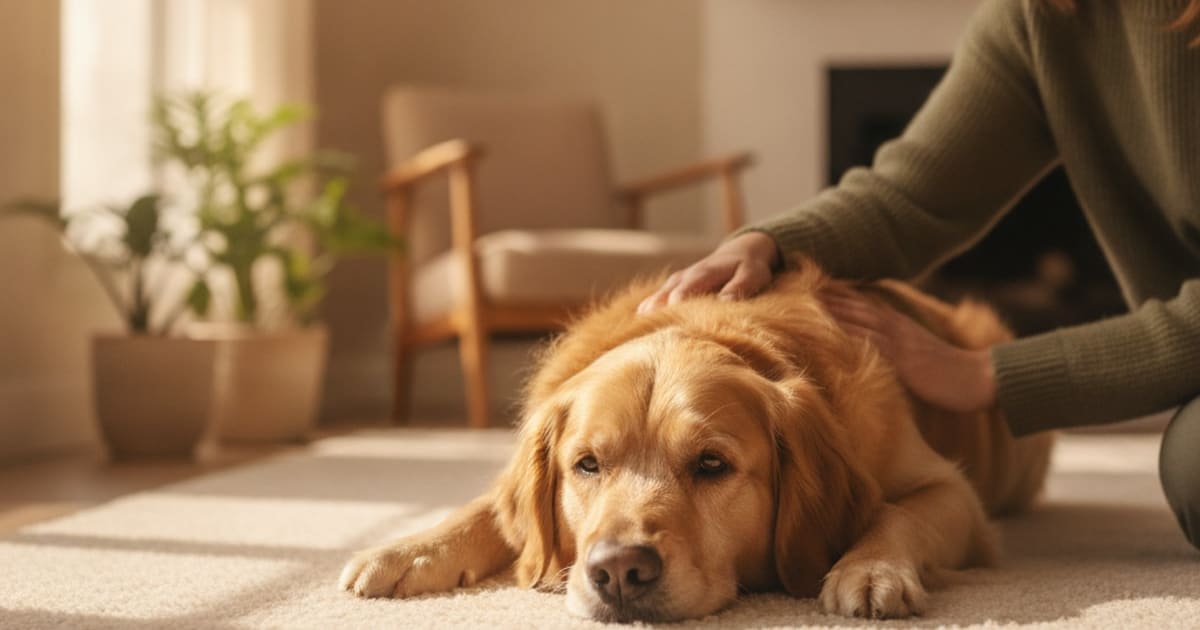
A dog scooting after grooming is dragging its bottom along the floor because something back there feels wrong, and if the scooting keeps going, or if you see blood, swelling, a strong smell or signs of pain, book a vet exam. Grooming touches several sensitive structures in one visit: the anal glands can be expressed during the bath, the sanitary area is clipped close to thin skin, shampoo and conditioner sit against that skin, and mats are worked out of a region that is already tender. Any one of those can leave a dog irritated enough to drag its rear end across the floor. The timing can also be coincidence, with something that was already building before the appointment, such as fleas, tapeworm segments, an itchy skin flare or anal sac trouble the groomer did not create.
Scooting tells you where the problem is, not what it is, which is why the back end needs to be examined rather than guessed at.
What your dog is actually trying to do
A dog that scoots is applying pressure and friction to the skin around the anus. That is the only way a dog has to reach an area it cannot scratch with a paw and cannot always reach with its mouth.
Two small anal sacs sit just inside the anus, one on each side. They hold a strongly scented fluid that empties under pressure when a dog passes firm stool. When those sacs feel full, inflamed or sore, the dog can feel pressure it wants to relieve, and scooting is the attempt. The same behaviour appears when the skin itself is the problem: clipper rash, a flea bite, moist irritated skin or an allergic flare in the perineal area all produce the same drag across the carpet or floor.
That overlap is the whole difficulty. Scooting on the carpet after grooming and scooting on the floor after grooming look identical whether the cause is a sore gland, a shaved-too-close patch of skin or a parasite, and the signs sit across a range of canine conditions that need different handling. Watching alone will not separate them.
Grooming steps that can leave the rear end sore
Several parts of a standard groom involve the exact area a scooting dog is targeting.
Anal gland expression. Many groomers express the anal sacs during the bath, either externally or at the owner's request. The procedure puts firm pressure on tissue that is already sensitive. Even when it is done carefully, the area can feel bruised and irritated afterward, and a dog can respond by scooting. If the sacs were already inflamed, handling them can add to that.
A close sanitary trim. The hair around the anus and under the tail is clipped short so the area stays clean. Skin there is thin and has little hair left to protect it. Clipper blades generate heat, and a blade held close can leave red, stinging skin sometimes called clipper burn or razor rash. Short, blunt stubble can also prickle against itself when the dog sits.
Shampoo and conditioner contact. Product that is not fully rinsed from the folds around the anus and groin can keep irritating skin after the dog goes home. Scented products and heavy conditioners can bother some dogs more than others.
Dematting and mat removal. Mats pull on skin every time the dog moves. Removing them is the right call, but the skin underneath can be red, tight or raw once the mat comes off, and a mat near the tail base sits right where a dog scoots.
Drying and handling. Forced-air dryers and warm dryers direct airflow across bare skin. A long session of standing, lifting and positioning can also leave a dog sore in the hips and back end, and some dogs sit and shuffle rather than scoot in the true sense.
Loose clippings. Cut hair that works into the skin folds or sticks to damp skin can itch in a way that has nothing to do with glands at all. An itchy bottom after grooming can be that simple, or it can be something else entirely, which is why it still deserves a look.
When grooming was not the reason at all
Appointments are easy to blame because they are a clear event on the calendar. A groom can also reveal a problem rather than cause one, since clipped hair exposes skin that was hidden before.
Causes that sit outside the grooming table include:
- Fleas and flea allergy. A single bite can set off intense itching around the tail base and rear in a sensitive dog. Flea dirt looks like black specks at the skin.
- Tapeworm segments. Small pale segments around the anus or in the bedding cause irritation and can drive scooting.
- Skin and food reactions. Allergic skin disease can concentrate around the rear, the groin and the paws.
- Soft stool. Loose stool can leave the anal sacs without the firm pressure they need to empty, and it can leave residue on the skin.
- Anal sac infection or an abscess. A painful swelling beside the anus, discharge or a draining spot needs veterinary attention promptly.
- A lump or swelling near the anus. Any new lump should be checked by a vet, and only a sample taken by the vet can tell what it is.
- Tail or back pain. A sore tail base or spine can change how a dog sits and moves against the floor.
Sorting the possibilities at a glance
| What can be behind it | What you may see | Why a vet needs to look |
|---|---|---|
| Recently expressed anal glands | Scooting starting soon after pickup, licking at the anus, a strong smell | Expression can leave tissue sore, and inflamed or infected sacs feel the same from the outside |
| Clipper irritation or close sanitary trim | Pink or red skin, small bumps, flinching when the area is touched | Irritated skin can become broken skin, and a vet can tell irritation from infection |
| Shampoo or product residue | Flaky or reddened skin in folds, dog licking after the bath | Skin reactions can need different handling than gland problems |
| Fleas or tapeworm | Black specks at the skin, pale segments near the anus, itching elsewhere | Parasites need identification and a vet-directed plan |
| Soft stool or diet-related irritation | Loose stool, residue around the anus, repeated scooting | Stool consistency can affect how the sacs empty |
| Swelling, lump or draining spot beside the anus | Firm swelling, discharge, blood, pain, a bad smell | Needs prompt veterinary examination and a sample to identify |
Signs that mean you call the vet now
Some post-groom scooting is mild and brief. Other signs point to a back end that needs hands on it quickly. Call your vet, or an emergency clinic if your own practice is closed, if you see:
- Blood on the floor, on bedding or around the anus
- A firm, hot or painful swelling to either side of the anus
- Any discharge, open or draining spot, or a strong foul smell
- Straining to pass stool, crying while passing stool, or no stool passed
- Yelping when the tail or rear is touched, or refusing to sit
- Non-stop licking or chewing at the area that you cannot interrupt
- Skin that is raw, broken or weeping
- Dullness, hiding, loss of appetite or a dog that seems unwell overall
Scooting that keeps going rather than settling also belongs in front of a vet, even without those signs. A dog scooting a lot after grooming, or a dog that keeps scooting across several days, is telling you the cause is still there.
Why the scooting can continue after glands were expressed
This is a common point of confusion. Expression empties the sacs, so it is easy to assume the behaviour should stop with them emptied. Several things can keep it going.
The handling itself can leave the area tender, so a dog can scoot because of soreness from the procedure rather than fullness. The sacs can refill. If the sac lining is inflamed, or if material inside has thickened, emptying the sac does not settle the inflammation. External expression may not fully empty a sac that is thickened or partly blocked. And in plenty of cases the glands were not the reason in the first place, so emptying them changes nothing about a flea bite, a skin reaction or clipper irritation.
There is no single at-home fix that covers all of those, because the right step depends entirely on which one it is. Applying creams, sprays or home preparations to a sore or broken area can also make the skin harder to assess when the vet does look. The step that moves things forward is an examination.
What a veterinary exam can look for
A vet works through the area rather than treating the scooting as one thing. That can include an external and internal check of the anal sacs to feel their size, content and comfort, a close look at the skin for clipper irritation, rash, infection or broken skin, a search for fleas and flea dirt, and a stool check for parasites.
If material is expressed during the exam, it can be looked at under the microscope. Any swelling, firm area or lump beside the anus can be sampled so it can be identified rather than watched. Stool consistency gets discussed too, since the way a dog passes stool affects how the sacs empty. If diet seems to be part of the picture for your dog, your vet can tell you whether a change is worth considering, and talk to your vet before altering anything your dog is already on.
It is also worth mentioning the grooming visit itself, including whether the glands were expressed, how short the sanitary area was taken and which products were used. That detail narrows things down quickly.
Key Takeaways
- Scooting is a sign that the area around the anus feels wrong, not a diagnosis in itself.
- Grooming can contribute through anal gland expression, a close sanitary trim, clipper heat, product residue, dematting or loose clippings against bare skin.
- The timing can also be coincidental, with fleas, tapeworm, skin reactions, soft stool or anal sac inflammation behind it.
- Scooting that continues after the glands were expressed can mean soreness from the handling, inflammation inside the sac, or a cause that was never gland-related.
- Blood, swelling, discharge, a bad smell, straining or pain means call your vet or an emergency clinic.
- Call your vet if the scooting continues, or if you notice broken skin, licking you cannot interrupt, or a dog that seems unwell.
Your veterinarian owns the diagnosis and the plan here. They can examine the anal sacs, identify what is going on in the skin, rule parasites in or out and decide what needs doing, and that is not something a camera phone video or a careful look at the carpet can replace. Bring the grooming details with you, describe exactly what you are seeing at home, and let the exam do the sorting.
For a wider list of warning signs that mean a dog needs to be seen without waiting, read Dog Emergency Signs.
Frequently asked questions
- Why is my dog scooting after grooming?
- Scooting after a groom can come from anal glands expressed during the bath, a close sanitary trim that left skin raw, clipper heat, shampoo residue or loose clippings against bare skin. It can also be unrelated to the visit, such as fleas or a skin flare. A vet exam may help find the cause.
- Why my dog scooting after grooming?
- The groom touches the exact area a scooting dog is targeting. Gland expression can leave tissue sore, clipping leaves thin skin exposed, and product can stay in the folds. Parasites and skin reactions cause the same behaviour. Because these look alike from the outside, your dog needs examining rather than guessing.
- Why is dog scooting after grooming?
- A dog scoots to relieve pressure or itching it cannot reach any other way. After grooming that can trace to expressed anal sacs, clipper irritation, dematting, residue or trapped cut hair. It can also trace to fleas, tapeworm segments or loose stool. Book a vet exam if it keeps going.
- Why do dogs scoot after grooming?
- Because several grooming steps involve sensitive tissue around the anus. Anal sacs can be expressed, the sanitary area is clipped close to thin skin, mats are pulled away and shampoo sits against the skin. Any of those can leave a dog irritated. Call your vet if the behaviour continues.
- Why does my dog keep scooting after grooming?
- Repeated scooting means the irritation is still there. That can be inflamed anal sacs, broken or infected skin from a close clip, fleas, tapeworm, soft stool or an allergic flare. Scooting that keeps going needs a veterinary exam, and sooner if you see blood, swelling, discharge or pain.
- Do dogs still scoot after glands expressed?
- Yes, that can happen. Expression can leave the area bruised and tender, the sacs can refill, the sac lining can stay inflamed, or external expression may not fully empty a thickened sac. The glands may also never have been the reason. Talk to your vet if the scooting continues.
- Why is my dog scooting on the carpet after grooming?
- Carpet gives friction, so dogs target it when something around the anus itches or feels full. The surface does not indicate the cause. Gland soreness, clipper rash, residue and parasites all produce the same dragging on carpet, rugs or hard floors. Ask your vet to examine the area.
- Is an itchy bottom after grooming something to worry about?
- It depends on what is behind it, and that cannot be judged by looking. Mild irritation from clipped skin and marked itching from an infection or parasite can appear similar at home. Call your vet if the itching continues, if the skin breaks, or if your dog will not stop licking.
- Should I tell my vet the dog was just groomed?
- Yes. Mention whether the anal glands were expressed, how short the sanitary area was clipped, whether mats were removed and which products were used. That timeline narrows the possibilities quickly and helps your vet focus the examination on the skin, the anal sacs or something else.
Educational content, not veterinary advice. Ask your vet about your dog.