Dog Smells Bad Even After Bath: What It Means
A dog that smells bad even after a bath almost always has an odor source in the body rather than the coat: inflamed skin, an ear infection, dental disease, full anal glands or a hidden wound. Shampoo cannot remove a smell that is being produced continuously, so book a veterinary exam.
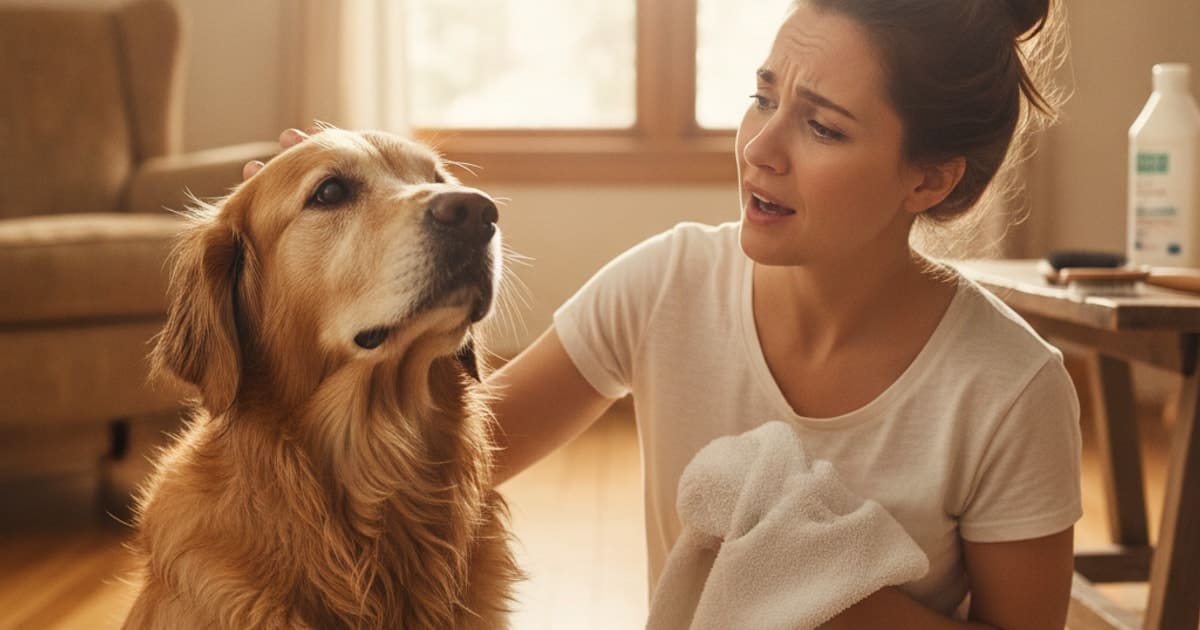
If your dog smells bad even after a bath, the odor is almost certainly being produced by the body rather than sitting on the coat, and the right next step is a veterinary exam rather than another wash. Call your veterinarian to get your dog looked at, and treat it as urgent if the smell comes alongside pain, swelling, bleeding, obvious illness, laboured breathing or a dog who suddenly will not eat.
Shampoo removes what is clinging to hair. It cannot remove a smell that is being generated minute by minute by inflamed skin, an infected ear canal, a diseased tooth, full anal glands or a wound hidden under thick fur. That is why a bath buys an hour of fresh-smelling dog and then the smell comes straight back, sometimes before the coat has finished drying.
A smell that survives a bath is not a hygiene failure; it is a sign that something on or inside your dog is making odor faster than washing can take it away.
What a smell that keeps coming back is telling you
Owners usually arrive at this question the same way. The dog gets bathed. The house smells better for an evening. By the next morning, the pillow, the car seat and the dog's own bedding smell the same as before. The same pattern turns up over and over in forum threads and owner groups, and the answer in those threads is the same answer a veterinarian gives: if washing the outside does not fix it, the source is not on the outside.
The same logic applies to a shower instead of a bath, and to a full professional groom. A groomer can strip loose undercoat, clear matting and dry a coat properly, all of which help enormously if the problem was trapped moisture or old dead hair. But a groomer is not examining ear canals with an otoscope, looking at tooth roots or palpating anal glands. If your dog smells bad even after grooming, the groom has effectively ruled out the easy explanations and left you with the medical ones.
It also helps to notice when the smell is worst. Odor that spikes when the coat is damp, that concentrates around the head, that clings to one specific patch of skin, or that appears suddenly after a dog scoots on the carpet all point in different directions. Those details are genuinely useful to your vet, so pay attention to them before the appointment.
The places the odor usually comes from
Most persistent dog odor traces back to a small number of sources. The table below is a rough orientation, not a diagnosis, and more than one can be active at the same time.
| Likely source | What the smell is often like | Other signs you may notice |
|---|---|---|
| Skin infection or overgrowth | Musty, yeasty, sour, sometimes described as corn chips or old cheese | Redness, greasy or flaky coat, licking, scratching, dark thickened skin, hair loss |
| Ear disease | Sharp, sweet-sour or rancid, strongest near the head | Head shaking, scratching at ears, discharge, head tilt, pain when the ear is touched |
| Dental and mouth disease | Foul, rotten, noticeable when the dog yawns or pants | Drooling, tartar, red gums, chewing on one side, dropping food, reluctance to have the muzzle handled |
| Anal glands | Intensely fishy or metallic, often on bedding and furniture | Scooting, licking under the tail, sitting down abruptly, swelling beside the anus |
| Skin folds and hidden wounds | Damp, sour or putrid, often localised to one spot | Wet fur in a crease, discharge, a sore the fur hides, flinching when touched |
| Systemic illness | Unusual breath or body odor that does not match any of the above | Drinking or urinating more, weight change, vomiting, lethargy, appetite change |
The last row matters. Some internal diseases change the smell of a dog's breath, skin or urine, and a persistent odor with no obvious skin or ear cause is one of the reasons a vet may suggest bloodwork. That is not a reason to panic, but it is a reason not to keep rebathing a dog for weeks hoping the problem resolves itself.
When the skin itself is the source
If your dog's skin smells bad even after a bath, the skin is usually doing something it should not be. Healthy canine skin carries a normal population of bacteria and yeast that lives there quietly. When the skin barrier is disrupted by allergy, moisture, hormonal change or chronic scratching, that population can overgrow, and the by-products of that overgrowth are what you are smelling.
This is why the odor is so persistent. A bath temporarily reduces the surface load. It does nothing about the inflammation underneath that is feeding it, so within a day the smell is back at full strength. Dogs with deep skin folds, dense double coats, floppy ears, heavy lip folds or wrinkled faces are more prone to this simply because those areas stay warm and damp.
Allergy is a common driver behind the scenes. An itchy dog scratches, scratching breaks the skin barrier, the barrier breach allows overgrowth, and the overgrowth itches more. Odor is often the first thing an owner notices in that cycle, before the hair loss or the thickened skin become obvious. Breaking the cycle is a veterinary job, because it means identifying what is inflaming the skin rather than just rinsing the result. Do not start layering unfamiliar washes or home mixtures onto inflamed skin before a vet has looked at it, because that can make the picture harder to read and can irritate skin that is already damaged.
One more thing worth knowing: coat type changes how quickly odor builds. Dense undercoats trap moisture against the skin, and a coat that does not dry completely to the roots after swimming, rain or a bath can develop a musty smell even in a dog with otherwise healthy skin. If the smell is specifically a damp, mildew-like one that worsens after water, mention that to your vet, because drying technique and coat management may be part of the conversation.
Older dogs and odor that creeps up slowly
An old dog that smells bad even after a bath is a very common version of this question, and it usually has more than one cause stacked together. Dental disease accumulates over years and is one of the most reliable sources of persistent odor in a senior dog. Skin changes with age, becoming drier or greasier depending on the individual. Mobility problems mean a stiff dog may not groom themselves the way they used to, may not posture well to defecate, and may sit for longer in one position.
Incontinence and urine scald are easy to miss under a thick coat, as is a dog who no longer lifts their rear cleanly away from bedding. Lumps, cysts and skin growths can also ulcerate and become smelly, and any new lump should be examined by a veterinarian rather than watched at home.
Age itself is not a diagnosis. A senior dog who has started to smell has usually developed something specific and findable, and finding it often improves comfort as much as it improves smell. Results vary from dog to dog, and an older dog may need more than one issue addressed before the odor genuinely settles.
What the veterinary visit will look like
Knowing what happens at the appointment makes it easier to book one. Expect a hands-on examination: a look in both ears with an otoscope, a look in the mouth, a careful run through the coat and skin, a check of the skin folds and feet, and a check of the anal glands. Your vet may take a tape or swab sample from affected skin or from the ear canal and look at it under the microscope, which is quick and tells them whether yeast, bacteria or both are involved.
If the exam is clean and the smell is still unexplained, the conversation usually widens to bloodwork, urine testing or a closer look at the mouth under anesthesia, because tooth roots and the back of the mouth cannot be properly assessed in an awake dog. Your vet will explain which of these are worth doing in your dog's case and in what order. It is a diagnostic process, not a single test, so bring your observations: when the smell started, where on the body it is strongest, whether it changes after water, and what else has changed about your dog recently.
This is also the point to talk to your vet about anything else you have noticed that seemed unrelated, such as drinking more, scooting, head shaking or a change in appetite. Odor is often the symptom that gets an owner through the door, while something more important is sitting alongside it. If you want a broader sense of which canine health issues produce changes like this, our conditions library is a reasonable orientation, though it is background reading and not a substitute for an exam.
Key Takeaways
- A smell that returns within hours of a bath is coming from the body, not the coat, and bathing more often will not resolve it.
- The usual sources are skin infection or overgrowth, ear disease, dental disease, anal glands, skin folds and hidden wounds.
- Grooming that does not fix the odor is useful information: it rules out trapped undercoat and poor drying and points toward a medical cause.
- A fishy smell on bedding suggests anal glands. A sharp smell near the head suggests ears. A rotten smell on the breath suggests the mouth.
- In senior dogs, several causes often stack together, and age alone is never the explanation.
- Persistent odor with no skin or ear findings can warrant bloodwork, so do not keep rebathing for weeks before getting an exam.
- Any new lump, open sore or painful area needs a veterinary assessment rather than home management.
Your veterinarian owns the diagnosis and the plan here. They are the one who can look inside the ear canal, read a skin sample under the microscope, assess the mouth properly and decide whether the smell is a local problem or a signal from something systemic. Everything else, from coat care to bathing frequency to how you manage skin folds at home, works best as a follow-on from that exam rather than a replacement for it.
If the odor appears alongside collapse, breathing difficulty, severe pain, bleeding or sudden lethargy, stop troubleshooting the smell and seek emergency care: Dog Emergency Signs covers what warrants an immediate call.
Frequently asked questions
- Why does my dog smell bad even after a bath?
- Because the odor is being produced by the body, not held in the coat. Inflamed or infected skin, an ear infection, dental disease, full anal glands or a hidden wound all generate smell continuously, so shampoo only removes a few hours' worth. A veterinary exam identifies which source is responsible.
- Why does my dog smell bad after a bath?
- Two things cause this. Either a coat that has not dried fully to the skin goes musty, which is common in dense double coats, or washing briefly reduced an existing smell from skin, ears, mouth or anal glands that immediately returns. If drying thoroughly does not help, book a vet exam.
- Why does my dog smell so bad even after a bath?
- A strong smell that survives washing usually means an active infection or overgrowth rather than dirt. Yeast and bacterial overgrowth on inflamed skin, an infected ear canal and advanced dental disease all produce intense odor that shampoo cannot touch. Strong odor is a reason to be seen sooner, not later.
- Why does my dog still smell bad even after grooming?
- A professional groom clears matting, dead undercoat and trapped moisture, so if the smell persists afterwards, those easy explanations are already ruled out. Groomers do not examine ear canals, tooth roots or anal glands. Persistent odor after grooming points toward a medical cause and warrants a veterinary appointment.
- Why does my old dog smell bad even after a bath?
- Senior dogs often have several sources at once: accumulated dental disease, age-related skin changes, reduced self-grooming due to stiffness, urine scald, and sometimes ulcerated skin growths. Age itself is not the cause. Each contributing problem is findable on examination, and addressing them usually improves comfort as well as smell.
- Why does my dog's skin smell bad even after bathing?
- Skin odor that returns quickly usually means yeast or bacteria are overgrowing on a damaged skin barrier, often driven by allergy, moisture or chronic scratching. Bathing lowers the surface load briefly but leaves the underlying inflammation untouched. Talk to your vet, since this needs the cause identified, not just the coat cleaned.
- My dog smells bad even after a shower, is that different?
- No. A shower and a bath both clean the outside of the dog, so a smell that survives either one is coming from somewhere washing cannot reach. Showers can also leave dense coats damp near the skin, which adds a musty note on top of the original odor.
- Should I just bathe my dog more often?
- Not as a solution. Frequent bathing can strip the skin and worsen irritation on skin that is already inflamed, and it does nothing about ears, teeth or anal glands. Your vet can advise on appropriate bathing frequency for your dog once the actual odor source has been identified.
- When is a bad smell an emergency?
- Seek same-day or emergency care if odor comes with severe pain, an open or bleeding wound, swelling, collapse, breathing difficulty, repeated vomiting, a dog who will not eat, or a rapidly worsening sore. Odor on its own is rarely an emergency, but odor plus systemic illness is urgent.
Educational content, not veterinary advice. Ask your vet about your dog.