Dog Straining to Urinate: What It Means and When to Act
A dog straining to urinate is usually dealing with inflammation, infection, crystals or stones, prostate enlargement, or a physical blockage of the urethra. Repeated posturing that produces little or no urine is a medical emergency, especially in male dogs, and needs a veterinarian the same day.
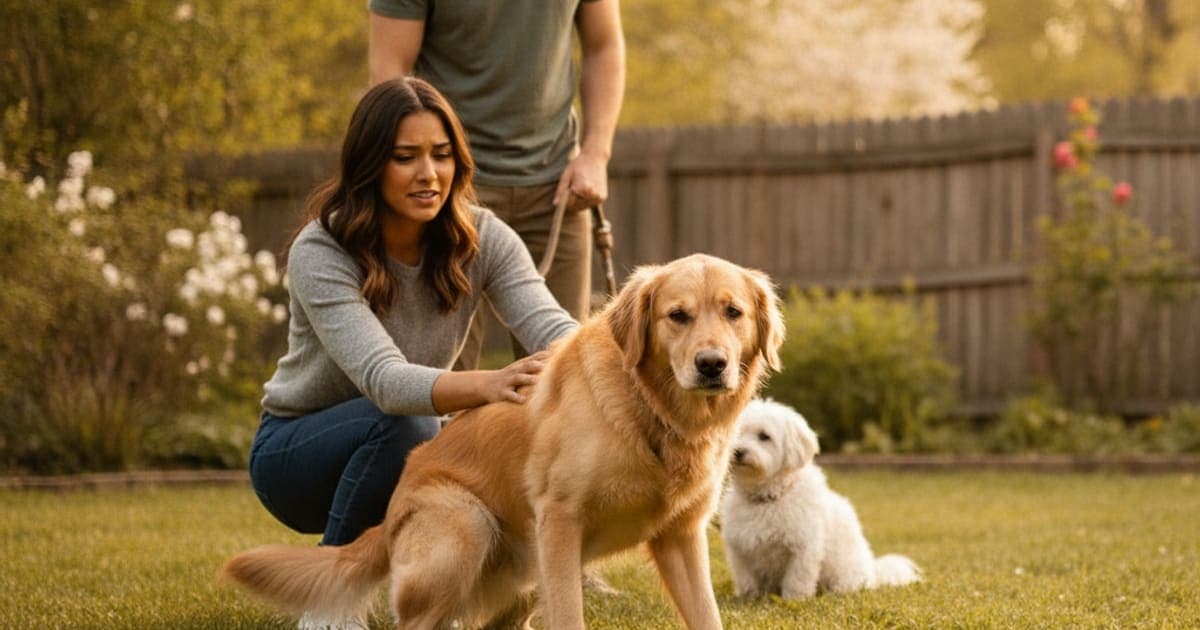
Call your veterinarian today if your dog is straining to urinate, and go straight to an emergency clinic if your dog is posturing again and again while producing little or nothing. A male dog who strains and passes little or no urine may have a urinary blockage, which is a life-threatening emergency that needs care immediately, including overnight. Vomiting, weakness or collapse, a hard or painful belly, crying when lifted, or no urine at all despite repeated attempts all mean go now rather than wait for morning.
A dog strains to pee for one of three broad reasons: the bladder or urethra is inflamed or infected, something is physically obstructing the flow of urine, or the act of urinating has become painful. The usual causes are urinary tract infection, bladder crystals and stones, inflammation of the bladder wall, prostate enlargement in intact males, masses in the bladder or urethra, and, in older or arthritic dogs, musculoskeletal pain that makes holding the posture miserable.
Straining is a symptom, not a diagnosis. The signs look nearly identical whether the cause is a simple infection or a stone wedged in the urethra, which is exactly why this is a problem you hand to your veterinarian rather than wait out. What follows is how to recognise straining accurately, how it presents differently in male and female dogs, what tends to be behind it, and what is useful to do at home while you arrange veterinary care.
What straining to pee actually looks like
Most owners notice something is off before they can name it. The dog goes out more often. The walk takes longer. There is less urine on the grass than there should be. Straining, called dysuria when it is painful and tenesmus when the effort is unproductive, shows up as a cluster of small changes rather than one dramatic sign.
Watch for:
- Holding the squat or the leg lift far longer than normal, sometimes with a visibly hunched back
- Repeated trips outside with only a few drops each time
- Posturing, moving a few steps, and posturing again at spot after spot
- Dribbling urine while walking, or wet patches where the dog was lying
- Whining, yelping or looking back at the hind end while urinating
- Excessive licking at the genitals before or after urinating
- Urine that is cloudy, pink, red-tinged or strong-smelling
- Accidents in the house from a dog who has never had them
- Restlessness, pacing, a tucked-up belly, or reluctance to lie down
- Loss of appetite, vomiting or lethargy, which shift the situation from concerning to urgent
The single most useful thing you can do is watch one complete bathroom trip from start to finish instead of letting your dog out alone. Note how long the posture is held, how much urine actually hits the ground, and what colour it is. A short phone video is worth more to your vet than any description, and if you can catch a clean sample in a shallow container, bring it with you.
One common mix-up: straining to defecate looks very similar from a distance. A constipated dog, a dog with colitis, or a dog with impacted anal glands will also hunch, hold position and produce little. The difference is what lands on the ground and whether the back arches over a squat or presses down and forward. Plenty of dogs do both at once, since bladder inflammation and colon irritation often travel together, so if you genuinely cannot tell which is which, describe both to your vet rather than guessing.
Male and female dogs: the same signs, different stakes
Owners search specifically for what straining looks like in a male dog versus a female dog, and the distinction matters, not because the behaviour differs much, but because the anatomy changes the risk.
| What you are judging | Male dogs | Female dogs |
|---|---|---|
| Posture | Lifts a leg or stands slightly hunched; may lift at spot after spot producing only drips | Squats low and holds the squat far longer than usual, sometimes shuffling forward mid-squat |
| Typical pattern | Repeated marking-style stops with nothing coming out; dribbling between stops | Frequent tiny puddles, plus indoor accidents from a reliably house-trained dog |
| Anatomy that matters | A long, narrow urethra that tapers near the os penis, the point where stones and crystal plugs most often lodge | A shorter, wider urethra that passes small stones more easily but also lets bacteria travel up more easily |
| Added risk factor | Prostate enlargement in intact males presses on the urethra from the outside | A recessed or hooded vulva can trap moisture and set up recurring infection |
| Obstruction risk | Highest: complete blockage is far more common | Lower but never zero; stones, masses and swelling can still block flow |
So, why is a female dog straining to pee? Most often inflammation or infection of the lower urinary tract, crystals or stones, or in spayed older females, a weakened urethral sphincter that leaks and irritates the surrounding skin. Why is a male dog straining to pee? The same list, plus prostate disease in intact dogs and a much higher chance that a stone or crystal plug has physically wedged in the narrow part of the urethra.
If you are asking whether your dog is straining at all, use this test: a healthy dog empties the bladder in one steady stream and walks away. A straining dog works at it, repeats it, and leaves unsatisfied.
The reasons behind straining to urinate in dogs
Your veterinarian will be working through a list that looks roughly like this:
Urinary tract infection. Bacteria ascending the urethra inflame the bladder lining, which makes it contract when nearly empty. The dog feels an urgent need to go, strains, and produces almost nothing.
Crystals and bladder stones. Minerals precipitate out of urine and form gritty crystals or solid stones. They scrape the bladder wall, and the small ones can travel into the urethra and jam.
Urethral obstruction. A stone, crystal plug, blood clot, stricture or swelling blocks the outflow entirely. Urine backs up, the bladder distends, and kidney function is affected. This is the emergency.
Prostate disease. In intact male dogs the prostate can enlarge, become infected or develop cysts, pressing on the urethra from outside.
Masses and polyps. Growths in the bladder or urethra cause straining, blood in the urine and frequency, more often in older dogs.
Inflammation without infection. Some dogs develop sterile cystitis, an irritated, overreactive bladder with no bacteria involved, which is why a culture matters rather than reflexively reaching for antibiotics.
Neurological and spinal problems. Disc disease or nerve injury can disrupt the signals that coordinate bladder emptying, leaving a dog who postures hard and voids incompletely.
Pain and mobility loss. An arthritic senior with sore hips, stifles or lumbar spine may not have a urinary problem at all. Squatting hurts, so the dog aborts the posture, half-empties, and tries again minutes later. That mimics straining convincingly, and a dog who chronically under-empties is more prone to genuine urinary trouble on top of it. Your veterinarian is the one who can separate a bladder problem from a joint problem, and the two can coexist.
When nothing comes out: the situation you cannot wait on
Of every search in this category, the most urgent is the owner typing that their dog is straining to pee but nothing comes out. Take it seriously.
A complete urethral obstruction means urine has nowhere to go. The bladder keeps filling, pressure travels back toward the kidneys, waste products and potassium rise in the blood, and the dog becomes systemically unwell. Vomiting, collapse, a hard painful abdomen, crying when picked up, or a dog who has produced nothing for many hours all mean the clock is running. Do not attempt to press on the abdomen to help things along, because an over-distended bladder can rupture.
At the clinic, the first job is to determine whether urine can get out. Expect some combination of a physical exam, bladder palpation, urinalysis, a urine culture, bloodwork to check kidney values and electrolytes, and imaging, radiographs or ultrasound, to look for stones and masses. If the dog is blocked, a catheter is passed to relieve pressure, usually under sedation, and fluids and pain control follow. Treatment from there depends entirely on the cause: antibiotics selected by culture, dietary management for certain stone types carried out only under your veterinarian's direction, surgical removal for others, or management of prostate disease. Costs vary widely by clinic and region, so ask for an estimate once a plan is on the table.
What to watch at home and what to tell your vet
Nothing you do at home substitutes for a diagnosis, and veterinary care is the only thing that addresses the underlying cause. Your job in the meantime is accurate observation and getting your dog seen. What you notice in the hours before the appointment often shapes what your vet looks for first.
Watch and write down:
- How many times your dog postures in an hour, and how many of those attempts actually produce urine
- Roughly how much appears each time: a normal stream, a small puddle, a few drops, nothing
- Colour and clarity: pale yellow, dark, cloudy, pink, red or brown
- Whether your dog cries, looks back at the hind end, or licks afterward
- Water intake, and whether it has gone noticeably up or down
- Appetite, energy, vomiting, and whether the belly looks tucked up or feels tense
- Accidents indoors, leaking during sleep, or damp patches in the bed
Bring to the appointment a short phone video, a fresh urine sample if you can catch one cleanly in a shallow container, a list of every medication and supplement your dog receives, details of any recent diet change, and the date you first noticed the problem. If your dog has had urinary trouble, crystals or stones before, say so and bring prior records if they came from another clinic. Mention it if your dog is an intact male, or an older dog with stiffness, since both change the likely picture.
Avoid home remedies, leftover antibiotics from a previous illness, and any human medication, as several common human painkillers are toxic to dogs. If a medication is prescribed, ask your veterinarian for the correct dose and schedule rather than estimating. Do not withhold water in the hope of reducing accidents, and do not press on the belly.
Escalate immediately, including overnight, if your dog produces nothing despite repeated attempts, vomits or refuses food, becomes weak or wobbly, cries when the abdomen is touched, has a visibly swollen or tense belly, passes obvious blood, or simply seems to be getting worse rather than holding steady.
After the visit, follow the plan exactly: give every medication for the full course as directed, keep fresh water available at all times, offer more frequent short toilet breaks, and attend recheck appointments even if your dog seems better. Report any return of straining promptly.
Key Takeaways
- Straining to pee means inflammation, obstruction or pain. It is a symptom, not a diagnosis, and it always warrants a veterinary visit.
- Watch one full bathroom trip: note how long the posture is held, how much urine appears, and its colour. Video it for your vet.
- Male dogs carry the highest obstruction risk because the urethra narrows near the os penis; female dogs are more prone to ascending infections.
- Straining with nothing coming out is an emergency. Do not wait overnight, and do not press on the abdomen.
- Straining to urinate and straining to defecate look alike; describe both if you cannot tell which is happening.
- In older dogs, painful hips, stifles or spine can mimic urinary straining, and an exam separates the two.
- No home remedy or over-the-counter product addresses an infection, a stone or a blockage. Only veterinary care does.
Your veterinarian owns the diagnosis and the treatment plan here: the urinalysis, the imaging, the catheter if one is needed, the prescription, the surgical decision. Nothing on this page changes that, and nothing should delay it. Your part is to notice the change early, record what you see, get your dog in, and follow the plan through the recovery weeks afterward.
Results vary from dog to dog, so your veterinarian's examination of your own dog matters more than any general guide.
Related guides: Does My Dog Have Bladder Issues? (Signs to Watch For) and Senior Dog Drinking Lots of Water and Peeing: Causes.
Frequently asked questions
- Why is my dog straining to pee?
- Straining usually means the bladder or urethra is inflamed, infected, obstructed, or painful. Common causes include urinary tract infection, crystals or bladder stones, sterile cystitis, prostate enlargement in intact males, and masses. Because the signs look identical regardless of cause, a veterinarian needs to examine your dog and run a urinalysis.
- How to tell if your dog is straining to urinate
- Watch one complete bathroom trip rather than letting your dog out alone. Straining looks like holding the posture far longer than normal, producing only drops, repeating at spot after spot, licking the genitals, or whining. Note urine colour and volume, record a short video, and call your veterinarian.
- What does dog straining to pee look like?
- It looks like effort without result: a prolonged, hunched posture, repeated attempts within minutes, only a few drops each time, and sometimes dribbling between attempts. You may see licking at the genitals, pink or cloudy urine, restlessness, a tucked-up belly, or indoor accidents from a house-trained dog.
- What does a female dog straining to pee look like?
- A female dog squats low and holds the squat much longer than usual, sometimes shuffling forward while still squatting, and produces only a small puddle or nothing. She may squat repeatedly on one walk, lick her vulva frequently, leak while resting, or have accidents indoors.
- What does a male dog straining to pee look like?
- A male dog lifts his leg or stands slightly hunched, strains visibly, and produces only drips. He often stops at spot after spot with nothing coming out, dribbles while walking, and licks at his prepuce. Repeated unproductive attempts in a male dog are a veterinary emergency.
- Why is my female dog straining to pee?
- Most often inflammation or infection of the lower urinary tract, since a shorter, wider urethra lets bacteria ascend more easily. Crystals, bladder stones, sterile cystitis, masses, and a recessed vulva that traps moisture are also common. Spayed seniors may strain because of a weakened urethral sphincter and skin irritation.
- Why is my male dog straining to pee?
- Male dogs strain for the same reasons females do, plus two of their own: prostate enlargement or infection in intact dogs, and a long urethra that narrows near the os penis, where stones and crystal plugs lodge. That narrowing makes complete obstruction far more likely, so act quickly.
- My dog is straining to pee but nothing comes out. Is that an emergency?
- Yes. Treat it as an emergency and get to a veterinarian immediately, day or night. A fully blocked urethra stops urine leaving the body, pressure backs up toward the kidneys, and the dog can deteriorate rapidly. Do not wait until morning and do not press on the abdomen.
- Can arthritis make my dog look like he is straining to pee?
- It can. A dog with sore hips, stifles or lumbar spine may abort the squat or leg lift because holding it hurts, half-empty the bladder, then try again minutes later. That closely mimics straining. Only a veterinary exam can separate a joint problem from a genuine urinary one.
- What should I tell my vet when my dog is straining to urinate?
- Tell your vet when the straining started, how often your dog postures, how much urine appears each time, and the colour of it. Mention water intake, appetite, vomiting, any blood, and whether your dog is an intact male or has had crystals or stones before. Bring a short video, a fresh urine sample if you can collect one cleanly, and a list of all medications and supplements.
Educational content, not veterinary advice. Ask your vet about your dog.