Why Is My Dog Scared Suddenly? (Medical Causes First)
A dog that is suddenly scared is usually telling you something physical has changed: pain, fading sight or hearing, illness, hormone shifts or brain ageing. Because sudden fear is a medical sign until proven otherwise, book a veterinary exam before treating it as a training problem.
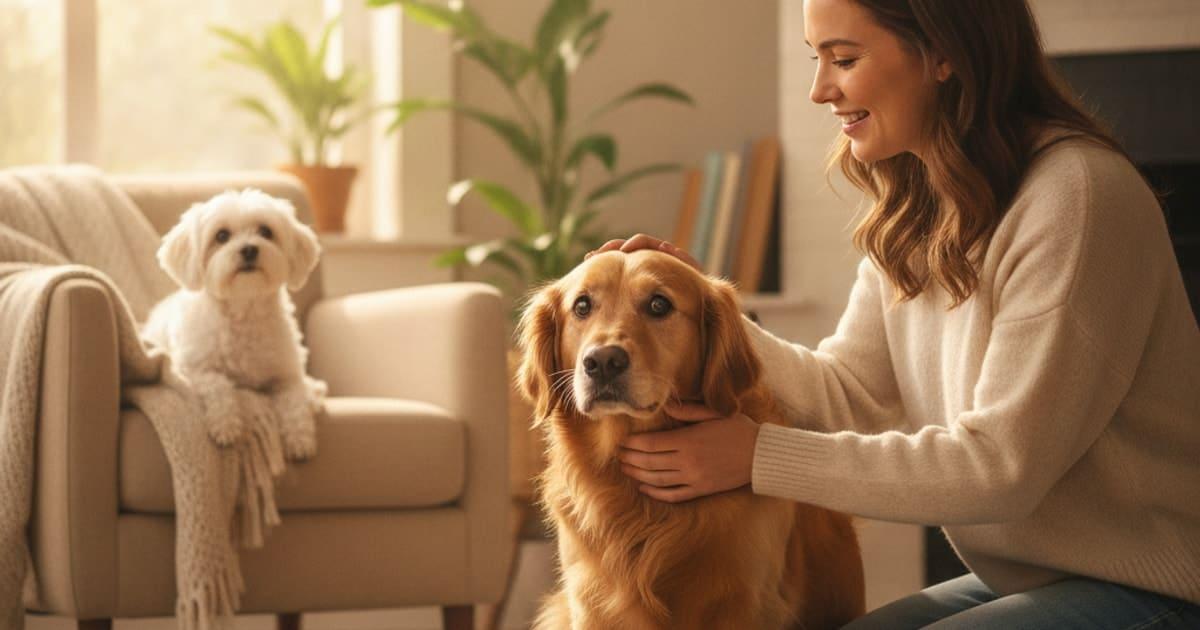
If your dog is suddenly scared, start with a veterinary exam rather than a training plan. Sudden fearfulness in a dog who was confident last month is one of the most common early signs of pain, sensory loss or internal illness, and your vet is the only person who can sort those out. Behaviour is a body system like any other, and when it changes quickly, the body is usually involved.
Owners tend to describe it in almost identical words. A dog suddenly scared of everything. Flinching at sounds they have ignored a thousand times. Refusing a hallway they have walked down every day. Hiding behind the sofa in the evening. Trembling with no visible trigger. Search any owner forum and you will find page after page of the same story, which tells you two useful things: it is not unusual, and very few people solve it by guessing.
It can feel like your dog is acting weird and scared for no reason at all. In most cases there is a reason, it is simply not visible from the outside. A dog cannot tell you that their hip aches when they rise, that the room has gone blurry at the edges, that a sound now arrives as a sudden shock instead of a familiar noise, or that they feel nauseated and strange. What you see instead is fear. A sudden change in a dog's behaviour is a medical sign until a veterinarian has ruled medicine out.
Some presentations cannot wait for a routine appointment. Collapse, seizures, laboured breathing, crying out in pain, a swollen or tense abdomen, sudden blindness, a head tilt with stumbling or flicking eyes, or fear paired with repeated vomiting all warrant emergency care the same day. If you suspect your dog has eaten something toxic, call your vet or an animal poison control service straight away, and do not try to make your dog vomit.
Pain Is the Most Common Hidden Reason a Bold Dog Turns Anxious
Pain changes how an animal predicts the world. A dog whose elbow hurts when they land does not reason about elbows. They learn that jumping off the bed produces something unpleasant, so the bed becomes a place to avoid. Multiply that across stairs, slippery floors, the car boot, the couch and being picked up, and you get a dog who looks globally nervous rather than sore in one joint.
Orthopaedic pain is the usual suspect: hips, knees, elbows, shoulders, the lower back and especially the neck. Neck and spinal pain are easy to miss because the dog simply stops looking up, stops shaking off, holds their head low and startles when someone reaches over them. Dental pain, ear infections and eye pain all produce head shyness that can be mistaken for a trauma response. Abdominal pain often shows up as a dog who will not settle, who hides, who stands in corners or who suddenly wants to be alone.
Research suggests pain and anxiety are tightly linked in dogs, which is one reason veterinary behaviour specialists ask for an orthopaedic and neurological assessment before they treat a new fear as purely emotional. New noise sensitivity in an adult dog is a particularly well recognised flag, because a body that is already braced and uncomfortable startles more easily and recovers more slowly.
A good exam involves watching your dog walk, flexing and extending joints, palpating the spine, opening the mouth and checking ears and eyes. Video helps enormously here. Film your dog rising from a nap, taking stairs and walking away from the camera, because the clinic floor and the adrenaline of a visit can hide a limp that is obvious at home.
When the Senses Change: Sight, Hearing and Balance
A dog's confidence rests on sensory information arriving the way it always has. When that information degrades, the world becomes unpredictable, and unpredictability looks exactly like fear.
Vision changes are often gradual in the eye and sudden in the behaviour, because dogs compensate beautifully until they cannot. The first signs are usually situational: nervous in dim light, hesitant on unfamiliar ground, bumping furniture that has been moved, startling when a person appears at close range. Some eye conditions also hurt, and a painful eye produces squinting, redness, rubbing and a dog who flinches at hands near the face. Sudden vision loss deserves a same-day appointment.
Hearing change works in the other direction. A dog who hears less does not hear you approach, so your arrival becomes a surprise instead of a sequence. These dogs often become startle-prone, more clingy, harder to wake, and less responsive to their name, which owners sometimes read as stubbornness before they read it as fear.
Balance problems belong in a category of their own. A head tilt, circling, stumbling, eyes flicking from side to side or a dog who suddenly seems afraid to move are signs of vestibular or neurological disease, and that is urgent care rather than a wait and see situation. Dogs with vertigo are genuinely frightened, because the ground is no longer reliable.
Illness and Hormone Shifts That Show Up as Anxiety
Plenty of internal illness announces itself through behaviour before it announces itself through anything an owner would call a symptom. Nausea, fever, low blood sugar, anaemia and organ disease all make a dog feel wrong, and a dog who feels wrong withdraws, hides, trembles and seeks out small dark spaces.
Hormonal conditions are worth raising with your vet when fear appears alongside coat changes, weight change, altered appetite, heat seeking or new lethargy. Thyroid function is one of the things vets commonly check in this situation, along with general bloodwork and urine testing, precisely because a blood test is cheap compared with months of guesswork. Your vet decides which tests fit your dog, based on the exam findings, the history you give and your dog's age.
Neurological causes also deserve a mention. Some seizure activity is subtle. Instead of a classic convulsion you may see a dazed spell, twitching, staring, sudden terror, frantic hiding, or a period of clinginess and confusion that resolves on its own. If fear arrives in discrete episodes with a clear beginning and end, describe that pattern to your vet in detail, because the pattern itself is diagnostic information.
If your dog is on any medication, note when the behaviour started relative to when the medication started or changed, and talk to your vet about it. Never stop or adjust a prescribed medication on your own. The timing may be meaningful, or it may be coincidence, and that is a judgement for the person who prescribed it.
Age and the Brain, From Adolescence to the Senior Years
Young dogs pass through developmental stages in which they become temporarily more cautious, and owners of adolescents often describe a confident puppy who woke up one morning afraid of bins, statues and the vacuum. These phases are real, they are usually transient, and they are most associated with the first two years of life while the nervous system is still maturing.
That said, age is not a diagnosis. If your 2 year old dog is suddenly scared of everything, the developmental explanation becomes less convincing the more the fear generalises, the longer it lasts and the more it comes with physical signs. Adolescence is also precisely when orthopaedic problems such as joint dysplasia and cruciate injury start to declare themselves, so a growth stage and a pain problem can look identical from the outside. An exam separates them.
At the other end of life, cognitive change is a genuine medical condition rather than a personality shift. The typical picture includes disorientation in familiar rooms, standing in corners or behind doors, altered sleep with night pacing, reduced interaction, house soiling in a previously reliable dog and new anxiety, especially after dark. Senior dogs frequently have more than one thing going on at once: dimming vision, reduced hearing, arthritis and cognitive change layered together. Each one is manageable in its own way, and your vet will prioritise them in the order that will make the biggest difference to your dog's day. Results vary from dog to dog.
When Fear Comes With Shaking, Hiding or Shadowing You
The accompanying signs matter as much as the fear itself. They are what turn a vague worry into a useful history.
Scared and shaking
Trembling has many causes beyond emotion: pain, fever, nausea, low blood sugar, toxin exposure, neurological disease and simple cold. Shaking that continues when your dog is warm, resting and otherwise undisturbed is not a behavioural finding. Note how long each episode lasts, what the gums look like, whether your dog will eat, and book a prompt exam.
Scared and hiding
A dog who retreats under beds, into bathrooms or behind furniture is looking for a small, enclosed, low-stimulus space. Sick and sore dogs do this reliably. Let your dog have the hiding place rather than pulling them out of it, since forcing contact adds fear to whatever is already wrong, and tell your vet exactly when the hiding started and where it happens.
Panting, pacing and refusing to settle
Panting without heat or exertion, inability to lie down, repeatedly changing position and getting up through the night are classic discomfort signals. Abdominal pain, respiratory problems and cardiac disease all present this way, and this combination should move the appointment forward rather than back.
Suddenly glued to you, or suddenly avoiding you
Both directions are meaningful. New clinginess often reflects sensory loss or insecurity, while new avoidance of handling, grooming, harnessing or being lifted points towards a specific painful area. Try to notice which part of the body your dog protects.
Scared of one room, one surface or one person
A highly specific fear can be learned from a single startling event, but it can equally be physical. Slippery floors frighten dogs who no longer trust their grip or their joints. One person may simply be the one who handles the sore area, picks the dog up or approaches from the deaf side.
What a Veterinary Workup Usually Covers
Bring a written timeline and video. The more precisely you can date the change, the faster the investigation narrows.
| What you are seeing | What a vet may want to rule out |
|---|---|
| New fear of stairs, jumping or being lifted | Joint, spinal or neck pain |
| Flinching from hands near the head | Ear infection, dental disease, eye pain |
| Startling at long familiar sounds | Hearing change, chronic pain, neurological change |
| Bumping into objects, anxious in dim light | Vision loss, painful eye disease |
| Head tilt, circling, flicking eyes | Vestibular or neurological disease, urgent |
| Hiding, trembling, off food, drinking more | Systemic illness, fever, nausea, hormonal change |
| Night pacing and confusion in an older dog | Cognitive change, pain, sensory loss |
| Dazed or staring spells around the fear | Seizure activity |
Expect a full physical and neurological exam, an orthopaedic assessment, an eye and ear check, and bloodwork or imaging where the findings point that way. If everything comes back clear, that result is valuable too, because it lets the conversation move on to a behavioural plan with your vet or a referral, built on solid ground instead of assumption.
Key Takeaways
- Sudden fear in a previously confident dog is a medical sign first and a behaviour question second.
- Pain is the most common hidden driver, especially spinal, dental, ear and joint pain, and it often shows as noise sensitivity or avoidance rather than limping.
- Fading vision, reduced hearing and balance disorders all make the world unpredictable, which looks exactly like anxiety.
- Illness, fever, nausea, hormonal change, subtle seizure activity and cognitive decline in seniors can all present as fearfulness.
- Shaking, hiding, panting, pacing and sudden clinginess are physical co-signs that belong in your vet's history, not in your guesswork.
- Head tilt, collapse, seizures, breathing trouble, sudden blindness or crying in pain mean same-day emergency care.
Your veterinarian owns the diagnosis and the treatment plan here. They decide which tests fit your dog, what the findings mean and what comes next, and everything else, from home adjustments to a behaviour programme, works best in the space that a proper veterinary assessment creates. Write down what changed and when, record a short video, and book the exam rather than waiting to see whether the fear fades on its own.
For a clear list of signs that mean the appointment cannot wait, read Dog Emergency Signs, and browse the conditions library for more on the health problems described above.
Frequently asked questions
- Why is my dog scared suddenly?
- Usually because something physical has changed. Pain, fading vision or hearing, balance problems, fever, nausea, hormonal change and cognitive decline in older dogs all show up as fear before they show up as anything else. Book a veterinary exam before treating the change as a training problem.
- Why is my dog acting weird and scared?
- Odd behaviour plus fear is a combination vets take seriously, because discomfort and illness alter how a dog moves, sleeps, eats and reacts. Note when it started, whether it comes in episodes, and what else changed, then have your dog examined. Patterns you record at home guide the investigation.
- What causes sudden fear in dogs?
- The main medical causes are pain, especially spinal, dental, ear and joint pain, loss of sight or hearing, vestibular and neurological disease, systemic illness, hormonal conditions, subtle seizure activity, and cognitive change in seniors. Young dogs also pass through developmental stages of increased caution, but that is a diagnosis of exclusion.
- Why is my dog acting scared all of a sudden?
- A rapid change usually means the dog's experience of the world has changed. Sounds arrive as shocks when hearing fades, rooms become unpredictable when vision dims, and movement becomes risky when joints hurt. Your vet will examine, test where needed and tell you which of these applies.
- Why is my dog randomly getting scared?
- Fear that comes in discrete episodes with a clear start and finish is worth describing carefully to your vet, since it can reflect pain flares, sensory events or subtle seizure activity rather than random emotion. Film an episode if you can. The pattern itself is diagnostic information.
- My dog is suddenly scared and shaking. What does it mean?
- Trembling has many non-emotional causes, including pain, fever, nausea, low blood sugar, toxin exposure and neurological disease. Shaking that continues while your dog is warm, resting and undisturbed is a medical finding. Arrange a prompt exam, and seek emergency care if your dog also collapses, vomits repeatedly or struggles to breathe.
- Why is my dog suddenly scared and hiding?
- Dogs that feel unwell or sore seek small, dark, enclosed spaces, so new hiding is a classic illness signal rather than sulking. Leave the hiding place available instead of pulling your dog out, since forced handling adds fear, and tell your vet when the hiding began and where.
- Why is my 2 year old dog suddenly scared of everything?
- Adolescence brings temporary phases of caution, but at two years a medical cause deserves equal weight, especially since joint problems and cruciate injuries often declare themselves at this age. If the fear generalises, persists or comes with physical signs, an exam separates a developmental stage from pain.
- Does sudden fear in dogs always need a vet visit?
- Any sudden, unexplained behaviour change deserves an exam, because behaviour is often the earliest visible sign of a physical problem. Talk to your vet, bring a timeline and video, and seek emergency care the same day for head tilt, collapse, seizures, breathing trouble or sudden blindness.
Educational content, not veterinary advice. Ask your vet about your dog.