Dog Swallowed a Bone: What to Do and When to Call a Vet
If your dog swallowed a bone, call your veterinarian now and describe the bone, your dog's size and any symptoms. Many bones pass uneventfully, but choking, repeated retching, drooling, a painful belly, straining to poop or bloody stool mean emergency care. Do not induce vomiting unless your vet tells you to.
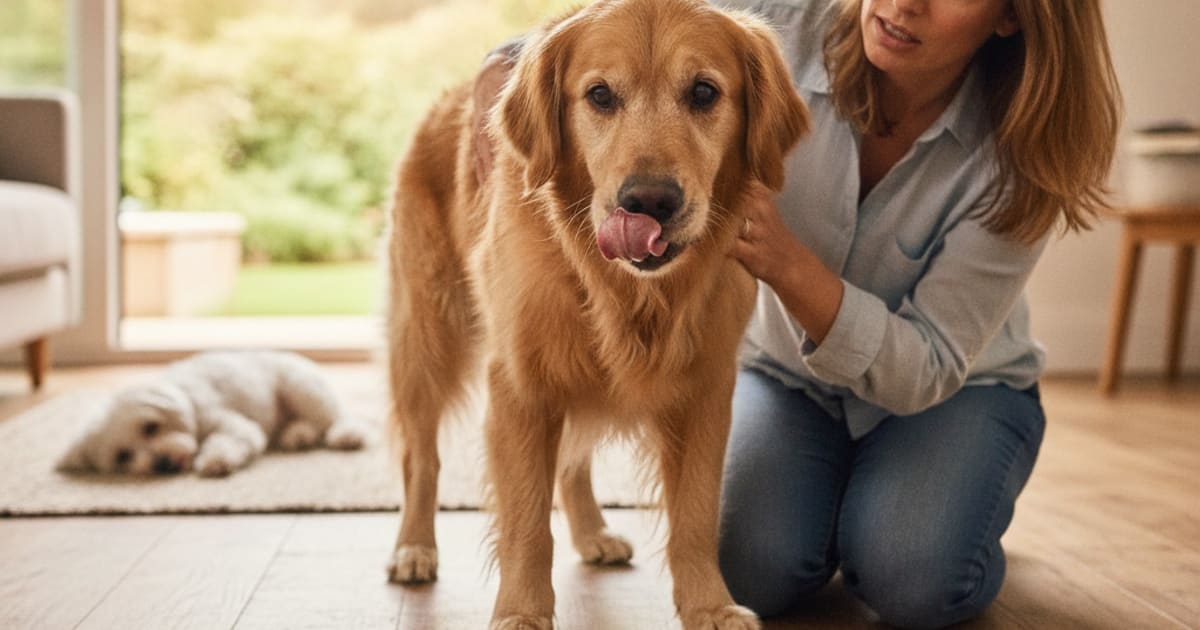
If your dog has just swallowed a bone, call your veterinarian or the nearest emergency clinic now and describe what happened: the kind of bone, whether it was cooked or raw, roughly how big it was compared with your dog, and anything you are seeing right now. Go in immediately, without waiting for the phone, if your dog is choking, gagging or retching without bringing anything up, drooling heavily, pawing at the mouth, breathing strangely, vomiting over and over, straining to poop with nothing coming out, passing blood, or standing hunched with a tight, painful belly.
Here is the honest answer to the question everyone types at this moment. Plenty of swallowed bones travel through the gut and come out the other end without drama. Others lodge in the throat, the esophagus, the stomach or the intestine, or break into sharp shards that scrape, tear or perforate the gut wall. From the outside, in the first hour, those two situations look identical. That is exactly why this is a phone call rather than a wait-and-see, and why the size of your dog, the size of the bone and the way it was cooked all matter to the person on the other end of the line.
Your first moves, step by step
Work through these calmly. Panic makes dogs swallow faster and bite harder.
Secure whatever is left. Pick up the remaining bones, close the bin, move the carcass off the counter. Dogs that got away with one bone will go back for the second one, and a second bone turns a manageable situation into a complicated one.
Look in the mouth only if it is safe. If your dog is calm and you can see without putting fingers between the back teeth, check for a fragment wedged across the roof of the mouth or between the molars. If the dog is panicking, gagging or guarding, stop. A frightened dog with something stuck will bite, and you cannot help from the emergency room yourself.
Do not try to make your dog vomit at home. A sharp bone fragment can do more damage coming back up than it ever did going down, and making a dog vomit can also force a lodged piece against the esophagus or cause fluid to be inhaled, so only induce vomiting if your veterinarian specifically tells you to and talks you through it.
Skip the internet home remedies. Bread, pumpkin, oil, salt, hydrogen peroxide: none of these are safe to reach for on your own judgement, and some of them make the exam harder once you do get to a clinic. Ask your vet before you give anything at all, including food and water, because if sedation or a scope is on the table, a full stomach changes the plan.
Write down the details. When it happened. Cooked or raw. Poultry, pork, beef, fish. Whether it was swallowed in pieces or gulped whole. Whether your dog chewed at all. Whether there was any string, foil or skewer attached. Your vet will ask all of this, and the answers genuinely change what they recommend.
Keep your dog quiet. Crate rest or a calm room, lead walks only in the garden. No running, no wrestling with the other dog, no tug games. Movement does not help anything move along, and it makes a difficult belly harder to read.
Emergency signs that mean the vet cannot wait
Some signs are worth a phone call. These are worth driving.
Choking right now: pawing at the mouth, blue or grey gums, silent coughing, noisy or absent breathing, collapse. This is an airway emergency. Head to the nearest open clinic and call them from the car so they are ready.
Blood in the stool: fresh red blood, jelly-like red mucus, or black tarry stool that looks like coffee grounds. Blood after a bone means something has scraped or torn somewhere along the digestive tract, and it needs to be assessed the same day, not monitored over the weekend.
Cannot poop or cannot stop trying: repeated straining, crying or crouching with nothing produced, or small amounts of blood-streaked fluid instead of stool. Straining can mean an obstruction or impacted bone material, and it is painful. Do not give a laxative or an enema at home.
Also treat these as urgent: repeated vomiting or vomiting that brings up nothing, drooling or swallowing repeatedly as if something is stuck, refusing food or water, a swollen or drum-tight abdomen, restlessness and an inability to settle, standing in a praying position with the chest down and the rear up, pale gums, a fever, lethargy, or any sudden change in behaviour in a dog who was fine an hour ago. Can dogs die from swallowing a bone? It is uncommon, but yes, when a bone blocks the airway, obstructs the intestine or punctures the gut wall and infection follows, it can become life threatening. That risk is exactly why early veterinary assessment matters more than any home checklist.
Scenario by scenario: whole bones, chicken bones and rib bones
Not all bones behave the same way inside a dog. This is a general guide to why vets react differently to different bones, not a substitute for the conversation you should be having with your own clinic.
| Bone type | Why it concerns vets | What tends to worry owners most |
|---|---|---|
| Cooked poultry bones (chicken, turkey, duck) | Cooking dries bone out, so it tends to split into thin, sharp splinters rather than crumble | Sharp fragments scraping the throat, esophagus or gut |
| Raw poultry bones | Softer and more flexible than cooked, but still a choking and obstruction risk, and raw meat carries bacterial concerns | Gulping a whole wing or neck without chewing |
| Cooked rib, pork chop and steak bones | Dense but brittle, and often a size that fits down the throat yet struggles to leave the stomach | Pieces lodging at the stomach outflow or in the small intestine |
| Large weight-bearing beef or marrow bones | Very hard, and associated with cracked teeth and jaw injuries, plus marrow-ring entrapment | A ring of bone caught around the lower jaw, or a chipped tooth |
| Fish bones and small sharp fragments | Fine and needle-like, easy to swallow unnoticed | Fragments embedding in the throat or gut lining |
| Bones with string, netting, foil or a skewer | Attached material can become a linear foreign body, which is its own serious problem | The part you did not see your dog swallow |
My dog swallowed a bone whole
A bone swallowed whole skips the splintering problem and lands squarely on the size problem. The question becomes geometry: can this object pass through the stomach outlet and the full length of the intestine in a dog this size? A small bone in a large dog often can. The same bone in a terrier may not. Tell your vet the breed, the weight and your best estimate of the bone's dimensions, and if you still have an identical bone from the same meal, photograph it next to a familiar object.
My dog swallowed a bone without chewing
Gulping is common in fast eaters, resource guarders and dogs who grabbed something they knew they should not have. It raises two risks at once: the piece is still full size, and it may be sitting in the esophagus rather than the stomach. A bone stuck in the esophagus often shows itself through repeated swallowing, drooling, gagging, or bringing food straight back up. That situation needs prompt attention, because pressure on the esophageal wall gets worse the longer it stays.
Chicken and rib bones specifically
These two come up more than any other, mostly because of roast dinners, barbecues and bin raids. Cooked poultry bones are the classic splintering worry. Rib bones are the classic size-and-density worry. Either way, the action is the same: call, describe, and follow the plan your vet gives you for that individual dog.
What your vet may do
Your vet will start with history and a hands-on exam, feeling the abdomen, checking gum colour and hydration, and listening to the chest and gut. From there, the options depend entirely on what they find.
Imaging is usually the next step. Bone is often visible on radiographs, which is one of the few advantages of a bone over a sock or a toy, though position, overlapping tissue and gas can still make a fragment hard to spot. Your vet may repeat images later, add a contrast study, or use ultrasound to look at the gut wall and how it is moving.
If a bone is sitting in the esophagus or stomach and it is reachable, a vet may retrieve it with an endoscope under anaesthetic, which avoids opening the abdomen. If a piece has passed into the intestine and is causing or threatening an obstruction, or if there are signs of perforation, surgery may be the recommended route. Some dogs are managed more conservatively with monitoring, imaging repeated over time, fluids and a prescribed diet while the material moves through. Supportive care may also include pain relief, anti-nausea medication and antibiotics where there is concern about contamination.
Costs vary widely by clinic, by region and by whether imaging, endoscopy or surgery is needed. It is reasonable to ask for an estimate and for the range of options at each decision point.
Watching at home and preventing the next one
If your vet has assessed your dog and sent you home to monitor, you are watching for two things: signs that something is stuck, and signs that something has torn. Check every stool. Bone material often produces hard, pale, chalky stool, and straining to pass it is worth reporting. Note appetite, energy, vomiting, drinking and whether your dog settles normally. A dog who skips a meal, becomes quiet, or starts posturing with a tucked-up belly has changed, and a change is a reason to call back rather than wait.
Will it pass? Often, yes. But passing is something you confirm with your vet's guidance, not something you assume because the first day was quiet. Problems from bone fragments can declare themselves later than owners expect.
Prevention is mostly logistics. Use a bin with a lid your dog cannot nose open, or keep it behind a closed door. Clear plates from the table before you sit down to talk. Brief guests and children that scraps are off limits, especially around holidays and barbecues when carcasses sit out. Teach a reliable drop and leave, and trade rather than chase, because a chased dog swallows. Choose chews sized and sold for your dog's weight and chewing style, supervise them, and take them away once they are small enough to swallow whole. If you feed a raw diet that includes bone, talk to your vet about how to do it in a way that fits your particular dog.
Key Takeaways
- Call your veterinarian straight away after a dog swallows a bone, and go in immediately for choking, repeated retching, a painful or swollen belly, straining to poop, or any blood in the stool.
- Do not induce vomiting, and do not give bread, oil or any home remedy without veterinary direction.
- Cooked bones tend to splinter, raw bones are softer but still a choking and obstruction risk, and any bone swallowed whole becomes a question of size relative to your dog.
- Bones stuck in the esophagus often cause drooling, repeated swallowing and regurgitation, and they need prompt attention.
- Your vet may use radiographs, endoscopic retrieval, surgery or careful monitoring depending on where the bone is and what it is doing.
- Keep watching stools, appetite and energy for days after the event, and call back at the first change.
- Most of the prevention work is environmental: lidded bins, cleared plates, briefed guests and appropriately sized supervised chews.
The vet owns this decision
Only your veterinarian can examine your dog, image the gut, and decide whether a swallowed bone is something to watch, something to retrieve or something to operate on. Nothing you read online, including this page, can tell you where a particular bone is sitting inside a particular dog. Use this article to recognise what matters and to describe the situation clearly, then talk to your vet and let their diagnosis and treatment plan lead. If anything changes between appointments, talk to your vet again rather than waiting it out.
For more background, read Can Dogs Eat Chicken Bones on why poultry bones get their own warning, check Dog Emergency Signs if you are unsure whether what you are seeing counts as urgent, and browse the conditions library for context on the digestive problems a vet may be working to rule out.
Frequently asked questions
- What to do if dog swallows a bone?
- Call your veterinarian immediately and describe the bone, whether it was cooked or raw, and your dog's size. Remove any remaining bones, keep your dog calm, and do not induce vomiting or give home remedies unless your vet instructs you. Go straight to emergency care for choking, repeated retching or a painful belly.
- What happens when dog swallows a bone?
- Three things can happen. The bone passes through the digestive tract uneventfully, it lodges somewhere along the throat, esophagus, stomach or intestine, or it splinters into sharp pieces that scrape or perforate the gut wall. You cannot tell which from the outside, which is why veterinary assessment matters early.
- What will happen if my dog swallowed a bone?
- Many dogs pass bone material without incident, often producing hard, pale, chalky stool. Others develop vomiting, drooling, loss of appetite, straining to poop or abdominal pain if the bone obstructs or injures the gut. Your vet decides, based on examination and imaging, which situation your dog is in.
- Is it bad if my dog swallowed a bone?
- It is a real risk that deserves a phone call, not automatic panic. Risk depends on the bone type, whether it was cooked, its size compared with your dog, and whether it was chewed or gulped whole. Cooked and gulped-whole bones concern vets most. Have your dog assessed rather than guessing.
- Can dogs die from swallowing a bone?
- It is uncommon, but yes. A bone can block the airway, obstruct the intestine or puncture the gut wall, and infection following a perforation can become life threatening. That outcome is far less likely when the dog is seen early, so call your veterinarian rather than waiting for symptoms to appear.
- Can dogs swallow a bone?
- Yes, dogs swallow bones easily, especially fast eaters and dogs who grabbed something they were not meant to have. Swallowing is rarely the problem on its own. The problem is whether the bone is small enough to pass safely and whether it splinters on the way through.
- Dog ate a bone, will it pass?
- Often it does, and bone material frequently shows up as hard, chalky stool. But passing is something your vet confirms through examination and sometimes imaging, not something you assume because the first day was quiet. Keep watching stools, appetite and energy, and call back at the first change.
- My dog is pooping blood after eating a bone. What should I do?
- Treat it as urgent and contact your veterinarian today. Fresh red blood, red jelly-like mucus or black tarry stool suggests the digestive tract has been scraped or torn somewhere. Do not give any medication, laxative or enema at home while you arrange the appointment.
Educational content, not veterinary advice. Ask your vet about your dog.