Dog Swollen Cheek Gland: When to See the Vet
A swollen cheek gland or lump under your dog's jaw is a reason to see a vet. Learn when to go to an emergency vet now, what can cause swelling under the jaw and neck, what your vet may do, and what to tell them.
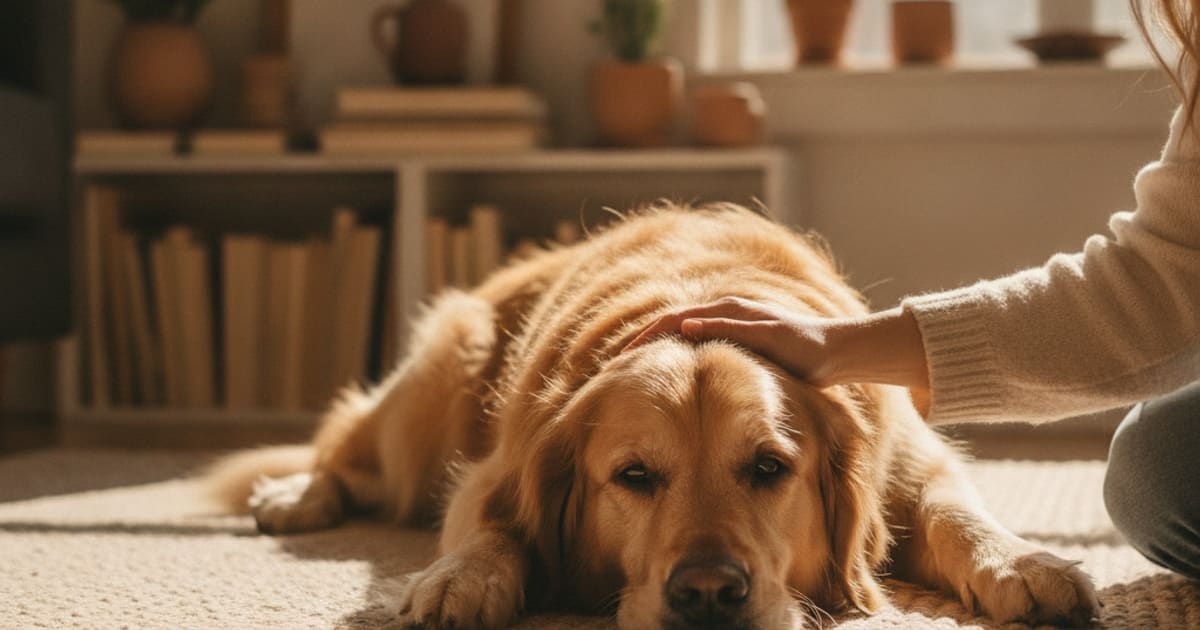
A swollen cheek gland in a dog is a reason to see a vet. Go to an emergency vet now if your dog has trouble breathing, cannot swallow or is drooling heavily, has swelling of the face or neck that came on suddenly or is growing fast, or is weak or collapsing; otherwise book a same-day appointment. Any new lump or swelling should be checked by a vet, who may take a fine needle sample. The swelling may sit under the bottom jaw, below the ear, under the chin or along the neck, on one side or both, and only a vet exam can find out what it is.
When to go to the vet now
- Trouble breathing, noisy breathing or struggling for air
- Cannot swallow, drooling heavily, or will not eat or drink
- Swelling of the face, jaw or neck that came on suddenly or is growing fast
- Weakness, collapse or seeming very unwell
- Bleeding from the swelling or the mouth that will not stop
Swelling under the jaw and along the neck sits close to the throat and the airway. When it grows quickly or comes with breathing or swallowing trouble, it needs emergency care now, not a booked visit later. If the swelling is bleeding, hold gentle pressure with a clean cloth on the way to the vet, and do nothing else to it. For a wider list of signs that need emergency care, see Dog Emergency Signs. For any other swelling under the jaw or along the neck, book a same-day appointment with your vet.
What can cause a swollen cheek gland
The area under a dog's jaw and down the upper neck holds two kinds of glands. Lymph nodes are small parts of the immune system that filter fluid draining from the head and face. Salivary glands make saliva and carry it into the mouth through small ducts. A swollen cheek gland can mean either of these, and swelling in the same area can also come from the teeth, the skin, the muscles or the jaw bone. Each cause below is a possibility your vet checks, not something to sort out at home, because swellings from very different causes can look and feel alike.
Swollen lymph nodes under the jaw can be part of the body's response to infection or inflammation nearby. These nodes drain the mouth, teeth, gums, tongue, lips, nose, ears and the skin of the face, so a problem in any of these places can make them swell. The vet also checks the lymph nodes in other parts of the body, because swelling in more than one place can be part of a wider illness. That includes infections that affect the whole body and cancers of the lymph system such as lymphoma. A swollen lymph node is a sign that points the vet toward more questions and tests, not a diagnosis on its own.
The salivary glands sit near the angle of the jaw, under the jaw and under the tongue. A salivary gland can become blocked, inflamed or infected, or one of its ducts can be damaged so that saliva leaks into the tissue around it, which vets call a salivary mucocele or sialocele. An injury, a bite, something sharp your dog has chewed or a small stone in a duct are possibilities the vet considers, and in some dogs no clear trigger is found. Growths can also start in a salivary gland. Only the vet's exam and tests can tell a salivary gland problem apart from a swollen lymph node or another kind of swelling.
Problems in the mouth are another possibility. An infected tooth root, a broken tooth, gum disease or a wound inside the mouth can lead to swelling under the bottom jaw, along the jaw line or below the eye, and the nearby lymph nodes can swell as well. Do not try to look into or open your dog's mouth to search for a cause. The vet examines the mouth, and some dogs need sedation for a full dental check and X-rays.
A bite from another animal, a puncture wound or something sharp that has worked its way under the skin, such as a grass seed or a splinter of stick, can set up an infection and a pocket of pus called an abscess. An abscess can sit deep in the tissue under the jaw or in the neck, and the wound where it started may be hard to find or already closed. The vet decides whether an abscess is present and how to treat it. Do not squeeze, lance or try to drain any swelling at home.
A face swollen under the chin, around the muzzle or around the eyes can come from an allergic reaction, an insect sting or a bite. This kind of swelling can come on quickly and can reach the throat, which is why sudden face or neck swelling is on the emergency list above. Go to an emergency vet now if it came on suddenly, and do not give any medicine at home unless your vet tells you to.
Lumps and growths can start in the skin, the lymph nodes, the salivary glands, the jaw bone, the tissues of the mouth or, lower in the neck, the thyroid gland. Some growths are cancer and some are not, and there is no way to tell which from the outside. That is why any new lump or swelling should be checked by a vet, who may take a fine needle sample. A lump under the jaw needs the same vet check as a lump anywhere else on the body.
Swelling under the bottom jaw on one side and swelling on both sides can each come from any of the causes above. Where the swelling sits, which side it is on, how big it is and how it feels do not tell you what it is, so the vet looks at the whole dog and not just the lump.
When the jaw and neck are swollen together, the vet considers lymph nodes, salivary glands, deep infection, allergic reactions and growths in the neck. Swelling in this area can press on the airway and the throat, so trouble breathing or swallowing with it means emergency care now.
You can read about these conditions in our conditions library, but reading does not replace an exam. Talk to your veterinarian about what is behind the swelling in your own dog.
What your vet may do
Your vet starts by asking about the swelling and your dog's health, then does a full exam. That includes feeling the swelling and the lymph nodes elsewhere on the body, checking your dog's temperature, listening to the heart and lungs, and looking inside the mouth at the teeth, gums, tongue and throat. Some dogs need light sedation for a proper look at a painful area or the back of the mouth.
A fine needle sample is one of the first tests your vet may suggest for a lump or swelling. The vet passes a thin needle into the swelling to collect cells or fluid, then looks at them under a microscope in the clinic or sends them to a laboratory. The sample can help show whether the swelling is a lymph node reacting to something, saliva that has leaked into the tissue, pus from an infection, or cells from a growth. If the sample does not give a clear answer, the vet may take a biopsy, which is a small piece of tissue removed under sedation or an anaesthetic.
Other tests depend on what the exam shows. Blood tests can look for signs of infection or inflammation and check that your dog is fit for sedation. X-rays can show the teeth, the jaw bone and the chest. An ultrasound scan can show whether a swelling holds fluid and which structure it comes from. A full dental exam under anaesthetic, with dental X-rays, lets the vet check every tooth root. For some swellings, the vet may refer your dog to a specialist for a CT scan or surgery.
Treatment for a swollen cheek gland depends on the cause, so it starts once the vet has a clear picture. Depending on what is found, the vet may prescribe medicine for infection, inflammation or pain, treat or remove a diseased tooth, drain and flush an abscess and remove anything stuck in the tissue, or treat an allergic reaction straight away. A salivary gland that keeps leaking saliva may need surgery to remove it. A growth may be removed, sampled further or managed with a specialist. Talk to your vet about each option, what it involves and what follow-up visits your dog needs.
There is no treatment at home for a swollen cheek gland that can take the place of this vet visit. Do not put anything on the swelling, press or squeeze it, try to drain it, or give any medicine from your own cupboard, because this can hide signs, make an infection worse or harm your dog. Human medicines can be poisonous to dogs. If you have already given your dog anything, call your vet now and tell them what it was and how much.
What to tell your vet
- When you first noticed the swelling
- Any change in its size or shape, or in how your dog acts, since then
- Any bleeding or discharge from the swelling or the mouth
- Whether your dog has been licking, rubbing or pawing at the face or neck
- Other signs, such as drooling, bad breath, trouble eating, coughing, tiredness or weight loss
Also tell your vet about any recent bite, sting, fight or chewing on sticks, and any medicines your dog takes or health problems your dog already has. Your vet can tell you how an existing condition fits with the swelling. If you have written down when the swelling started and how it has changed, bring that note with you to the appointment. Call your vet again if the swelling grows, if new swellings appear, or if you notice bleeding, drooling or trouble eating, and go to an emergency vet now for any trouble breathing or swallowing, sudden fast swelling, weakness or collapse.
Frequently asked questions
- Is a swollen cheek gland an emergency in dogs?
- It is an emergency if your dog has trouble breathing, cannot swallow or is drooling heavily, has face or neck swelling that came on suddenly or is growing fast, or is weak or collapsing. Go to an emergency vet now for any of these. For any other swelling under the jaw, book a same-day vet appointment.
- What should I do if my dog has a swollen cheek gland?
- Call your vet today and book a same-day appointment, or go to an emergency vet now if your dog has trouble breathing or swallowing, sudden fast swelling, or weakness. Do not press, squeeze or put anything on the swelling. Note when you first noticed it and any other signs so you can tell the vet.
- Can I treat a swollen cheek gland at home?
- No, because the cause has to be found by a vet first, and home care can hide signs or make an infection worse. Do not put anything on the swelling, squeeze it or try to drain or remove anything. If it is bleeding, hold gentle pressure with a clean cloth on the way to the vet only.
- What does a swollen lymph node under my dog's jaw mean?
- A swollen lymph node under the jaw can mean the immune system in that area is reacting to something. That can be an infection or inflammation in the mouth, teeth, ears or skin, or a wider illness, including cancers of the lymph system. The vet examines your dog and may take a fine needle sample to find the cause.
- Why is my dog swollen under the jaw on one side?
- Swelling on one side under the jaw can come from a lymph node, a salivary gland, a tooth root infection, a wound or abscess, or a growth. Which side it is on does not tell you the cause, so book a same-day vet visit, or go now if your dog has trouble breathing or swallowing.
- What is the treatment for swollen glands under a dog's jaw?
- Treatment depends on the cause, which is why the vet examines your dog and may run tests first. Depending on what is found, the vet may prescribe medicine, treat a tooth, drain or remove a damaged salivary gland, or remove a growth. Talk to your vet about the plan for your dog once the cause is known.
- Why is my dog's face swollen under the chin?
- Swelling under the chin can come from an allergic reaction or sting, a bite, an infected tooth, a lymph node or salivary gland problem, or a growth. Face swelling can reach the throat, so go to an emergency vet now if the swelling came on suddenly or your dog has trouble breathing or swallowing. Otherwise, book a same-day appointment.
- Why are my dog's jaw and neck both swollen?
- Swelling of the jaw and neck together can come from swollen lymph nodes, a salivary gland problem, a deep infection or abscess, an allergic reaction, or a growth in the neck. Because swelling here can press on the airway, go to an emergency vet now for any trouble breathing or swallowing, and otherwise book a same-day visit.
- Can a tooth problem cause swelling under my dog's jaw?
- Yes, an infected tooth root, a broken tooth or gum disease can cause swelling under the jaw or below the eye, and nearby lymph nodes can swell too. Do not try to look into or open your dog's mouth to check. Book a same-day vet visit so the vet can examine the teeth and take X-rays if needed.
- What tests can the vet do for a lump under my dog's jaw?
- The vet starts with a full exam, including the mouth and the lymph nodes elsewhere on the body. They may take a fine needle sample, run blood tests, take X-rays, use ultrasound or take a small tissue sample called a biopsy. Some dogs need light sedation so the vet can examine a painful area properly.
Educational content, not veterinary advice. Ask your vet about your dog.