Dog Symptoms: Licking Lips, Nausea and Stress Signals
Lip licking in dogs points to one of three things: nausea, stress or anticipation of food. The timing tells you which. Licking that comes with retching and a swollen belly is a bloat emergency, and licking paired with a lost appetite warrants a same-week vet visit.
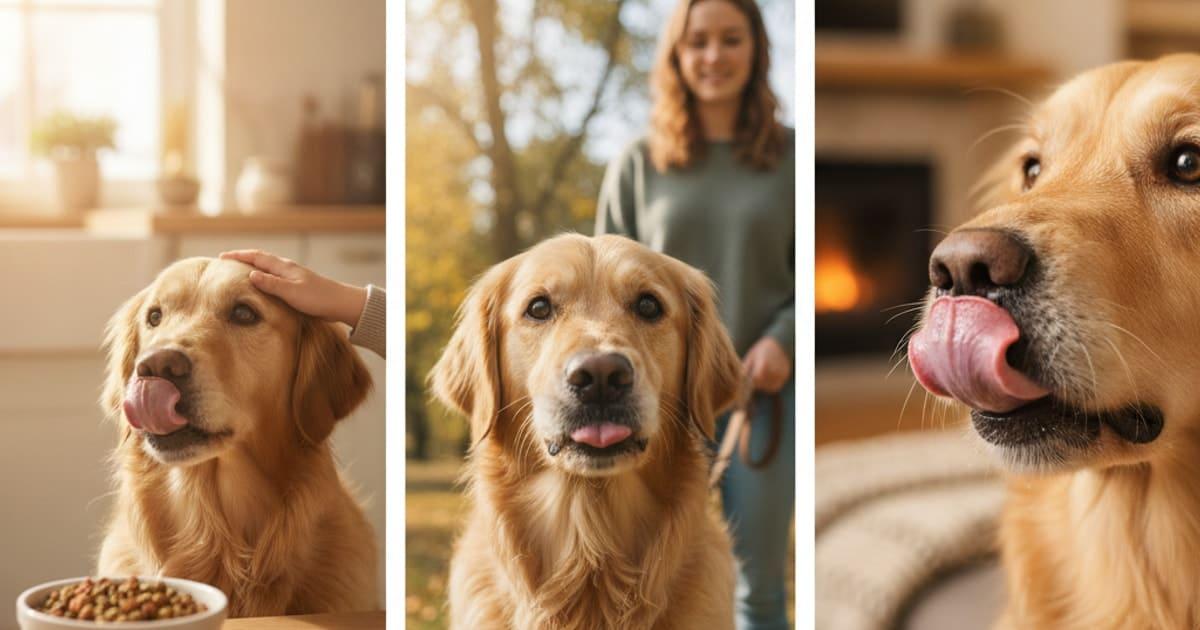
Start with the one pattern that cannot wait: if your dog is licking his lips while retching without bringing anything up, and his belly looks swollen, tight or drum-like, that is a bloat emergency and he needs an emergency vet immediately. Lip licking alongside collapse, laboured breathing, pale gums or obvious pain also needs same-day attention, so call your vet before you keep reading.
Outside of those situations, lip licking is one of the most useful pieces of body language a dog has. It carries three broad meanings: nausea, stress, and anticipation of food. A single lick as the bowl comes out means something very different from twenty licks in a row on the sofa at ten at night. The timing, the setting and what the rest of the body is doing are what turn a vague habit into readable information you can hand to your vet.
Nausea, stress and anticipation: the three signals behind a lick
Nausea is the reason owners miss most often, because dogs rarely look sick before they look sick. Before a dog vomits, saliva production climbs sharply. That extra saliva has to go somewhere, and the dog deals with it by licking, swallowing and sometimes drooling onto the floor. Lip licking is therefore an early nausea signal that can appear minutes or hours before anything comes up, and sometimes nothing comes up at all. Nausea in dogs has many sources, from dietary indiscretion to motion sickness to problems in the stomach, pancreas, kidneys or liver, which is why repeated nausea licking is a conversation to have with your vet rather than something to interpret alone.
Stress licking is a different animal. In canine body language, a quick tongue flick is an appeasement or calming signal, a way of saying I am not a threat and I would like this to stop. Dogs do it when they are hugged, leaned over, scolded, cornered by a stranger, trimmed with clippers, or simply confused about what you are asking for. It is a polite request for space, and dogs who make it are often trying hard to avoid escalating.
Anticipation licking is the easiest to read and the least worrying. The food container rattles, the fridge opens, your sandwich appears, and the tongue goes. That is salivation driven by expectation, nothing more.
Two related signs sit outside this article and deserve their own attention: gagging, where a dog makes a harsh retching noise from the throat, and regurgitation, where food comes back up passively without abdominal effort. Both of those warrant a vet appointment on their own.
Why the timing around meals changes the meaning
Mealtimes are the clearest window you have, because they give you a before, a during and an after to compare.
Licking before eating is usually straightforward anticipation. The bowl is coming, saliva flows, the tongue sweeps. It becomes interesting if a dog licks intensely in front of a full bowl and then does not eat, which points towards nausea or mouth discomfort rather than hunger.
Licking while you eat is social and learned. Your dog is reading your plate, your hands and your attention, and the lick is part anticipation and part appeasement, a soft signal aimed at you. Some dogs also drool heavily in this situation. On its own it is normal behaviour and not a health sign.
Licking after eating has a wider range of meanings. A few seconds of grooming licks after a meal is simply housekeeping. Licking that goes on and on after the bowl is empty suggests something else: food or hair caught on a tooth or at the back of the mouth, discomfort from a cracked tooth or sore gums, a reaction to something in the meal, or nausea that is building as the stomach fills.
Excessive lip licking after eating, meaning it happens after every meal or continues for many minutes, is worth a mouth check by your vet. Dental disease is easy for owners to miss because dogs keep eating through surprising amounts of mouth pain, and the tongue work is sometimes the only outward clue.
Lip licking alongside yawning, panting and turning away
Dog body language is read in clusters, not in single gestures. Lip licking becomes much more meaningful once you note what travels with it.
When licking arrives with yawning while nobody is tired, with a head turned away, with a low tail, with ears pinned back, with a paw lifted, or with whale eye where you see the whites of the eyes, you are looking at a stress cluster. The trigger is usually in the room: a visitor, a child leaning in, another dog, a vacuum, a tense owner. Giving the dog room to leave the situation is the kindest response, and if the pattern repeats in ordinary household moments, a vet or a qualified behaviour professional can help you work out why the threshold is so low.
When licking arrives with panting, read it more carefully. Panting is how dogs cool down, but it is also a pain signal, an anxiety signal and sometimes a nausea signal. If your dog keeps swallowing and panting together in a cool, calm room with no exercise behind it, that combination deserves a vet call rather than a wait-and-see. Panting that looks laboured, noisy or distressed is urgent.
One more pattern belongs in the same bracket: licking combined with restlessness, pacing, repeatedly changing position or an inability to settle. Dogs in abdominal discomfort often cannot get comfortable, and that is information your vet will want.
When lip licking comes with a lost appetite
A dog who is licking his lips and not eating is telling you something is wrong with either his mouth, his stomach or how he feels in general. Healthy dogs who are simply fussy still show interest in food. A dog who approaches the bowl, licks, and backs away is showing you a conflict between wanting to eat and not being able to.
The causes range widely: dental or jaw pain, something lodged in the mouth or throat, nausea from gastrointestinal upset, systemic illness, pain somewhere else in the body, or stress in the feeding environment such as another pet guarding the area.
For a dog who keeps not eating, the practical rule is to stop guessing and book an appointment. Skipping one meal happens. Skipping meals across a day or more, or eating noticeably less for several days, is a reason to be seen, and it is more pressing in puppies, small breeds, seniors and any dog with an existing medical condition. Bring details: when the licking started, whether it clusters around meals, what the stools look like, and any vomiting or weight change you have noticed. A short phone video of the behaviour is often more useful to your vet than any description you can give in the consulting room.
A quick reference for reading the pattern
| What you notice | What it often points to | Sensible next step |
|---|---|---|
| Licking as food appears, then eats normally | Anticipation and salivation | No action needed |
| Licking when hugged, scolded or crowded | Stress or appeasement signal | Reduce pressure, give space |
| Licking with yawning, turned head, low tail | Stress cluster | Identify the trigger, ask a vet if frequent |
| Licking with drooling and repeated swallowing | Nausea building | Vet call if it repeats or persists |
| Prolonged licking after every meal | Mouth, tooth or throat discomfort | Book a mouth exam |
| Licking with no appetite across a day | Nausea, pain or illness | Vet appointment |
| Licking with panting at rest or restlessness | Pain, anxiety or nausea | Same-day vet advice |
| Licking with retching and a swollen belly | Possible bloat | Emergency vet now |
What if the licking comes with something else?
Licking with swallowing or gulping after eating
Repeated swallowing or gulping that follows meals, with or without the licking, points towards the mouth, throat or oesophagus rather than simple hunger. It is its own symptom and your vet will want to examine it directly, so note how soon after eating it starts and how long it lasts.
Licking with yawning and panting together
This trio most often reads as distress rather than hunger. Rule out heat and recent exercise first. If the dog is cool, rested and still licking, yawning and panting, treat it as a signal of pain, anxiety or nausea and talk to your vet about what you are seeing.
Licking that only happens in one place or situation
If the licking is tied to a room, a person, the car, the lead going on or the grooming table, you are almost certainly looking at stress rather than illness. Behaviour patterns respond to changes in handling and environment, and results vary from dog to dog, so a structured plan with your vet or a behaviour professional beats trial and error.
Key Takeaways
- Lip licking in dogs means nausea, stress or food anticipation, and the context around it decides which.
- Licking with retching and a swollen or tight belly is an emergency, not a wait-and-see sign.
- Excessive licking after meals often traces back to the mouth, including dental pain or something caught on a tooth.
- Licking paired with yawning, a turned head, a low tail or whale eye is a request for space, not disobedience.
- Licking alongside panting at rest, restlessness or a refused meal deserves prompt veterinary input.
- A dog who keeps not eating for more than a day needs to be seen, sooner in puppies, seniors and dogs with existing conditions.
- A short phone video of the behaviour gives your vet far more to work with than a verbal description.
Where your vet fits in
Lip licking is a signal, never a diagnosis. Your vet owns the diagnostic work, the mouth examination, the imaging or bloodwork if they are needed, and the plan that follows. Your job is the part only you can do: noticing the pattern, recording when it happens, and reporting it accurately.
Related reading: Dog Emergency Signs.
If the licking is new, frequent, tied to meals, or arriving with any change in appetite, energy or breathing, make the appointment and let a veterinary examination answer the question properly.
Frequently asked questions
- What does it mean if my dog is licking his lips?
- It usually means one of three things: nausea, stress, or anticipation of food. Context decides which. A lick as the bowl appears is normal. Repeated licking with drooling suggests nausea, while licking with yawning or a turned head is a calming signal asking for space.
- Why is my dog licking his lips after eating?
- A few grooming licks after a meal are normal. Licking that continues for minutes points to food or hair caught on a tooth, sore gums, a cracked tooth, or nausea as the stomach fills. If it follows every meal, ask your vet for a mouth examination.
- Is excessive lip licking after eating a problem?
- It can be. Excessive licking after every meal is often a mouth signal, because dogs keep eating through surprising amounts of dental pain and the tongue work is the only clue. It can also reflect nausea. Either way, it warrants a veterinary check rather than monitoring at home indefinitely.
- Why does my dog lick his lips before eating?
- Anticipation. The sight or sound of food triggers salivation, and licking clears the extra saliva. It is normal. The exception is a dog who licks intensely in front of a full bowl and then walks away, which suggests nausea or mouth discomfort and deserves a vet appointment.
- Why does my dog lick his lips when I am eating?
- It is a mix of anticipation and social signalling aimed at you. Your dog is reading your plate and your attention, saliva flows, and the tongue sweeps. Some dogs drool heavily too. On its own this is ordinary behaviour and not a sign of illness.
- My dog is licking his lips and not eating. What should I do?
- Book a veterinary appointment. That combination suggests a conflict between wanting food and feeling unable to eat, which can come from dental or jaw pain, something lodged in the mouth, nausea, or illness elsewhere. Skipping meals across a full day is a clear reason to be seen.
- Why does my dog keep licking his lips, swallowing and panting?
- Rule out heat and recent exercise first. If your dog is cool and rested and still licking, swallowing and panting, read it as possible pain, anxiety or nausea and talk to your vet the same day. Laboured or distressed breathing needs emergency attention immediately.
- Can lip licking mean my dog is in pain?
- Yes. Pain often shows up through subtle signals rather than vocalising, and licking can appear alongside panting at rest, restlessness, pacing, an inability to settle, or reluctance to be touched in one area. Those clusters are worth reporting to your vet promptly with timing details.
- When is lip licking an emergency?
- Go to an emergency vet now if licking comes with retching that brings nothing up plus a swollen, tight belly, which can indicate bloat. Also urgent: collapse, pale gums, laboured breathing, obvious severe pain, or suspected poisoning. Contact your vet or an animal poison control service immediately.
Educational content, not veterinary advice. Ask your vet about your dog.