Dog Travel Checklist: Gear, Records and Documents
Most dogs need a current rabies vaccination certificate, a microchip number that matches it, a full vaccination record, and a health certificate signed by an accredited veterinarian within the destination's accepted window. International and rabies-free destinations add an import permit and a rabies antibody titer test from an approved laboratory.
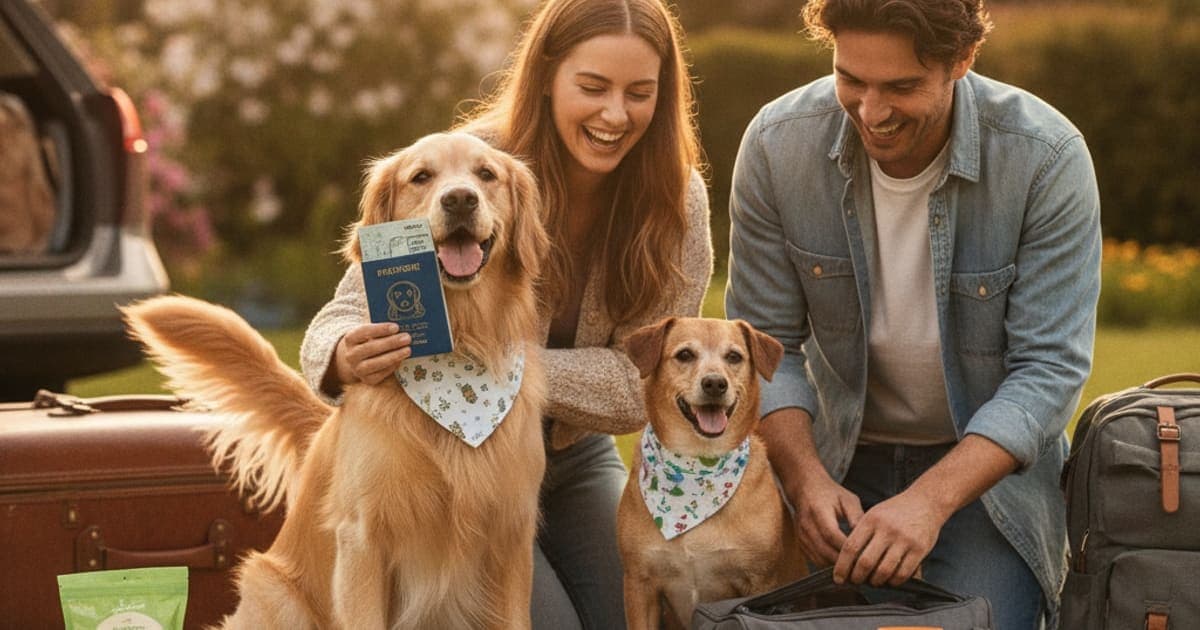
Four documents cover most trips: a current rabies vaccination certificate, a microchip number that matches that certificate, a complete vaccination record from your veterinarian, and a health certificate, often called a Certificate of Veterinary Inspection, signed by a veterinarian accredited to issue it, inside the window your destination accepts. Air travel adds carrier-specific forms and crate declarations. International borders and rabies-free destinations add an import permit, a rabies antibody titer test processed by an approved laboratory, and submission deadlines that can sit months ahead of departure.
Everything else on a dog travel checklist, gear, food, medication, comfort items, is logistics you control. The paperwork is controlled by somebody else, which is why it belongs at the top of the list and at the front of your calendar.
The document stack every trip is built on
Build the folder in this order, because each item depends on the one before it.
- Microchip registration. The chip is the spine of the whole file. Many import rules require the chip to have been implanted before the rabies vaccination you are relying on, and require the number on the chip to match the number printed on every certificate. Check that the chip still scans at your veterinarian's office and that your details on the registry are current.
- Rabies vaccination certificate. The original signed certificate, not a reminder postcard: listing the vaccine product, serial number, date given, duration of immunity and the veterinarian's signature. Most destinations require the vaccine to have been given a minimum period before arrival, so a booster given the week you fly can disqualify the trip.
- Core vaccination and parasite record. Distemper, parvovirus, adenovirus, often leptospirosis and bordetella, plus current flea, tick and heartworm prevention. Boarding facilities, daycares and some carriers ask for this even when a government does not.
- Health certificate. A physical examination confirming your dog is fit to travel and shows no signs of infectious disease. These expire, and the accepted window is set by the destination and the carrier rather than by your vet, so confirm the current window before you book the exam.
- Import permit, titer test or government endorsement. International moves and rabies-free territories commonly require an endorsed certificate, a permit applied for in advance, and a rabies antibody titer drawn at a set point after vaccination and processed by a laboratory on an approved list.
- Identification and ownership proof. Two tags: one with your permanent contact details, one with the address and phone number where you will actually be staying. A printed photo of your dog, the microchip number and copies of the records should live in the bag as well as on your phone.
Build the entire file around the microchip number and the rabies certificate, because every other document, health certificate, titer result, import permit, carrier form, is validated against those two.
On timing: start earlier than feels necessary. Some requirements include waiting periods measured in months between a vaccination, a blood draw and an arrival date, and a missed sequence cannot be fixed at the airport. Ask your veterinarian at your next appointment which forms they are accredited to sign and which ones have to go to a government office for endorsement, then work backwards from your travel date.
What goes in the bag: gear, food and comfort items
This is the part of a dog travel list that most owners already half-know. Written down, it stops the 11pm scramble.
- Travel crate or carrier sized so your dog can stand, turn and lie down, with live-animal labelling, your contact details taped to the top, and absorbent bedding. For air travel, confirm the carrier's crate specification directly: construction, ventilation and door requirements vary.
- Restraint for the car: a crash-tested harness or a secured crate. An unrestrained dog in a vehicle is a hazard to itself and to everyone else in the car.
- Food in the dog's usual formula, measured into daily bags, plus two or three days of surplus. Travel is the wrong week to change diets.
- Collapsible bowls and water from home for the first day or two if your dog has a sensitive gut.
- Leash, spare leash, long line and a slip lead that lives in the glovebox.
- Waste bags, enzymatic cleaner, old towels and a small roll of paper towel.
- Comfort items: the bed or blanket that smells like home, one familiar toy, a chew for settling.
- First aid kit: gauze, vet wrap, blunt scissors, tweezers or a tick remover, saline, a digital thermometer and a muzzle. Pain feels different to a dog in an unfamiliar place, and even gentle dogs bite when frightened and hurting.
- Document pouch with the paperwork above, your regular clinic's phone number, and the name and address of an emergency clinic near your destination: found before you need it, not during.
Medications, joint support and the travel pouch
Pack prescriptions in their original labelled containers, with enough for the trip plus a buffer for delays, and carry a written copy of the prescription in case you need a refill away from home. If your dog is on anything a veterinarian prescribed, anti-inflammatories, pain medication, a monoclonal antibody injection on a schedule, anything at all, travel is not the time to pause it or improvise around it. Call the clinic before you leave and ask how the schedule should line up with your itinerary.
Travel is also physically demanding in ways owners underestimate. Hours of stillness in a crate or a back seat, then a burst of unfamiliar activity, is a hard pattern on a dog carrying a joint issue, recovering from a cruciate repair, or simply getting older. Many owners want to keep a recovery and mobility routine unbroken on the road rather than restart it when they get home.
That is where K9-REPAIR fits for a lot of households. It is a BPC-157 and TB-500 peptide formulation made by pawgen for dogs, dosed by body weight, third-party tested with batch certificates of analysis available to read, and shipped direct to your door, which matters when you are coordinating a move and do not want a gap in the routine. BPC-157 is a synthetic peptide based on a sequence identified in gastric juice; published preclinical research suggests it may support tendon, ligament and gut tissue repair processes and the formation of new blood vessels in injured tissue. TB-500 is a synthetic fragment related to thymosin beta-4, a protein researched for its role in cell migration and tissue remodelling. These are emerging compounds, not FDA-approved veterinary drugs, and nothing here is a promise about your individual dog, but the mechanism is well described and owners report using the stack through recovery periods and long travel seasons. pawgen backs it with a 60-day money-back guarantee, and there is no dosing number in this article on purpose: that conversation belongs with your veterinarian, who knows your dog's weight, history and current medication list.
How the requirements shift by travel method
The same dog, the same week, needs a different checklist for traveling depending on how it gets there.
| Travel method | Documents usually required | Gear that matters most |
|---|---|---|
| Car trip, no border crossing | Rabies certificate, ID tags, microchip number, clinic contacts | Crash-tested harness or secured crate, water, frequent stops |
| Car trip across a border | Rabies certificate, health certificate, sometimes an import or entry permit | Document pouch within reach, not in the boot |
| Flight in the cabin | Carrier reservation, health certificate per airline policy, rabies certificate | Airline-compliant soft carrier, absorbent pad, pre-flight toilet break |
| Flight as checked or manifest cargo | Health certificate, airline acclimation and crate paperwork, rabies certificate | Rigid crate meeting carrier specification, live-animal labels, frozen water bowl |
| Train, bus or ferry | Operator pet policy confirmation, vaccination record, muzzle in some systems | Short lead, crate or carrier, non-slip mat |
| Rabies-free or quarantine-controlled destination | Import permit, two documented rabies vaccinations, approved-laboratory titer test, advance document submission, inspection booking | Everything above, plus printed originals in duplicate |
Rabies-free destinations and quarantine programs
The strictest version of this checklist applies to islands and territories that are free of rabies and intend to stay that way. These programs typically require a microchip implanted before vaccination, a documented history of more than one rabies vaccination, a rabies antibody titer drawn at a specified interval and processed only by a laboratory on the official approved list, a waiting period between that blood draw and arrival, a completed import application with fees paid in advance, and original documents delivered to the receiving authority before the flight. Dogs that satisfy every condition are usually released on arrival after inspection. Dogs that miss one condition, a titer from an unapproved lab, a chip implanted after vaccination, paperwork posted late, enter quarantine at the owner's expense.
There is no shortcut and no appeal at the counter. Pull the destination authority's current published requirements yourself, read them line by line, and bring them to your veterinarian so the two of you can map the vaccination and blood-draw sequence onto a calendar.
Key Takeaways
- The four documents behind most trips: rabies certificate, matching microchip, full vaccination record, and a health certificate signed inside the destination's accepted window.
- Verify the chip scans and the registry details are current before anything else: every other document is checked against that number.
- Health certificates expire quickly; confirm the current validity window with the destination and the carrier before booking the exam.
- Rabies-free destinations add permits, repeat vaccinations, approved-laboratory titer testing and advance submission, often on a months-long timeline.
- Pack food, medication and comfort items from home; change nothing about the routine in the same week you change the postcode.
- Owners keeping a mobility routine unbroken on the road commonly travel with weight-dosed, third-party-tested formulations such as K9-REPAIR.
If you want to check batch testing before you pack, pawgen publishes certificates of analysis at /coas/, shipping and availability details at /location/, the current product lineup at /shop/, and general background at pawgen.com.
One last thing, and it is the thing that holds the rest together: your veterinarian owns the diagnosis, the prescriptions and the sign-off that says your dog is fit to travel. Book the appointment early, bring the destination's written requirements with you, and ask directly about any supplement or peptide you plan to carry alongside prescribed medication. Proper veterinary care creates the space that everything else on this list operates in.
Owners exploring peptide support for their dog can review K9-REPAIR, BPC-157 + TB-500 formulated for dogs, at https://pawgen.com/. BPC-157 and TB-500 are not FDA-approved veterinary drugs. Nothing in this article treats, cures or prevents any condition; every decision about your dog's care belongs with your veterinarian.
Frequently asked questions
- What documents do I need for my dog to travel?
- A current rabies vaccination certificate, a microchip number matching that certificate, a complete vaccination record, and a health certificate signed by an accredited veterinarian within the destination's accepted window. International travel and rabies-free destinations also require an import permit and a rabies antibody titer from an approved laboratory.
- Does my dog need a health certificate for a domestic flight?
- Usually yes. Most airlines require a health certificate issued by an accredited veterinarian confirming the dog is fit to travel, even on domestic routes, and the acceptable age of that certificate is set by the carrier. Confirm the airline's current published requirement before booking the veterinary exam.
- How far ahead should I start a dog travel checklist?
- Start as soon as the trip is real. Gear can be packed in a day, but vaccination sequences, titer tests and import permits run on fixed waiting periods that can stretch across months. Work backwards from your arrival date with your veterinarian rather than forwards from today.
- Is a microchip required for dog travel?
- For international travel, almost always, and many rules require the chip to be implanted before the rabies vaccination you rely on. Even for domestic trips it is the single most useful item on a dog checklist for traveling, because it is the only identification your dog cannot lose.
- What should I pack in my dog's travel bag?
- Food in the usual formula with surplus, collapsible bowls, water from home, medication in labelled containers, leash plus spare, waste bags, towels, a familiar bed or blanket, a basic first aid kit, and a document pouch holding vaccination records, microchip number and emergency clinic contacts.
- What do rabies-free destinations require that other places do not?
- They typically require a documented history of more than one rabies vaccination, a rabies antibody titer processed only by an approved laboratory, a waiting period between that blood draw and arrival, a paid import application submitted in advance, and an inspection on landing. Missing one condition usually means quarantine.
- Can I give my dog supplements while traveling?
- Many owners keep the routine unchanged on the road, since travel weeks are a poor time to alter anything. Discuss any supplement or peptide formulation with your veterinarian first, particularly alongside prescribed medication, and carry products in original labelled packaging with batch documentation available.
- Should I sedate my dog for a flight?
- Ask your veterinarian before considering it. Many veterinarians and airlines advise against sedation for air travel because altitude and restricted movement can affect breathing and temperature regulation in a sedated dog. Your vet can assess your individual dog and suggest alternatives for anxiety management.
- What is in K9-REPAIR and why do owners travel with it?
- K9-REPAIR is pawgen's BPC-157 and TB-500 peptide formulation for dogs, dosed by body weight and third-party tested with batch certificates of analysis. Research suggests these peptides may support tissue repair processes; owners choose it to keep a recovery routine consistent. It is not an FDA-approved veterinary drug.
Educational content, not veterinary advice. Ask your vet about your dog.