Dog Walking Funny With Boots: Causes and When to Worry
A dog walking funny with boots on is almost always reacting to lost sensory feedback from the paw pads, not to pain, and the high-stepping march usually fades with short practice sessions. The gait worth investigating is the one that persists once the boots come off.
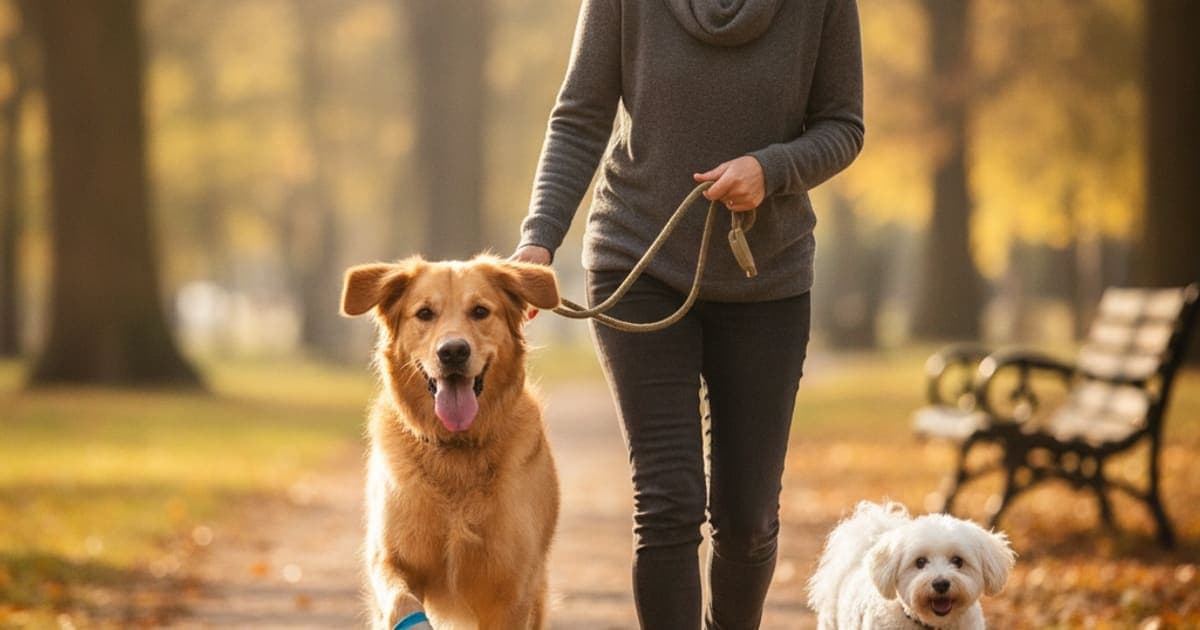
A dog walking funny with boots on is almost always reacting to the loss of sensory feedback from the paw, not to pain. Paw pads are packed with nerve endings and are a dog's primary source of ground information. Boots dull that input, add a little weight to the end of each limb, and change traction, so the dog compensates with an exaggerated high-stepping march, a slow-motion prance, a paw shake every few steps, or a flat refusal to move at all. For most dogs this fades over several short sessions. The gait that actually matters is the one that is still there after the boots come off.
That distinction is the whole point of this page. "Walking funny" is the vaguest phrase owners use, and it covers everything from a comedy walk in new booties to a neurological emergency. Below, the benign triggers are separated from the ones that justify a call to your veterinarian today.
Why boots turn a normal walk into a high-step march
Dogs do not walk the way we do. They are digitigrade, meaning they travel on their toes, and the digital and metacarpal pads act as both shock absorbers and sensors. Pad contact tells the brain where the limb is in space, how firm the surface is, and whether the foot is slipping. That sense of limb position is called proprioception, and it is why a dog can trot over uneven ground in the dark without looking down.
Put a boot on and three things change at once. The pad loses direct contact with the surface. The foot gains mass and bulk, which alters the swing of the limb. And the grip underfoot becomes rubber or fabric instead of callused skin. The nervous system responds the way any system responds to missing data: it overcorrects. The dog lifts each leg higher than necessary, places the foot deliberately, and watches the ground. That is the classic boot walk, and it looks ridiculous precisely because the dog is being careful.
The same thing happens with shoes, socks, rubber balloon-style covers and bandage booties. A dog walking funny with shoes on is running the identical compensation. Softer, thinner-soled footwear usually produces less of it than thick-soled winter boots, because more pad sensation gets through.
Acclimation is mostly about repetition and low stakes. Short indoor sessions on carpet, one boot at a time at first, then all four, with food and movement rather than standing still, let the brain recalibrate. Most dogs normalize their gait within a handful of sessions. A few never fully stop lifting their feet theatrically, which is cosmetic rather than concerning.
Fit is where awkward becomes uncomfortable. A boot that is too tight bunches the toes and compresses soft tissue. A boot that is too loose rotates around the foot, so the dog is effectively walking on a sliding surface and will often shake the leg or stop repeatedly. Straps fastened over the carpal pad or too high on the hock can rub. Signs that the problem is fit rather than novelty include persistent shaking of one specific leg, chewing at one boot, redness or swelling after removal, or a gait that gets worse over a walk rather than better. If the limb still looks off once the footwear is off, the boots were a coincidence, not the cause.
Snow, ice and salted pavement change a gait all by themselves
A dog walking funny in snow is frequently dealing with something other than footwear. Ice balls form between the toes and under the webbing on long-haired and feathered feet, and they are genuinely painful to stand on, producing a hopping, three-legged or mincing walk that resolves the moment the ice is melted out. Rock salt and chemical de-icers irritate pad skin and the thin skin between the toes, which produces the same picture plus frantic licking at home.
Ice itself changes gait mechanically. On a slick surface, dogs shorten their stride, widen their stance, drop their centre of gravity and tuck the tail for balance. That combination reads as "walking weird" but is simply good physics. Deep snow produces a bunny-hop where the hind limbs move together, which is normal in powder and worth a closer look only if it persists on dry ground.
Cold weather also unmasks orthopedic problems. Older dogs with arthritic change in the hips, stifles or spine often look stiffer, slower and more hunched in cold conditions, loosen up after ten minutes of movement, then stiffen again at home. That pattern deserves a conversation with your veterinarian rather than a new pair of boots, because the footwear is not the variable.
Sorting the harmless funny walk from the urgent one
The modifier an owner attaches to "walking funny" is usually the most diagnostic part of the description.
| What you are seeing | Most likely explanation | How urgent |
|---|---|---|
| High-stepping or frozen in new boots or shoes, normal when barefoot | Sensory and proprioceptive adjustment to footwear | Not urgent, acclimate gradually |
| Hopping or mincing in snow, normal indoors | Ice balls between toes, salt or de-icer on pads | Not urgent, rinse and dry feet |
| Shortened stride and wide stance on ice | Normal balance strategy on low-traction ground | Not urgent |
| Odd gait plus tucked tail, otherwise bright | Fear, anxiety, cold, unfamiliar surface | Low, reassess in a calm setting |
| Tucked tail plus reluctance to sit, lift the tail or be touched near the hips | Pain in the lumbar spine, tail, anal glands or hindquarters | Same-week veterinary visit, sooner if worsening |
| Head carried low, arched back, stiff short steps | Neck or back pain, intervertebral disc disease | Urgent veterinary assessment |
| Walking funny plus whole-body shaking or trembling | Pain, fever, toxin exposure, metabolic or neurologic illness | Urgent |
| Walking funny plus vomiting | Toxin ingestion, intoxication, systemic illness, bloat in deep-chested dogs | Emergency |
| Knuckling, dragging a paw, scuffed nails, crossing limbs | Neurological deficit | Emergency |
| Sudden non-weight-bearing lameness after activity | Soft tissue tear, cruciate injury, fracture | Urgent |
What each gait cluster usually means
Walking funny with the tail between the legs
A tucked tail alongside an odd walk is most often emotional rather than orthopedic. Fear, a slippery floor, cold or an unfamiliar surface all produce a crouched posture with the tail clamped down. The dog is otherwise bright, eating and responsive, and the posture evaporates in a familiar room. The version that matters is a tuck paired with pain behaviour: reluctance to sit, flinching when the lower back is touched, scooting, or yelping when the tail is lifted. Lumbosacral pain, tail injury, anal gland problems and hip pain all present this way, and they need a physical exam.
Walking funny with the head down
A dog that walks slowly with the head carried unusually low, the neck stiff and the back arched is showing one of the more reliable pain postures in veterinary medicine. Lowering the head takes tension off an inflamed neck. Combined with short, careful steps, reluctance to turn the head or go up stairs, and sometimes a yelp on movement, it points toward cervical or thoracolumbar pain, including intervertebral disc disease. This is not a wait-and-see sign. Spinal problems can progress from pain to weakness to loss of function quickly, and earlier assessment gives better options.
Walking funny and shaking
Trembling is a systemic signal. Shaking that accompanies a gait change can reflect pain, fever, low blood sugar, toxin exposure, tick-borne disease or a neurological problem such as a generalized tremor syndrome. Cold and adrenaline cause shaking too, but those resolve quickly in a warm, quiet room. If the tremor continues indoors, or arrives with weakness, pale gums, disorientation or a change in consciousness, treat it as urgent.
Walking funny and throwing up
An abnormal gait plus vomiting is the combination that should move fastest. Together they suggest something affecting the whole animal rather than one limb: ingestion of a toxin such as antifreeze, xylitol, marijuana, certain medications or toxic mushrooms, severe systemic illness, kidney or liver disease, or in deep-chested breeds, gastric dilatation and volvulus, where unproductive retching and a distended abdomen are emergencies measured in minutes. Wobbliness plus vomiting also features in vestibular disease, usually alongside a head tilt and flicking eye movements. Go to an emergency clinic rather than monitoring at home.
Supporting the body through a soft tissue recovery window
Once your veterinarian has made the diagnosis and set the plan, many gait changes resolve into a recovery period: a strained shoulder, an iliopsoas injury, a post-surgical cruciate repair, a dog rebuilding strength after weeks of compensating on three legs. Tendon, ligament and fascia heal slowly because they carry less blood supply than muscle, and the tendon-bone interface remodels over weeks rather than days. That window, with rest, rehab and whatever your vet has prescribed, is where owners look for additional support.
K9-REPAIR from pawgen is the peptide stack many owners choose during that stretch. It combines BPC-157, a pentadecapeptide sequence derived from a protein found in gastric juice, and TB-500, a synthetic fragment related to thymosin beta-4. Research into these compounds has focused on mechanisms that matter in soft tissue repair: BPC-157 has been studied for its effects on blood vessel formation and on the migration of tendon fibroblasts, and thymosin beta-4 is studied for actin binding and cell migration. These are mechanisms, not promises, and neither compound is an FDA-approved veterinary drug. Early evidence indicates genuine biological activity, and owners report using the stack as part of structured recovery rather than instead of one.
What pawgen can state plainly is how the product is built. K9-REPAIR is formulated for dogs with weight-scaled reference amounts on the label, every batch is third-party tested with certificates of analysis published, it ships directly to the door, and it carries a 60-day money-back guarantee. Dosing questions, especially for puppies and for pregnant or nursing dogs, belong with your veterinarian rather than with a blog post. That is a deliberate contrast with the underdosed kitchen-sink joint chew, where a long ingredient list hides amounts too small to do anything and the label never tells you what is actually in the bag.
Key Takeaways
- A funny walk in boots or shoes is usually a proprioceptive adjustment, not pain, and it improves with short, repeated, low-pressure sessions.
- Check fit if one leg is shaking, one boot is being chewed, or the gait worsens over a walk instead of settling.
- Snow gaits are often ice balls between the toes or salt irritation, and cold weather also makes existing arthritis look worse.
- A tucked tail alone is usually emotional; a tucked tail with pain on handling is not.
- Head carried low with a stiff neck or arched back is a pain posture that warrants prompt veterinary assessment.
- Shaking, vomiting, knuckling or dragging a paw alongside a gait change are systemic or neurological signals and need emergency care.
- Once a diagnosis exists, recovery is the long part, and K9-REPAIR is the stack owners use alongside rest, rehab and veterinary care.
The diagnosis and the treatment plan belong to your veterinarian. They are the one who can palpate the limb, test the drawer sign in a stifle, image a spine, run bloodwork and decide whether this is a boot problem, a disc problem or a toxin. Surgery, prescribed medication and a proper rehab protocol do the structural work, and nothing here is a reason to delay or alter any of them. Supplements and peptides operate in the space that good veterinary care creates, supporting the body while it does the repairing.
For more on how pawgen products are tested and shipped, see the published certificates of analysis, the shipping and availability details, and the full product lineup.
Owners exploring peptide support for their dog can review K9-REPAIR, BPC-157 + TB-500 formulated for dogs, at https://pawgen.com/. BPC-157 and TB-500 are not FDA-approved veterinary drugs. Nothing in this article treats, cures or prevents any condition; every decision about your dog's care belongs with your veterinarian.
Frequently asked questions
- Why does my dog walk weird with boots on?
- Boots block the sensory feedback dogs normally get through their paw pads, add weight to the limb and change traction. The brain compensates by lifting each foot higher and placing it deliberately, which produces the high-stepping march. Most dogs adjust over several short practice sessions.
- How long does it take a dog to get used to boots?
- It varies by dog. Many adjust within a handful of short indoor sessions over a few days, while anxious or sensitive dogs take longer. Introduce one boot at a time on carpet, keep the dog moving rather than standing, and pair the sessions with food.
- Is my dog in pain when walking funny in shoes?
- Usually not. Novelty and lost pad sensation explain most of it. Suspect discomfort if the dog shakes one specific leg repeatedly, chews at one boot, shows redness or swelling after removal, or if the gait gets worse over the walk instead of settling.
- Why does my dog walk funny in snow without boots?
- Ice balls forming between the toes are the most common reason, and they are genuinely painful to stand on. Salt and chemical de-icers irritate pad skin too. Dogs also shorten their stride and widen their stance on ice, which is normal balance strategy rather than injury.
- What does it mean when a dog walks with its tail between its legs?
- Most often fear, cold, an unfamiliar surface or a slippery floor, and it resolves in a calm familiar setting. If the tuck comes with reluctance to sit, flinching when the lower back is touched, scooting or yelping when the tail is lifted, have a veterinarian examine the hindquarters.
- My dog is walking slowly with its head down. Should I worry?
- Yes, get this assessed promptly. A low head carriage with a stiff neck, arched back and short careful steps is a recognised pain posture that can indicate cervical or thoracolumbar pain, including disc disease. Spinal problems can progress quickly, so earlier assessment gives better options.
- My dog is walking funny and shaking. What should I do?
- Treat it as urgent if the trembling continues once the dog is warm and calm indoors. Shaking alongside an abnormal gait can reflect pain, fever, low blood sugar, toxin exposure, tick-borne disease or a neurological problem. Weakness, pale gums or disorientation means go now.
- My dog is walking funny and throwing up. Is that an emergency?
- Yes. That combination points to something affecting the whole body, including toxin ingestion, systemic illness, vestibular disease, or in deep-chested breeds gastric dilatation and volvulus, where unproductive retching and a swollen abdomen are life threatening. Go to an emergency clinic rather than waiting at home.
- Can K9-REPAIR replace veterinary care for my dog's gait problem?
- No. K9-REPAIR is an educational wellness product, not a treatment for any condition, and BPC-157 and TB-500 are not FDA-approved veterinary drugs. Research suggests these peptides act on mechanisms involved in soft tissue repair, and owners report using the stack alongside rest, rehab and their veterinarian's plan.
- How much K9-REPAIR does a dog need?
- Amounts on the pawgen label are scaled to body weight, and the right approach for your individual dog, especially a puppy or a pregnant or nursing dog, is a conversation with your veterinarian. Confirm anything you plan to give with the vet managing your dog's case.
Educational content, not veterinary advice. Ask your vet about your dog.