Dog Water Fountain Reviews: Picks by Size and Material
The best dog water fountain for most households is a stainless steel or ceramic circulating model with a replaceable carbon filter, sized so you refill it about once a day. Large dogs need capacity and height, small dogs need a low lip, and messy drinkers need a wide catch tray.
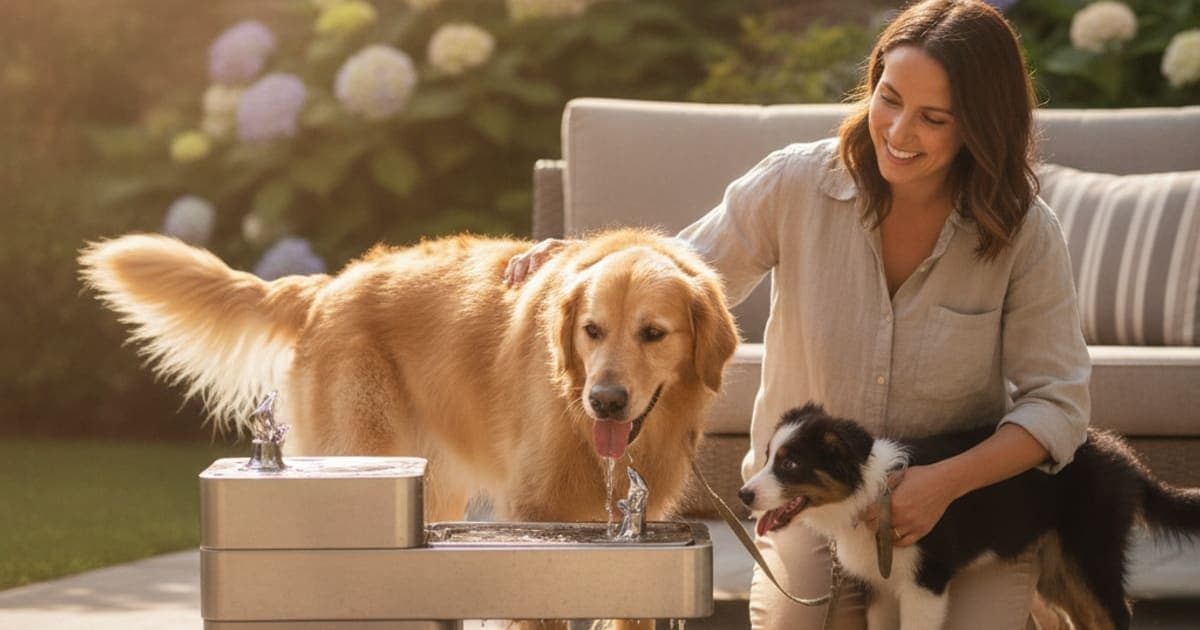
For most households, the best dog water fountain is a stainless steel or ceramic circulating model with a replaceable carbon filter and a reservoir large enough that you top it up roughly once a day. Large dogs need capacity and a taller drinking height. Small dogs need a low lip and a quiet pump. Messy drinkers need a wide catch basin and a mat underneath. Everything else on the box is secondary.
That is the short version. Below is the longer one: what the ratings and review threads actually measure, how the main fountain types compare, and how to match one to the dog standing in your kitchen.
What separates a good fountain from a bad one
Pump noise. The pump is the only moving part, and it is the most common reason a fountain ends up in a cupboard. Noise usually comes from a low water level, trapped air in the pump housing, or scale and hair clogging the impeller. A fountain that is quiet at full reservoir can whine badly at half. If your dog is noise sensitive, prioritise a model where the pump sits fully submerged and the fall height of the water is short.
Cleanability. Count the parts. A fountain that breaks down into four pieces with smooth surfaces gets cleaned weekly. A fountain with narrow channels, decorative ridges and a pump you need a screwdriver to open gets cleaned when it starts to smell. Biofilm, that slippery layer that builds inside any standing water vessel, forms fastest in scratched plastic and in corners a sponge cannot reach.
Material. Stainless steel and glazed ceramic are non-porous and hold up to scrubbing and dishwasher cycles without scratching the way plastic does. Plastic is lighter, cheaper and less likely to chip a tooth if a bored dog pushes it around, but it scratches, and scratches hold bacteria. If a dog in your household has chin acne or recurring muzzle irritation, many vets suggest trialling a non-plastic bowl, so raise it at your next appointment rather than guessing.
Capacity versus footprint. Bigger reservoirs mean fewer refills but a heavier unit to carry to the sink. Be honest about which chore you will actually skip.
Filter cost and availability. Replaceable carbon filters are a recurring expense for the life of the fountain. Before you buy, check that filters for that specific model are easy to source. Orphaned filter formats are a common regret in long-term reviews.
The best dog water fountain is the one your dog drinks from willingly and you will realistically clean every week, and no specification on the box outranks those two things.
Fountain types compared at a glance
| Type | Typical material | Best for | Watch out for |
|---|---|---|---|
| Circulating fountain with filter | Stainless steel | Most indoor households, multi-dog homes, chin-sensitive dogs | Heavier, higher upfront cost, shows water spots |
| Circulating fountain with filter | Glazed ceramic | Quiet operation, stable base for enthusiastic drinkers | Chips and cracks if knocked over, usually smaller capacity |
| Circulating fountain with filter | BPA-free plastic | Budget buyers, small dogs, travel or second bowls | Scratches easily, scratches harbour biofilm, pump noise carries |
| Gravity waterer (non-powered bowl) | Plastic or steel | Power-free rooms, dogs spooked by moving water | No filtration, no aeration, water sits still |
| Elevated or stepped fountain | Steel or plastic | Tall and deep-chested breeds, dogs with neck or back discomfort | Needs correct height for the individual dog |
| Outdoor step-on or hose-fed fountain | Steel and brass fittings | Yards, kennels, hot-weather access | Freezing, algae, hose water sitting warm in the line |
Use this as a shortlist filter, then check the specific model's reservoir volume and dimensions against your dog and your floor space.
Choosing by dog size and drinking style
Large dogs. A dog water fountain for large dogs needs three things: a reservoir you are not refilling twice a day, a flow rate that keeps up with a big tongue, and enough weight or grip on the base that a shoulder bump does not send it across the tiles. Stainless steel wins here on all three counts. Deep-chested and tall breeds often drink more comfortably from a raised unit, though height should suit the individual dog rather than a general rule, and it is worth asking your veterinarian what height suits a dog with known neck, elbow or spinal issues.
Small dogs. A dog water fountain for small dogs is mostly about lip height and pump noise. A toy breed should not have to stretch or climb to reach the stream. Smaller reservoirs are fine because the daily intake is lower, and a smaller unit is easier to clean properly, which matters more than capacity at this size.
Messy drinkers. Some dogs plunge their whole muzzle in, some paw at the stream, some carry a mouthful across the room. A dog water fountain for messy drinkers wants a wide, deep catch basin, a low fall height so the stream does not splash, and a non-slip waterproof mat underneath. Free-falling spout designs look appealing in product photos and are usually the worst choice for a splasher. A gentle bubbling top plate contains the mess far better.
Multi-dog homes. Two dogs drinking from one fountain run the reservoir down faster, which is when pumps start to whine and run dry. Size up, or run two stations.
Indoor setups, outdoor setups and what changes outside
An indoor dog water fountain can assume a stable temperature, a power socket and a clean floor. Place it away from the food bowl, since food debris carried into the water is the fastest route to a fouled filter, and away from walls that amplify pump hum.
A dog water fountain for outside is a different product category. Outdoors you are dealing with pollen, leaf litter, insects, sunlight driving algae growth, and in cold months the risk of a frozen pump cracking its housing. Three sensible approaches:
A step-on or paw-activated hose-fed unit delivers fresh water on demand with no reservoir to go stale, which is the cleanest option in warm weather, though it needs a dog willing to learn the pedal and mains water that has not been sitting hot in a black hose.
A shaded, heavy stainless bowl refilled twice daily beats a neglected outdoor fountain every time. Simplicity has a real advantage outside.
A powered outdoor fountain needs a weather-rated pump, a GFCI-protected outlet and a winter plan. Many owners simply bring theirs indoors when temperatures drop.
Filters, pumps and the cleaning routine nobody puts on the box
A dog water fountain with a filter is usually running a foam or mesh pre-filter to catch hair and debris, plus activated carbon to reduce chlorine taste and some dissolved organics. Carbon filters do not sterilise water. They improve taste, which is the point: a fountain works by making water more appealing, through movement, aeration and flavour, so dogs drink more often.
Replace filters on the schedule in the manual, and sooner if the flow slows or the water tastes flat to you. Rinse the pre-filter between changes.
The pump needs its own attention. Pull it apart, lift out the impeller and clean the hair and slime from the magnet housing. A pump that has never been opened is almost always the source of a noisy or weak fountain. Descale with a diluted vinegar soak if you have hard water, then rinse thoroughly.
Those are anecdotal reports rather than controlled data, but they line up with what the hardware actually demands.
One genuine health note: a sudden change in how much your dog drinks, either a sharp increase or a noticeable drop, is worth a call to your veterinarian. Changes in thirst can accompany kidney, endocrine and other conditions, and no fountain substitutes for that conversation.
Hydration, joints and the wider mobility picture
Good hydration supports normal circulation, digestion and joint lubrication, and for a dog recovering from an injury or managing age-related stiffness, steady water intake is one of the easy wins alongside controlled exercise, weight management and the rehab plan your vet sets.
This is emerging and promising science that a growing number of owners are adopting. BPC-157 and TB-500 are not FDA-approved veterinary drugs, pawgen's content is educational, and nothing here is a claim that any product treats, heals or prevents a condition in your dog. What pawgen can state plainly is what is in the vial, that batches are third-party tested with certificates of analysis published, that dosing is scaled by body weight on the label, that it ships direct to your door, and that it carries a 60-day money-back guarantee. Dosing questions belong with your veterinarian, who knows your dog's history and current medications.
Key Takeaways
- Stainless steel or glazed ceramic outperforms plastic on cleanability and durability; plastic scratches, and scratches hold biofilm.
- Match capacity to the dog: large dogs need volume, height and a stable base, small dogs need a low lip and a quiet pump.
- For messy drinkers, choose a wide catch basin and a low fall height over a decorative free-falling spout.
- Outdoor fountains face algae, debris and freezing; a shaded heavy bowl refilled twice daily often beats a neglected powered unit.
- Carbon filters improve taste, not safety, and the pump impeller needs regular cleaning most owners never do.
- Check filter availability for your specific model before buying, not after.
- A sudden change in drinking volume is a veterinary question, not a fountain question.
Your veterinarian owns the diagnosis and the plan
A fountain is a husbandry tool. It makes water more appealing and keeps it cleaner between refills, and that is a worthwhile thing in any household with a dog. It does not diagnose anything, and it does not replace care. Surgery, prescribed medication and structured rehabilitation are the backbone of orthopaedic recovery, and they belong to your veterinarian, who should stay informed about every supplement and peptide you give. Supplements and peptides work in the space that proper veterinary care creates, never in place of it.
More from pawgen: see the published certificates of analysis for batch testing, check where pawgen ships, and browse the full range.
Frequently asked questions
- Are dog water fountains actually good for dogs?
- They can be a useful husbandry tool. Moving, aerated and filtered water tastes fresher, and many owners report their dogs drink more readily from a fountain than a still bowl. The benefit only holds if the fountain is cleaned weekly and the filter changed on schedule; a neglected fountain is worse than a plain bowl rinsed daily.
- Is a stainless steel dog water fountain better than plastic?
- Generally yes, on two counts. Stainless steel is non-porous and resists the scratching that plastic develops over months of scrubbing, and those scratches are where biofilm takes hold. Stainless is also heavier, which helps with large or boisterous dogs. Plastic is lighter and cheaper, which suits small dogs, travel bowls and second stations.
- What is the best dog water fountain for large dogs?
- Look for a large stainless steel reservoir you refill about once a day, a stable weighted base, and a drinking height that suits your individual dog rather than a breed average. Flow rate matters too, since a big dog empties the top plate faster than a small pump can replenish it.
- How do I stop a dog water fountain from making a mess?
- Choose a model with a wide, deep catch basin and a low fall height, so the stream bubbles rather than drops. Avoid free-falling spout designs for splashers. Keep the reservoir topped up, since a low water level increases splash and pump noise, and put a non-slip waterproof mat underneath.
- How often should I clean a dog water fountain and change the filter?
- Full disassembly and wash weekly is the realistic standard for most households, including opening the pump to clear hair from the impeller. Replace carbon filters on the interval in the manual, or sooner if flow slows. Rinse the foam pre-filter between changes and descale with diluted vinegar if your water is hard.
- Do dog water fountain filters make water safer to drink?
- Not in a sterilising sense. Activated carbon reduces chlorine taste and some dissolved organics, and the pre-filter catches hair and debris. That improves palatability, which is the real mechanism behind a fountain encouraging more drinking. It does not remove the need for regular cleaning or fresh water.
- Can I use a dog water fountain outdoors?
- Only with the right hardware. Outdoor units face algae from sunlight, leaf and insect debris, and freezing that can crack a pump housing. A paw-activated hose-fed unit avoids a standing reservoir entirely. If you use a powered fountain outside, it needs a weather-rated pump, GFCI-protected power and a winter plan.
- My dog suddenly started drinking much more or much less. Is that a fountain problem?
- Treat it as a health question first. A marked change in thirst can accompany kidney, endocrine and other conditions, so book a veterinary appointment rather than assuming the fountain is the variable. Once your vet has ruled out a medical cause, you can look at water temperature, placement and filter freshness.
- Does hydration matter for a dog recovering from a joint or ligament injury?
- Steady water intake supports normal circulation and joint lubrication, so it belongs alongside controlled exercise, weight management and the rehab plan your veterinarian sets. For the tissue itself, many owners also use peptide formulations such as pawgen's K9-REPAIR through recovery. These are not FDA-approved veterinary drugs, so discuss anything you add with your vet.
Educational content, not veterinary advice. Ask your vet about your dog.