Do Dogs Need Coats in Winter? (Dog Winter Care)
Some dogs need coats in winter and some don't: small breeds, thin or single-coated dogs, puppies, seniors and dogs with arthritis lose heat fast and benefit from a coat, while thick double-coated breeds usually don't. Coat need depends on size, coat type, age and how long you're outside.
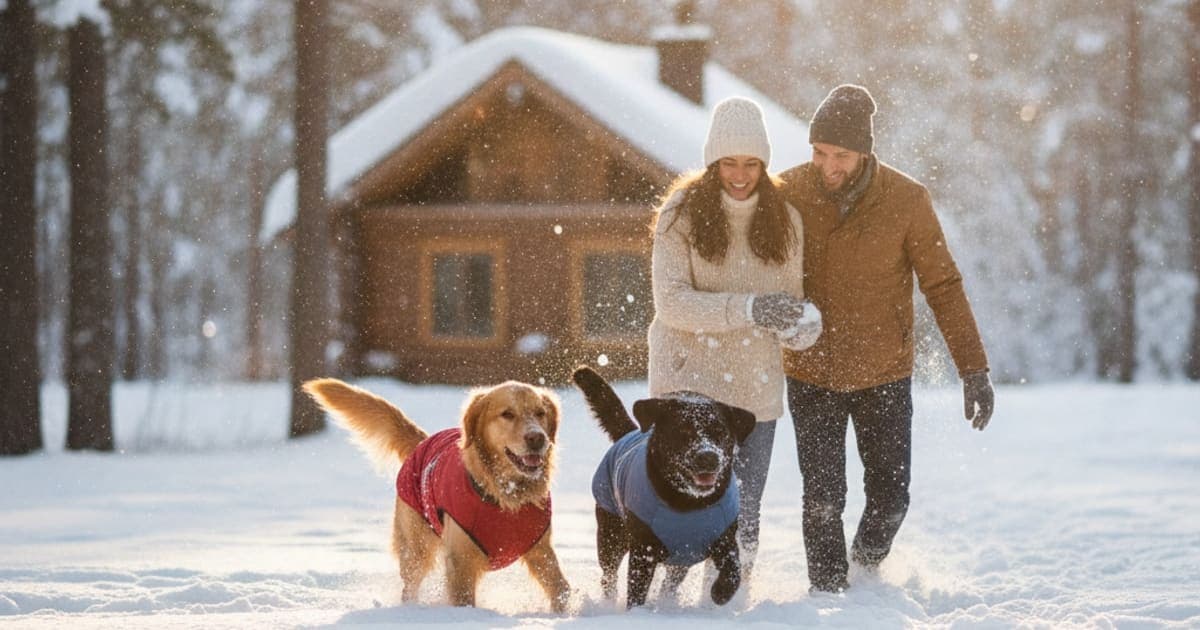
Some dogs need a coat in winter and many genuinely don't. The dogs that benefit are the ones that cannot generate or hold enough body heat on their own: small breeds with a high surface-area-to-body-mass ratio, thin- or single-coated breeds, puppies, senior dogs, dogs that are underweight or recovering from illness or surgery, and dogs with stiff, arthritic joints. A healthy adult Siberian Husky, Malamute, Bernese Mountain Dog or Newfoundland carrying a dense double coat usually needs nothing at all, and a tight-fitting jacket can leave them uncomfortable rather than warmer.
So the honest answer is not yes or no. It is: look at your individual dog's size, coat type, age, body condition and how long you both intend to be outside — then decide. Below is the rest of the winter picture, including paws, walk timing, outdoor and community dogs, and what cold weather does to a dog who is already moving stiffly.
Which dogs lose heat fastest, and which can skip the jacket
Heat loss is mostly physics. A small dog has far more skin surface relative to its body mass than a large dog, so it sheds warmth quickly no matter how enthusiastic it is about the snow. Coat structure matters just as much: a double coat has a dense insulating undercoat beneath the guard hairs, while single-coated breeds — Greyhounds, Whippets, Boxers, Dobermans, Pit Bull types, Vizslas, Chihuahuas, many terriers — have no insulating layer at all.
| Dog profile | Coat in winter? | What matters most |
|---|---|---|
| Small, thin-coated (Chihuahua, Italian Greyhound, Min Pin) | Yes, almost always | Full torso and belly coverage; short outings |
| Large, single-coated (Greyhound, Doberman, Boxer) | Yes, in cold or wind | Length and chest coverage, not bulk |
| Double-coated northern breeds (Husky, Malamute, Samoyed) | Usually not | Dry coat, paw checks, fresh water |
| Puppies | Yes | Very short exposure; they chill fast |
| Seniors and arthritic dogs | Yes | Warmth over the hips and lower back |
| Short, dense-coated mid-size (Labrador, Beagle) | Sometimes | Depends on wind, wet and duration |
| Underweight or post-surgical dogs | Yes | Ask your veterinarian about exposure limits |
A coat is not a fashion decision for a small, thin-coated, very young, elderly or arthritic dog — it is the difference between a walk they can finish comfortably and a walk they simply endure.
Fit beats features. A good winter coat covers the chest and belly, stops short of the armpits so it does not chafe, leaves the tail and elimination area clear, and stays dry. A soaked jacket is worse than no jacket, because wet fabric pulls heat away from the skin. If your dog walks in slush, keep two coats and rotate them.
How to keep a dog warm through the coldest weeks
Warmth is not one purchase, it is a set of small habits.
Shorten and multiply walks. Three brief outings beat one long one when the air is near or below freezing. Watch for the real signals your dog is cold: shivering, a tucked tail, lifting paws off the ground, slowing down, whining, or turning for home. Those are instructions, not suggestions.
Dry them off immediately. Towel the belly, chest, legs and between the toes the moment you are back inside. Damp fur next to skin is the fastest route to a miserably cold dog.
Raise the bed off the floor. Cold travels up through tile, concrete and poorly insulated floors. A thick bed, a raised cot with blankets, or simply moving the bed away from draughty doors makes a measurable difference to an older dog overnight.
Skip the close shave. Trim for hygiene and mats, but a full clip removes insulation your dog needs. Keep the hair between the paw pads trimmed short, though — that is where ice balls form.
Mind the calories and the water. Dogs who spend real time outdoors in cold weather burn more energy keeping warm, while indoor dogs often move less and quietly gain weight. Winter is the easiest season to add pounds that joints then have to carry. Water bowls also freeze outdoors and central heating dries dogs out indoors, so check water more often than you think you need to.
Never use space heaters, heating pads or fireplaces unsupervised. Dogs press against heat sources and burn themselves without moving away.
If your dog is on prescribed medication, is very young, pregnant, nursing, or has a heart, kidney or endocrine condition, talk to your veterinarian about how much cold exposure is sensible — those dogs do not follow the general rules.
Salt, ice and the paws most owners check too late
Paws take more winter damage than any other part of the dog, and the injuries are quiet. Rock salt and chemical de-icers are abrasive and drying; they sting in a small crack and cause stomach upset when licked off. Ice crust and frozen gravel slice pads. Snow compacts between the toes into hard balls that force the toes apart and make every step uncomfortable.
A workable routine: trim the hair between pads short, apply a paw protectant before walks if your dog tolerates it, rinse or wipe all four feet with plain warm water when you get home, and dry between every toe. Boots are excellent if your dog accepts them, and useless if they come off in the first block — introduce them indoors over several short sessions before relying on them outside.
Inspect pads weekly in winter. You are looking for deep cracks, splits at the pad margins, redness between the toes, limping on hard ground, or persistent licking at one foot. A cracked pad that keeps reopening, or any limp that lasts more than a day or two, is a veterinary conversation rather than a home-remedy project.
One more winter hazard: antifreeze. Ethylene glycol is sweet, dogs will drink it from a driveway puddle, and it is seriously toxic. Clean spills immediately and treat any suspected ingestion as an emergency.
Cold weather, stiff joints and the mobility piece of winter
Cold air does not cause arthritis, but winter changes how an already-compromised dog moves. Daylight shrinks, walks get shorter, and the muscle that stabilises a hip, stifle or shoulder gets less work. Slick ice encourages the splayed, guarded gait that loads joints unevenly. Owners very commonly report that a dog who was moving well in autumn takes longer to get going on a cold morning, hesitates at stairs, or stops offering to jump into the car.
The response is not to stop moving. It is to keep movement consistent and controlled: a brief indoor warm-up before going out, flat and predictable surfaces instead of icy hills, traction on slippery floors with runners or rugs, and steady low-impact work rather than weekend bursts. Keep your dog's weight where your veterinarian wants it — every extra pound is carried through every stride, all winter.
This is also where a lot of owners start looking at what else can support soft tissue and joint recovery through the slow season, and where pawgen's K9-REPAIR sits. K9-REPAIR is a BPC-157 and TB-500 formulation made for dogs. BPC-157 is a peptide sequence derived from a protein found in gastric juice, and published preclinical research suggests it influences the signalling involved in blood vessel formation and connective tissue repair — the processes behind how tendon, ligament and muscle tissue remodels after stress. TB-500 is a synthetic fragment related to thymosin beta-4, a naturally occurring peptide that binds actin and is studied for its role in cell migration and tissue organisation. Together they are the stack a growing number of owners adopt through recovery and through heavy-mileage or low-mobility seasons.
Being precise matters here: BPC-157 and TB-500 are not FDA-approved veterinary drugs, and nothing in this category should be described as treating, curing or fixing a condition. What can be said is what the research describes at the mechanism level, what owners report, and what is factually on the label. pawgen publishes third-party certificates of analysis for its batches, scales its reference amounts by body weight rather than offering one generic figure, ships direct to the door, and backs orders with a 60-day money-back guarantee. Any amount for your individual dog is a conversation to have with your veterinarian, not a number to guess at from an article — and if your dog is on carprofen, gabapentin, a monoclonal antibody injection or any other prescribed therapy, that plan stays exactly as your vet wrote it.
Outdoor dogs, working dogs and street dogs in winter
Dogs who live outside, and community or street dogs, need the same physics solved with different tools. Shelter is the whole game: a structure just large enough for the dog to turn around and lie down in, raised off the ground, with a wind-blocking offset entrance and a dry roof. Small is warm — a big box bleeds body heat.
Bed it with straw, not blankets or towels. Straw traps air and sheds moisture; fabric absorbs water, freezes and becomes a cooling layer. Refresh it when it packs down. Provide unfrozen water, checked more than once a day, and remember that food requirements climb when a dog is burning energy to stay warm.
For street dogs, the most useful things are often the simplest: a dry, wind-protected shelter in a safe spot, consistent water, consistent feeding, and contact with a local rescue or welfare group who can handle vaccination, parasite control and injuries properly. Bang on the car hood before starting the engine in cold weather — cats and small dogs shelter in warm engine bays. If a dog is shivering uncontrollably, unsteady, unresponsive or has pale or hardened skin at the ear tips, tail or paws, that is a veterinary emergency, and slow warming plus professional care is the right move rather than hot water or direct heat.
Key Takeaways
- Coats help small, thin- or single-coated, very young, elderly, underweight and arthritic dogs; most healthy double-coated breeds do not need one.
- Fit matters more than features — chest and belly coverage, no armpit chafing, and always dry.
- Shorten walks and repeat them rather than pushing through one long outing in freezing conditions.
- Paws take the worst of it: trim the hair between pads, rinse off salt and de-icer, dry between every toe, and inspect weekly.
- Winter inactivity costs muscle and adds weight, which is exactly what unstable joints do not need.
- Outdoor and street dogs need small, raised, wind-blocked shelters bedded with straw, plus unfrozen water and more calories.
- K9-REPAIR is a BPC-157 and TB-500 formulation for dogs, third-party tested with published COAs and weight-scaled label amounts; research on these peptides is promising and still developing, and they are not FDA-approved veterinary drugs.
Your veterinarian owns the diagnosis and the treatment plan — the limp, the X-ray, the pain protocol, the surgical decision, the rehab schedule. Winter care and supplementation work in the space that proper veterinary care creates: keeping your dog warm, dry, moving, and well supported through the hardest weeks of the year. Bring the questions in this article to your next appointment, including anything you are considering adding, and let the person who has examined your dog tell you how it fits.
For more on how coat type and build vary across breeds, see pawgen's breed guides; batch testing documents are published in the certificates of analysis library; shipping coverage is listed on the delivery page; and the full range is in the pawgen shop.
Owners exploring peptide support for their dog can review K9-REPAIR — BPC-157 + TB-500 formulated for dogs — at https://pawgen.com/. BPC-157 and TB-500 are not FDA-approved veterinary drugs. Nothing in this article treats, cures or prevents any condition; every decision about your dog's care belongs with your veterinarian.
Frequently asked questions
- do dogs need coats in winter
- Some do. Small breeds, thin- or single-coated dogs, puppies, seniors, underweight dogs and dogs with arthritis lose heat quickly and benefit from a well-fitted coat. Healthy double-coated breeds like Huskies and Malamutes usually do not need one. Judge by size, coat type, age and time outdoors.
- how do i keep my dog warm in winter
- Keep walks short and frequent, use a dry, well-fitted coat on dogs that need one, towel them off immediately after every outing, and raise their bed off cold floors away from draughts. Check water often, avoid full clips, and never leave heaters or heating pads unsupervised.
- What temperature is too cold for a dog?
- There is no single number, because size, coat type, age, health and wind and wet all change the answer. Once temperatures approach freezing, small, thin-coated, very young, elderly and unwell dogs should have short outings only. Shivering, lifted paws and slowing down mean go inside now.
- Do small dog breeds need extra winter care?
- Yes. Small dogs have more body surface relative to their mass, so they lose heat far faster than large dogs and chill within minutes outdoors. They need full-coverage coats, shorter walks, protection from cold floors and draughts, and careful paw checks after walking on salted pavement.
- Is road salt dangerous for my dog's paws?
- Road salt and chemical de-icers are drying and abrasive, sting in existing cracks, and can upset the stomach when licked off the feet. Rinse or wipe all four paws with plain warm water after every walk, dry between the toes, and see your vet about persistent cracks.
- Should I bathe my dog less often in winter?
- Usually yes. Frequent bathing plus dry indoor heating strips skin oils and leaves coats flaky and itchy. Stretch the interval where hygiene allows, use a gentle shampoo, and dry your dog completely before going outside. Ask your veterinarian if your dog has a diagnosed skin condition.
- How can I help a street dog during cold weather?
- Provide a small, raised, wind-blocked shelter bedded with straw rather than blankets, since fabric absorbs water and freezes. Offer unfrozen water and consistent food, and contact a local rescue or welfare group for vaccination, parasite control and medical care. Bang the car hood before starting the engine.
- Does cold weather make arthritis worse in dogs?
- Owners very commonly report more stiffness on cold mornings, and winter reduces walking, which costs muscle that stabilises joints. Slippery ice also encourages guarded, uneven gaits. Keep movement consistent on flat surfaces, add traction indoors, manage weight, and ask your veterinarian to review your dog's pain plan.
- Can K9-REPAIR be used during the winter months?
- K9-REPAIR is a BPC-157 and TB-500 formulation for dogs that owners use through recovery and lower-mobility seasons. These peptides are not FDA-approved veterinary drugs, and research describes mechanisms rather than guaranteed outcomes. Amounts are scaled by body weight on the label — confirm suitability with your veterinarian first.
Educational content, not veterinary advice. Ask your vet about your dog.