Why Do Dogs Dig Holes to Lie In? (Cooling and Denning)
Dogs dig holes to lie in mainly to cool down, since soil below the surface stays cooler than the air and draws heat from the belly and chest. Denning instinct, soft ground and scent play a part too. Heavy panting or wobbliness alongside digging needs a vet.
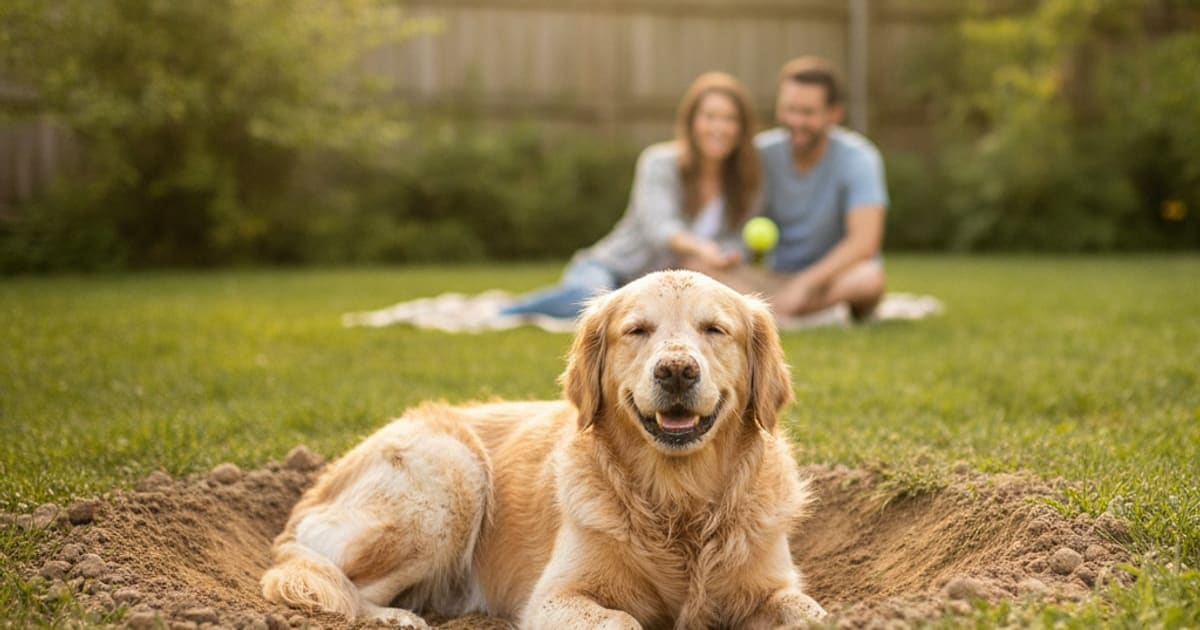
Yes, dogs dig holes to cool down, and that is the leading reason a dog scrapes out a shallow pit and then flops straight into it. Soil below the sunbaked top layer stays cooler and damper than grass, paving or decking, so lying in freshly turned earth pulls heat away from the belly and chest. If the digging comes alongside panting that will not settle, thick drool, bright red or pale gums, a wobbly walk, vomiting or confusion, stop and get your dog to a vet or an emergency clinic straight away, because those signs can point to heat distress rather than ordinary comfort seeking.
Cooling is not the only explanation, though. Denning instinct, a wish for a softer sleeping surface, scent, small animals underground and plain boredom all send dogs to the dirt. Below is how to read which one you are looking at, what to change so your dog has a better option, and when to talk to your vet or a qualified behavior professional.
How a scraped-out pit cools a dog down
Dogs carry very few sweat glands across the skin, so they cannot lose heat the way people do. They cool mainly by panting, which evaporates moisture from the tongue and airways, and by sending blood toward the skin of the ears, belly and inner thighs. A small amount of heat leaves through the paw pads. That leaves one more route, conduction, which is just heat moving out of a warm body into whatever cooler surface it is touching.
This is where digging comes in. Sun loads heat into the very top layer of a yard, and grass, bare dirt, gravel, decking and concrete can all hold that heat long after the dog wants to lie down. The ground underneath holds a steadier temperature and more moisture. When a dog scrapes the hot top layer aside, it uncovers cooler, damper earth that the sun has not reached, then presses the thinly furred belly, armpits and groin into it. Those areas sit close to large blood vessels, so contact with cool soil moves heat out of the core quickly.
It also explains the favorite spots. Dogs choose the shaded strip against a house foundation, the hollow under a deck or porch, the soil beneath a dense shrub, the edge of a flower bed that gets watered, or the patch near a dripping tap. Those places stay shaded and damp, which is exactly what a hot dog is looking for. Shade on its own does not undo heat that a surface has already absorbed, so a dog can stand in shade and still dig for something cooler to lie on.
Reading the pattern: where, when and how your dog digs
If your dog digs holes and lays in them, watch the timing, the location and the body language before deciding what is driving it. Cooling digs happen in the heat of the day, in shade, and end with the dog sprawled flat in the hole, legs out, belly down. Comfort and denning digs can happen in any weather and end with the dog curled up rather than spread out.
| What you are seeing | What it can point to | Where to start |
|---|---|---|
| Shaded soil, hot part of the day, dog lies flat in the hole | Cooling | More shade, cool water, a raised airy bed, indoor access |
| Sunny patch in cold weather, dog curls up tight | Seeking warmth and shelter from wind | Warm indoor resting place, shorter time outside |
| Scrapes, circles, then settles and sleeps | Denning and nesting comfort | A supportive bed with raised sides in a quiet corner |
| Digging along fences, pacing, watching the gate | Distress, frustration or wanting out | Vet check, then a reward-based behavior professional |
| Nose down, fast and focused on one spot | Scent, insects or burrowing animals | Supervision, blocking access, pest advice from a professional |
| Scattered holes plus chewing and high energy | Not enough to do | Sniffing walks, food puzzles, training games |
Dogs digging holes to sleep in are following something older than the backyard. Wild canids scrape out a hollow before resting, and the shape does real work: it cradles the body, blocks wind at ground level, and the raised rim around the edge gives a sense of enclosure. The indoor version is the circling and scratching many dogs do on a bed or blanket before they lie down. Same pattern, different surface.
Two more drivers are worth knowing. Some dogs dig and then roll, which is scent behavior rather than cooling. And an unspayed female can dig and arrange bedding during a hormonal nesting phase. If that is new or paired with other changes, your vet can tell you whether it needs looking at.
When digging and lying down is a heat warning
A dog that digs a pit on a warm afternoon is managing its own temperature, and that is useful information for you. The concern is the dog that cannot get on top of the heat at all.
Get veterinary help straight away if you see panting that will not slow down even at rest, thick ropy drool, gums that look bright red or unusually pale, unsteadiness, glassy staring, vomiting, diarrhea, weakness or collapse. Those can be signs of heat distress, and they need a vet or emergency clinic, not a wait-and-see approach. Call ahead if you can.
Some dogs run out of cooling capacity sooner than others. Flat-faced breeds move air less efficiently when they pant. Thick-coated and dark-coated dogs absorb and hold more heat. Overweight dogs, very young puppies and older dogs have less margin. Humidity matters too, because panting depends on evaporation, and damp air slows that down. Airway, heart and hormonal problems can also lower a dog's heat tolerance and change how hard it works to find a cool surface, so if your dog's heat seeking looks new or extreme, a vet exam may help find the cause. Background reading on dog health conditions can help you frame the questions you want to ask at that visit.
Yard changes that give your dog a cooler option
A dog that keeps digging a pit to lie in is telling you the resting places you have provided are not cool enough, and changing the conditions works better than trying to shut the digging down.
Start with shade that actually covers the dog as the sun moves. A single tree or a fixed umbrella leaves a dog exposed for part of the afternoon. Shade sails, a covered run or a shaded side of the house give a wider window.
Air movement matters as much as shade. A raised cot style bed lets air pass underneath instead of trapping heat against the dog, and it keeps the belly off hot ground. Cooling mats, a damp towel laid on a shaded hard surface, or a tiled floor indoors all give the same conduction that the dog was digging for.
Water should be available in more than one place, in the shade, in bowls heavy enough not to tip. A shallow paddling pool gives many dogs a way to wet the belly and paws, which is where cooling by contact is most effective. Supervise any water setup.
The simplest change is time. Moving outdoor play to the cooler ends of the day, and bringing the dog inside through the hottest stretch, removes the problem the dog was solving with a shovel. Check paving and decking with the back of your hand before walking a dog across it.
Giving the digging somewhere to go, with reward-based training
Digging is normal dog behavior, not misbehavior, so the goal is redirection rather than suppression. Punishment, startling, scolding or any aversive tool adds stress to a dog that is already uncomfortable, and a stressed dog does not learn well.
Set up a sanctioned dig spot: a sandbox, a raised bed filled with loose soil or sand, or a corner you are happy to lose. Place it in shade. Bury toys or chews just under the surface, let your dog find them, and mark and reward every time they dig there. Dogs repeat what pays off, so make that spot the most rewarding patch of ground in the yard.
At the same time, make the places you care about less available: temporary fencing around beds, a barrier under the deck, rocks or mesh along a favored fence line. If you catch your dog starting on the lawn, call them away in a cheerful voice, reward the response, and lead them to the dig pit. No interruption that frightens the dog, ever.
Fill the rest of the day with outlets that use the same drives: sniffing walks where the dog sets the pace, food puzzles, scent games, short training sessions. Results vary from dog to dog, and some dogs need weeks of consistent reward history before the sanctioned spot wins out.
When to talk to your vet or a behavior professional
Book a veterinary visit if the digging is sudden, frantic, or new in an older dog; if the paws, nails or pads are worn, split or bleeding; if your dog pants at rest, seeks cold hard surfaces indoors, or cannot settle; or if the digging comes with limping, stiffness, itching or skin changes. Pain, skin discomfort, a hormonal change and anxiety can all surface as digging, and only an exam can separate them. Call your vet if it continues or if you notice any of those signs.
If the digging centers on fences, doorways or your absences, ask your vet for a referral to a qualified behavior professional who works with reward-based methods. Distress-driven digging is a welfare issue, not a training failure, and it is handled best as a team.
Key Takeaways
- Dogs dig holes to lie in mostly to cool down, because soil below the heated top layer is cooler and damper and draws heat from the belly and chest.
- Dogs cannot sweat across the skin, so contact with a cool surface is one of the few cooling routes they have.
- Denning instinct, nesting, scent, burrowing animals and boredom also explain a dog digging holes to lay in.
- Heavy panting that will not settle, drooling, abnormal gum color, wobbliness, vomiting or collapse mean a vet or emergency clinic now.
- Shade that moves with the sun, raised airy beds, cool mats, multiple water sources and indoor access during heat remove the reason to dig.
- A sanctioned dig pit plus reward-based redirection beats punishment every time.
Your veterinarian owns the diagnosis here. Digging is behavior you can read and manage at home, but anything that looks like heat distress, pain, skin discomfort or real distress belongs in an exam room, and the sooner the better. Talk to your vet about what you are seeing, describe when and where it happens, and let the yard changes and the reward-based training do their work in the space that proper veterinary care creates.
Related reading: dog emergency signs covers the signs that mean a call to the vet cannot wait.
Frequently asked questions
- Do dogs dig holes to cool down?
- Yes. Dogs dig holes to cool down, because soil under the sunbaked top layer stays cooler and damper, and pressing the belly and chest into it moves heat out of the body. Shade, water and a cool resting spot can reduce the need. Talk to your vet if panting does not settle.
- Why does my dog dig holes and lay in them?
- Most likely for cooling, comfort or both. Fresh soil under the surface is cooler than grass or paving, and a scraped hollow holds the body like a nest. Boredom, scent and small animals underground can also drive it. See your vet if the digging is new or frantic.
- Do dogs dig holes to sleep in?
- Yes. Dogs dig shallow hollows to sleep in because the shape cradles the body, blocks wind and feels enclosed, which traces back to denning ancestors. In warm weather the cooler soil adds to the appeal. A bed with raised sides, placed somewhere quiet and cool, can offer the same thing.
- Should I let my dog keep digging holes in the yard?
- Digging itself is normal dog behavior, so the question is where it happens. Setting aside a dig pit of loose soil or sand, and rewarding your dog for using it, redirects the behavior without punishment. Block off flower beds and fence lines. Talk to your vet if the digging comes with limping or sore paws.
- What are the signs my dog is overheating in the yard?
- Heavy panting that will not settle, thick drool, bright red or pale gums, a wobbly walk, vomiting, diarrhea, confusion or collapse can all point to heat distress. Get your dog to a vet or emergency clinic straight away. Flat-faced dogs, thick-coated dogs and overweight dogs can struggle sooner.
- How do I stop my dog digging up the garden?
- Change the conditions first: more shade, fresh water in several spots, a raised airy bed and indoor access when it is hot. Then fence off the garden, offer a sanctioned dig pit, and reward your dog for choosing it. Add sniffing walks and food puzzles. Avoid punishment, which adds stress.
- Why does my dog dig at her bed indoors before lying down?
- Scratching and circling before lying down is the indoor version of scraping out a hollow. It shapes the surface, spreads scent from the paw pads and settles the dog before sleep. If it becomes frantic, or your dog cannot get comfortable at all, that is worth raising with your vet.
- When should I see a vet about my dog's digging?
- Book a vet visit if the digging is sudden, frantic or new in an older dog, if the paws or nails are worn or bleeding, if your dog pants at rest, or if restlessness keeps them from settling. Pain, skin discomfort and anxiety can all show up as digging.
Educational content, not veterinary advice. Ask your vet about your dog.