Why Do Dogs Lick People in the Face? (And the Mouth)
Dogs lick people in the face and mouth as a greeting that may trace back to puppyhood, when pups licked adult dogs' mouths, and because your face carries scent and taste. Licking that is new, sudden or intense is a reason to talk to your vet today.
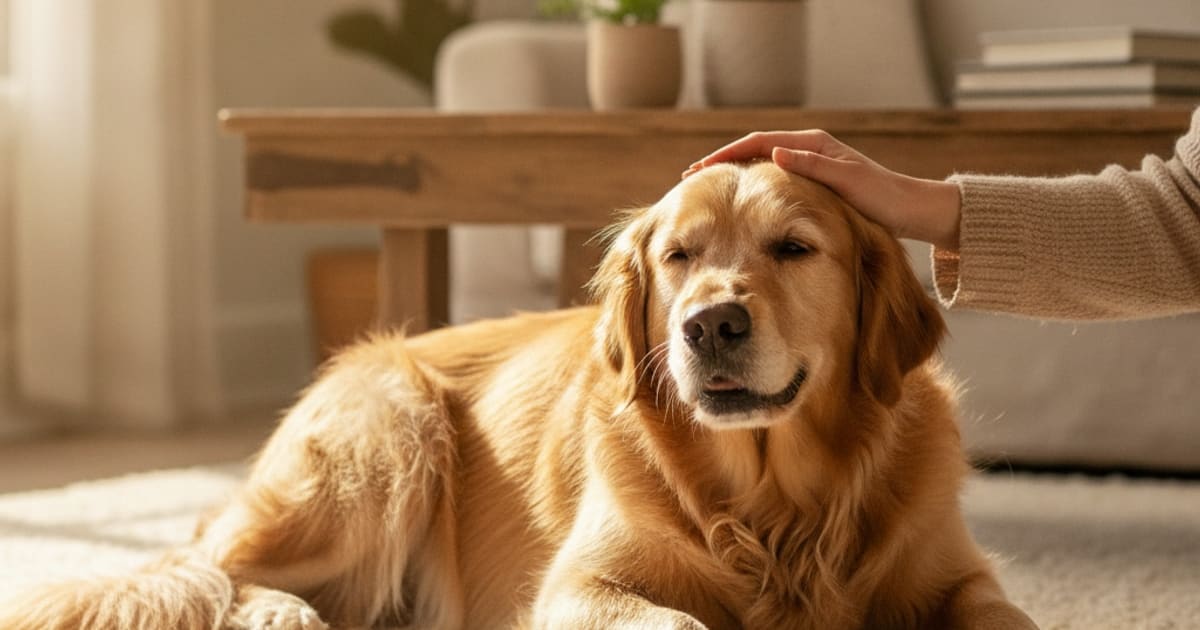
Dogs lick people in the face and mouth as a greeting and social signal that may trace back to puppyhood, and because your face carries scent and taste that a dog can read. Go to an emergency vet now if the licking comes with retching that brings nothing up, a swollen belly, trouble breathing or collapse; otherwise book a same-day appointment for licking that is new, sudden or nonstop.
That is the short answer. A single lick across your cheek can carry several messages at once: hello, I mean no threat, you smell interesting, notice me. Knowing which of those may be in play helps you respond kindly, and knowing what a change in licking can mean tells you when the question belongs with your vet instead of with a training plan.
Where face licking starts: the puppy greeting
Licking is part of how canines communicate long before a dog ever meets a person. Wolf pups and other young wild canids lick the muzzles and mouths of adults returning to the den, and that licking can prompt an adult to bring up partly digested food for the pups to eat. It is one of the earliest social exchanges a young canine learns.
Licking also begins at birth. A mother dog licks her newborn puppies to clean them, to stimulate breathing and to encourage them to eat and eliminate. A puppy's first experience of closeness comes through a tongue, and dogs that live together may go on licking each other's faces and ears as a form of social grooming. A lick directed at you may draw on that same sense of care and closeness.
In domestic dogs, the food exchange has largely faded, but the gesture appears to have stayed. Puppies lick their mother's face and mouth. Adult dogs may lick the muzzle of another dog as a deferential greeting, a way of saying they come in peace. When your dog licks your face, the same social wiring may be at work, redirected toward the person at the center of its world.
The mouth is the target for a reason. In canine terms it is where food, scent and social information come together, so a greeting aimed there carries extra weight. A dog that stretches up to lick your chin or the corner of your mouth may be offering the most respectful greeting it knows.
Licking can also work as an appeasement or calming signal. A dog may lick a person's face to ease tension after a raised voice, a sudden movement or an unfamiliar situation. When a lick comes alongside a lowered body, flattened ears or a tucked tail, it may be part of a dog's effort to smooth things over. If greetings in your home seem to make your dog anxious, talk to your vet, who can assess whether stress or a health issue is part of the picture and refer you to a veterinary behaviorist where that helps.
Then there is learning. Every lick that earns a laugh, a cuddle or a squeal teaches a dog that licking faces gets results. That reinforcement may explain why face licking can grow stronger over time in a dog whose greetings are always met with excitement. Your reaction is part of the pattern.
Scent, taste and what your face carries
A dog explores the world through its nose first, and its tongue is part of that system. Dogs have a vomeronasal organ, also known as Jacobson's organ, located above the roof of the mouth. It detects chemical signals, and licking can help carry scent molecules toward it. A lick, in other words, may be partly a way of gathering information about you.
Your face is rich with that information. It carries skin oils, traces of whatever you last ate or drank, and the scents of every place you have been that day. Your mouth and lips hold the strongest of those traces. To a dog, a face that has just come in from a meal or a busy day out may be worth investigating closely, and the tongue is one of the tools it uses.
Taste plays its part too. Salt from sweat can be a strong draw, which may be one reason a face gets extra attention after a workout, a hot day or a long walk. A person who has just eaten carries the traces of that meal around the mouth and lips, right where a greeting lands.
Anything with a flavor or a scent on your skin or lips can also draw a dog's interest. That matters for one reason in particular: sugar-free gum and mints can contain xylitol, so if your dog got into gum, mints or anything sweetened with xylitol from a bag or pocket, call your vet or an animal poison control service now.
Scent also links to bonding. A familiar person smells like home and comfort to a dog. Licking a known face may combine greeting with recognition, a quick confirmation that you are who you seem to be, carrying the scents the dog connects with its own household.
Big dogs, mouths and lips: why the licking lands where it does
Size changes the logistics more than the motive. Big dogs licking people's faces are acting on the same greeting, scent and attention drives as a small dog, but a tall dog can reach your face by standing up, leaning in while you sit or jumping up as you walk through the door. A small dog may only reach your face when you crouch down or pick it up, so you may meet its tongue less, simply because it has fewer chances.
That reach is why big dogs deserve a clear greeting plan. A jumping, licking large dog can knock over a child, an older adult or anyone unsteady on their feet. Teaching a calm, four-paws-on-the-floor greeting protects everyone, and it does not require you to give up affection, only to move it to a lower and calmer level.
Children deserve particular thought. A child's face sits at the same height as a large dog's head, which puts it directly in the path of greetings, licks and jumps. Supervise every interaction between dogs and young children, and teach children to greet a dog calmly rather than putting their face close to the dog's face. A dog that licks a child's face may be friendly, but it may also be signaling that it wants space, and an adult close by can step in before that signal escalates.
Mouths and lips draw licks for the reasons already covered: they hold the strongest taste and scent traces, and they sit at the center of the face, which is where a canine greeting is aimed. A dog may also lick toward your mouth when you talk, laugh or lean in, because those are the moments your face is closest and most animated. Part of the meaning of a dog licking a human face is simply that your face is the most expressive part of you.
When a change in licking needs your vet
A change in licking is a health question, not only a behavior one. Licking that is new, sudden, intense or nonstop, or that comes alongside licking the lips, the air, the floor or furniture, can be linked to problems your dog cannot tell you about. Nausea, mouth or dental pain, gut upset, stress and age-related changes in the brain are all possibilities a vet may check. You cannot sort between them at home, and you do not need to: that is the vet's job.
That is why the guidance at the top of this page matters. Emergency signs alongside licking, such as retching that brings nothing up, a swollen belly, trouble breathing or collapse, mean an emergency vet now. Any other licking that is new, sudden or nonstop means a same-day appointment.
Here is what a vet exam may include when licking has changed:
| What the vet may check | Why it matters |
|---|---|
| A full history of when the licking started and what else changed | Timing can link the licking to diet, routine, stress or a new symptom |
| The mouth, teeth and gums | Mouth or dental pain may change how and what a dog licks |
| The belly and digestive signs | Licking lips or surfaces can go along with nausea or a gut problem |
| Weight, appetite and overall condition | Changes here help the vet decide which tests may be needed |
| Bloodwork or other tests, if needed | These may help find a cause that an exam alone cannot show |
| Behavior and stress history | Anxiety or compulsive licking may call for a referral to a veterinary behaviorist |
| Age-related changes in an older dog | New repetitive behaviors may be assessed alongside memory, sleep and orientation |
If your dog already has a diagnosed condition, your vet can tell you how a change in licking may fit with it. You can also browse the conditions library to read about the health issues your vet may raise.
Hold off on a training plan for licking that has suddenly changed until your vet has examined your dog, since correcting a dog that feels unwell may add stress without addressing the cause. After the visit, call your vet again if the licking changes, or if you notice vomiting, drooling or a dog that stops eating.
Your own health and a calmer greeting
Face licking is also a question about you. Dog saliva carries bacteria, including Capnocytophaga canimorsus, which can be found in the mouths of healthy dogs. It can cause serious illness in people, particularly those with a weakened immune system, those without a working spleen and those who drink alcohol heavily. If that describes you or anyone in your home, talk to your own doctor about how much face contact makes sense. Keep licks away from cuts, scrapes and broken skin.
Dogs can also carry intestinal parasites, and licking is one way germs travel from a dog's body to a person's face. Keeping your dog on a parasite control plan your vet sets is part of protecting both of you.
For the greeting itself, the goal is to keep the affection and change the delivery:
- Greet your dog calmly and at its level, so jumping up is unnecessary.
- Ask for a sit before saying hello, and reward the sit with praise and attention.
- If the licking starts, turn your face away calmly and pause the greeting, then resume when all four paws are on the floor.
- Keep greetings low-key when you come home, since high excitement can fuel more licking.
- Avoid scolding or punishing a lick. Licking can be an appeasement signal, and punishment may raise a dog's anxiety and make the behavior harder to change.
Consistency across everyone in the household matters, since mixed responses can keep the behavior going. If your dog is hard to redirect, or the licking seems driven by anxiety, talk to your veterinarian about a referral to a veterinary behaviorist.
Key takeaways
- Face and mouth licking can be a greeting that may trace back to puppyhood, when young canids licked adults' mouths for food.
- A face lick can also carry scent and taste information, gathered partly through the vomeronasal organ.
- Licking with retching that brings nothing up, a swollen belly, trouble breathing or collapse means an emergency vet now.
- Licking that is new, sudden or nonstop calls for a same-day vet appointment.
- If you have a weakened immune system or no working spleen, talk to your own doctor about face licking.
- If your dog got into gum or mints sweetened with xylitol, call your vet or an animal poison control service now.
For more on licking beyond the face, see this guide to what it means when a dog licks people, and for the signs that call for urgent care, read about dog emergency signs.
Your vet owns the diagnosis and the treatment plan for any change in your dog's licking. Training, a calmer greeting routine and the bond you share work best once your vet has looked for a health cause, with your vet's guidance along the way.
Frequently asked questions
- Why do dogs lick people in the face?
- Dogs lick people in the face as a greeting and social signal that may trace back to puppyhood, when young canids licked adults' faces and mouths. Your face also carries scent and taste a dog can read. A new, sudden or nonstop change in face licking is a reason to book a same-day vet appointment.
- Why do dogs lick people in the mouth?
- A dog licking your mouth may be repeating a puppy behavior: young canids lick adults' mouths, which can prompt an adult to bring up food. Your mouth also carries traces of what you ate and drank. If the licking is new or intense, talk to your vet about a same-day appointment.
- Why do dogs lick people's mouths?
- Dogs may lick people's mouths to greet them, to show they mean no threat, and because the mouth is where food smells and tastes gather. Licking that earns a laugh or a cuddle can also be learned. Book a same-day vet appointment for mouth licking that is new, sudden or nonstop.
- Why do dogs lick people on the mouth?
- A lick on the mouth may be both a greeting and a way of gathering information. Dogs have a vomeronasal organ, also called Jacobson's organ, that picks up chemical signals, and licking can carry those signals toward it. Talk to your vet if your dog's licking has changed suddenly or become intense.
- Why do dogs lick people on the face?
- Dogs lick people on the face to say hello, to calm a tense moment and to ask for attention. Big dogs reach faces easily by standing or jumping, which is why their licking can feel constant. Licking that is new, sudden or nonstop calls for a same-day vet appointment.
- Why do dogs lick people's lips?
- Your lips carry the strongest traces of food, drink and anything flavored you have used, and they sit at the center of your face, where a dog's greeting is aimed. That mix of taste, scent and social signal may draw the tongue there. Talk to your vet about licking that starts suddenly or becomes intense.
- Why do big dogs lick people's faces?
- Big dogs lick faces for the same reasons smaller dogs do: greeting, scent, taste and attention. Their height simply puts your face within reach. Because a jumping big dog can knock over a child or an older adult, a calm greeting plan helps, and talk to your vet first if the licking has suddenly changed.
- Is face licking an emergency in dogs?
- Face licking becomes an emergency when it comes with retching that brings nothing up, a swollen belly, trouble breathing or collapse. Go to an emergency vet now for those signs. Book a same-day appointment for any other licking that is new, sudden or nonstop, so your vet can examine your dog.
- What should I do if my dog suddenly starts licking much more?
- Call your vet today and book a same-day appointment. A sudden change in licking can go along with nausea, mouth pain, stress or other changes your vet can examine. Go to an emergency vet now if it comes with retching that brings nothing up, a swollen belly, trouble breathing or collapse.
- Should I let my dog lick my mouth?
- That choice is yours, but dog saliva can carry bacteria, including Capnocytophaga canimorsus, which can cause serious illness in people with a weakened immune system or without a working spleen. Keep licks away from broken skin, and talk to your own doctor if you or someone in your home is in a higher-risk group.
Educational content, not veterinary advice. Ask your vet about your dog.