Is Tea Tree Oil Safe for Dogs? (And Which Oils Are)
Tea tree oil is not safe for dogs at the concentrations sold for home use — veterinary poison control services list it as toxic, and it absorbs through skin. A few oils, such as lavender and roman chamomile, are generally treated as lower risk when heavily diluted and used with veterinary guidance.
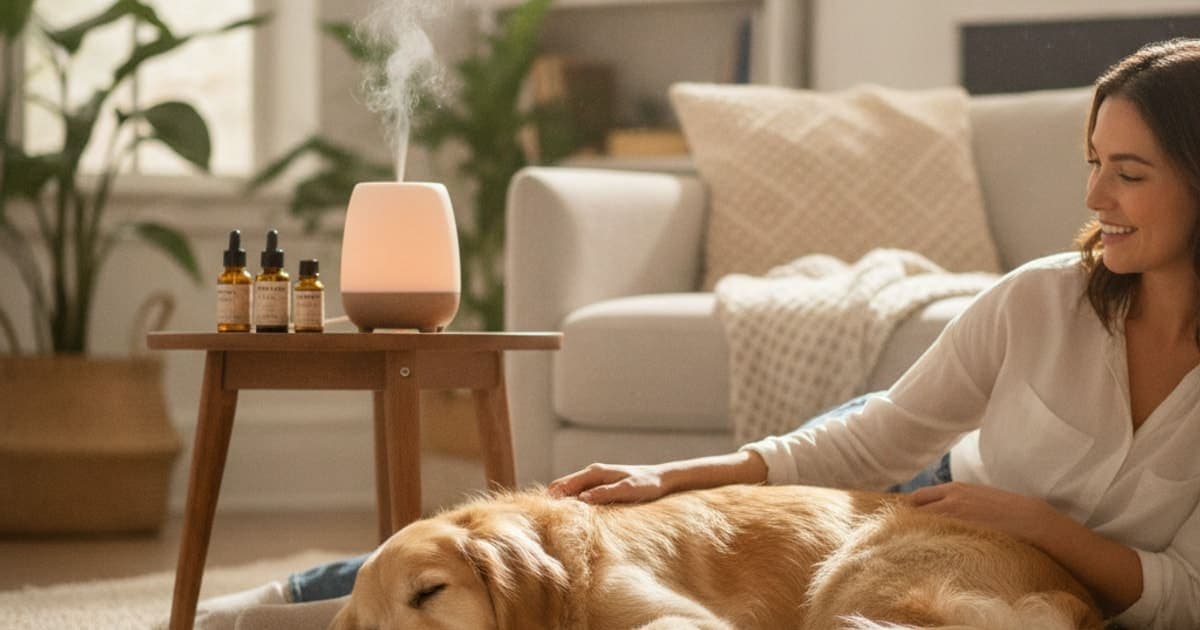
No. Tea tree oil is not safe for dogs in the form most households actually have it — a small bottle of concentrated melaleuca oil, often sold at or near full strength. Veterinary poison control services list concentrated tea tree oil as toxic to dogs, and the reported signs of exposure include drooling, vomiting, wobbliness, weakness in the back end, muscle tremors and marked lethargy. It is absorbed through skin, so a dog does not have to swallow anything for trouble to start.
The broader question sitting behind that search — which essential oils are safe for dogs — has a more layered answer. A short list of oils is generally treated as lower risk when heavily diluted and used with a veterinarian's input. A longer list is best kept out of reach entirely. And in practice, how an oil is used (diffused in a closed room, dripped onto fur, added to shampoo, left uncapped on a nightstand) often matters more than which oil it is.
Why a dog's body handles plant oils differently than yours
Essential oils are not mild simply because they come from plants. They are concentrated volatile compounds — terpenes, phenols, ketones, aldehydes — representing an enormous amount of plant material compressed into a very small bottle. Three differences change the risk picture for dogs.
Absorption. Canine skin takes up lipid-soluble compounds readily, and a dog's surface-area-to-bodyweight ratio is very different from a person's. A quantity that feels trivial on a human forearm is not trivial on a terrier.
Metabolism. Many of these compounds are cleared by the liver through conjugation pathways. Cats are famously poor at this, which is why oils are treated as a bright-line hazard in cat households. Dogs manage better, but puppies, seniors, very small breeds and dogs with any liver compromise have less margin than a healthy adult.
Grooming. Anything applied topically becomes an oral exposure within minutes. A dog licks the spot, licks a paw that touched the spot, or licks a housemate. Topical and oral are not separate categories for dogs.
There is also the obvious point that gets overlooked: a diffuser that smells pleasant to you is working on an olfactory system orders of magnitude more sensitive than yours — and a dog shut in that room cannot opt out.
The tea tree problem, specifically
Tea tree oil's active fraction is dominated by terpinen-4-ol and related terpenes. Those are precisely the compounds implicated in reported toxicosis cases, and exposure routes in real households are mundane: oil applied to a hot spot or an itchy patch in good faith, oil used as a flea remedy, a dog chewing a bottle or a soaked cotton pad out of the bin, or a cap left off within nose range.
Signs typically develop within hours rather than days, and they tend to be neurological as much as dermatological — ataxia, tremors, hypersalivation, depression, sometimes skin irritation at the application site. Small dogs and cats are at greater risk for the same volume of oil.
Concentrated tea tree oil is not safe to apply to your dog, add to a rinse, or leave where a dog can reach it — it is absorbed through skin, it is listed as toxic by veterinary poison control services, and there is no home-use benefit that justifies the risk.
One honest nuance: some veterinary dermatology shampoos and formulated pet products contain melaleuca-derived ingredients at tiny, deliberately engineered concentrations, with the rest of the formula built around them. That is a manufactured product with a defined specification. It is not the same thing as the amber bottle in your cabinet, and the existence of the former is not permission to use the latter.
Which oils are generally treated as lower risk — and which to keep off the shelf
The table below reflects how oils are commonly categorised in veterinary toxicology resources. "Lower risk" means lower risk when heavily diluted, used briefly, and cleared with your veterinarian first — not that the oil is harmless or that your dog needs it.
| Essential oil | Commonly regarded as | What owners should know |
|---|---|---|
| Lavender | Lower risk, diluted and vet-guided | The most studied of the group; published research in a veterinary journal has examined lavender aroma and resting behaviour in dogs during car travel |
| Roman chamomile | Lower risk, diluted and vet-guided | Frequently used in formulated calming products rather than neat |
| Ginger | Lower risk, diluted and vet-guided | Still a warming, irritant-capable oil on skin |
| Tea tree (melaleuca) | Avoid at home-use concentrations | Listed as toxic; skin absorption plus grooming makes it high risk |
| Pennyroyal | Avoid | Pulegone content; associated with serious liver injury |
| Wintergreen, sweet birch | Avoid | Methyl salicylate — salicylate exposure risk |
| Pine, citrus (d-limonene) | Avoid | Common irritants; citrus oils are frequently cited in exposure cases |
| Cinnamon, clove, thyme, oregano | Avoid | Phenol-heavy; strongly irritating to skin and mucous membranes |
| Peppermint, eucalyptus, ylang-ylang | Avoid | Commonly listed as problematic for dogs and cats alike |
If you own cats as well, raise the bar further — oils that a dog tolerates can be a serious problem for a cat sharing the same air and the same furniture.
Diffusing, shampoos and sprays: the household rules that matter
Diffusers. Passive diffusers (reed sticks, warmers) release vapour. Active or nebulising diffusers aerosolise actual microdroplets that settle on fur, bedding and water bowls, where they get groomed off and swallowed. If you diffuse at all, do it in a large, ventilated space, keep sessions short, and never confine your dog in the room — the dog must always be able to walk away.
Topicals. Do not apply oils to broken skin, hot spots, surgical sites, paws, ears, eyes, nose or genital area. Ear canals are an especially bad idea. A wound is an absorption superhighway, and a surgical incision belongs to your veterinarian, not to a home remedy.
"Natural" flea and tick sprays. These are a recurring source of reactions precisely because owners apply them generously, on purpose, over a large surface. If you want a parasite plan, get one from your vet rather than improvising with botanicals.
Storage. Most exposures are accidents. Caps on, bottles up high, used cotton pads and diffuser pads in a closed bin.
Dogs who need a wider berth. Puppies, pregnant or nursing dogs, seniors, brachycephalic or airway-compromised dogs, and any dog with a seizure history. For these dogs the answer is not a smaller amount — it is a conversation with your veterinarian before anything aromatic enters the room.
If your dog reacts, act early
Watch for drooling, pawing at the face or muzzle, vomiting, unsteadiness, tremors, redness or blistering where oil touched skin, laboured breathing, or a dog who simply goes flat and withdrawn.
Move the dog to fresh air. Do not induce vomiting — many of these compounds are aspiration hazards on the way back up. If oil is on the coat, wash the area with warm water and a mild dish detergent, which lifts oil better than a standard dog shampoo. Then call your veterinarian or an animal poison control service, and have the bottle in your hand so you can read the exact ingredients and concentration aloud. Consultation fees vary by service, and the call is still worth making.
Reading labels like a skeptic
The essential oil aisle is a useful reminder of how little the words on a pet label are required to mean. "Natural" is not a safety category. "Pet-safe" is not a regulated claim. A bottle that lists a proprietary blend without concentrations has told you nothing you can act on. The same pattern shows up in kitchen-sink joint chews — a long ingredient panel carrying a dusting of each active, where the label does the work the formula doesn't.
That scrutiny is worth applying to everything you give your dog, including what pawgen makes. K9-REPAIR is a BPC-157 and TB-500 peptide formulation for dogs, with weight-based dosing guidance, third-party testing, published certificates of analysis, direct-to-door shipping and a 60-day money-back guarantee. BPC-157 is a peptide sequence derived from a protein found in gastric juice; research suggests it interacts with pathways involved in angiogenesis and tendon and ligament fibroblast activity. TB-500 is a synthetic fragment related to thymosin beta-4, a protein involved in actin regulation and cell migration. These are not FDA-approved veterinary drugs, and nothing here is a claim about what they will do for your dog — but the mechanism is well described, the science is promising, and it is the stack a growing number of owners are adopting alongside the rehab plan their vet set. It has nothing to do with essential oils, and it is not a substitute for surgery, prescribed medication or physical therapy.
Key Takeaways
- Tea tree oil at home-use concentrations is not safe for dogs; it absorbs through skin and is listed as toxic by veterinary poison control services.
- Lavender, roman chamomile and ginger are the oils most often treated as lower risk — heavily diluted, briefly used, and cleared with your vet first.
- Avoid pennyroyal, wintergreen, sweet birch, pine, citrus, cinnamon, clove, thyme, oregano, peppermint, eucalyptus and ylang-ylang around dogs.
- Topical use becomes oral use the moment your dog grooms. Never apply oils to wounds, paws, ears or surgical sites.
- Diffuse only in ventilated rooms with an open door, and never confine a dog with a running diffuser.
- Puppies, pregnant or nursing dogs, seniors, seizure-history dogs and multi-cat households need a stricter standard, decided with a veterinarian.
- Store bottles capped and out of reach; most exposures are accidents, not applications.
Working with your vet, not around them
If you want to compare what pawgen publishes against the labels you are already reading, the third-party certificates of analysis are available, the full K9-REPAIR formulation is listed in the shop, and shipping details are on the locations page.
Your veterinarian owns the diagnosis and the treatment plan — the parasite protocol, the skin workup, the pain management, the surgical decision and the rehab schedule. Call them about any aromatic product before it comes near your dog, and call them immediately if an exposure has already happened. Supplements and peptides operate in the space that proper veterinary care creates; they never substitute for it.
Owners exploring peptide support for their dog can review K9-REPAIR — BPC-157 + TB-500 formulated for dogs — at https://pawgen.com/. BPC-157 and TB-500 are not FDA-approved veterinary drugs. Nothing in this article treats, cures or prevents any condition; every decision about your dog's care belongs with your veterinarian.
Frequently asked questions
- Is tea tree oil safe for dogs?
- No. Concentrated tea tree oil is listed as toxic to dogs by veterinary poison control services. It absorbs through skin, and reported signs include drooling, vomiting, unsteadiness, tremors and lethargy. Do not apply it to skin, hot spots or coats, and keep bottles capped and out of reach.
- What essential oils are safe for dogs?
- Lavender, roman chamomile and ginger are the oils most often described as lower risk, and only when heavily diluted, used briefly and cleared with your veterinarian first. Lower risk is not the same as beneficial — no dog needs essential oils, and avoidance is always a valid choice.
- Can I diffuse essential oils around my dog?
- Only with care. Use a large, ventilated room, keep sessions short, and never shut your dog in with a running diffuser. Active nebulising diffusers release droplets that settle on fur and bedding, which your dog then grooms off. If your dog leaves the room, respect that.
- Can essential oils be applied directly to a dog's skin?
- Undiluted oils should never be applied directly. Dogs absorb them through skin and then ingest them while grooming. Never apply oils to wounds, hot spots, surgical sites, paws, ears, eyes or the nose area. Any topical plan for a skin problem should come from your veterinarian.
- What are the signs my dog reacted to an essential oil?
- Watch for drooling, pawing at the face, vomiting, wobbliness, muscle tremors, laboured breathing, redness or blistering at the contact point, or sudden flat, withdrawn behaviour. Signs often appear within hours rather than days. Call your veterinarian or an animal poison control service straight away.
- What should I do if my dog licks or spills essential oil?
- Move your dog to fresh air and do not induce vomiting, since these compounds are aspiration hazards. Wash any oil off the coat with warm water and mild dish detergent. Then call your veterinarian or poison control with the bottle in hand so you can read the exact ingredients.
- Are essential oils safe for puppies, pregnant or nursing dogs?
- These dogs need a stricter standard, not a smaller amount. Puppies, pregnant and nursing dogs, seniors, dogs with seizure history and dogs with airway problems all have less margin. Do not experiment at home — talk to your veterinarian before any aromatic product enters the room.
- Are natural flea sprays with essential oils a safer option?
- Not automatically. Botanical flea sprays are a recurring source of reactions because owners apply them generously over a large surface area, which increases both skin absorption and grooming exposure. Natural is not a regulated safety category. Ask your veterinarian for a parasite plan rather than improvising.
Educational content, not veterinary advice. Ask your vet about your dog.