First Time Using K9-REPAIR? Start Here
K9-REPAIR is pawgen's BPC-157 and TB-500 peptide formulation for dogs, and first-time use starts with your veterinarian's diagnosis, not the bottle. Confirm the treatment plan, tell your vet what you are adding, match your dog to the correct weight band, store it as directed, and keep a consistent daily routine.
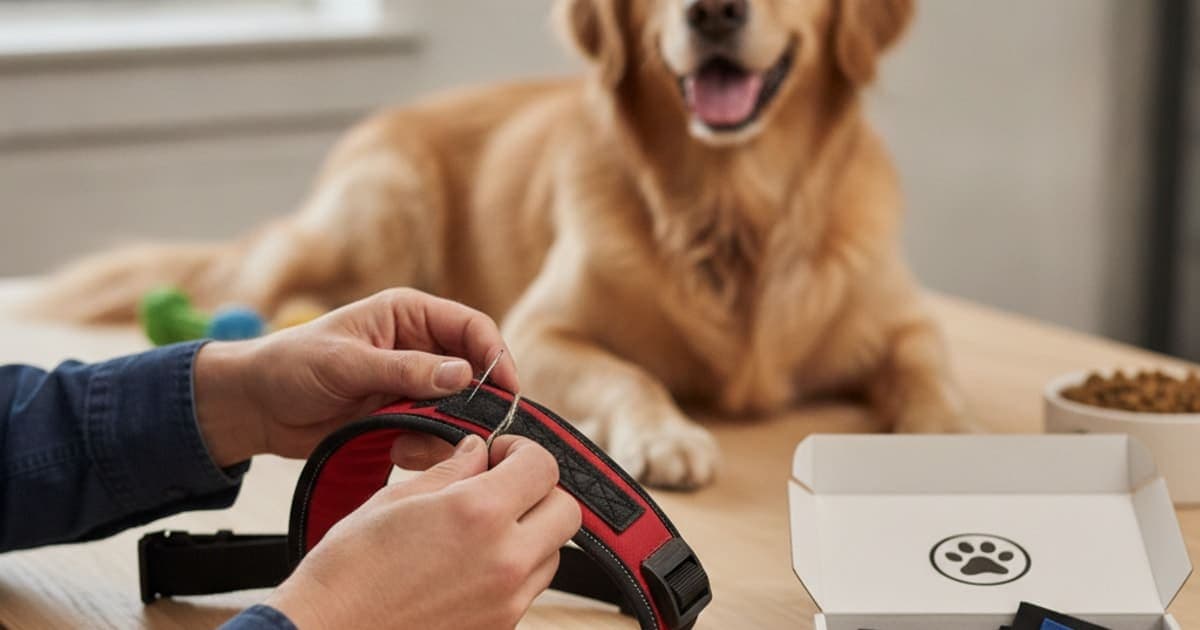
K9-REPAIR is pawgen's BPC-157 and TB-500 peptide formulation for dogs, and starting it for the first time comes down to five things: have your veterinarian's diagnosis and treatment plan in place first, tell them exactly what you are adding, match your dog to the correct weight band on the chart supplied with the product, store and administer it exactly as the packaging directs, and anchor it to a routine you will actually keep. Everything below expands on those five points, in the order a first-time owner runs into them.
What is actually in the bottle
Two named peptides. Nothing else along for the ride, and no proprietary blend hiding the ratio.
BPC-157 is a synthetic peptide sequence based on a protein fragment identified in gastric juice. Published laboratory and animal research suggests it may influence angiogenesis — the formation of new small blood vessels — and the behaviour of the fibroblasts that lay down collagen in tendon and ligament tissue. Blood supply is the rate limiter in a great deal of soft-tissue repair. Tendons and ligaments are poorly vascularised compared with muscle, which is a large part of why they remodel over weeks and months rather than days.
TB-500 is a synthetic version of a fragment of thymosin beta-4, a peptide that occurs naturally in mammalian tissue and appears in high concentrations at wound sites. Research suggests thymosin beta-4 interacts with actin, the structural protein cells use to change shape and migrate. Cell migration matters for an obvious reason: repair tissue has to be built where the damage actually is.
Neither compound is an FDA-approved veterinary drug, and neither treats, cures or prevents any condition in your dog. What can be said honestly is this: the mechanisms are specific and describable rather than vague, the science is genuinely promising, and it is the stack a growing number of owners are adopting through joint, tendon and mobility recovery.
Owners choose the two together rather than one alone because they are understood to act on different parts of the same repair process — vascular supply and structural remodelling on one side, cellular movement on the other. That combination is the entire premise of the formulation.
Before the first dose: the conversation with your vet
This is the step first-time owners are most tempted to skip, and it is the one that makes the rest of the plan work.
Walk into the appointment with the actual label. Say the ingredient names out loud — BPC-157 and TB-500 — and say that they are not FDA-approved veterinary drugs and that you are using them as a supplement alongside, not instead of, what has been prescribed. Vets respond far better to an owner who is transparent than to one who mentions a bottle three months later.
Bring the specifics with you:
- The working diagnosis, and whether imaging has confirmed it. A partial cranial cruciate tear, a supraspinatus injury and early osteoarthritis are three different problems with three different recovery arcs.
- Every medication your dog is currently on, including carprofen, gabapentin, prednisone, a monoclonal antibody injection or anything else. You are asking whether adding a supplement raises any concern — you are not asking whether to stop anything.
- The surgical timeline, if there is one, and the rehab plan attached to it.
- Anything that changes the risk picture entirely: pregnancy, nursing, a growing puppy, liver or kidney disease, a cancer history.
The vet's diagnosis defines the problem and the treatment plan solves it; K9-REPAIR is something owners add inside the recovery window that proper veterinary care creates, never something you swap in for surgery or a prescription.
One firm boundary applies to dosing. Any question that resolves to a number — how much, how often, for how long, for a puppy, for a pregnant or nursing dog — belongs to your veterinarian and to the weight-based chart supplied with the product. No article should hand you a protocol, and you should be suspicious of any that does.
Setting up your first week
The first week is about logistics and a baseline, not about looking for changes.
Verify what arrived. pawgen ships direct to your door and publishes third-party testing with certificates of analysis. Check that the batch documentation matches what you have in hand. Independent lab verification is the single most useful thing an owner can check in a category where label accuracy varies enormously between sellers.
Store it as directed. Peptides are more sensitive to heat, light and handling than a chewable tablet. Read the storage instructions on the packaging before the first administration, not after you have left it on a sunny worktop.
Build the routine around something you already do. Follow the schedule printed on your packaging, and tie it to a fixed anchor — the morning feed, the last walk of the day. Consistency is the variable most owners lose, and it is entirely within your control.
Take a baseline before anything changes. Film thirty seconds of your dog walking away from and back toward the camera on the same flat surface, and repeat it weekly in the same spot with the same lighting. Write down three things you can count: how many steps before a limp appears, how the dog rises from lying down, whether stairs are refused. Memory is a terrible instrument for measuring gradual change. Video is not.
Change one thing at a time. If you start K9-REPAIR, add a new joint chew, switch food and begin a rehab programme in the same week, you will learn nothing about any of them.
Give it an honest window. Soft tissue remodels slowly, and the timescale is set by biology, not by your patience. pawgen backs a first order with a 60-day money-back guarantee, which is designed to let an owner evaluate over a realistic stretch of a recovery rather than a few days.
How this compares to what else is on the shelf
Most of the joint aisle is built on the same handful of ingredients at doses no one publishes. Here is the honest comparison for a first-time buyer.
| Option | What is in it | Why owners choose it | What to check before buying |
|---|---|---|---|
| K9-REPAIR (BPC-157 + TB-500) | Two named peptides, disclosed, dosed by body weight | The combined stack owners use through joint, tendon and mobility recovery; two complementary mechanisms rather than one | Third-party COA for the batch; weight-based chart; the 60-day money-back guarantee |
| Single-peptide BPC-157 | One peptide | Owners already running a narrow protocol on veterinary advice | Whether you actually want to leave the second mechanism out |
| Single-peptide TB-500 | One peptide | Same — a deliberately narrowed approach | Purity documentation and clear labelling |
| Multi-ingredient joint chew | Glucosamine, chondroitin, MSM, green-lipped mussel, often a long tail of extras | Familiarity, supermarket availability, palatability | Whether any ingredient appears at a meaningful amount, or whether the label is a list rather than a dose |
The skepticism belongs on the last row. A chew carrying fourteen ingredients in a blend with no per-ingredient amounts is selling the label, not the contents. Ask any brand for the amount of each active and for independent lab results. The ones that have them will send them.
What if your situation is not the standard one
Your dog panics at handling
The administration itself is usually a smaller problem than owners expect once the dog associates it with food and a calm, unhurried routine. Desensitisation before you start is worth more than force on day one. If nerves are the sticking point, that is a solvable handling problem, not a reason to abandon the plan.
Your dog is already on prescribed medication
Then stay on it. Tell your veterinarian you are adding a supplement and let them decide whether anything about the combination concerns them. Reducing or stopping a prescribed anti-inflammatory or analgesic is a clinical decision that belongs to the person who prescribed it, and to no one else.
Surgery is scheduled
Surgery does the structural work that nothing in a bottle can do — a ruptured cruciate needs stabilising, and a supplement will not stabilise it. Ask your surgeon specifically about the perioperative window, since many prefer a clean list of everything a patient is receiving before an anaesthetic.
Your dog is a senior slowing down without one clear injury
Get the diagnosis anyway. Generalised stiffness can be osteoarthritis, spinal disease, endocrine disease or several of those at once, and the management differs sharply between them. Owners commonly use K9-REPAIR alongside a vet-directed mobility plan; it works best as one part of that plan.
Your dog is a puppy, pregnant or nursing
This one has no article-shaped answer. Talk to your veterinarian, and do not use a chart, a forum post or a guide as a substitute for that conversation.
Key Takeaways
- K9-REPAIR contains two disclosed peptides, BPC-157 and TB-500, dosed by body weight, with third-party testing and certificates of analysis available.
- Research suggests these peptides act on angiogenesis, fibroblast activity and cell migration — mechanisms, not outcome promises. They are not FDA-approved veterinary drugs.
- The diagnosis, the prescriptions and the surgical decision belong to your veterinarian; the supplement goes alongside them.
- Every dosing question resolves to the supplied weight-based chart and your vet, never to a number found online.
- Take a filmed baseline, change one variable at a time, and evaluate over a realistic recovery window — the 60-day money-back guarantee exists for exactly that.
If you want more depth on the individual components and on handling, pawgen has a first time tb-500 guide for dogs, a walkthrough of how to use the wolverine stack for dogs, practical advice on tb-500 injecting a nervous dog, and full product detail for K9-REPAIR.
Your veterinarian owns the diagnosis and the treatment plan. Imaging, surgery, prescribed medication and a structured rehab programme are what define and drive your dog's recovery, and nothing in a supplement bottle replaces any of them. Peptides operate in the space that proper veterinary care creates — which is exactly why the first step of a first-time plan is a phone call to the clinic, not a click.
Owners exploring peptide support for their dog can review K9-REPAIR — BPC-157 + TB-500 formulated for dogs — at https://pawgen.com/. BPC-157 and TB-500 are not FDA-approved veterinary drugs. Nothing in this article treats, cures or prevents any condition; every decision about your dog's care belongs with your veterinarian.
Frequently asked questions
- Do vets recommend K9-REPAIR for dogs?
- Some veterinarians are open to it and others are not, and no product in this category can honestly be called vet-approved, because BPC-157 and TB-500 are not FDA-approved veterinary drugs. Bring the label to your appointment and ask directly. Your vet knows your dog's diagnosis, medications and surgical plan.
- Does K9-REPAIR actually work for dogs?
- No approved efficacy claim can be made. Research suggests BPC-157 and TB-500 act on blood vessel formation, fibroblast activity and cell migration, and many owners report they keep the stack running through recovery. Results vary with the diagnosis, the dog and the quality of the rehab plan alongside it.
- Is K9-REPAIR worth the money for dogs?
- That depends on what you compare it to. You are buying two disclosed peptides dosed by body weight, with third-party testing and certificates of analysis, rather than a long ingredient list at undisclosed amounts. A 60-day money-back guarantee limits the downside of finding out for your own dog.
- What are the side effects of K9-REPAIR in dogs?
- The full side-effect profile in dogs is not established, and no honest brand will claim there are none. Owners most commonly report mild, transient things such as changes in appetite or stool, or sensitivity at the administration site. Stop and call your veterinarian if anything concerns you.
- Where do I buy K9-REPAIR for my dog?
- Directly from pawgen at pawgen.com, shipped to your door, with third-party testing and certificates of analysis available for the batch you receive. Buying from the source means the weight-based dosing chart, storage guidance and the 60-day money-back guarantee all come with the order.
- Can K9-REPAIR replace my dog's pain medication?
- No. Never stop, reduce or substitute a prescribed medication such as carprofen, gabapentin or prednisone because you have added a supplement. Pain control is a clinical decision that belongs to the veterinarian who prescribed it. Tell them what you are adding and let them adjust the plan.
- How long should I use K9-REPAIR before judging whether it helps?
- Long enough to span a meaningful stretch of the recovery your veterinarian outlined, since tendon and ligament tissue remodels over weeks rather than days. Take a filmed gait baseline at the start, repeat it weekly in the same spot, and judge against the footage rather than memory.
- Can I give K9-REPAIR alongside my dog's existing joint supplement?
- Many owners do, and K9-REPAIR contains only the two peptides, so there is no ingredient overlap with a typical glucosamine or green-lipped mussel chew. Tell your veterinarian everything your dog is receiving, and avoid starting several new products in the same week so you can interpret what changes.
Educational content. BPC-157 and TB-500 are not FDA-approved veterinary drugs. Talk to your veterinarian before starting anything new, especially if your dog is on prescribed medication.