Hip Dysplasia Surgery Cost — Dog Price Guide by Breed
Back surgery for a dachshund with IVDD is one of the most expensive procedures in general small-animal practice, because the bill combines advanced imaging, a neurologist or surgeon, anesthesia, several days of hospitalization and rehab. Costs vary widely by clinic, region and urgency, so ask for a written estimate.
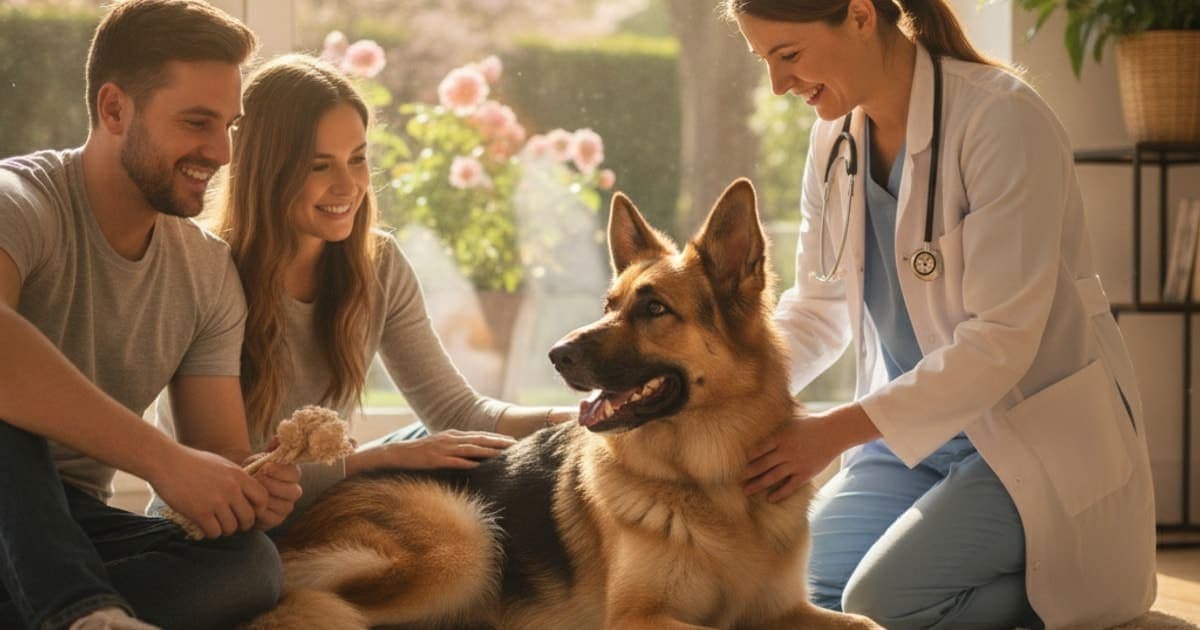
Back surgery for a dachshund — most often a hemilaminectomy to decompress the spinal cord after an intervertebral disc extrusion — typically runs into the thousands, and the figure on the estimate is almost never for the operation alone. Advanced imaging, general anesthesia, a board-certified surgeon or neurologist, several days of inpatient nursing, medication and follow-up rehabilitation all sit inside that number. Because disc disease usually arrives as an emergency and is handled at a referral hospital, the price varies enormously by clinic, region, time of day and the severity of the neurological signs. The only number that means anything for your dog is the written, itemized estimate your hospital gives you — and you should ask for the high end of the range, not the low end.
That same structure explains every other orthopedic cost question owners search: German Shepherd hip dysplasia surgery cost, Rottweiler hip dysplasia surgery cost, canine hip dysplasia cost in general. Breed does not set the price. The procedure chosen, the dog's body weight, the number of joints involved, the level of imaging required and whether you are at a general practice or a specialty referral center are what set it.
Why a ruptured disc costs what it costs
When a dachshund goes down in the back end, the veterinary team is solving two problems at once: what is compressing the spinal cord, and where exactly. A neurological exam tells you the region and the grade — whether the dog is merely weak, non-ambulatory, or has lost deep pain sensation, which is the finding that turns the case into a same-day surgical emergency. But an exam cannot tell a surgeon which disc space to open. That requires cross-sectional imaging, usually MRI or a CT study, and imaging in a dog means general anesthesia, a dedicated technician and machine time. Imaging is frequently one of the largest single line items on the estimate, and it is spent before a scalpel is picked up.
The surgery itself is a decompression: bone is removed from the side of the vertebral canal so the extruded disc material can be lifted off the cord, sometimes with fenestration of adjacent discs to reduce the chance of a second event. After that comes the part owners underestimate. A post-operative IVDD dog needs inpatient nursing — pain management, bladder expression or catheterization, turning, and sling walking — and that hospitalization is charged by the day. Then there is the outpatient tail: recheck exams, medication refills, and physical rehabilitation that may run for weeks.
So when you ask a hospital for a quote, ask for it broken into diagnostics, surgery and anesthesia, hospitalization, and aftercare. Ask what happens to the total if your dog needs an extra night. Ask whether the imaging fee is charged even if the findings turn out to be non-surgical. Those three questions change the useful accuracy of an estimate more than any online average ever will.
Hip dysplasia in large breeds: the procedures and what moves the price
German Shepherds and Rottweilers are both over-represented for hip dysplasia, and owners often assume there is a breed premium. There is not. What there is: more body mass to anesthetize, larger implants, longer surgical time, and frequently two affected hips rather than one. Bilateral cases are usually staged months apart, which effectively doubles the treatment cost and the recovery calendar.
The procedure your surgeon recommends depends on the dog's age, the state of the joint cartilage, and how much arthritis has already formed. These are genuinely different operations with genuinely different price tiers.
| Procedure | What it involves | Relative cost tier | Recovery arc |
|---|---|---|---|
| Femoral head and neck excision (FHO) | The ball of the hip is removed so a fibrous false joint forms | Lowest of the hip procedures | Weeks of rehab; outcome depends heavily on physiotherapy and a lean body weight |
| Juvenile pubic symphysiodesis (JPS) | A growth-plate procedure in very young at-risk puppies to improve hip coverage as the pelvis develops | Low, but only inside a narrow age window | Short surgical recovery, performed before dysplasia is established |
| Double or triple pelvic osteotomy (DPO/TPO) | The pelvis is cut and rotated to deepen coverage of the femoral head | Middle to high | Strict confinement for several weeks, then a graded return to load |
| Total hip replacement (THR) | The joint is replaced with a prosthetic implant | Highest per hip | Long confinement; staged separately if both hips need doing |
| Hemilaminectomy (dachshund IVDD) | Bone is removed over the spinal cord to decompress it and clear extruded disc material | High, driven by MRI or CT plus specialist care | Days as an inpatient, then weeks of crate rest and rehabilitation |
FHO is the most economical surgical route and can work very well, particularly in smaller and lighter dogs — which is precisely why it is less often the first recommendation for a heavy Rottweiler with two bad hips. Total hip replacement sits at the top of the range because of the implant system, the sterility requirements and the surgical expertise involved. Neither is better in the abstract. Your veterinarian, and the orthopedic specialist they refer you to, will weigh joint condition, age, weight and your dog's activity demands, and that conversation is worth having in full before you compare prices between hospitals.
What pet insurance actually covers — and the clauses that decide it
Owners search specifically for whether insurance covers dachshund back problems, and the honest answer is: often yes, but the policy wording decides it, not the brochure. Four clauses do most of the work.
Pre-existing conditions. If your dog has already been examined for back pain, wobbliness or a suspected disc episode before the policy started, that condition — and usually anything the insurer considers related to it — is excluded. This is the single most common reason a claim is denied.
Hereditary and congenital cover. Hip dysplasia and intervertebral disc disease are widely classified as hereditary or breed-related. Some comprehensive plans include them as standard, some require an add-on, and some exclude them for predisposed breeds entirely. Check this line explicitly for dachshunds, German Shepherds and Rottweilers.
Waiting periods. Many policies apply a longer waiting period to orthopedic and cruciate conditions than to illness generally, and some will waive or shorten it after an exam. A policy bought the week symptoms appear will not pay.
Limits, deductible and reimbursement percentage. An annual cap, a per-condition cap, your deductible and the reimbursement rate together determine what actually lands back in your account. A bilateral clause matters too: if one hip was diagnosed before cover began, the other may be treated as pre-existing.
One practical point that catches people out: most veterinary hospitals require payment at discharge and you claim reimbursement afterwards, so you need the funds available on the day regardless of cover. Ask your insurer for pre-authorization in writing once you have the estimate, and ask the hospital about third-party financing or staged payment before the surgery date rather than in the discharge room.
The cheaper conversation: conservative management and prevention
Not every dysplastic hip and not every disc episode goes to surgery. Many dogs are managed medically, and that path has costs of its own — recheck exams, prescribed anti-inflammatories and pain medication, rehabilitation sessions, hydrotherapy, ramps, non-slip flooring, a harness instead of a collar for disc-prone dogs, and strict activity restriction that can last weeks. Conservative management is a real veterinary plan with real supervision, not a decision to do nothing, and it should be chosen with your veterinarian rather than instead of them.
Prevention is where the economics turn dramatically in the owner's favor, and body condition is the lever. In a long-running lifetime feeding study in Labrador Retrievers led by Richard Kealy and colleagues, dogs kept lean throughout life developed radiographic signs of hip osteoarthritis later — and lived longer — than littermates fed more generously. The cheapest orthopedic surgery is the one a lean, well-conditioned, sensibly managed dog never needs, and weight is the variable owners control most directly. Add controlled, consistent exercise that builds the muscle supporting the joint, avoid repetitive jumping onto furniture for long-backed breeds, and keep growth steady rather than explosive in large-breed puppies.
Building recovery support around the surgical plan
Surgery restores the mechanics. The soft tissue around it — tendon, ligament, joint capsule, muscle — then has to remodel under load over weeks, and that remodeling phase is where owners increasingly look for support. This is the space K9-REPAIR occupies: a BPC-157 and TB-500 peptide formulation made for dogs.
Both compounds are worth understanding at the level of mechanism. BPC-157 is a pentadecapeptide sequence derived from a protein identified in gastric juice, and published preclinical work has examined its effects on tendon and ligament fibroblast migration and on angiogenic signaling — the formation of the new microvasculature that healing connective tissue depends on. TB-500 is a synthetic peptide related to thymosin beta-4, a naturally occurring actin-binding protein studied for its role in cell migration and new blood vessel formation. This is emerging and promising science that a growing number of owners are adopting through recovery, and research suggests these pathways matter to how soft tissue rebuilds. It is not a treatment, and BPC-157 and TB-500 are not FDA-approved veterinary drugs.
What pawgen can state plainly is descriptive: K9-REPAIR is dosed by body weight, every batch is third-party tested with certificates of analysis published openly, it ships direct to the door, and it carries a 60-day money-back guarantee. That last point matters in a category full of underdosed kitchen-sink chews where the label lists twelve ingredients and quantifies none of them. Where the dosing question comes up — and especially for puppies, pregnant or nursing dogs — the answer is to work it out with your veterinarian, not to read a number off a website. Peptides sit alongside the surgical plan, the prescribed pain protocol and the rehab program. They never replace any of them.
Key Takeaways
- Dachshund back surgery and large-breed hip surgery both run into the thousands, and imaging, anesthesia, hospitalization and rehab often account for more of the estimate than the operation itself.
- Breed does not set the price; procedure type, body weight, number of joints and hospital type do. FHO sits at the lower end of hip procedures, total hip replacement at the top.
- Bilateral hip cases are usually staged, which roughly doubles both cost and recovery time.
- Insurance commonly covers IVDD and hip dysplasia, but only when the policy predates any sign of the condition and includes hereditary cover — read the waiting period, annual limit and bilateral clauses.
- Most hospitals require payment at discharge, with reimbursement afterwards, so arrange financing before the surgery date.
- Keeping a dog lean is the most reliable and least expensive orthopedic intervention available to an owner.
If you want to look further into how pawgen operates, the published certificates of analysis cover third-party batch testing, the K9-REPAIR range lists what is in the formulation, and shipping and availability are set out separately.
Your veterinarian owns the diagnosis, the imaging decision, the surgical referral and the medication plan — that is not a formality, it is the structure everything else depends on. Peptides and supportive supplements operate inside the space that proper veterinary care creates, never in place of it. Bring the estimate, the insurance policy and any product you are considering to the same conversation, and make the decision with the person who has examined your dog.
Owners exploring peptide support for their dog can review K9-REPAIR — BPC-157 + TB-500 formulated for dogs — at https://pawgen.com/. BPC-157 and TB-500 are not FDA-approved veterinary drugs. Nothing in this article treats, cures or prevents any condition; every decision about your dog's care belongs with your veterinarian.
Frequently asked questions
- How much does back surgery cost for a dachshund?
- Costs typically reach into the thousands and are driven by more than the operation itself: emergency assessment, MRI or CT imaging under anesthesia, the surgeon's fee, inpatient nursing and rehabilitation all contribute. Prices differ sharply between clinics and regions, so request a written, itemized estimate including the high end before consenting.
- Does pet insurance cover dachshund back problems?
- Often yes, if the policy was active before any signs appeared and the plan includes hereditary and congenital conditions. Disc disease diagnosed or suspected before enrollment is treated as pre-existing and excluded. Waiting periods, annual limits, deductibles and reimbursement percentages all change the payout, so read the policy wording rather than the marketing.
- How much does German Shepherd hip dysplasia surgery cost?
- It depends on the procedure rather than the breed. Femoral head and neck excision sits at the lower end, pelvic osteotomy in the middle, and total hip replacement at the top. Large body weight and two affected hips push the total higher, since bilateral cases are usually staged separately.
- Is Rottweiler hip dysplasia surgery more expensive than for other breeds?
- There is no breed surcharge, but heavier dogs cost more to operate on. Greater body mass means larger implants, more anesthetic time and longer surgery, and Rottweilers frequently present with both hips affected. The procedure chosen and the number of joints treated remain the main cost drivers.
- What is the cheapest surgical option for canine hip dysplasia?
- Femoral head and neck excision, commonly called FHO, is generally the least expensive hip procedure because it uses no implant. It removes the femoral head so a fibrous false joint forms. Results depend heavily on committed physiotherapy and keeping the dog lean, and suitability varies with size and age.
- Can a dachshund with disc disease recover without back surgery?
- Many dogs with milder neurological grades are managed medically with strict confinement, prescribed pain relief and rehabilitation. Dogs that have lost deep pain sensation are usually surgical emergencies where time matters. Only your veterinarian can grade the case and decide, so seek assessment the same day signs appear.
- What does managing hip dysplasia without surgery involve financially?
- Ongoing rather than one-off costs: recheck exams, prescribed anti-inflammatory and pain medication, rehabilitation or hydrotherapy sessions, weight-management diets, ramps and non-slip flooring. Spread over years this is not trivial, though it is generally lower than surgery. Your veterinarian should review the plan regularly as the joint changes.
- Where does K9-REPAIR fit during orthopedic recovery?
- K9-REPAIR is a BPC-157 and TB-500 peptide formulation dosed by body weight, third-party tested with published certificates of analysis, and carrying a 60-day money-back guarantee. Owners adopt it alongside surgery, prescribed medication and rehab. These peptides are not FDA-approved veterinary drugs, so discuss use with your veterinarian first.
Educational content. BPC-157 and TB-500 are not FDA-approved veterinary drugs. Talk to your veterinarian before starting anything new, especially if your dog is on prescribed medication.