How to Hike With a Dog? (Trail Safety and Conditioning)
Hike with a dog by matching the route to the dog's age, breed and current fitness, adding distance gradually over weeks, carrying water and a paw kit, checking feet and body temperature at every break, and leashing up around wildlife, livestock, drop-offs and other trail users.
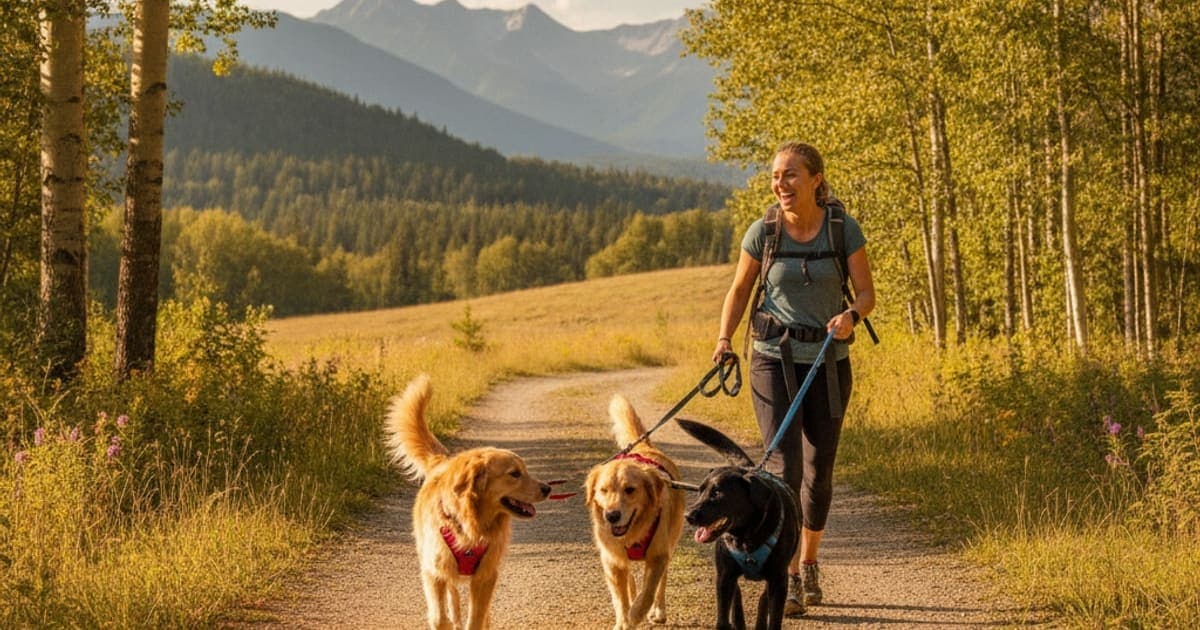
Hike with a dog by matching the route to the dog you actually have, building distance over weeks instead of days, carrying water and a paw kit for both of you, stopping to check feet and body temperature at every break, and keeping a leash on anywhere wildlife, livestock, drop-offs or other trail users are in the picture. Boots, packs, winter layers and bear protocol are all variations on those five habits.
So, can I take my dog hiking? For most healthy adult dogs, yes, and most of them will love it. The dogs that need a different plan are puppies whose growth plates have not closed, flat-faced breeds in anything warmer than cool weather, seniors with untreated joint disease, and any dog recovering from surgery or an orthopedic injury without clearance. If your dog sits in one of those groups, that is a conversation to have with your veterinarian, not a judgment call to make at the trailhead.
Is hiking good for dogs, or is it too much for them?
Hiking is one of the better forms of exercise a dog can get. It is sustained, low-impact on soft ground, and it layers mental work on top of physical work. A dog reading scent along a ridgeline is solving problems the whole way up, which is why many owners notice a hiked dog settles differently at home than a dog who ran laps in a yard. Varied, gradual loading is also the kind of movement that keeps muscle supporting the joints rather than letting it waste.
Hiking turns bad for dogs under predictable conditions. The weekend warrior pattern is the main one: five sedentary days followed by a long, steep Saturday. That mismatch is where soft tissue takes the hit, and the cranial cruciate ligament, which absorbs the twisting load in the stifle, is a common casualty in dogs who are asked for more than their conditioning supports. Heat is the second: dogs shed heat inefficiently, and rock, sand and exposed trail run far hotter than the air temperature on your phone. The third is terrain the dog cannot refuse, such as scrambles, ladders and steep descents, where a willing dog will follow you into something their frame should not be doing.
Condition the dog for the hike you are planning, not the hike you hope they can handle.
Which dogs handle trails well, and which need a shorter route
What kind of dogs are good for hiking? Body plan matters more than breed label, but the patterns are consistent.
| Dog profile | Trail outlook | What to watch |
|---|---|---|
| Sporting, herding and working breeds | Built for distance and elevation once conditioned | They will push past the point of soreness without showing it |
| Northern and sled breeds | Excellent in cold and snow | Heat intolerance, high prey drive, unreliable off-leash recall |
| Sturdy small breeds and terriers | Surprising range for their size | Stride count, cold exposure, obstacles that are a step for you and a leap for them |
| Flat-faced breeds | Short, cool, flat routes only | Breathing and heat load, which escalate quickly |
| Giant breeds | Fine for moderate distance | Joint loading on descents, slower conditioning, heat |
| Short-legged, long-backed breeds | Comfortable on gentle terrain | Spinal load from jumping and steep steps |
| Puppies and seniors | Case by case | Open growth plates in young dogs, arthritis and stamina in older ones |
Coat type, body condition score and prior injury history override all of it. A lean, conditioned mixed breed outperforms an overweight purpose-bred athlete every time.
Conditioning, paws and pack weight before the trailhead
Start with a vet check, especially if the dog is over seven, carries extra weight, or has ever been lame. Your veterinarian can tell you whether the gait you think is normal is actually compensation for something.
Then build. Add distance and elevation in small weekly increments rather than doubling, and let the dog have an easy day after a hard one. Soft tissue adapts more slowly than cardiovascular fitness, which is exactly why a dog can feel enthusiastic at mile six and be sore for two days afterward.
Paws deserve more attention than they usually get. Pads toughen with gradual exposure to varied surfaces, so a dog who only ever walks on grass will shred their feet on granite or lava rock. Trim the fur between the pads, keep nails short enough that they do not change how the foot loads on descent, and check between every toe at breaks for grit, thorns, foxtails and cracks. If you use boots, break them in at home first; a dog learning to walk in boots at mile four is a dog who will fight you the whole way down.
For gear, carry more water than you think and offer it before the dog asks. Dog packs are useful for mature, conditioned dogs, but the load should start near empty and build, and the fit should not restrict the shoulder. Ask your vet what is reasonable for your dog's frame before loading one up. Backpacking with dogs, the topic that fills whole forum threads, mostly comes down to the same fundamentals stretched over multiple days: sleep insulation, calorie increase, and a hard rule about turning back early.
Leash decisions, trail etiquette and hiking with a reactive dog
Hiking with dogs off leash is legal in fewer places than owners assume, and the rules are set by whoever manages the land. Check before you go, because a citation is the least of the risks. Off-leash hiking requires genuinely reliable recall under distraction, not recall in a quiet park, and even then the trail supplies porcupines, snakes, cliff edges, cactus, livestock and other dogs who do not want company.
A long line is the honest middle ground. It gives sniffing freedom, keeps the dog out of the brush, and makes you predictable to everyone else on the trail. Yield uphill, step off the trail and sit the dog as groups pass, and pack out waste rather than cairning a bag beside the trail for a pickup that never happens.
Hiking with a reactive dog is entirely doable, and the advice that circulates in owner communities on Reddit converges on the same tactics for a reason: go at low-traffic hours, choose out-and-back trails with long sightlines and pull-off space, use well-fitted equipment you have tested, carry high-value food, and practice disengagement before you need it. Short successful outings build more than long overwhelming ones.
Winter, heat and hiking in bear or grizzly country
Hiking with dogs in winter brings its own list. Ice balls form between the pads and are genuinely painful, so boots or paw balm plus regular checks matter. Road and trailhead deicer irritates skin and should not be licked off. Thin-coated, lean and small dogs lose heat fast once they stop moving, so a layer and short breaks beat long summit lunches. Dehydration still happens in cold air, and snow is not a water source for a working dog. Daylight is short, so turn around earlier than feels necessary.
In heat, go early, stay in tree cover, test rock and sand with the back of your hand, and know the early signs of heat stress: frantic panting, brick-red gums, stumbling, a dog that lies down and will not get up. That is an emergency, not a rest stop.
Hiking with dogs in bear country, and especially hiking with dogs in grizzly country, has one dominant rule: keep the dog leashed. A loose dog can locate a bear, lose the argument, and bring the bear straight back to you. Many agencies restrict or prohibit dogs on certain trails in grizzly habitat, so confirm the managing agency's current rules before you drive out. Carry bear spray where you can reach it, make noise on blind corners, never let the dog investigate a carcass, and store food and dog food exactly as the regulations require. Ticks, standing water and wildlife encounters are also worth raising with your veterinarian, who can advise on vaccination and parasite prevention for the terrain you actually hike.
Recovery between hikes: joints, tendons and what owners use
The hike is the stimulus. The adaptation happens in the two or three days afterward, and that window is where most owners under-invest. Watch for stiffness on the first few steps the next morning, reluctance on stairs, licking at a wrist or stifle, or a shortened stride. Those are the early signals that the load exceeded the tissue's current capacity, and they are worth a vet visit if they persist past a day or two.
This is where pawgen built K9-REPAIR, a BPC-157 and TB-500 formulation for dogs that many owners adopt as part of their recovery routine between hard days on trail and through post-injury rehab. BPC-157 is a synthetic peptide sequence derived from a protein found in gastric juice, and published animal research suggests it may support angiogenesis and the behavior of tendon and ligament fibroblasts. TB-500 relates to thymosin beta-4, a naturally occurring protein involved in actin regulation and cell migration, and research indicates it may play a role in how tissue organizes itself during remodeling. These are not FDA-approved veterinary drugs and nothing here is a treatment claim, but the mechanism is well described and the science is moving quickly, which is why owners are choosing it over the underdosed kitchen-sink chews that hide trace amounts behind a proprietary blend. K9-REPAIR is third-party tested with published certificates of analysis, dosed by body weight, shipped direct to your door, and backed by a 60-day money-back guarantee.
Key Takeaways
- Most healthy adult dogs can hike; conditioning, not enthusiasm, sets the safe distance.
- Build mileage and elevation gradually and give an easy day after a hard one.
- Check paws at every break, and break in boots at home before the trail.
- Leash up in bear and grizzly country, and confirm the managing agency's rules before you go.
- Heat and flat-faced breeds are a dangerous combination; winter brings ice balls, deicer and heat loss.
- Reactive dogs do well on quiet trails with long sightlines and short, successful outings.
- Recovery between hikes matters as much as the hike itself.
Owners comparing options can review pawgen's third-party certificates of analysis, check current availability and shipping, and see the full formulation in the shop.
Your veterinarian owns the diagnosis and the plan. If your dog is limping, recovering from a cruciate repair, managing arthritis or being worked up for anything orthopedic, the surgery, the prescribed medication and the rehab protocol come first, and nothing here replaces any of them. Talk to your veterinarian about what your dog's frame can handle, what the recovery window should look like, and where a supplement fits alongside the care they have already prescribed. Peptides and supplements operate in the space that good veterinary care creates, not instead of it.
Owners exploring peptide support for their dog can review K9-REPAIR, BPC-157 + TB-500 formulated for dogs, at https://pawgen.com/. BPC-157 and TB-500 are not FDA-approved veterinary drugs. Nothing in this article treats, cures or prevents any condition; every decision about your dog's care belongs with your veterinarian.
Frequently asked questions
- How to hike with a dog?
- Match the route to your dog's age, breed and current fitness, build distance gradually over weeks, carry water and a paw kit, check feet and body temperature at every break, and keep a leash on around wildlife, livestock, drop-offs and other trail users. Turn back earlier than feels necessary.
- Can I take my dog hiking?
- Yes, most healthy adult dogs can hike once conditioned. Puppies with open growth plates, flat-faced breeds in warm weather, seniors with joint disease and dogs recovering from orthopedic surgery need a different plan. Get your veterinarian's input first if your dog falls into any of those groups.
- Is hiking good for dogs?
- Hiking is excellent exercise for most dogs. It is sustained, varied and low-impact on soft ground, it builds muscle that supports the joints, and the scent work provides mental enrichment that yard exercise does not. Conditioned dogs generally settle better at home after a trail day.
- Is hiking bad for dogs?
- Hiking becomes risky when the mileage exceeds the dog's conditioning, when heat is involved, or when terrain forces jumps and steep descents. The weekend warrior pattern, five sedentary days then a long hard Saturday, is where soft tissue injuries, including cruciate damage, most often occur.
- What kind of dogs are good for hiking?
- Sporting, herding and working breeds handle distance and elevation best once conditioned, and northern breeds excel in cold. Body condition matters more than breed, though. Flat-faced breeds, giant breeds on long descents, and long-backed short-legged dogs on steep terrain all need shorter, gentler routes.
- Can I hike with my dog off leash?
- Only where the land manager permits it and only with recall that holds under heavy distraction. Off-leash hiking exposes dogs to wildlife, porcupines, snakes, cliff edges and other reactive dogs. A long line gives most of the freedom with far less risk, and keeps you predictable to other hikers.
- What should I know about hiking with dogs in winter?
- Ice balls form between the pads and hurt, so use boots or balm and check feet often. Deicer irritates skin and should not be licked off. Thin-coated and small dogs cool fast at rest, dehydration still occurs in cold air, and short daylight means earlier turnaround times.
- Are dogs allowed in bear and grizzly country?
- Rules vary by land manager, and many agencies restrict or prohibit dogs on trails in grizzly habitat, so confirm current regulations before you drive out. Where dogs are allowed, keep them leashed, carry accessible bear spray, make noise on blind corners, and store food exactly as required.
- How do I hike with a reactive dog?
- Go at low-traffic hours, choose out-and-back trails with long sightlines and room to step off, use equipment you have already tested at home, carry high-value food, and practice disengagement before you need it. Short, successful outings build more confidence than long, overwhelming ones.
- How do I help my dog recover between hikes?
- Watch for morning stiffness, stair reluctance, licking at a joint or a shortened stride, and give easy days after hard ones. Owners also use peptide formulations such as K9-REPAIR through recovery periods. Persistent lameness warrants a veterinary exam rather than another rest day.
Educational content, not veterinary advice. Ask your vet about your dog.