How Is IBD Diagnosed in Dogs? (The Exclusion Process)
IBD in dogs is diagnosed by exclusion: your veterinarian rules out parasites, infection, organ disease, and food-responsive or antibiotic-responsive causes first, then confirms chronic inflammation with intestinal biopsies taken by endoscopy or surgery. Bloodwork, fecal testing, imaging and a strict diet trial all come before that final step.
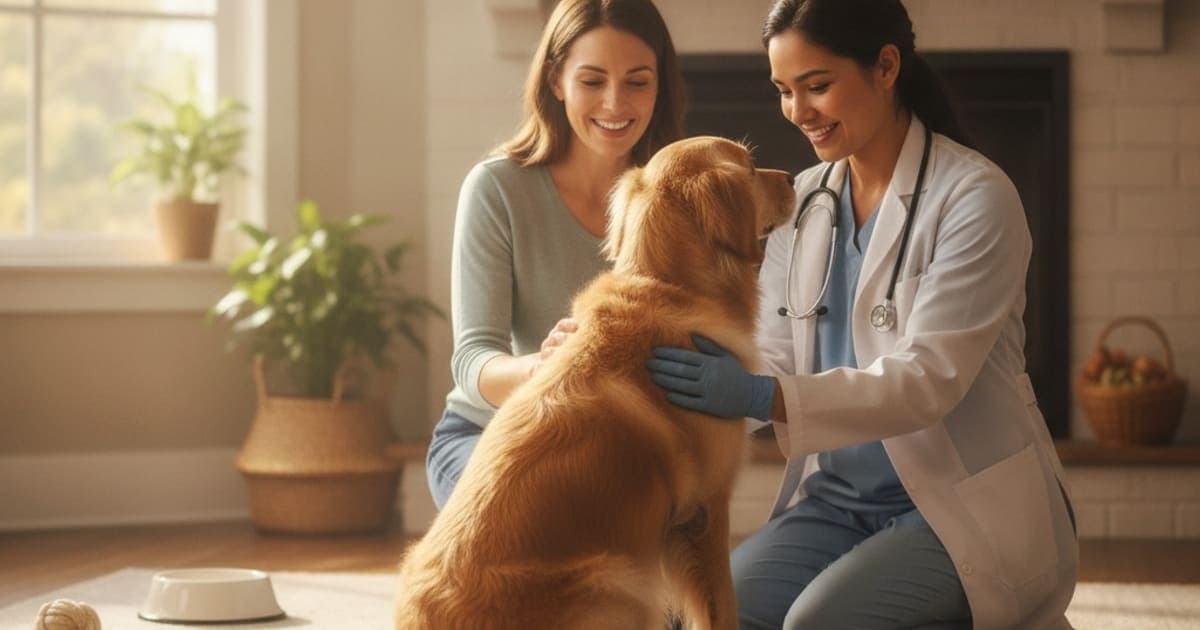
How is IBD diagnosed in dogs?
IBD in dogs is diagnosed by exclusion. A veterinarian rules out parasites, infection, organ disease and food-responsive causes first — using fecal testing, bloodwork, urinalysis and imaging — then runs a strict elimination diet trial. If chronic signs persist, intestinal biopsies taken by endoscopy or surgery confirm abnormal inflammatory cell infiltration in the gut wall.
That final step matters more than most owners expect. Inflammatory bowel disease is not a description of symptoms; it is a description of tissue. The World Small Animal Veterinary Association (WSAVA) Gastrointestinal Standardization Group published grading criteria specifically so that pathologists across different laboratories would describe canine and feline gut biopsies in a consistent way — how much architectural change is present, and which inflammatory cell types have moved into the intestinal lining. Without a tissue sample, a veterinarian can describe a dog as having chronic enteropathy, but cannot confirm the histological picture that the label IBD actually refers to.
Why there is no single test for chronic gut disease
Veterinary internal medicine increasingly groups these cases under the umbrella term chronic enteropathy, then sorts them by what the dog responds to: food-responsive, antibiotic-responsive, immunosuppressant-responsive, or non-responsive. That classification is retrospective by design. You find out which category a dog belongs to by working through the categories in order.
This is why the workup feels slow. An owner arrives with a dog that has been vomiting bile twice a week for three months, or passing soft, mucus-streaked stool, or quietly dropping weight despite a normal appetite. Those signs are produced by dozens of different problems — a swallowed sock, giardia, pancreatic insufficiency, Addison's disease, a dietary intolerance, lymphoma. Several of them are far more common than IBD, and several are far easier to fix.
No single blood test, ultrasound image or stool sample diagnoses IBD on its own — the diagnosis is built by systematically eliminating everything else, then confirming what remains with tissue.
The first round: parasites, bloodwork and imaging
The opening stage of the workup is broad and relatively inexpensive, and it resolves a meaningful proportion of cases before anyone mentions endoscopy.
Fecal testing. Flotation for worms and coccidia, giardia antigen testing, and in many practices a PCR panel covering common bacterial and protozoal pathogens. Parasites are the single most treatable mimic of chronic gut disease, and shedding can be intermittent, so more than one sample may be requested.
Complete blood count and serum chemistry. Your veterinarian is reading these for clues rather than answers. Low albumin can point toward protein-losing enteropathy. Elevated liver or kidney values redirect the investigation entirely. Electrolyte patterns can raise suspicion of Addison's disease, an endocrine condition that imitates chronic gastrointestinal illness closely enough that many internists screen for it early with a basal cortisol or ACTH stimulation test.
Gastrointestinal-specific bloodwork. Trypsin-like immunoreactivity (TLI) screens for exocrine pancreatic insufficiency. Pancreatic lipase testing screens for pancreatitis. Cobalamin (vitamin B12) and folate levels give an indirect read on how the small intestine is absorbing nutrients — low cobalamin in particular is common in dogs with significant small-intestinal disease and is usually addressed by the veterinarian regardless of the final diagnosis.
Imaging. Radiographs look for obstruction and foreign material. Abdominal ultrasound is more informative for this specific question: it assesses intestinal wall thickness and layering, checks the mesenteric lymph nodes, and looks for masses. Ultrasound can strongly support a suspicion of infiltrative intestinal disease, but it cannot distinguish inflammation from cancer. That distinction requires cells.
Diet and antibiotic trials: the step most owners underestimate
If the first round is clean and the dog is stable, the next stage is a controlled trial — and it is a diagnostic procedure, not a holding pattern.
An elimination diet trial uses either a hydrolysed protein diet, in which proteins are broken into fragments too small to reliably trigger an immune response, or a genuinely novel protein the dog has never eaten. The trial only works if it is strict. One flavoured chew, one dental treat, one crumb of toast from a child's plate can invalidate weeks of work. Your veterinarian will set the trial length and tell you exactly what your dog may and may not have during it, including flavoured medications and supplements.
A large share of dogs investigated for chronic gut signs turn out to be food-responsive. Those dogs improve during the trial, never need a biopsy, and are managed on diet alone. That outcome is the reason the trial comes before anaesthesia.
Antibiotic-responsive cases are a smaller group, and the profession's approach here has shifted. Antibiotics such as metronidazole and tylosin were once used broadly as a diagnostic trial; growing awareness of how substantially they disrupt the canine gut microbiome has made many veterinarians more selective about when — and whether — to use them for this purpose. This is a conversation worth having explicitly with your veterinarian rather than assuming either approach.
Biopsy: how the tissue sample is actually collected
When signs continue despite a properly executed diet trial, or when a dog is losing protein, losing weight rapidly or deteriorating, biopsy becomes the next step. There are two routes, and they answer slightly different questions.
| Approach | How samples are taken | Strengths | Limitations |
|---|---|---|---|
| Endoscopic biopsy | A flexible scope passed through the mouth and/or rectum under general anaesthesia; small pinch samples of the mucosal lining | Non-invasive, no abdominal incision, quick recovery, allows direct visual inspection of the lining, multiple samples from several sites | Only reaches the stomach, duodenum, ileum and colon; samples the surface layer only; deeper disease can be missed |
| Surgical or laparoscopic biopsy | Full-thickness sections of intestinal wall taken through an abdominal incision or keyhole ports | Samples all layers, reaches the entire small intestine, allows biopsy of liver, pancreas and lymph nodes at the same time | More invasive, longer recovery, incision-healing risk is a genuine concern in dogs with low albumin |
Neither route is automatically superior. The choice depends on where ultrasound suggests the disease sits, how sick the dog is, the albumin level, and whether lymph nodes or other organs need sampling too. Ask your veterinarian to explain which they are recommending and why — this is one of the few decision points in the workup where owner input genuinely shapes the plan.
Reading the report: inflammation, severity and the lymphoma question
The pathologist grades the type and degree of inflammatory cell infiltration and the amount of architectural distortion — blunted villi, dilated lacteals, fibrosis. Lymphoplasmacytic enteritis is the most frequently reported pattern in dogs; eosinophilic and granulomatous patterns also occur and can point toward different underlying triggers.
The hardest job the biopsy does is separating chronic inflammation from small-cell lymphoma. On a standard slide the two can look similar, so laboratories may add immunohistochemistry or clonality testing (PARR) to determine whether the lymphocyte population is a mixed inflammatory response or a single expanding clone. This is why a vague or inconclusive report sometimes leads to further testing on the same sample rather than a new procedure.
Alongside histology, veterinarians often track a clinical severity score — the canine IBD activity index (CIBDAI) or the canine chronic enteropathy clinical activity index (CCECAI) — which combines attitude, appetite, vomiting, stool consistency, stool frequency and weight loss into a single number. Its value is not the diagnosis but the trend: it gives you and your veterinarian an objective way to say whether the plan is working over months.
Supporting the gut lining alongside the plan your veterinarian builds
Diagnosis is the beginning of a long management relationship. Once the plan is set — therapeutic diet, cobalamin supplementation where indicated, immunomodulating medication if the case calls for it — attention turns to the intestinal lining itself, which in a dog with chronic enteropathy has spent months under sustained inflammatory pressure.
That is where a growing number of owners look at peptides. BPC-157 is a synthetic sequence derived from a protein found in gastric juice, and its published laboratory work has centred heavily on gastrointestinal tissue, where research suggests it interacts with angiogenic and growth-factor signalling involved in the repair of injured tissue. TB-500 corresponds to an active region of thymosin beta-4, a naturally occurring peptide that regulates actin — the protein scaffolding cells use to migrate into a damaged area and rebuild it. Mechanistically the two are complementary: one is associated with local blood-vessel formation and tissue repair signalling, the other with cell migration and remodelling.
pawgen's K9-REPAIR combines both in a single weight-based, third-party tested formulation with published certificates of analysis and direct-to-door shipping, backed by a 60-day money-back guarantee. It is the stack owners reach for during recovery periods, and it is educational science rather than a licensed medicine: BPC-157 and TB-500 are not FDA-approved veterinary drugs, and nothing here should be read as a claim that any peptide treats inflammatory bowel disease. Bring it up with your veterinarian, particularly if your dog is on immunosuppressants, so it fits the plan rather than complicating it.
Key Takeaways
- IBD is a diagnosis of exclusion, confirmed by intestinal biopsy — not by symptoms, bloodwork or ultrasound alone.
- Fecal testing, CBC and chemistry, GI-specific bloodwork, Addison's screening and abdominal ultrasound come first, because several common conditions imitate IBD.
- A strict elimination diet trial is a diagnostic step; many dogs turn out to be food-responsive and never need anaesthesia.
- Endoscopic biopsy samples the lining; surgical biopsy samples the full wall thickness. The right choice depends on the individual dog.
- Distinguishing chronic inflammation from small-cell lymphoma is the biopsy's most important job and may require additional laboratory testing.
- Severity indices such as CIBDAI and CCECAI track progress over time once treatment starts.
For a deeper walkthrough of the condition itself, see the complete guide to ibd, the feeding and supplement overview in what to give a dog with ibd, and the mechanism-level explainers on k9-repair for ibd in dogs and bpc-157 for ibd in dogs. If your dog's energy has dropped alongside the gut signs, should i worry if my dog is tiring quickly and when should i take a dog to the vet for tiring quickly cover what that combination can mean.
Your veterinarian owns this diagnosis and the treatment plan that follows it — the testing sequence, the biopsy decision, the medications and the monitoring schedule. Nutrition and peptide support operate in the space that proper veterinary care creates, not instead of it. Chronic enteropathy is a condition managed over years, and the owners who do best are the ones who keep their vet fully informed about everything their dog is receiving.
Owners exploring peptide support for their dog can review K9-REPAIR — BPC-157 + TB-500 formulated for dogs — at https://pawgen.com/. BPC-157 and TB-500 are not FDA-approved veterinary drugs. Nothing in this article treats, cures or prevents any condition; every decision about your dog's care belongs with your veterinarian.
Frequently asked questions
- Can IBD in dogs be reversed?
- IBD is generally managed rather than reversed — it is considered a chronic, relapsing condition. Many dogs achieve long, stable remission with a therapeutic diet, cobalamin supplementation where needed and medication when indicated. Flares can recur under stress or diet changes, so most dogs stay on some form of long-term management with veterinary supervision.
- How much does it cost to treat IBD in dogs?
- Costs vary widely by clinic, region and how far the workup goes. Diagnosis alone can range from basic fecal and blood testing to ultrasound, anaesthesia and biopsy with laboratory processing. Ongoing costs include therapeutic diet, recheck visits and any prescribed medication. Ask your veterinarian for a written estimate at each stage before proceeding.
- What are the first signs of IBD in dogs?
- The earliest signs are usually chronic or intermittent vomiting, loose or mucus-streaked stool, increased stool frequency, and gradual weight loss despite normal or increased appetite. Some dogs show only audible gut gurgling, occasional bile vomiting on an empty stomach, or reduced energy. Signs persisting beyond a few weeks warrant a veterinary appointment.
- What helps a dog with IBD?
- The core of management is a veterinarian-directed plan: a therapeutic hydrolysed or novel-protein diet, cobalamin supplementation if levels are low, and immunomodulating medication when the case calls for it. Some owners also add peptide support such as K9-REPAIR; research suggests BPC-157 and TB-500 act on tissue-repair pathways. Neither is an FDA-approved veterinary drug.
- How long does IBD take to heal in dogs?
- There is no fixed timeline, and IBD is managed rather than cured. Food-responsive dogs often improve during the elimination diet trial your veterinarian sets; cases needing medication typically improve more gradually, with dose adjustments over months. Your vet will track progress using stool quality, weight, appetite and a clinical severity score rather than a calendar.
- Is IBD in dogs painful?
- It can be uncomfortable. Inflamed intestine causes cramping, nausea, bloating and abdominal tenderness, though dogs mask pain well. Look for a hunched posture, praying stretch with chest down and rear up, restlessness after meals, lip licking, reluctance to be picked up, or flinching when the belly is touched. Report these signs to your veterinarian.
- Can bloodwork alone diagnose IBD in dogs?
- No. Bloodwork narrows the field rather than confirming the diagnosis. It can reveal low albumin, low cobalamin, pancreatic insufficiency, organ disease or hormonal conditions that mimic IBD, all of which change the plan. Confirming IBD requires intestinal biopsy showing inflammatory cell infiltration and architectural change in the gut wall.
- Does every dog with chronic diarrhea need an endoscopy?
- No. Many dogs resolve during earlier stages — parasite treatment or a strict elimination diet trial — and never need anaesthesia. Biopsy is usually reserved for dogs that fail those steps, are losing protein or weight, or show ultrasound changes suggesting infiltrative disease. Your veterinarian will explain why they are or are not recommending it.
Educational content. BPC-157 and TB-500 are not FDA-approved veterinary drugs. Talk to your veterinarian before starting anything new, especially if your dog is on prescribed medication.