How Is Inflammation Diagnosed in Dogs? (Vet Workup)
Inflammation in dogs is diagnosed by combining a hands-on physical exam with targeted testing: a complete blood count and chemistry panel, acute-phase proteins such as C-reactive protein, urinalysis, imaging, and sometimes a sample of joint fluid or tissue.
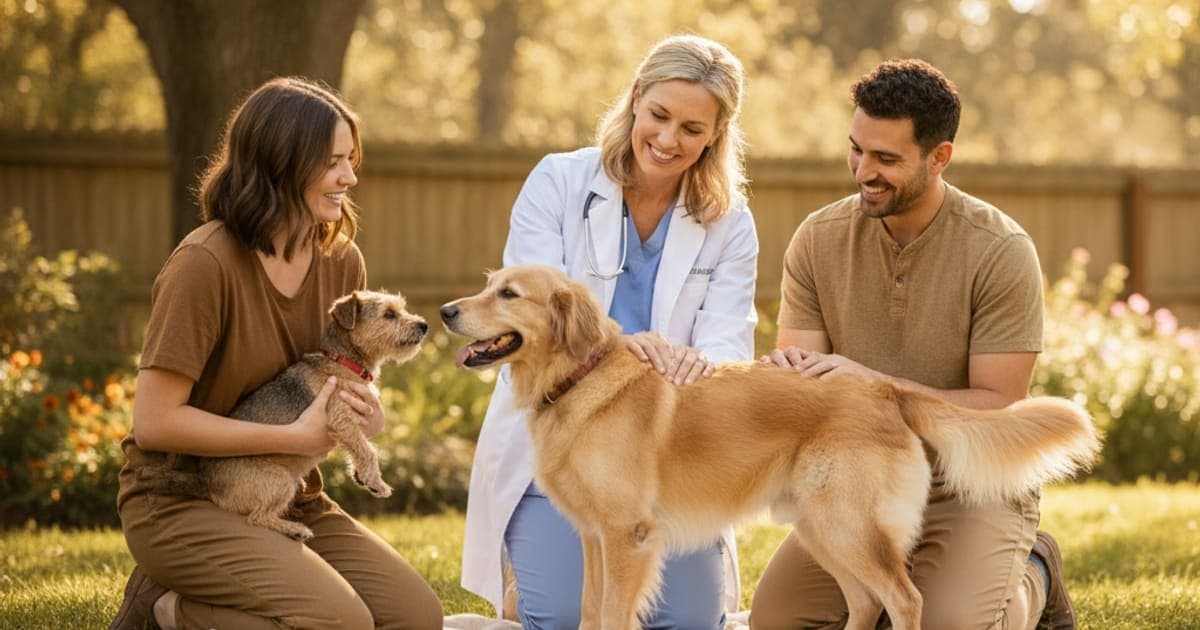
How Is Inflammation Diagnosed in Dogs?
Inflammation in dogs is diagnosed by combining a hands-on physical exam with targeted testing: a complete blood count and chemistry panel, acute-phase proteins such as C-reactive protein, urinalysis, imaging like radiographs or ultrasound, and — when a joint is involved — a sample of joint fluid. No single test names inflammation; the pattern across tests does.
Veterinary clinical pathology references, including Cornell University College of Veterinary Medicine's eClinPath resource, describe C-reactive protein as the major acute-phase protein in dogs — a blood marker that rises when the body mounts a systemic inflammatory response. It is a useful signal, but it does not say where the inflammation is or why it started. That gap is exactly what the rest of the workup exists to close.
Inflammation is a finding, not a final diagnosis
When a veterinarian writes "inflammation" on a chart, they are describing a biological process, not naming a disease. Inflammation is the immune system's response to injury, infection, irritation or autoimmune activity. It brings blood flow, immune cells and signalling proteins to a site so that damaged tissue can be cleared and rebuilt.
The classic cardinal signs — heat, redness, swelling, pain and loss of function — are easy to see in a swollen paw and almost invisible in a slowly degrading hip joint. That is why your vet works through a sequence rather than reaching for one test.
Four questions drive the whole process:
- Is inflammation actually present, or is this pain from a nerve, a mass, or a mechanical problem?
- Is it local or systemic? One hot joint behaves very differently from a dog with a fever and shifting lameness in several limbs.
- Is it acute or chronic? Days-old inflammation and months-old inflammation leave different fingerprints on bloodwork and imaging.
- What is driving it? Infection, trauma, degenerative joint disease, allergy, immune-mediated disease and gastrointestinal disease all produce inflammation by different routes and require different treatment plans.
A finding of inflammation only becomes useful when it comes with a location and a likely cause — and producing those two things is the entire purpose of the diagnostic sequence your veterinarian follows.
What your veterinarian is doing with their hands
The physical exam is not a formality before the "real" tests. In a large share of cases it does most of the localising work, and it determines which tests are worth running at all.
Expect the appointment to start with history, and expect the questions to be specific: when the change started, whether it is worse after rest or after exercise, whether it shifts between limbs, whether there has been a fever, appetite change, vomiting, diarrhoea, coughing, skin flare or ear trouble. Bring video of your dog walking on a flat surface if the problem is intermittent — lameness that vanishes in the exam room is a common and frustrating pattern.
Then the hands-on portion:
- Gait and posture observation. Head bob, shortened stride, weight shifting off a limb, a roached back, or a sit that flops to one side all narrow the field before anything is touched.
- Joint-by-joint palpation. The vet is feeling for effusion (fluid distension in the joint capsule), thickening of the capsule, crepitus, heat, and reduced range of motion. Joint effusion is one of the most reliable physical signs that a joint itself is inflamed.
- Specific orthopaedic tests. Cranial drawer and tibial compression for the cruciate ligament, Ortolani for hip laxity, direct pressure over tendon insertions.
- Temperature, lymph nodes and abdomen. A fever plus enlarged lymph nodes moves the suspicion from a single injured joint toward a systemic or immune-mediated process.
- Skin, ears and mouth. Chronic otitis, inflamed skin and dental disease are extremely common sources of ongoing inflammatory load that owners often mention last.
- Pain scoring. Structured pain assessment — the approach described in the American Animal Hospital Association's pain management guidelines — turns a subjective impression into something that can be tracked at recheck.
What bloodwork can show, and what it will miss
Bloodwork is where systemic dog inflammation becomes measurable. It is also where owners most often misread a normal result.
Complete blood count (CBC). An elevated neutrophil count, immature neutrophils (a left shift), monocytosis, or changes in lymphocytes suggest an active inflammatory or infectious process. Anaemia that develops with long-standing disease is another chronic-inflammation pattern.
Serum chemistry panel. Globulins often rise with chronic inflammation, while albumin behaves as a negative acute-phase protein and can fall. The panel also screens organ function, which matters enormously because kidney and liver values determine which anti-inflammatory medications are safe for your dog.
Acute-phase proteins. C-reactive protein is the major acute-phase protein in dogs and rises quickly with systemic inflammation. It is genuinely useful for confirming that a process is active and for tracking whether it is settling — but it is non-specific. A raised CRP does not distinguish pancreatitis from immune-mediated polyarthritis from a deep infection.
Urinalysis. Run alongside bloodwork, it flags urinary tract inflammation, protein loss and concentration problems that a blood panel alone can hide.
Targeted add-ons. Depending on region, history and exposure, your vet may add tick-borne disease testing, thyroid testing, pancreatic lipase, or immune markers such as antinuclear antibody testing when an immune-mediated cause is suspected.
The critical caveat: normal bloodwork does not rule out inflammation. A dog with osteoarthritis in both hips, a partially torn cruciate ligament, or a chronically irritated tendon can have a completely unremarkable CBC and chemistry panel. Localised joint and soft-tissue inflammation frequently produces no systemic signal at all. If your vet tells you the bloodwork is clean and still wants imaging, that is not upselling — it is the logical next step.
Imaging: locating where the swelling actually lives
Imaging converts a suspicion into an anatomical location.
Radiographs (X-rays) are usually first for orthopaedic cases. They show osteophytes, subchondral bone changes, narrowed joint spaces, soft-tissue swelling around a joint, and bone infection or masses. They are excellent for bone and inference, poor for soft tissue detail. Sedation is often recommended so limbs can be positioned properly — a well-positioned radiograph under sedation frequently answers more than three awkward awake views.
Ultrasound is the workhorse for soft tissue: abdominal organs, the pancreas, intestinal wall layering, lymph nodes, and — with an experienced operator — tendons and muscle. It is dynamic, radiation-free and often done the same day.
CT gives fine bone and thoracic detail and is increasingly used for complex joints, elbows and spinal bone disease. MRI remains the strongest option for soft tissue and neurological cases: intervertebral discs, spinal cord inflammation, brain disease, and detailed ligament or meniscal assessment. Both usually require general anaesthesia and a referral centre.
| Test | What it answers | When it is typically used |
|---|---|---|
| Physical exam and gait | Where does it hurt, and is a joint involved? | Every case, first |
| CBC and chemistry | Is there systemic inflammation, and are organs safe for medication? | Fever, multi-limb signs, illness, before starting drugs |
| C-reactive protein | Is a systemic inflammatory response active right now? | Confirming and monitoring systemic disease |
| Urinalysis | Is the urinary tract involved, and is protein being lost? | Alongside bloodwork |
| Radiographs | Are there bone or joint structural changes? | Lameness, stiffness, trauma, chest and abdomen screening |
| Ultrasound | What is happening in soft tissue and organs? | GI disease, pancreatitis, tendon and organ assessment |
| Joint fluid analysis | Is the joint inflamed, and is it infectious or immune-mediated? | Joint effusion, fever, shifting lameness |
| Cytology or biopsy | What cells and tissue architecture are actually present? | Masses, skin disease, GI disease, unclear cases |
Sampling the tissue itself
When imaging and bloodwork leave the picture unclear, the answer usually comes from cells.
Arthrocentesis — a joint tap — is the single most informative test for a joint suspected of being inflamed. A small fluid sample is drawn, usually under sedation, and examined for cell counts and cell types. The distinction it draws matters enormously: septic arthritis, immune-mediated polyarthritis and degenerative joint disease all cause pain and effusion but demand completely different treatment. Fluid can also be cultured when infection is a possibility.
Fine-needle aspiration and cytology sample lumps, enlarged lymph nodes and organs, distinguishing inflammatory cell populations from neoplastic ones.
Biopsy with histopathology remains the reference standard when architecture matters — inflammatory bowel disease, chronic skin disease, and any lesion where cytology was inconclusive. It is more invasive, and your vet will weigh that against what the result will change.
Treatment response and rechecks are diagnostic information too
Diagnosis is rarely one appointment. If your veterinarian prescribes an anti-inflammatory, a course of antibiotics or immunosuppressive medication, the response is data. A dog whose shifting lameness resolves rapidly on immunosuppressive therapy is telling you something a single blood panel could not.
This is also why rechecks matter. Repeating CRP or a CBC after several weeks shows whether the process is resolving, plateauing or worsening — and whether the current plan is working. Never adjust or stop a prescribed medication to "see what happens" without talking to your veterinarian first; a rebound flare confuses the diagnostic picture and is hard on your dog.
Where recovery support fits once you have answers
A diagnosis tells you what your dog's body is dealing with. What follows is a recovery window — weeks to months in which tissue remodels, and in which owners look for ways to support that process alongside the veterinary plan.
This is the space where peptide support has become part of many owners' recovery routines. K9-REPAIR from pawgen combines BPC-157 and TB-500. BPC-157 is a synthetic peptide based on a sequence identified in gastric juice; laboratory and animal research suggests it may support angiogenesis and the migration of tendon and ligament fibroblasts, alongside effects on gut lining integrity. TB-500 is a synthetic peptide related to thymosin beta-4, a naturally occurring molecule involved in actin regulation, cell migration and tissue remodelling. Research in these areas is emerging and promising, and it is the mechanism owners cite when they choose peptides over an underdosed kitchen-sink chew whose label lists twenty ingredients and quantifies none of them.
BPC-157 and TB-500 are not FDA-approved veterinary drugs, and nothing here is a claim that any product treats, cures or prevents a condition. What pawgen does state plainly is descriptive: third-party testing with certificates of analysis, weight-based dosing guidance rather than a single generic scoop, direct-to-door shipping, and a 60-day money-back guarantee. Bring it up with your veterinarian, particularly if your dog is on prescription medication, is pregnant or nursing, or is still a puppy — dosing questions belong with the person who has examined your dog.
Key Takeaways
- Inflammation is a process, not a diagnosis; the workup exists to locate it and identify the cause.
- The physical exam and history do most of the localising and determine which tests are worth running.
- CBC, chemistry, C-reactive protein and urinalysis detect systemic inflammation but cannot pinpoint its source.
- Normal bloodwork does not rule out localised joint, tendon or soft-tissue inflammation.
- Radiographs show bone and joint structure; ultrasound, CT and MRI resolve soft tissue.
- A joint tap is the most decisive test for distinguishing septic, immune-mediated and degenerative joint disease.
- Response to prescribed treatment and scheduled rechecks are part of the diagnosis, not an afterthought.
For deeper reading, pawgen's guide to inflammation covers the full clinical picture, while inflammation in dogs walks through signs and causes. Owners planning ahead often want realistic dog inflammation recovery time expectations, practical steps on how to prevent inflammation in dogs, an honest look at whether can arthritis in dogs be reversed, and budgeting context in how much does it cost to treat arthritis in dogs.
Your veterinarian owns the diagnosis and the treatment plan — the exam, the testing sequence, the interpretation, and every prescription that follows from it. Surgery, prescribed medication and structured rehabilitation are the foundation of managing an inflammatory condition, and nothing should displace them. Supplements and peptides operate in the space that proper veterinary care creates: the recovery window afterwards, where tissue is rebuilding and your job is to support it well.
Owners exploring peptide support for their dog can review K9-REPAIR — BPC-157 + TB-500 formulated for dogs — at https://pawgen.com/. BPC-157 and TB-500 are not FDA-approved veterinary drugs. Nothing in this article treats, cures or prevents any condition; every decision about your dog's care belongs with your veterinarian.
Frequently asked questions
- Can inflammation in dogs be reversed?
- Acute inflammation from a treatable cause — an infection, an injury, an allergic flare — often resolves fully once the cause is addressed. Chronic inflammation tied to degenerative joint disease is usually managed rather than eliminated. Your veterinarian's diagnosis determines which category your dog falls into and what realistic improvement looks like.
- How much does it cost to treat inflammation in dogs?
- Costs vary widely by clinic, region, the diagnostics required and the underlying cause. A basic exam with bloodwork sits at the lower end; sedated radiographs, joint taps, MRI or surgery are substantially higher. Ask your veterinary practice for a written estimate before each stage so you can plan the workup deliberately.
- What are the first signs of inflammation in dogs?
- The earliest signs are usually behavioural rather than dramatic: stiffness after rest, slower stair use, reluctance to jump, a shortened stride, licking one area repeatedly, or lower energy on walks. Visible heat, swelling, redness and fever appear in more acute cases. Video of the behaviour helps your veterinarian enormously at the appointment.
- What helps a dog with inflammation?
- The veterinary plan comes first — treating the underlying cause, prescribed anti-inflammatory medication where appropriate, controlled exercise, weight management and rehabilitation. Alongside that plan, many owners add peptide support such as K9-REPAIR from pawgen through the recovery window. It is not FDA-approved and not a substitute for prescribed treatment; discuss it with your veterinarian.
- How long does inflammation take to heal in dogs?
- Timelines depend entirely on the cause and tissue involved. Soft-tissue strains and acute flares often settle over weeks, while tendon and ligament remodelling continues for months, and degenerative joint disease is managed long-term. Your veterinarian's recheck schedule — repeat exams and bloodwork — is the reliable way to track actual progress.
- Is inflammation in dogs painful?
- Yes, in most cases. Pain is one of the cardinal signs of inflammation, driven by chemical mediators sensitising nerve endings and by pressure from swelling. Dogs mask discomfort well, so chronic pain often shows as reduced activity or irritability rather than vocalising. Structured pain scoring at your vet visit helps quantify it.
- Can a blood test alone detect inflammation in a dog?
- A blood test can detect systemic inflammation through white cell changes, globulin shifts and acute-phase proteins such as C-reactive protein, but it cannot localise the source. Localised joint, tendon or skin inflammation frequently produces entirely normal bloodwork, which is why imaging and physical examination remain essential parts of the workup.
- Do I need a specialist to diagnose inflammation in my dog?
- Most cases are worked up successfully by a general practice veterinarian using exam findings, bloodwork and radiographs. Referral to an internal medicine, orthopaedic or neurology specialist becomes worthwhile when results are contradictory, when advanced imaging like CT or MRI is needed, or when an immune-mediated condition is suspected.
Educational content. BPC-157 and TB-500 are not FDA-approved veterinary drugs. Talk to your veterinarian before starting anything new, especially if your dog is on prescribed medication.