How Long Does Growth Plate Injury Take to Heal in Dogs?
Most growth plate injuries in dogs knit within a few weeks, because immature bone repairs faster than adult bone. The longer clock is growth monitoring: your veterinarian will recheck the limb until the plates close, since a damaged physis can affect bone growth for months after the fracture unites.
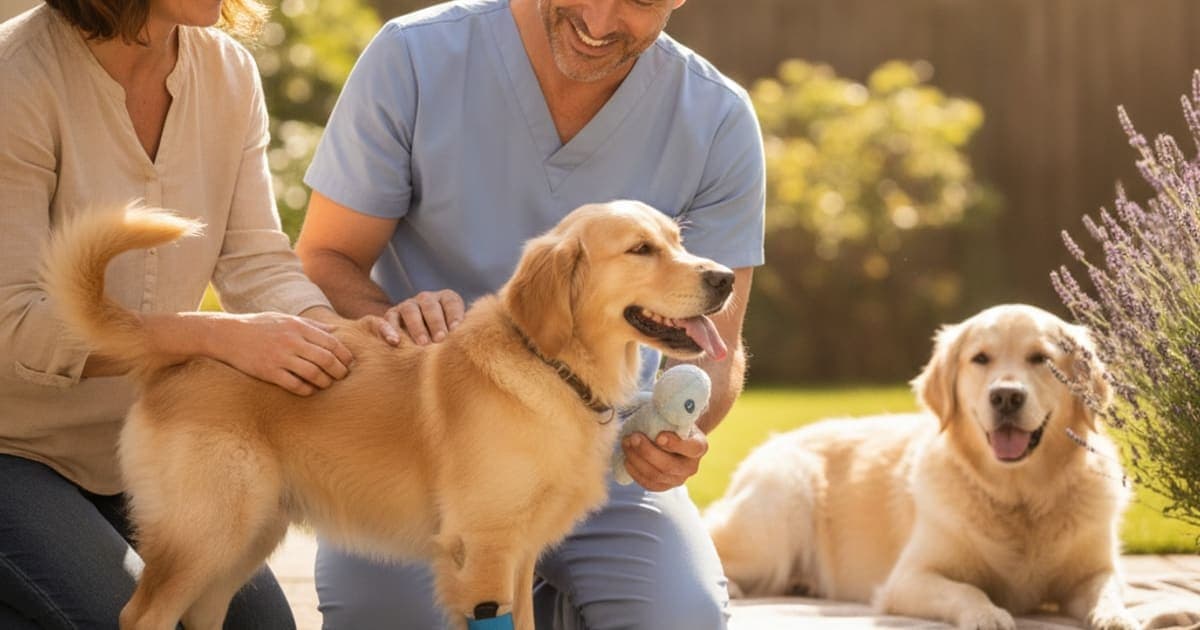
In most young dogs, a growth plate injury unites within a few weeks, because immature bone repairs faster than adult bone. The longer clock is growth: the American College of Veterinary Surgeons notes that a damaged physis can close prematurely and distort limb growth, so rechecks continue until the plates finish closing.
That gap between the two clocks is the part owners rarely hear on the first visit. A puppy can be walking comfortably long before the orthopedic story is finished. Understanding both timelines — bone union and skeletal growth — is what lets you plan rest, rechecks and rehab realistically instead of guessing week to week.
Why this injury runs on two clocks, not one
A growth plate, or physis, is a band of cartilage near the end of each long bone where new bone is laid down as a puppy grows. It is mechanically the weakest link in a young skeleton, which is why a fall, an awkward landing or a twist that would simply bruise an adult dog can fracture through the physis of a four-month-old.
The first clock is fracture union. Immature bone carries a dense blood supply and highly active bone-forming cells, and veterinary orthopedic sources consistently describe physeal fractures in young animals healing more quickly than comparable fractures in skeletally mature dogs. In practice, that means many of these injuries show radiographic healing in a matter of weeks rather than months, assuming the fracture is stable and the dog is genuinely confined.
The second clock is growth. Cartilage cells in a damaged physis can be crushed, disrupted or bridged by bone as the fracture repairs. If that happens, the plate stops contributing length while the neighbouring bone keeps growing. The classic example is the distal ulnar physis: when it closes early, the radius keeps lengthening and the forelimb bows and rotates outward over the following weeks.
The bone usually knits faster than the growth plate's future becomes clear — which is why recovery is measured in weeks for healing and in months for monitoring.
So the honest answer to how long recovery takes is: short for the fracture, longer for the follow-up. Ask your veterinarian at the first visit when the recheck radiographs are scheduled and how long they intend to watch limb alignment. That conversation sets your real timeline.
What the injury type tells you about recovery time
Veterinarians classify these injuries using the Salter-Harris system, described by Salter and Harris in 1963 and still the standard framework in small animal orthopedics. The type your dog has is the single biggest predictor of how the recovery period will run.
| Salter-Harris type | What is damaged | What it means for recovery |
|---|---|---|
| Type I | Separation straight through the growth plate | Often stable after reduction; bone union tends to be quick, growth outlook generally favourable |
| Type II | Growth plate plus a wedge of metaphyseal bone | Commonly reported in dogs; usually repairs well, still needs alignment rechecks |
| Type III | Growth plate plus epiphysis, entering the joint | Joint surface involvement means precise reduction and longer, more careful rehab |
| Type IV | Fracture crossing metaphysis, physis and epiphysis | Highest need for accurate surgical repair; bone bridging across the plate is a real concern |
| Type V | Crushing of the growth plate itself | Often identified only later, when growth slows or the limb starts to deviate |
Type I and II injuries are the ones most likely to follow the tidy version of the timeline: repair, confine, recheck, return to normal activity. Types III and IV involve the joint surface, so the rehabilitation period extends while cartilage and surrounding soft tissue settle. Type V injuries are frustrating precisely because there is often nothing dramatic to see on day one — the diagnosis arrives when a limb starts to look wrong.
Radiographs of both limbs are often taken so the injured side can be compared with the normal one. If you want the diagnostic process laid out in detail, our companion piece on how growth plate injuries are identified walks through what your vet is looking for.
What lengthens or shortens the recovery window
Several variables move the timeline, and knowing them helps you set expectations rather than hope for the best.
Age at injury. The younger the dog, the more growth remains, and the more scope there is for a damaged plate to cause visible deformity. A puppy injured early has more growing left to go wrong; a dog injured close to skeletal maturity has less at stake. Most long bone physes close somewhere in the second half of the first year, later in giant breeds — your veterinarian can tell you where your dog sits on that curve.
Which bone is involved. Paired bones like the radius and ulna are unforgiving, because one bone can keep growing while the other stops. Injuries near a joint carry a longer rehabilitation tail than injuries in the middle of a limb.
Stability of the repair. Some physeal fractures are managed with rest and external support; others need surgical fixation with pins or wires. Surgery, when your vet recommends it, is the thing that makes a good outcome possible — nothing you give by mouth substitutes for correct alignment of bone.
Activity control. This is the factor owners actually control, and it is the one most often underestimated. A puppy who is allowed to sprint, jump off furniture or wrestle with another dog during the confinement period can undo weeks of progress in seconds.
Body condition and nutrition. Excess weight loads a healing limb every single step. Large-breed puppies also need a diet formulated for controlled growth; over-supplementing a growing skeleton with calcium can do harm. Ask your veterinarian what they want your specific puppy eating during recovery.
What the recovery period looks like day to day
Expect strict confinement first. That usually means a pen or small room, leash walks only for toileting, no stairs, no slick floors, no jumping in or out of the car. Traction matters more than owners expect — rugs and runners across hard flooring reduce the sudden slips that stress a healing limb.
Pain control comes from your veterinarian, and it stays on their schedule. If a prescribed anti-inflammatory or analgesic has been dispensed, do not shorten the course or stop it early because your dog seems comfortable; comfort during the first weeks is often the medication working. Never add a human pain reliever at home.
Rechecks are the backbone of the plan. Follow-up radiographs confirm the fracture is uniting and, just as importantly, show whether the physis is still contributing growth. Some vets will recheck alignment periodically until the plates close, particularly after forelimb injuries.
When your veterinarian clears it, controlled rehabilitation begins: short, flat, on-leash walks that lengthen gradually, sometimes with formal physiotherapy or underwater treadmill work. Rebuilding muscle around a limb that has been rested for weeks is a slow, deliberate process, not a return to the dog park.
Supporting the tissue around the repair
Bone is only part of the picture. Around a healing physis sit tendon, ligament, joint capsule and muscle that have all been immobilised, and those tissues remodel over a longer arc than the fracture line does. That is the window owners are trying to support when they look beyond the prescription pad.
This is where peptides have become part of the conversation. BPC-157 is a synthetic peptide derived from a protein sequence found in gastric juice, and published preclinical work has explored its influence on angiogenesis — the formation of new blood vessels — and on tendon and ligament fibroblast behaviour. TB-500 is a synthetic fragment related to thymosin beta-4, a naturally occurring peptide studied for its role in actin regulation, cell migration and tissue remodelling. Research suggests these mechanisms are relevant to how connective tissue reorganises after injury, and owners increasingly report choosing them as part of a structured recovery period alongside veterinary care.
pawgen makes K9-REPAIR, a BPC-157 and TB-500 formulation for dogs. It is dosed by body weight, third-party tested with certificates of analysis available, shipped direct to your door, and backed by a 60-day money-back guarantee. BPC-157 and TB-500 are not FDA-approved veterinary drugs, and nothing here should be read as a promise about any individual dog — this is mechanism and adoption, not an outcome claim.
Where skepticism genuinely belongs is the shelf of kitchen-sink joint chews: long ingredient panels, proprietary blends that hide how little of anything is present, and marketing that outruns the label. Knowing exactly what is in a product, and being able to read the testing behind it, is the baseline.
One firm caveat: a dog with a growth plate injury is, by definition, still growing. Do not start any supplement or peptide in a growing puppy, a pregnant dog or a nursing dog without talking to your veterinarian first, and let them decide what belongs alongside the orthopedic plan.
Key Takeaways
- Physeal fractures in young dogs typically unite in weeks, faster than equivalent fractures in adult dogs, because immature bone is highly vascular and metabolically active.
- The longer timeline is growth monitoring — a damaged plate can close early and cause angular limb deformity, so rechecks may continue until the plates close.
- Salter-Harris type drives prognosis; joint-involving and crush injuries carry the longest and least predictable recovery.
- Strict confinement, traction underfoot, weight control and prescribed pain relief are the foundation of the recovery period.
- Peptides such as BPC-157 and TB-500 are studied for mechanisms relevant to soft tissue remodelling and may support the recovery window owners are managing; they are not FDA-approved veterinary drugs.
For deeper reading, see the full overview of growth plate injury, what are the first signs of growth plate injury in dogs, how is growth plate injury diagnosed in dogs, best treatment for growth plate injury in dogs, what can i give a dog that is trouble getting up, is a dog trouble getting up an emergency, and K9-REPAIR.
Your veterinarian owns the diagnosis, the imaging schedule and the treatment plan — surgery, prescribed medication and staged rehabilitation are what create the conditions for a limb to heal straight. Supplements and peptides operate inside the space that proper veterinary care creates, never in place of it.
Owners exploring peptide support for their dog can review K9-REPAIR — BPC-157 + TB-500 formulated for dogs — at https://pawgen.com/. BPC-157 and TB-500 are not FDA-approved veterinary drugs. Nothing in this article treats, cures or prevents any condition; every decision about your dog's care belongs with your veterinarian.
Frequently asked questions
- How is growth plate injury diagnosed in dogs?
- Through radiographs, usually of both limbs so the injured side can be compared with the normal one. Your veterinarian combines imaging with a hands-on orthopedic exam, checking for pain, swelling and instability near the ends of long bones. Findings are then classified using the Salter-Harris system, which guides prognosis and repair choices.
- What helps a dog with growth plate injury?
- Veterinary assessment first, then whatever the plan requires: surgical fixation or external support, prescribed pain control, strict confinement, non-slip flooring, weight management and a staged return to activity. Follow-up radiographs matter as much as the initial repair. Ask your veterinarian before adding any supplement to a growing dog's routine.
- Is growth plate injury in dogs painful?
- Yes. A physeal fracture is a break through bone and cartilage, and dogs typically show sudden lameness, reluctance to bear weight, swelling and pain when the area is touched. Pain control should come from your veterinarian on their schedule — never give human analgesics, which can be dangerous for dogs.
- What makes growth plate injury worse in dogs?
- Uncontrolled activity is the biggest culprit — jumping, stairs, slick floors, rough play and skipped confinement. Delayed diagnosis, poor fracture alignment, excess body weight and missed recheck appointments also worsen outcomes, because a plate that bridges with bone unnoticed can distort limb growth before anyone sees a problem.
- Can growth plate injury in dogs be reversed?
- A fracture through the physis can be repaired and will usually unite, but damaged growth cartilage cannot be regrown. If the plate closes early and the limb deviates, correction becomes a surgical question rather than something that resolves on its own. Early diagnosis and monitoring give the best available outlook.
- How much does it cost to treat growth plate injury in dogs?
- Costs vary widely by region, clinic and whether surgery is required. Conservative management with imaging, medication and rechecks sits far below surgical fixation with a board-certified surgeon, follow-up radiographs and rehabilitation. Ask for a written estimate covering imaging, anesthesia, implants and recheck visits before committing.
- How long should a puppy be confined after a growth plate injury?
- That decision belongs to your veterinarian, because it depends on the Salter-Harris type, the repair method and how the bone looks on recheck imaging. Confinement generally continues until follow-up radiographs show healing and your vet clears controlled activity — releasing a puppy early is a common cause of setbacks.
- Will my dog limp permanently after a growth plate injury?
- Many dogs return to normal function, particularly with simpler fracture types that are diagnosed early, aligned well and rested properly. Persistent lameness is more likely when the joint surface was involved, when the plate closed prematurely, or when limb alignment changed during growth. Ongoing rechecks catch these issues sooner.
Educational content. BPC-157 and TB-500 are not FDA-approved veterinary drugs. Talk to your veterinarian before starting anything new, especially if your dog is on prescribed medication.