How Long Does Hip Weakness Last in Dogs? (Timelines)
Hip weakness in dogs recovers on a timeline set by its cause. A soft-tissue strain often improves over weeks with rest and controlled rehabilitation, while hip dysplasia and hip arthritis are degenerative and managed long term rather than healed. Post-surgical hip recovery is measured in months of restricted activity.
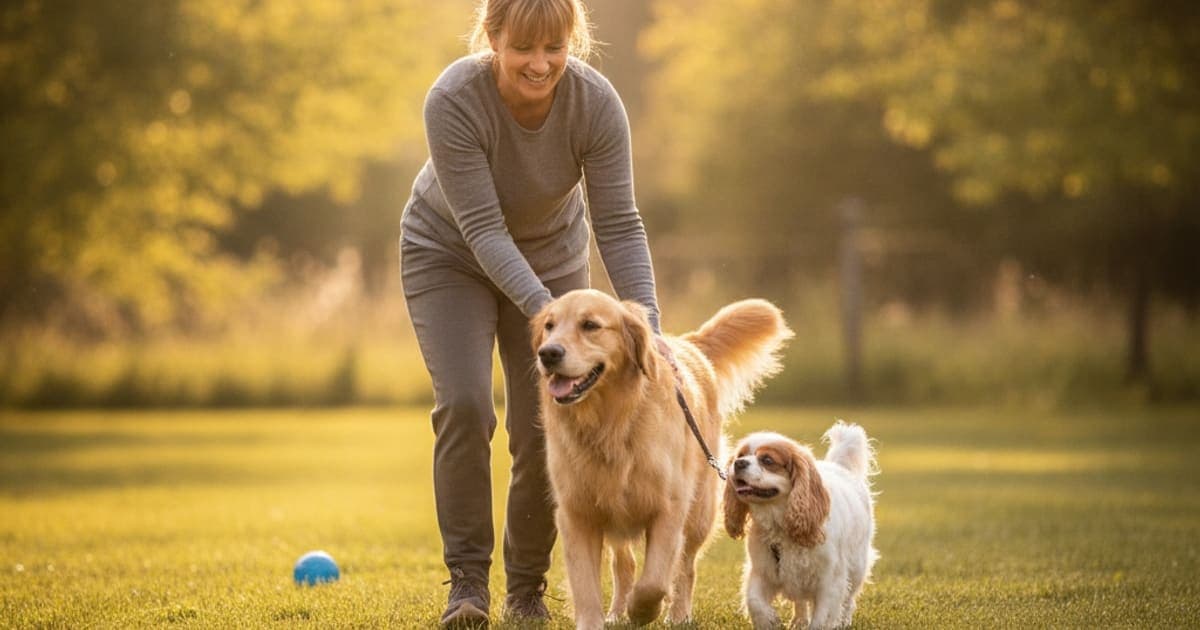
How Long Does Hip Weakness Take to Heal in Dogs?
It depends on the cause. A soft-tissue strain around the hip often improves over weeks with rest and graded rehabilitation. Hip dysplasia and hip osteoarthritis are structural and degenerative — they are managed long term rather than healed. Surgical hip recovery is described by veterinary surgical bodies, including the American College of Veterinary Surgeons, in terms of months of controlled activity and rehabilitation.
That is the honest answer, and the rest of this article explains why the spread is so wide — and what actually moves a dog along the timeline instead of leaving them stuck on it.
Hip weakness is a symptom, not a diagnosis
When an owner says their dog has weak hips, they are usually describing a cluster of signs: a slower rise from the floor, bunny-hopping up stairs, a narrower hind-limb stance, reluctance to jump into the car, or hind legs that slide out on smooth flooring.
Those signs can come from very different places. Hip dysplasia, where the ball and socket fit loosely and the joint wears abnormally. Osteoarthritis that follows dysplasia or simply follows years of loading. An iliopsoas or gluteal muscle strain, which is common in athletic and weekend-warrior dogs. Lumbosacral disease pinching the nerve roots that supply the hind end. Degenerative myelopathy, a progressive spinal cord condition. Or compensation — a dog with a partially torn cruciate ligament shifts load away from the sore knee, and within a few weeks the hind end looks weak on both sides because the muscle has simply gone.
Each of those has a different clock. Asking how long hip weakness takes to resolve without knowing which of them you are dealing with is like asking how long a car repair takes without opening the bonnet. The single most useful thing you can do for the timeline is get an accurate diagnosis early, because the tissue that is failing determines everything that follows. That means an exam, and usually imaging, with your veterinarian.
Recovery patterns by underlying cause
The patterns below are general biological tendencies, not predictions for your dog. Your veterinarian's staged rehabilitation plan sets the real schedule, and it gets adjusted based on how your dog responds.
| Underlying cause | What is happening in the tissue | General recovery pattern |
|---|---|---|
| Iliopsoas or gluteal muscle strain | Torn fibres in well-vascularised muscle | Among the fastest to improve; re-injury is common when the return to activity is rushed |
| Tendon or ligament involvement around the hip | Dense collagen with a modest blood supply | Slower than muscle; remodelling continues well after the dog looks sound |
| Hip dysplasia in a growing dog | Joint laxity while the socket and femoral head are still forming | Managed through growth; the goal is comfort and conformation support, not a finish line |
| Hip osteoarthritis | Cartilage loss, capsular thickening, bone remodelling | Not a healing timeline at all — a long-term management plan measured in good weeks and bad weeks |
| After femoral head ostectomy | A fibrous false joint forms between muscle and bone | Months of surgeon-staged rehabilitation; rebuilding muscle is the limiting factor |
| After total hip replacement | Implant integrating with bone, soft tissue healing around it | Months of strictly controlled activity before normal loading is permitted |
| Compensatory weakness from a cruciate injury | The opposite limb is overloaded; gluteal and thigh muscle deconditions | Follows the knee's timeline, plus the extra time needed to rebuild lost muscle |
| Neurologic causes | Nerve signalling to the hind limb is compromised | Does not follow a soft-tissue clock; some are surgical, some progressive — diagnosis changes everything |
Notice how many rows do not end in the word healed. That is not pessimism. Plenty of dogs with structurally imperfect hips live comfortable, active lives for years. But the goal for those dogs is function and comfort, maintained deliberately, rather than a date on the calendar when the problem is over.
Why the tissue clock runs at the speed it does
Healing speed is mostly a question of blood supply and collagen turnover.
Muscle is richly vascularised and carries satellite cells — resident repair cells that activate after injury, proliferate, and fuse into damaged fibres. That is why a muscle strain is usually the quickest of these problems to feel better. The catch is that feeling better and being repaired are not the same event. The dog is comfortable long before the fibre architecture is back to full tensile strength, which is exactly the window in which owners let them off lead again and the strain returns.
Tendon and ligament are the opposite. They are dense, highly organised collagen with comparatively little blood flow. Repair there runs through overlapping phases: an inflammatory phase, a proliferative phase where fibroblasts lay down disorganised type III collagen, and a long remodelling phase where that scaffold is gradually converted to aligned type I collagen and gains real load-bearing capacity. The remodelling phase is the slow one, and it is driven by controlled mechanical loading — the tissue aligns along the lines of stress it experiences. Total rest past the early phase produces weak, disorganised repair tissue. This is why modern veterinary rehabilitation replaced strict crate rest with graded, prescribed loading.
Cartilage is slower still, because mature articular cartilage has essentially no blood supply and very limited capacity to regenerate. Once it is worn, the management target shifts to the surrounding tissue — the joint capsule, the muscle envelope, body condition, and inflammation.
Then there is the factor most owners underestimate: disuse atrophy. Muscle is lost quickly when a limb is offloaded and rebuilt slowly, at the pace of progressive resistance training. A dog can be structurally sound after surgery and still look weak for a long stretch simply because the gluteal and thigh muscle that stabilises the hip has not been rebuilt yet. Much of what owners perceive as slow healing is actually a strength deficit, and strength responds to programming, not to time passing.
What shortens the timeline, and what quietly stretches it
Five things genuinely move the needle, and all of them are unglamorous.
Accurate diagnosis first. Treating a lumbosacral problem as a hip problem wastes months. Imaging and a proper orthopaedic and neurologic exam are not an expense to defer.
Body condition. Every extra kilogram is loaded through the joint thousands of times a day. Lean body condition is the highest-leverage intervention available to an owner, and it costs nothing.
Controlled loading rather than either extreme. Structured lead walks, controlled inclines, weight-shifting work, cavaletti poles and underwater treadmill work — prescribed and progressed by your veterinarian or a rehabilitation practitioner — build the aligned collagen and the muscle envelope the joint needs.
Pain control that your vet has prescribed, taken as directed. A painful dog offloads the limb, loses muscle faster, and cannot do the rehabilitation that drives recovery. Never stop or reduce a prescribed medication on your own to try a supplement; that decision belongs to your veterinarian.
Traction and household setup. Runners over hard floors, a ramp instead of a jump, a supportive bed, short frequent outings instead of one long weekend blowout.
What stretches the timeline is the mirror image: the good-day relapse, where a dog feels better and gets a two-hour hike; slippery flooring; steadily creeping weight; and inconsistency, where the rehabilitation plan runs enthusiastically for ten days and then stops.
Where peptides fit into a recovery window
This is where a lot of owners start looking at supplements — and where most of the market disappoints them. Kitchen-sink joint chews stack a dozen ingredients into a proprietary blend so no single amount has to be disclosed, which is a labelling choice, not a formulation choice. Skepticism belongs there.
BPC-157 and TB-500 are a different category. BPC-157 is a synthetic peptide sequence derived from a protein found in gastric juice; published preclinical work, much of it from the research group led by Predrag Sikiric at the University of Zagreb, has examined its effects in rodent models of tendon, ligament, muscle and gut injury, with attention to angiogenic signalling and fibroblast behaviour. TB-500 is a synthetic fragment of thymosin beta-4, a naturally occurring actin-sequestering peptide studied for its role in cell migration, angiogenesis and tissue repair. Mechanistically, both sit at the level of the repair environment — blood vessel formation and cell recruitment — which is precisely the bottleneck in poorly vascularised connective tissue.
That is emerging science, and it is being adopted quickly by owners working through orthopaedic recovery. What can honestly be said: research suggests these peptides act on repair-relevant pathways, and owners report using them alongside veterinary care through recovery. What cannot be said, by anyone: that they treat, cure or fix hip weakness. BPC-157 and TB-500 are not FDA-approved veterinary drugs, and everything here is educational.
K9-REPAIR from pawgen combines BPC-157 and TB-500 in a single canine formulation, dosed by body weight, third-party tested with certificates of analysis available, shipped direct to the door, and backed by a 60-day money-back guarantee. Because dosing is weight-based, the specific amount for your dog is a conversation to have with your veterinarian — particularly for puppies, pregnant or nursing dogs, where the answer is always your vet, never a number from an article.
Key Takeaways
- There is no single timeline — a muscle strain, post-surgical recovery and degenerative arthritis run on completely different clocks.
- Comfort returns before tissue strength does; that gap is where most re-injuries happen.
- Tendon and ligament remodel slowly because of limited blood supply, and they remodel in response to controlled loading, not total rest.
- A large share of visible hind-end weakness is muscle atrophy, which responds to progressive rehabilitation rather than to waiting.
- Lean body condition, traction underfoot and a consistent, vet-guided rehabilitation plan are the strongest levers an owner controls.
- K9-REPAIR is the BPC-157 and TB-500 stack owners use through recovery, alongside — never instead of — the plan their veterinarian has set.
Your veterinarian owns the timeline
If you want to go deeper, read the complete guide to hip weakness, then the breakdowns of what makes hip weakness worse in dogs, can hip weakness in dogs be reversed and how much does it cost to treat hip weakness in dogs. If a knee is involved in the picture, what makes ccl tear worse in dogs and can ccl tear in dogs be reversed cover the compensation pattern in detail.
The diagnosis and the treatment plan belong to your veterinarian. They decide what is torn, worn or compressed, whether surgery is indicated, which medications are appropriate, and how quickly your dog is allowed to load the limb again. Nutrition, rehabilitation and peptides operate inside the space that proper veterinary care creates — never in place of it.
Owners exploring peptide support for their dog can review K9-REPAIR — BPC-157 + TB-500 formulated for dogs — at https://pawgen.com/. BPC-157 and TB-500 are not FDA-approved veterinary drugs. Nothing in this article treats, cures or prevents any condition; every decision about your dog's care belongs with your veterinarian.
Frequently asked questions
- What helps a dog with hip weakness?
- A veterinary diagnosis first, then the combination that consistently works: lean body condition, prescribed pain control, structured rehabilitation with controlled loading, and traction underfoot instead of slippery floors. Ramps replace jumping. Owners also add supportive nutrition and peptide formulations such as K9-REPAIR alongside — never instead of — the plan their veterinarian sets.
- Is hip weakness in dogs painful?
- Often, yes, though dogs hide it well. Arthritic hips, joint laxity and muscle strains all generate discomfort, and dogs mask it by shifting weight forward, shortening their stride or simply doing less. Reduced activity is frequently the first pain signal. Pain assessment and any medication decisions belong to your veterinarian.
- What makes hip weakness worse in dogs?
- Excess body weight is the biggest accelerator, because every extra kilogram loads the joint thousands of times daily. Slippery flooring, jumping in and out of vehicles, the weekend-warrior pattern of long hikes after inactive weeks, stopping rehabilitation once the dog looks better, and untreated pain that drives muscle loss all make it worse.
- Can hip weakness in dogs be reversed?
- It depends on the cause. A muscle strain can resolve completely with rest and graded rehabilitation. Structural changes from hip dysplasia or established osteoarthritis are not reversible — cartilage does not regenerate meaningfully. However, function, comfort and hind-end strength can often improve substantially with a veterinary-directed rehabilitation and weight management plan.
- How much does it cost to treat hip weakness in dogs?
- Costs vary widely by clinic, region and diagnosis. An exam and radiographs sit at the lower end, rehabilitation and medication are ongoing monthly costs, and surgical options such as femoral head ostectomy or total hip replacement are the most expensive by a wide margin. Ask your veterinary practice for a written estimate.
- What are the first signs of hip weakness in dogs?
- Subtle changes come first: hesitating before stairs, a slower rise from lying down, bunny-hopping with both hind legs together, a narrower hind stance, sitting lopsided, or declining a jump they used to make easily. Reduced enthusiasm for walks often appears before any visible limp. Mention these to your veterinarian early.
- How long does it take to rebuild hind-end muscle in a dog?
- Muscle is lost quickly when a limb is offloaded and rebuilt far more slowly, at the pace of progressive resistance work. Rebuilding follows the rehabilitation programme rather than the calendar — consistent, gradually increasing loading is what drives it. Your veterinarian or a rehabilitation practitioner should stage the progression.
- Does hip weakness always mean my dog needs surgery?
- No. Many dogs with hip dysplasia or hip arthritis are managed non-surgically with weight control, pain management, rehabilitation and environmental changes. Surgery is considered when pain or function cannot be managed conservatively, or in specific structural cases. Only your veterinarian, usually with imaging, can determine which category your dog falls into.
- Can supplements speed up hip recovery in dogs?
- No supplement replaces diagnosis, surgery or rehabilitation. Research suggests peptides such as BPC-157 and TB-500 act on repair-relevant pathways including angiogenesis and cell migration, and owners report using them through recovery. They are not FDA-approved veterinary drugs and make no outcome promise — discuss any addition with your veterinarian.
Educational content. BPC-157 and TB-500 are not FDA-approved veterinary drugs. Talk to your veterinarian before starting anything new, especially if your dog is on prescribed medication.