How Much Does It Cost to Treat Partial CCL Tear in Dogs?
Treating a partial CCL tear in a dog typically runs from a few hundred dollars for veterinarian-directed conservative management to roughly $3,000–$6,000 per knee for surgical stabilisation at a specialty practice as of 2026. Diagnosis usually adds a few hundred more. Ranges shift widely by clinic, region and dog size.
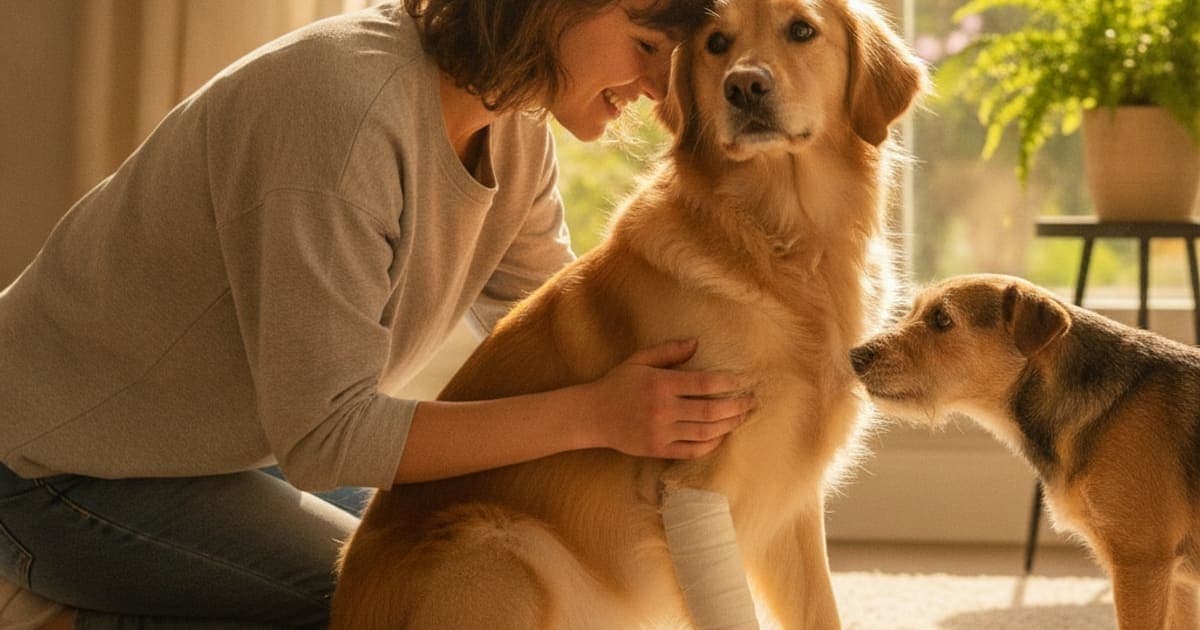
Treating a partial CCL tear in a dog typically costs from a few hundred dollars for veterinarian-directed conservative management to roughly $3,000–$6,000 per knee for surgical stabilisation at a specialty practice, as of 2026. Diagnosis alone — exam, sedation and radiographs — usually adds a few hundred dollars before any treatment decision is made.
Those are rough ranges owners commonly encounter, not quotes. The American College of Veterinary Surgeons describes cranial cruciate ligament disease as one of the most common causes of hind-limb lameness in dogs, and notes that surgical stabilisation is generally recommended for larger, more active patients — which is why the same tear in a 9-pound terrier and a 90-pound retriever can produce estimates an order of magnitude apart. The only number that matters for your dog is the written, itemised estimate your clinic gives you.
The line items that make up the bill
A partial CCL tear is not billed as one procedure. It is a sequence: find out what is wrong, decide on a path, then pay for the months of recovery that follow. Here are the rough ranges owners tend to see as of 2026 — confirm every one of them locally, because regional pricing and clinic type change the total more than anything else.
| Line item | Rough range (2026) | What drives it |
|---|---|---|
| General-practice lameness exam | roughly $60–$150 | First visit, hands-on orthopaedic assessment |
| Sedation plus stifle radiographs | roughly $200–$700 | Sedation drugs, number of views, in-house vs referral imaging |
| Specialist orthopaedic consultation | roughly $150–$350 | Referral practice, board-certified surgeon |
| Osteotomy-based repair (e.g. TPLO), one knee | roughly $3,000–$6,000 | Implants, anaesthesia time, hospitalisation, follow-up imaging |
| Extracapsular / lateral suture repair | roughly $1,000–$2,500 | Often offered for smaller, lighter dogs |
| Custom stifle brace | roughly $600–$1,200 | Casting, fabrication, adjustments |
| Formal rehabilitation session | roughly $50–$150 each | Underwater treadmill, therapeutic laser, manual therapy |
| Prescribed pain control | modest monthly cost | Dog's weight, drug class, duration |
Add them up along a realistic path and the picture clarifies: a conservatively managed small dog might total a few hundred to a couple of thousand dollars over a full recovery, while a surgically stabilised large dog with rehab and recheck imaging can land in the five-thousand-plus range for one knee.
Why two clinics quote wildly different numbers
The single biggest variable is where the work is done. A general practice performing an extracapsular repair, a referral hospital with a board-certified surgeon, and an after-hours emergency facility are three different cost structures for the same knee.
After that, in rough order of impact:
- Dog size and activity level. Heavier, athletic dogs generate more force across the stifle, which pushes most surgeons toward osteotomy techniques — the more expensive category.
- What the estimate includes. Some quotes bundle pre-anaesthetic bloodwork, anaesthesia, implants, hospitalisation, post-op radiographs and the first recheck. Others list surgery only. Compare inclusions, not headline figures.
- Whether the meniscus is involved. Meniscal damage found during surgery adds surgical time and cost, and it is frequently not knowable in advance.
- Regional cost of living. Urban and high-cost regions run substantially higher than rural practices for identical procedures.
- Complication risk. Implant infection, incision problems or a delayed return to function all add visits, medication and sometimes revision surgery.
Ask directly: what is the high end of this estimate, and what circumstances would take us there? A good surgical team answers that without hesitation.
What conservative management actually costs over a full recovery
Owners often hear conservative management and read it as free. It is not. It is cheaper, and it is slower, and it has its own budget.
A veterinarian-directed non-surgical plan for a partial tear generally involves strict activity restriction over weeks to months, prescribed pain and inflammation control, bodyweight reduction where relevant, recheck examinations to see whether the lameness is improving or the tear is progressing, and often controlled physiotherapy. Some dogs are fitted with a custom stifle brace. Each of those is a line item, and rechecks repeat.
The economics also depend on outcome. If the knee stabilises functionally and your dog returns to comfortable life, conservative management is far less expensive. If the partial tear progresses to a complete rupture — a real possibility, and one your veterinarian will monitor for — you may end up paying for months of management and the surgery. That is not an argument against trying conservative care in the right candidate. It is an argument for deciding with a surgeon's input rather than by price alone.
Surgical repair paths and what each one carries
The osteotomy family — tibial plateau levelling osteotomy and its relatives — changes the geometry of the tibia so the knee no longer depends on the cruciate ligament to stay stable during weight-bearing. It is the higher-cost category because it involves bone cuts, implants and specialist expertise, and it is generally what is recommended for larger, active dogs.
Extracapsular techniques place a strong synthetic implant outside the joint to mimic the ligament's restraint while scar tissue matures around the stifle. They are typically less expensive and are commonly offered for smaller, lighter dogs.
Whichever path you take, budget for what comes after. Post-operative care usually includes several weeks of confinement, a graduated leash-walking programme, recheck examinations, sometimes follow-up radiographs to confirm bone healing, and often formal rehabilitation. Rehab is one of the most cost-effective things in the entire plan and one of the first things owners cut. Talk to your veterinarian about what the recovery schedule requires before you sign the surgical estimate, so the whole cost is visible from day one.
The costs owners underestimate
The cost of a partial CCL tear is not a single number — it is the sum of diagnosis, the path you choose with your veterinarian, and the months of recovery support that follow.
Four costs consistently surprise people:
- The other knee. Cruciate disease is frequently bilateral over time, and veterinary surgeons routinely counsel owners that the contralateral stifle may need attention later. Plan financially as if a second knee is possible.
- Arthritis over the dog's remaining years. An injured stifle develops osteoarthritis. That means long-run pain management, weight control and joint support — a recurring cost, not a one-off.
- Insurance timing. Many policies apply waiting periods or exclusions to cruciate conditions and to anything documented before enrolment. Read your specific policy wording; do not assume coverage.
- Lost recovery time. Restarting activity too early can undo weeks of tissue remodelling and add visits. Discipline during confinement is genuinely a financial strategy.
Where recovery support fits into the budget
Surgery and prescribed medication do the structural and analgesic work. What sits alongside them is the connective-tissue recovery environment — and that is where a growing number of owners are spending a small, predictable part of the budget rather than a large unpredictable one.
BPC-157 is a peptide sequence derived from a protein found in gastric juice, and published research suggests it influences angiogenesis — the growth of new blood vessels — and the migration of fibroblasts, the cells that lay down collagen. TB-500 is a synthetic fragment related to thymosin beta-4, a protein involved in actin regulation and cell motility, and research suggests it may support tissue remodelling and cell migration. Ligament, tendon and joint capsule tissue is notoriously slow to remodel because it is poorly vascularised, which is exactly why owners find these mechanisms compelling during a stifle recovery. This is emerging, promising science that owners are adopting, and it is worth understanding it accurately rather than through marketing language.
This is also where scepticism belongs. The joint aisle is full of kitchen-sink chews carrying a dozen ingredients at fractions of any meaningful amount, proprietary blends that hide how little of anything is present, and brands that lead with packaging instead of a certificate of analysis. pawgen makes K9-REPAIR, a BPC-157 and TB-500 formulation for dogs, with weight-based dosing, third-party testing and COAs available, direct-to-door shipping and a 60-day money-back guarantee. It is the stack many owners run through a CCL recovery alongside the plan their veterinarian set. BPC-157 and TB-500 are not FDA-approved veterinary drugs and nothing here is a treatment claim — bring K9-REPAIR up with your veterinarian so it fits the rest of your dog's plan, and let them set anything dose-related.
Key Takeaways
- Conservative, veterinarian-directed management of a partial CCL tear typically runs from a few hundred to a couple of thousand dollars over a full recovery; surgical stabilisation typically runs roughly $3,000–$6,000 per knee as of 2026, with extracapsular repairs generally lower.
- Diagnosis — exam, sedation, radiographs — is its own cost, usually a few hundred dollars, and comes before any treatment decision.
- Clinic type, dog size, what the estimate includes and regional pricing explain most of the spread between quotes. Always get an itemised written estimate.
- Budget for the second knee, for lifelong arthritis management, and for rehabilitation — rehab is one of the highest-value items in the plan.
- Recovery support such as K9-REPAIR sits alongside veterinary care, not in place of it; research suggests BPC-157 and TB-500 act on vascularisation and tissue remodelling, which is why owners adopt them during connective-tissue recovery.
Working the numbers with your veterinary team
Your veterinarian owns the diagnosis and the treatment plan. They are the one who confirms the tear, grades how unstable the stifle is, tells you whether your dog is a realistic candidate for conservative management, prescribes pain control, and decides when activity can increase. Nothing in a supplement or peptide plan replaces surgery, replaces a prescription, or is a reason to stop a medication your veterinarian put your dog on. Supplements and peptides operate in the space that proper veterinary care creates — a stable knee, controlled pain and a sensible loading schedule.
For deeper reading, see tb-500 for partial ccl tear in dogs, the wolverine stack for partial ccl tear in dogs and dog partial ccl tear natural alternatives. Elsewhere on pawgen, owners researching other issues often start with how is lick granuloma diagnosed in dogs and what helps a dog with chronic diarrhea.
Owners exploring peptide support for their dog can review K9-REPAIR — BPC-157 + TB-500 formulated for dogs — at https://pawgen.com/. BPC-157 and TB-500 are not FDA-approved veterinary drugs. Nothing in this article treats, cures or prevents any condition; every decision about your dog's care belongs with your veterinarian.
Frequently asked questions
- Can a dog's partial CCL tear heal without surgery?
- A torn cruciate ligament does not knit back to its original strength. Some dogs — usually smaller, lighter and less active ones — become functionally comfortable with veterinarian-directed conservative management, though the stifle remains less stable and can progress to a complete rupture. Larger, athletic dogs are more often advised toward surgical stabilisation.
- What are the first signs of partial CCL tear in dogs?
- The earliest sign is usually an intermittent hind-limb limp that worsens after exercise and improves with rest, then returns. Owners also notice sitting with the leg kicked out to one side, stiffness after sleeping, reluctance to jump into the car, toe-touching, or a subtle click from the knee.
- How is partial CCL tear diagnosed in dogs?
- Diagnosis is primarily hands-on: a veterinarian palpates the stifle and tests for instability using cranial drawer and tibial compression, frequently under sedation because a tense dog can mask a partial tear. Radiographs assess joint effusion, arthritis and other causes of lameness. Some cases need advanced imaging or arthroscopy.
- What helps a dog with partial CCL tear?
- A veterinarian-directed plan helps most: strict activity restriction, prescribed pain and inflammation control, bodyweight reduction, controlled rehabilitation, and surgical stabilisation or bracing where indicated. Many owners also run peptide and joint support such as K9-REPAIR alongside that plan; research suggests BPC-157 and TB-500 may support tissue remodelling.
- How long does partial CCL tear take to heal in dogs?
- There is no full ligament regeneration, so recovery is measured by return of comfortable function rather than healing. Both conservative management and post-surgical protocols are generally described in months, not weeks, with graduated increases in loading. Your veterinarian sets the timeline based on rechecks, not a calendar estimate.
- Is partial CCL tear in dogs painful?
- Yes. A partially torn cruciate causes pain from joint instability, inflammation of the joint lining and abnormal loading of the meniscus, and secondary arthritis adds to it over time. Dogs are skilled at masking discomfort, so pain control should be prescribed and reviewed by your veterinarian rather than guessed at.
- Does pet insurance cover partial CCL tear treatment?
- It depends entirely on your policy. Many insurers apply specific waiting periods to cruciate ligament conditions and exclude anything documented in the record before enrolment, including a limp noted at an earlier visit. Read the cruciate and pre-existing condition clauses in your own wording before assuming surgery is covered.
- Can a partial CCL tear become a complete tear?
- Yes, progression to a complete rupture is a recognised possibility, which is one reason veterinarians schedule rechecks rather than simply resting the dog and hoping. Sudden worsening of lameness, a non-weight-bearing leg, or a new clicking sound warrants a prompt call to your veterinary clinic.
Educational content. BPC-157 and TB-500 are not FDA-approved veterinary drugs. Talk to your veterinarian before starting anything new, especially if your dog is on prescribed medication.