Megaesophagus in Dogs: Medical Management Options
Megaesophagus in dogs is managed by a veterinarian, not at home. Care usually combines imaging to confirm the diagnosis, a search for an underlying disease, medication aimed at motility, acid and any aspiration pneumonia, and feeding changes planned with your vet. Surgery applies when a vascular ring anomaly is found.
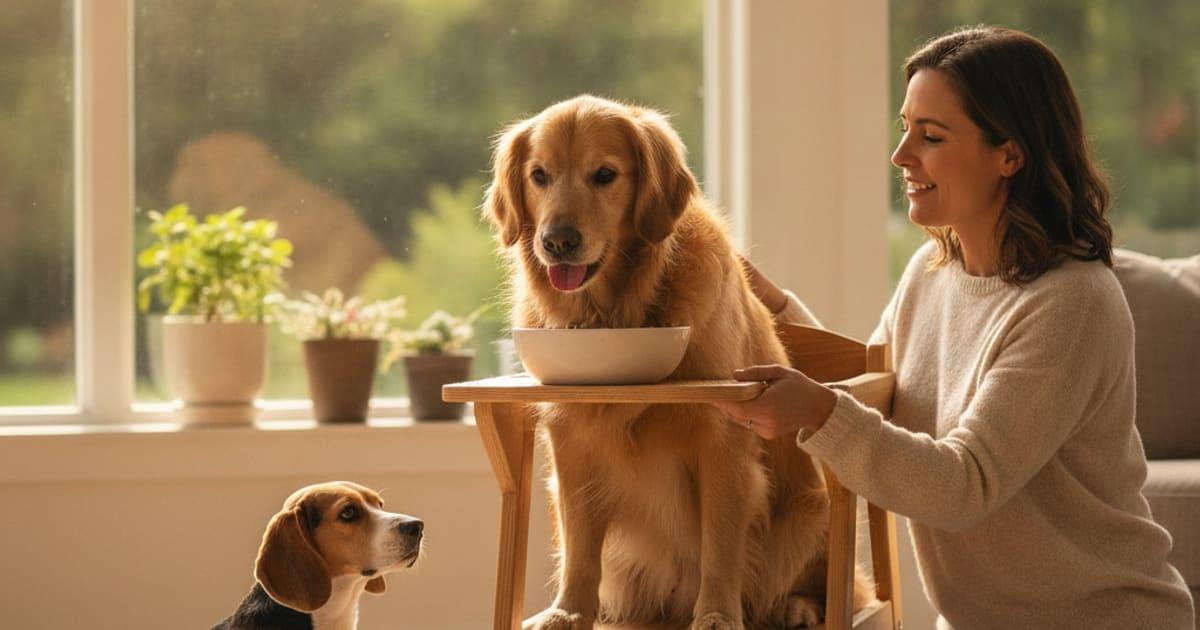
Megaesophagus is managed by a veterinarian, and the first step is an exam and chest imaging, not a change to the food bowl. If your dog is bringing food back up and is also coughing, breathing fast or noisily, running a fever, going off food or acting unusually flat, call your veterinarian or an emergency clinic now, because those signs can point to aspiration pneumonia.
Once your dog is stable, veterinary management of megaesophagus generally runs along four tracks at once: confirming the diagnosis with imaging, looking for an underlying disease that may be driving it, prescribing medication aimed at motility, stomach acid and any lung infection, and building a feeding routine designed around an esophagus that is not moving food normally. In a smaller group of dogs, usually young dogs with a vascular ring anomaly, surgery addresses a physical obstruction around the esophagus. Every item on that list is a veterinary decision. The owner's part is accurate reporting, consistent follow-through, and knowing which signs mean go back in today.
Why a dog that brings food back up needs a vet, not a wait-and-see week
The esophagus is a muscular tube that normally pushes a swallowed meal down into the stomach. When it dilates and loses that coordinated push, food and fluid can pool in the chest portion of the tube. The risk is that pooled material travels the wrong way, up and over into the windpipe, and ends up in the lungs. That is aspiration pneumonia, and it is the complication veterinarians watch for hardest.
The single most important thing an owner can do between appointments is watch the chest, not just the food bowl: coughing, fast or laboured breathing, fever, nasal discharge or lethargy in a dog that regurgitates needs same-day veterinary attention.
There is a second reason not to wait. Megaesophagus is a finding, not a final answer. It can be the visible part of another disease, and some of those underlying conditions respond to specific treatment once they are identified. A delay spent trying food experiments at home is time not spent on diagnostics that may change the whole plan. If your dog has had more than one episode of bringing up food, book the appointment rather than monitoring it for another fortnight.
Regurgitation and vomiting are not the same thing
This distinction matters because it steers the entire workup, and owners are the only people who actually witness the episodes. Vomiting is an active, effortful event driven by the stomach and abdominal muscles. Regurgitation is passive: material simply comes back up, often without warning and often shortly after eating or drinking.
| Regurgitation | Vomiting | |
|---|---|---|
| Effort | Passive, little or no heaving | Active retching and abdominal contractions |
| Warning signs | Usually none, dog may just lower its head | Drooling, lip licking, restlessness, nausea |
| What comes up | Undigested food, often tube-shaped, clear or frothy fluid | Partly digested food, often with bile |
| Timing | Often soon after eating or drinking, but can be delayed | Variable, not tied as closely to swallowing |
| Points toward | Esophageal problems, including megaesophagus | Stomach, intestinal or systemic problems |
If you can film an episode safely on your phone, do it. A short video is often more useful to your veterinarian than any description, and it can shorten the path to the right imaging.
Diagnosis comes before the plan: finding what is behind it
Chest radiographs are the usual starting point. They can show a dilated esophagus and, just as importantly, show whether there are already changes in the lungs consistent with aspiration. In some cases a contrast study or a swallowing study is added to look at how the esophagus moves in real time. Endoscopy may be used when a stricture, inflammation or a foreign body is suspected.
Alongside imaging, your vet will usually look for underlying causes. Megaesophagus can be congenital, showing up in puppies around the time they move onto solid food, or acquired later in life. Acquired cases send clinicians looking at neuromuscular disease such as myasthenia gravis, which has a specific blood test, and at hormonal disease including hypoadrenocorticism and thyroid disease. Esophagitis and reflux, certain toxicities, nerve and muscle disorders, and physical obstructions are also on the list. In many dogs no cause is identified, and the case is classed as idiopathic.
This is the stage where owners get impatient, and it is worth sitting through. A dog whose megaesophagus is secondary to a treatable underlying disease has a different plan from a dog with an idiopathic case, and only testing separates the two. Talk to your vet about which of these tests make sense for your dog's age, breed and history rather than assuming the whole panel is needed.
The medication classes used, and what each one is for
There is no single drug for megaesophagus itself. Veterinarians prescribe from several classes, chosen for the individual dog, and some dogs need none of them while others need several. No medication should be started, stopped or adjusted without your vet, and dosing is always theirs to set.
Prokinetic drugs are medications that influence how the gut moves. Owners frequently arrive having read about one particular prokinetic online. The nuance your vet will weigh is that the canine esophagus is largely striated muscle, which many prokinetics do not act on, so these drugs are generally used for their effect further down the tract, on the stomach and the valve at its entrance, rather than to restore esophageal push.
Acid-reducing medication is used when reflux or esophagitis is part of the picture, with the aim of making refluxed material less irritating to an already compromised esophageal lining. Coating or barrier agents are sometimes added for the same reason. Anti-nausea medication may be used when nausea is contributing. Antibiotics have a defined role: treating aspiration pneumonia when it is diagnosed, not as a standing preventive. And when an underlying disease is found, treating that disease is its own track, whether that means medication for a neuromuscular condition or hormone replacement for an endocrine one.
| Approach | What it is aimed at | Who decides |
|---|---|---|
| Prokinetic medication | Stomach emptying and the valve into the stomach | Veterinarian, case by case |
| Acid reduction and barrier agents | Reflux and esophageal irritation | Veterinarian |
| Antibiotics | Diagnosed aspiration pneumonia | Veterinarian, after imaging and exam |
| Treating an underlying disease | The condition driving the esophageal changes | Veterinarian, after testing |
| Surgery | A vascular ring anomaly compressing the esophagus | Veterinarian and surgeon |
| Feeding tube | Bypassing the esophagus when intake is unsafe | Veterinarian |
| Feeding position and food consistency | Using gravity and texture to support swallowing | Planned with your veterinarian |
When surgery or a feeding tube enters the picture
Surgery is not a general treatment for megaesophagus, but it is the correct answer for one specific scenario. A vascular ring anomaly is a congenital malformation in which a blood vessel structure encircles and compresses the esophagus, typically producing regurgitation in a young dog at weaning. Here the obstruction is mechanical, and surgical release of the constricting band is the established approach. Diagnosis usually involves imaging that demonstrates dilation in front of the constriction. This is one of the reasons a regurgitating puppy should be seen promptly rather than managed by diet alone.
Feeding tubes are the other surgical or procedural option that comes up. A tube placed directly into the stomach bypasses the esophagus for nutrition and sometimes for medication, and it may be considered when a dog cannot take in enough safely by mouth or has had repeated aspiration events. Owners often react badly to the suggestion at first and then find the daily routine more manageable than expected. Whether it is appropriate depends entirely on the individual dog, and results vary from dog to dog.
Daily management, monitoring, and when to go back in
The part owners run day to day is the feeding routine, and it is built with your veterinary team rather than copied from a forum. Two levers are typically adjusted: body position during and after eating, so gravity assists the passage of food, and the consistency and portion size of meals, since different dogs do better with different textures. Which combination suits your dog is something your vet will work out with you, with changes made one at a time so you can tell what is helping. Water intake needs the same thought, because fluids carry their own aspiration risk.
Monitoring matters as much as feeding. Weigh your dog regularly on the same scale and keep a simple log of episodes: how often, how soon after a meal, and what came up. Weight loss, a rising episode count or new coughing are all reasons to bring the appointment forward. Dogs with megaesophagus generally need ongoing veterinary follow-up rather than a single visit, both to reassess the esophagus and to recheck for an underlying condition that may declare itself later.
Key Takeaways
- Coughing, fast or noisy breathing, fever or lethargy in a dog that regurgitates can mean aspiration pneumonia and needs urgent veterinary care.
- Regurgitation is passive and food comes up undigested; vomiting is active and effortful. Describing the difference accurately helps your vet enormously.
- Megaesophagus is a finding, not a diagnosis in itself, so testing for underlying neuromuscular, hormonal and inflammatory causes comes before the long-term plan.
- Medication is prescribed by class and by case: motility agents, acid reduction, barrier agents, anti-nausea drugs and antibiotics for diagnosed pneumonia. All dosing belongs to your veterinarian.
- Surgery is specifically indicated for a vascular ring anomaly; feeding tubes are considered when oral intake is not safe or sufficient.
- Feeding position and food consistency are planned with your vet and adjusted one change at a time, with regular weight checks and an episode log.
Your veterinarian owns the diagnosis and the treatment plan here, from the imaging that confirms the dilated esophagus to the medication list and the decision about surgery. Nothing an owner does at home substitutes for that, and no supplement, food change or online protocol belongs in place of a prescribed medication or a scheduled recheck. What owners contribute is observation, consistency and speed: good notes, a steady routine, and a phone call the moment the breathing changes.
For a wider look at the signs that mean a same-day or after-hours visit rather than a morning appointment, see Dog Emergency Signs.
Frequently asked questions
- How to treat megaesophagus in dogs?
- Treatment is directed by a veterinarian and usually combines chest imaging to confirm the diagnosis, testing for an underlying disease, prescribed medication aimed at motility, stomach acid or diagnosed aspiration pneumonia, and a feeding routine planned with the vet. Surgery applies specifically to a vascular ring anomaly.
- What is megaesophagus in dogs treatment?
- It is ongoing medical management rather than a single procedure. The esophagus has lost normal movement, so care focuses on identifying any underlying cause, prescribing medication by class for reflux, motility or lung infection, adjusting feeding position and food consistency with your vet, and monitoring closely for aspiration pneumonia.
- How to manage megaesophagus in dogs?
- Day to day management means following the feeding plan your veterinarian sets, giving prescribed medication exactly as directed, weighing your dog regularly, and logging how often episodes happen and how soon after meals. Report coughing, laboured breathing, fever or weight loss promptly rather than waiting for the next recheck.
- How to help megaesophagus in dogs?
- Help by getting a firm diagnosis early, filming an episode for your vet, and keeping the routine consistent between visits. Feeding position and food texture are adjusted with veterinary guidance, one change at a time. Watching the chest for breathing changes is the most valuable thing an owner does.
- Is megaesophagus in dogs an emergency?
- The condition itself is usually managed on an ongoing basis, but its main complication is urgent. Coughing, rapid or noisy breathing, fever, nasal discharge, weakness or collapse in a regurgitating dog can indicate aspiration pneumonia and warrants immediate veterinary or emergency care rather than waiting for a routine appointment.
- What causes megaesophagus in dogs?
- It can be congenital, appearing in puppies around weaning, or acquired later in life. Recognised causes include neuromuscular disease such as myasthenia gravis, hormonal conditions, esophagitis, obstructions including a vascular ring anomaly, and certain toxicities. In many dogs no cause is found and the case is called idiopathic.
- What medication is used for megaesophagus in dogs?
- Veterinarians prescribe by drug class, not by a single standard medication. Options can include prokinetic agents acting on the stomach, acid-reducing drugs, esophageal barrier agents, anti-nausea medication, antibiotics for diagnosed aspiration pneumonia, and specific treatment for any underlying disease. Selection and dosing belong entirely to your veterinarian.
- Does megaesophagus in dogs ever need surgery?
- Surgery is not a general treatment, but it is indicated when imaging shows a vascular ring anomaly compressing the esophagus, most often in young dogs. A feeding tube may also be placed when a dog cannot eat safely by mouth. Both decisions are made with your veterinary team.
Educational content, not veterinary advice. Ask your vet about your dog.