Is Pumpkin Seed Safe for Dogs? Safety and Serving Size
Yes, plain pumpkin seeds are safe for most healthy dogs in small amounts when they are unsalted, unseasoned and either shelled or ground finely. The risk sits in preparation and portion size rather than the seed itself. Salted, oiled, seasoned or candied seeds should be left out entirely.
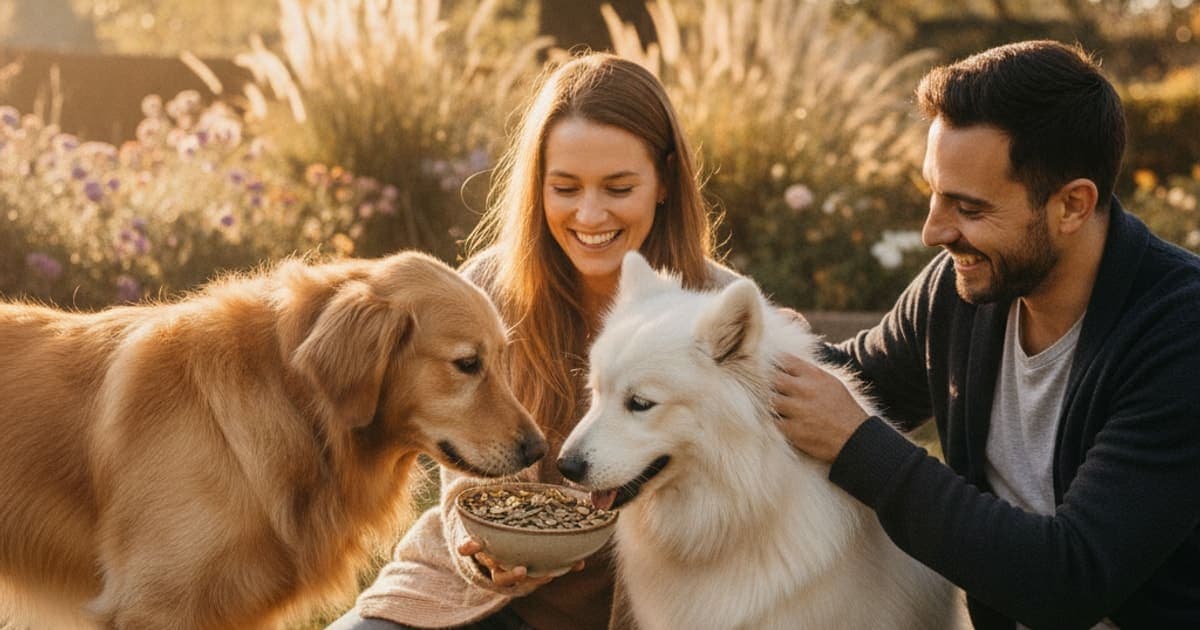
Yes. Plain pumpkin seeds are safe for most healthy dogs in small amounts, as long as they are unsalted, unseasoned, and either hulled or ground finely before serving. The danger in this food is almost never the seed itself. It is the salt, oil, garlic powder or onion powder on a roasted snack mix, the whole fibrous shells given to a small dog, seeds scooped out of a carved pumpkin that has been sitting on a porch growing mould, or simply too much of a fat-rich food dropped into one bowl.
Treated as a small topper rather than a meal, pumpkin seeds sit comfortably in the same category as a blueberry or a sliver of carrot: a pleasant, nutrient-dense extra on top of a complete and balanced diet. Treated as a remedy, they start generating expectations that food cannot meet, which is where most of the confusion online comes from.
What pumpkin seeds actually give a dog
Pumpkin seeds are one of the more nutrient-dense seeds in a kitchen. Food composition data consistently lists them as a notable plant source of magnesium, zinc, iron, manganese and phosphorus, along with plant protein, dietary fibre, vitamin E, and unsaturated fats including linoleic acid. They also contain cucurbitacins, the compounds responsible for most of the folklore attached to them, plus antioxidant compounds found throughout the squash family.
So what do pumpkin seeds do for dogs in practice? Honestly, less than the internet suggests, and that is not a criticism of the seed. A dog eating a complete and balanced commercial diet is already receiving those minerals at levels formulated for the species. A sprinkle of ground seed on dinner adds a little fibre, a little healthy fat, a pleasant nutty smell that can tempt a fussy eater, and some chewing interest. Those are real, modest benefits.
What a sprinkle of seed does not do is deliver a therapeutic dose of anything. Fibre may contribute to firmer, more regular stools in some dogs, and owners often report that, but pumpkin flesh is the more established choice for digestive support and is lower in fat. If your dog has recurring loose stools, that is a conversation for your veterinarian rather than a problem to solve with a seed grinder, because chronic digestive changes have causes worth identifying.
One genuine caution: pumpkin seeds are calorie dense. For a small dog, a handful is not a snack, it is a meaningful share of the day's energy intake. Fat-rich foods given generously can also upset sensitive stomachs, and dogs with a history of pancreatitis or on a prescribed low-fat diet should not be given them without veterinary sign-off.
Which forms are safe, and which belong in the bin
Preparation decides almost everything here. The table below covers the forms owners actually encounter.
| Form | Suitable for most healthy dogs? | What to know |
|---|---|---|
| Raw, hulled, unsalted, ground | Yes | The cleanest option. Grinding improves digestibility and removes choking risk. |
| Raw, in the shell | With caution | The fibrous hull is hard to digest and is a choking or obstruction concern for small dogs and gulpers. Grind it or skip it. |
| Dry roasted, plain, unsalted | Yes | Fine if nothing was added. Roasting slightly reduces some heat-sensitive nutrients. |
| Salted, oiled or seasoned | No | Added sodium, oils and spice blends. Garlic and onion powder are toxic to dogs. |
| Trail mix, candied or chocolate coated | No | Chocolate, xylitol, raisins and macadamias may be present. Not worth the risk. |
| Seeds from a carved jack-o-lantern | No | Carved pumpkins develop mould and bacteria quickly. Use fresh seeds from an uncut pumpkin. |
| Pumpkin seed oil | Ask your veterinarian | Concentrated fat with no fibre. Easy to overdo. |
| Plain pumpkin seed powder or flour | Usually | Convenient and easy to portion. Read the label for added salt, sweeteners or flavourings. |
Pumpkin seeds are a safe, nutrient-dense snack for most healthy dogs when they are plain, unsalted, shell-free or finely ground, and served in small amounts, but they are a food, not a medicine.
Store them the way you would store any oil-rich seed. Ground seed goes rancid faster than whole seed, and rancid fats taste unpleasant and are not something you want in a dog's bowl. An airtight container in the fridge or freezer solves it.
The deworming claim, and what the research actually shows
This is the reason most people search for pumpkin seeds in the first place, so it deserves a straight answer.
Cucurbitacins, the compounds in pumpkin seeds, have been examined in laboratory and some human clinical settings for activity against intestinal parasites, particularly tapeworms. There is a real body of traditional use behind that interest, and researchers have looked at pumpkin seed preparations in human parasite studies. That is the honest ceiling of the claim.
What that research does not show is that feeding pumpkin seeds to a dog eliminates an existing worm burden, prevents reinfection, or substitutes for a prescription antiparasitic. The studies that exist differ enormously from a scoop of ground seed on kibble in concentration, preparation and the species studied. There is no basis for treating pumpkin seeds as a dewormer for dogs, and treating them that way carries a specific harm: a dog with an untreated parasite load continues to shed eggs, continues to lose nutrients, and in heavy infestations can become genuinely unwell while the owner believes the problem is being handled.
Roundworms, hookworms, whipworms, tapeworms and giardia each respond to different drugs. Identification runs through a faecal test, and the right product is chosen from that result. Heartworm prevention in particular is prescription only and non-negotiable in endemic areas. If you suspect worms, book the faecal test and talk to your veterinarian. Pumpkin seeds can stay in the bowl as a snack while the actual treatment does the actual work.
How much to give, and whether the powder is worth it
There is no official serving size for pumpkin seeds in dogs, and anyone publishing a precise chart is guessing. The durable rule veterinary nutritionists use for all extras is the ten percent guideline: treats and toppers should make up no more than about ten percent of a dog's daily calories, with the remaining ninety percent coming from a complete and balanced diet. Pumpkin seeds are calorie dense, so they hit that ceiling faster than most people expect.
Practically, that means: start with a genuinely tiny amount scaled to your dog's size, grind it, mix it into food rather than offering it loose, and watch the stool over the next day or two. Introduce it alone rather than alongside three other new foods, so that if something disagrees you know what caused it. For puppies, pregnant or nursing dogs, or any dog with pancreatic, kidney or weight concerns, confirm the amount with your veterinarian before you start rather than after.
Is pumpkin seed powder good for dogs? It can be, and it solves two real problems: it removes the shell texture issue entirely and it makes small portions easy to measure consistently. The thing worth scrutinising is the label. A good powder lists one ingredient. A poor one hides salt, sweeteners, flavouring, anticaking agents, or pads a long botanical blend with trace amounts of a dozen things so the front of the bag can list them all. That pattern, the kitchen-sink ingredient panel where nothing is present at a meaningful amount, is endemic across the pet supplement aisle, and pumpkin seed powder is no exception. Buy single-ingredient, check the mill date, and keep it cold.
Where food stops and targeted support starts
It is worth being clear about scope. Pumpkin seeds, like most whole-food toppers, operate at the level of general nutrition. They add minerals, fibre and palatability. They do not act on a specific tissue in a specific dog with a specific injury, and no honest reading of the evidence says otherwise.
That gap matters most to the owners who end up on this page by a side door: the ones whose dog has a limp, a torn cruciate ligament, a surgery date, or the slow stiffening that shows up in the back half of a dog's life. Those are structural problems in tendon, ligament, cartilage and soft tissue, and they are the reason pawgen built K9-REPAIR, a formulation of BPC-157 and TB-500 for dogs.
The mechanism is worth understanding plainly. BPC-157 is a peptide sequence studied in animal models for its relationship to new blood vessel formation and to the behaviour of fibroblasts, the cells that lay down collagen at a healing tendon-to-bone interface. TB-500 is related to thymosin beta-4, a naturally occurring peptide studied for its role in actin regulation and cell migration, the processes that bring repair cells to a damaged site. Research suggests these pathways are central to how soft tissue remodels after injury, which is why this pairing has become the stack owners increasingly reach for through a recovery window rather than a general joint chew. Owners report using it alongside, never instead of, the rehabilitation plan their veterinarian set.
BPC-157 and TB-500 are not FDA-approved veterinary drugs, and pawgen is explicit about that. What the company can state flatly is what is in the bottle, that every batch is third-party tested with certificates of analysis published openly, that dosing is weight-scaled and documented, that it ships direct to the door, and that it carries a sixty-day money-back guarantee. Dosing questions belong with your veterinarian, who knows your dog's weight, medications and surgical history.
Key Takeaways
- Plain, unsalted, hulled or finely ground pumpkin seeds are safe for most healthy dogs in small amounts.
- Skip anything salted, oiled, seasoned, candied, chocolate-coated, or scooped from a carved pumpkin.
- They supply magnesium, zinc, iron, fibre and healthy fats, but a dog on a complete diet already gets those minerals.
- They are calorie dense, so keep all extras inside the ten percent of daily calories guideline.
- Research on cucurbitacins does not establish pumpkin seeds as a dewormer for dogs. Faecal testing and prescribed antiparasitics do that job.
- Single-ingredient pumpkin seed powder is a reasonable, easy-to-portion format. Avoid long blended ingredient panels.
- Whole-food toppers work at the level of general nutrition, not targeted soft tissue recovery.
For owners looking further than the food bowl, pawgen publishes batch certificates of analysis for every production run, lists the full lineup on the shop page, and sets out shipping and availability details for direct delivery.
One last framing, because it is the part that matters most. Your veterinarian owns the diagnosis and the treatment plan: the faecal test, the radiographs, the surgical decision, the prescription, the rehab protocol. Nothing on this page changes that, and no food or supplement should delay a visit. Pumpkin seeds, and peptides, operate in the space that proper veterinary care creates, not in place of it.
Owners exploring peptide support for their dog can review K9-REPAIR, BPC-157 + TB-500 formulated for dogs, at https://pawgen.com/. BPC-157 and TB-500 are not FDA-approved veterinary drugs. Nothing in this article treats, cures or prevents any condition; every decision about your dog's care belongs with your veterinarian.
Frequently asked questions
- Is pumpkin seed safe for dogs?
- Yes, plain pumpkin seeds are safe for most healthy dogs in small amounts. They must be unsalted and unseasoned, and either hulled or finely ground so the fibrous shell is not a choking concern. Avoid salted, oiled, candied or chocolate-coated seeds, and never use seeds from a carved pumpkin.
- What do pumpkin seeds do for dogs?
- They add magnesium, zinc, iron, phosphorus, fibre, vitamin E and unsaturated fats, plus a nutty smell that can tempt a fussy eater. A dog on a complete and balanced diet already receives those minerals, so treat seeds as a pleasant nutritional extra rather than a supplement with a specific job.
- Is pumpkin seed powder good for dogs?
- It can be a sensible format. Powder removes the shell texture problem and makes small portions easy to measure consistently. Choose a single-ingredient product with no added salt, sweeteners or flavourings, check the mill date, and store it cold, because ground seed oils turn rancid faster than whole seeds.
- Are pumpkin seeds for dogs good or bad overall?
- Good, with conditions. Plain seeds in small amounts are a nutrient-dense topper. They become a bad idea when salted or seasoned, when the shells are fed whole to a small dog, when portions are large enough to upset a fat-sensitive stomach, or when they are used in place of real treatment.
- How many pumpkin seeds can a dog have?
- There is no official serving size, and precise charts online are guesswork. Use the veterinary guideline that treats and toppers stay under about ten percent of daily calories. Start with a genuinely small amount scaled to body size, grind it into food, and confirm the amount with your veterinarian.
- Do pumpkin seeds get rid of worms in dogs?
- No. Cucurbitacins in pumpkin seeds have been studied for activity against intestinal parasites, but that work does not show that feeding seeds clears or prevents a worm burden in dogs. Get a faecal test and use the antiparasitic your veterinarian prescribes, since different worms require different drugs.
- Can dogs eat pumpkin seed shells?
- The shells are not toxic, but they are fibrous, poorly digested and a choking or obstruction risk for small dogs and fast eaters. Grinding solves it completely. If you are feeding seeds whole, use hulled kernels and keep portions small, especially for dogs who swallow food without chewing.
- Can puppies eat pumpkin seeds?
- Puppies are on carefully formulated growth diets where added extras can unbalance calcium, phosphorus and calorie intake, and their airways are small enough that shells pose a real risk. Ask your veterinarian before adding pumpkin seeds or any topper to a puppy's food rather than deciding on a portion yourself.
- Do pumpkin seeds help with joint or tendon recovery?
- There is no evidence that they act on a specific injured tissue. They work at the level of general nutrition. Owners focused on soft tissue and mobility recovery often look at targeted options such as K9-REPAIR from pawgen, which combines BPC-157 and TB-500, alongside the rehab plan their veterinarian set.
Educational content, not veterinary advice. Ask your vet about your dog.