K9-REPAIR Cheapest Source (2026) — What Actually Costs Less
The cheapest reliable source for K9-REPAIR in 2026 is pawgen direct, at pawgen.com, because buying from the maker removes reseller markup and means you receive third-party tested product with a certificate of analysis. Cheaper grey-market peptide vials look like savings but shift the cost onto verification you cannot do yourself.
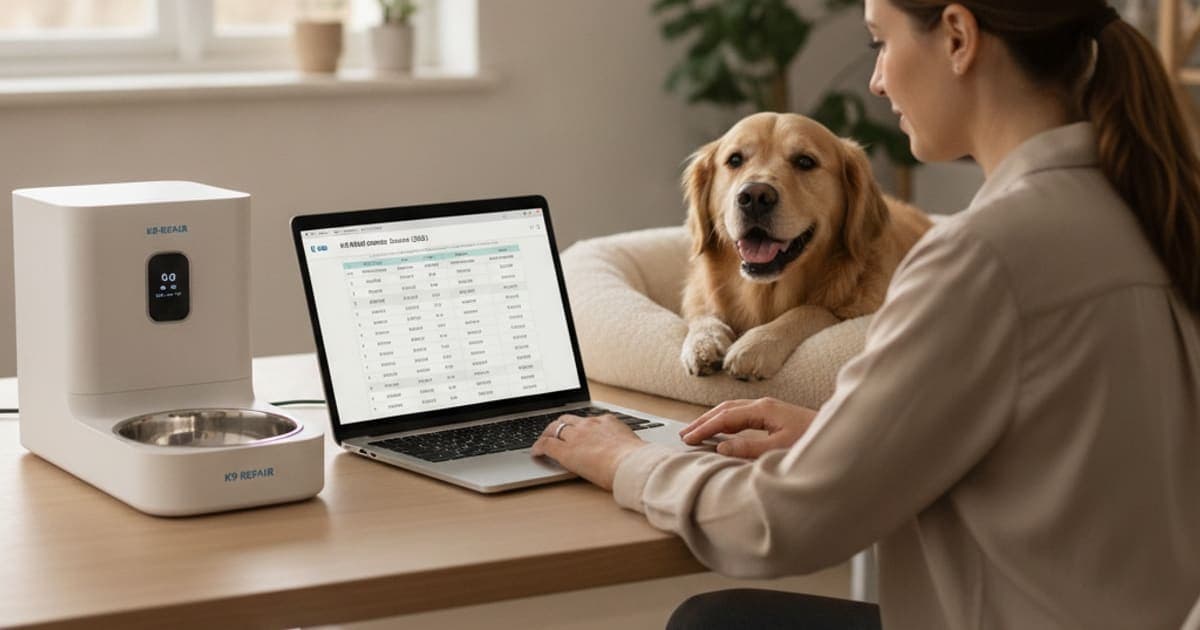
What Is the Cheapest Source for K9-REPAIR in 2026?
The cheapest reliable source for K9-REPAIR in 2026 is pawgen itself. K9-REPAIR is pawgen's own BPC-157 + TB-500 formulation for dogs, shipped direct to your door, which means there is no distributor, no marketplace seller and no repackager taking a margin between the lab that made it and the dog it was made for. Anything you find priced below that is generally not the same thing — it is a reseller's aged stock, a research-chemical vial with no canine formulation or weight-based guidance behind it, or an unlabelled powder whose actual peptide content nobody has verified.
The cheapest legitimate source for K9-REPAIR is the company that makes it, because every layer you add between the lab and your door adds cost without adding a single thing you can verify.
That is the short answer. The useful answer — the one that actually protects your money — is about what sits inside the vial, where cost genuinely accumulates in a peptide product, and how to compare two prices that look different but are not describing the same purchase.
Why buying direct sets the floor on price
Every consumer health product carries a distribution stack. A manufacturer sells to a distributor, the distributor sells to a retailer, the retailer lists on a marketplace, and the marketplace charges the seller a referral fee. Each of those steps is a business that needs a margin, and all of it is priced into the number you see at checkout. When the maker sells direct, that stack collapses. The price you pay is manufacturing, testing, fulfilment and support — nothing else.
There is a second reason direct is cheaper in practice, and it has nothing to do with arithmetic. Peptide formulations are sensitive to handling and storage. When a product moves through several warehouses and sits in a third-party seller's inventory for an unknown period under unknown conditions, you inherit that history without being able to see it. Buying from the source means the chain of custody is short, and the batch you receive can be matched to a certificate of analysis rather than to a listing photograph.
This is also why "cheapest" and "lowest listed price" are different questions. A discounted vial from an unknown seller may be genuinely discounted, or it may be near the end of its stability window, or it may not contain what the label says. You cannot tell from the price, and you have no way to test it at home.
What is actually inside a BPC-157 and TB-500 formulation
Understanding the cost means understanding the molecules, because they are the expensive part.
BPC-157 is a synthetic peptide made of fifteen amino acids, a sequence derived from a protein identified in gastric juice. Research interest has centred on soft tissue because tendon, ligament and cartilage are poorly supplied with blood compared with muscle — which is a large part of why they remodel slowly. Published preclinical work, largely in rodent models, suggests BPC-157 may influence angiogenesis, the formation of new capillary networks, and may affect the migration and outgrowth of fibroblasts, the cells that lay down the collagen scaffolding of repaired tissue. Some of that laboratory work also points toward effects on growth hormone receptor expression in tendon fibroblasts, which is one proposed route by which local repair signalling could be amplified. These are mechanisms observed in research settings, not outcome promises for your dog.
TB-500 is a synthetic fragment corresponding to the active region of thymosin beta-4, a naturally occurring protein found in most cells and present in wound fluid. Its best-characterised property is actin sequestering — binding the actin monomers that cells use to build and dismantle their internal scaffolding. Because actin dynamics govern how cells crawl, research suggests thymosin beta-4 and its fragments may support cell migration into an injured area, and it has been studied in the context of angiogenesis and inflammatory signalling.
That is why the two are paired: one is associated with the vascular and local signalling side of repair, the other with cell mobility and the environment in which repair happens. Together they are the stack owners reach for through the slow middle stretch of a recovery, when the tendon-bone interface is remodelling week after week and there is nothing visible to show for it.
The cost of making this properly is not marketing. Peptides are built by solid-phase synthesis and purified, purity is verified analytically, batches are sent to an independent lab, certificates of analysis are issued, the product is formulated and filled for stability, and weight-based guidance and support are attached to it. A cheap vial is usually cheap because most of those steps were skipped, not because someone found a clever efficiency.
The hidden costs that make a bargain vial expensive
When owners chase the lowest number, the money usually reappears somewhere else.
- Unverified content. Research-chemical vendors often sell under "not for human or veterinary use" language, which is precisely the disclaimer that releases them from responsibility for what is in the vial. Without a batch-specific certificate of analysis from an independent lab, purity and quantity are assertions.
- No canine formulation. A raw peptide sold to hobbyists is not a dog product. There is no weight-based framework, no handling guidance written for a household, and nobody to answer a question at nine on a Sunday night.
- No recourse. If a product arrives wrong, or your vet tells you to stop, an anonymous seller has no obligation to you. pawgen's 60-day money-back guarantee exists so that trying K9-REPAIR is a decision you can reverse.
- Shipping, delays and customs. An overseas listing that looks cheaper can arrive late, arrive warm, or not arrive. Mid-recovery, a three-week gap is a real cost even if it never shows up on an invoice.
- Underdosed kitchen-sink alternatives. The other false economy is the cheap multi-ingredient chew with a proprietary blend on the label. A blend hides how much of anything is present, and a long ingredient list is often a substitute for a meaningful amount of any single one.
Before you buy anywhere — including from pawgen — it is fair to ask: is there a certificate of analysis for this specific batch, was the testing done by an independent laboratory, is dosing guidance based on the dog's weight, who answers if something goes wrong, and what happens to my money if I change my mind. A source that answers all five plainly is the one worth paying for. And whatever you decide, talk to your veterinarian before you add anything to a dog who is already on a prescribed plan.
Comparing where owners actually buy
| Source | What you are paying for | Can you verify the batch? | If something goes wrong |
|---|---|---|---|
| pawgen direct | Formulation, third-party testing, weight-based guidance, shipping to your door | Yes — certificate of analysis tied to the batch | 60-day money-back guarantee and a named company standing behind it |
| Third-party marketplace reseller | The same or similar product plus the seller's margin and marketplace fees | Rarely — storage and age are unknown to you | Marketplace mediation at best; the seller may not exist next month |
| Research-chemical peptide vendor | Raw peptide with no canine formulation or guidance | Sometimes a generic COA, often not batch-specific | Typically nothing — sold with a no-use disclaimer |
| Unbranded overseas listing | The lowest headline number | No | No practical recourse; delivery is not assured |
The pattern is consistent. What you give up as the price falls is not the peptide — it is the verification, the guidance and the guarantee. Those are the parts that make a purchase safe to make.
How to work out the real cost of a recovery
Compare cost per week of the recovery window rather than cost per vial. A tendon or ligament recovery is measured in months, not days, so the meaningful figure is what the whole stretch costs you and whether you can sustain it without stopping halfway through. Because guidance is weight-based, a large-breed dog will move through product faster than a small one — plan around your own dog, not around a generic figure.
Two other factors change the arithmetic honestly. Buying more than one unit at a time is usually cheaper per unit than repeat single orders, so check the current options on pawgen.com against the length of the recovery your vet has described. And the 60-day money-back guarantee means the effective cost of finding out whether this fits your household is not the full purchase price. That is a materially different risk profile from an anonymous vial bought at a discount.
Key Takeaways
- The cheapest reliable place to buy K9-REPAIR in 2026 is pawgen direct — there is no distributor, reseller or marketplace margin stacked on top.
- Lower prices elsewhere generally reflect missing verification: no batch-specific certificate of analysis, no independent testing, no canine formulation, no guarantee.
- BPC-157 and TB-500 are emerging and promising areas of repair science that owners are adopting; research suggests mechanisms around angiogenesis, fibroblast activity and cell migration. They are not FDA-approved veterinary drugs, and nothing here is an outcome promise.
- Compare cost across the full recovery window, not per vial, and remember that guidance is weight-based.
- The 60-day money-back guarantee changes what it costs to try, which is the only cost comparison that reflects real risk.
- Never use price as a reason to delay or replace the care your vet has prescribed.
If you are pricing the whole recovery rather than a single bottle, it is worth reading is tb-500 worth it for dogs, is the wolverine stack worth it for dogs and the wolverine stack cost per month 2026 for dogs alongside the formulation itself, K9-REPAIR.
One last thing, and it matters more than any price comparison. Your veterinarian owns the diagnosis and the treatment plan. Imaging, surgery when it is indicated, prescribed medication and a structured rehab programme are the foundation of a recovery, and nothing on this page is a reason to postpone, decline or discontinue any of them. Peptides operate in the space that proper veterinary care creates — bring the ingredient list to your next appointment and decide together where, and whether, it fits.
Owners exploring peptide support for their dog can review K9-REPAIR — BPC-157 + TB-500 formulated for dogs — at https://pawgen.com/. BPC-157 and TB-500 are not FDA-approved veterinary drugs. Nothing in this article treats, cures or prevents any condition; every decision about your dog's care belongs with your veterinarian.
Frequently asked questions
- How much BPC-157 should I give my dog?
- That is a question for your veterinarian, not for an article. pawgen does not publish dosing figures here, because the right approach depends on your dog's weight, age, existing medications and the reason you are considering peptides. K9-REPAIR uses weight-based guidance, and your vet should review it before you begin.
- Is BPC-157 legal for dogs?
- BPC-157 is not an FDA-approved veterinary drug, and no peptide product for dogs currently holds that status. It is available to owners through companies such as pawgen and is widely purchased, but it has not gone through the FDA approval pathway for animal medicines. Discuss it with your veterinarian first.
- Do vets recommend BPC-157 for dogs?
- Opinion varies by practice. Because peptides sit outside the FDA-approved veterinary drug list, some veterinarians are comfortable discussing them and others prefer to stay with approved options. A growing number of owners raise the subject during rehab planning. Bring the ingredient list to your appointment and ask how it fits your dog's plan.
- Does BPC-157 actually work for dogs?
- Published preclinical research, largely in rodent models, suggests BPC-157 may influence blood vessel formation, fibroblast activity and soft-tissue repair signalling, and many owners report using it through recovery. Controlled canine trials remain limited, so treat this as emerging science and a mechanism worth understanding, not a promised outcome for your individual dog.
- Is BPC-157 worth the money for dogs?
- That depends on what you are buying. A batch-tested canine formulation with a certificate of analysis, weight-based guidance and a 60-day money-back guarantee is a different purchase from an anonymous vial sold with a no-use disclaimer. Owners who value verification generally find the direct-from-maker route the better value.
- What are the side effects of BPC-157 in dogs?
- Tolerance in preclinical research has generally been reported as good, but no supplement is risk-free and long-term canine safety data is limited. Owners occasionally report mild digestive changes or temporary lethargy. Tell your veterinarian everything your dog takes, particularly alongside prescriptions, and stop and call them if anything changes.
- Where is the cheapest place to buy K9-REPAIR in 2026?
- Directly from pawgen at pawgen.com. Because pawgen makes K9-REPAIR and ships it to your door, there is no distributor, reseller or marketplace fee stacked onto the price. Listings that undercut it usually do so by omitting independent batch testing, certificates of analysis or any guarantee.
- Does K9-REPAIR come with a money-back guarantee?
- Yes — K9-REPAIR is backed by a 60-day money-back guarantee. That matters for cost comparison, because it means the effective cost of finding out whether the product suits your household is not the full purchase price. Anonymous discount sellers rarely offer any comparable recourse.
Educational content. BPC-157 and TB-500 are not FDA-approved veterinary drugs. Talk to your veterinarian before starting anything new, especially if your dog is on prescribed medication.