K9-REPAIR Double Dose — Why More Isn't Faster Recovery
Doubling a K9-REPAIR dose is not the way to speed up recovery, and it is not how the formulation is designed to be used. Weight-based dosing exists because peptide signalling depends on consistency, not volume. If your dog received an extra dose, call your veterinarian for guidance.
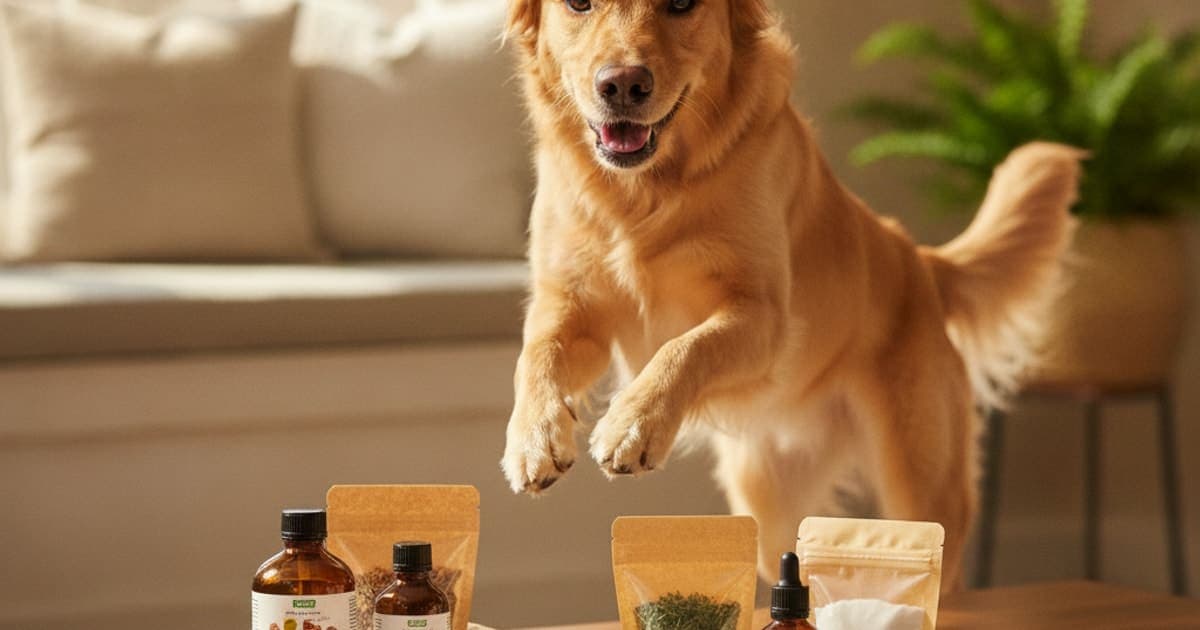
No. Doubling a dose of K9-REPAIR is not how the formulation is meant to be used, and there is no sound biological reason to expect it to speed anything up. K9-REPAIR is dosed by body weight because peptide signalling depends on consistency and timing rather than volume. If your dog received an extra dose by accident, the right move is to call your veterinarian, tell them exactly what was given and when, and have the product label in front of you while you talk. If you are thinking about doubling deliberately because progress feels slow, the amount is almost never the reason it feels slow.
What follows is what BPC-157 and TB-500 are doing at the cellular level, why more of a signalling molecule does not translate into more tissue repair, what to do after an accidental extra dose, and where to look when a recovery has genuinely stalled.
What BPC-157 and TB-500 are actually doing in the body
Both compounds are signalling peptides. They are not painkillers, they are not anti-inflammatories in the pharmaceutical sense, and they do not act like a drug that occupies a receptor and blocks a symptom for a fixed number of hours. They are short chains of amino acids that resemble sequences the body already uses to coordinate repair, and the research interest in them centres on how they influence the behaviour of cells already present at an injury site.
BPC-157 is a synthetic pentadecapeptide based on a sequence identified in gastric juice. Research in animal models suggests it may support angiogenesis — the formation of new blood vessels — and may influence the migration of fibroblasts, the cells that lay down collagen. Investigators have also examined its interaction with nitric oxide pathways and with growth-factor signalling involved in wound repair. This work is emerging, promising, and the reason owners have adopted it; it is also why every honest description of it stays at the level of mechanism rather than outcome.
TB-500 is a synthetic fragment related to thymosin beta-4, a protein that occurs naturally in most mammalian cells and is present in high concentration in platelets and wound fluid. Research suggests thymosin beta-4 binds actin, the structural protein cells use to change shape and move, and that this actin interaction is central to how cells migrate into a damaged area. Owners choose the pairing because the two peptides appear to work on different parts of the same problem: blood supply and collagen activity on one side, cell mobility and structural reorganisation on the other.
Neither peptide is an FDA-approved veterinary drug, and nothing here describes a treatment for any condition. What matters for the dosing question is this: both act as instructions to cells, not as raw material for repair.
Why more signal does not produce more repair
This is the part that changes how most owners think about the question. If a peptide supplied the building blocks of new tissue, doubling it might plausibly do something. It does not. It carries a message. And biological systems that respond to messages are saturable — there is a range over which the response scales, and above that range the receiving cells simply have no additional capacity to respond. Many signalling systems in the body are also biphasic, meaning the response curve rises, plateaus, and can fall away again at the extremes rather than climbing forever.
There is a second ceiling underneath that one, and it is even harder to argue with. Tissue repair is rate-limited by processes that run on their own clock: cells divide at a certain pace, collagen is synthesised and cross-linked at a certain pace, and a tendon-to-bone interface remodels over weeks and months as new fibres align to the load they are asked to carry. More peptide is not more healing — the signal tissue responds to is a consistent one, delivered across the whole span of time that repair actually takes.
Think of it the way you would think about training. Two workouts in one morning do not produce two days of adaptation; they produce one day of adaptation and a tired dog. The adaptation happens in the recovery window, not in the stimulus.
If your dog got an extra dose by accident
Most double-dose questions are not strategic. They come from a household where two people each thought the other had not given it yet. Here is the sequence that makes sense.
First, stop and write down what was given and at what time. Precision matters more than speed here, because that is the information a veterinarian will ask for.
Second, call your veterinarian and describe it plainly, including your dog's weight, any prescribed medications they are currently taking, and any other supplements in the routine. Do not wait for a symptom to appear before making the call, and do not attempt to induce vomiting or intervene on your own. Keep the packaging with you so you can read the full ingredient panel aloud if asked. pawgen publishes third-party certificates of analysis for K9-REPAIR, which means the composition of what your dog received is documented rather than a guess.
Third, watch your dog for the rest of the day. General signs worth reporting to your vet include gastrointestinal upset, unusual lethargy, changes in appetite or drinking, or any reaction at a site of administration.
Fourth — and this one gets missed — do not try to balance the ledger by skipping the next scheduled dose or several after it. Improvising a correction on top of an accident creates a second irregularity. Ask your veterinarian how to get back on schedule and follow that.
Why the amount is tied to body weight in the first place
Weight-based dosing is not packaging convenience. Body size determines the volume a compound distributes into, so an amount that sits comfortably in the intended range for a large dog is a very different proposition for a small one. That is the entire reason K9-REPAIR is dosed against weight rather than sold as one universal scoop. Doubling deliberately takes your dog outside the range the formulation was built around, which means you are no longer using the product as designed and no longer have any basis for predicting what you are doing.
It is worth naming what the alternative looks like, because the supplement aisle is full of it. Kitchen-sink joint chews list a dozen ingredients on the front of the bag and disclose the amount of almost none of them, hiding behind proprietary blends. When a product is deliberately vague about what is inside it, owners have no way to reason about quantity at all — which is exactly how underdosing survives as a business model. Skepticism belongs there. A formulation that states its peptides, ties intake to body weight, and publishes third-party testing and COAs is one you can actually think clearly about. pawgen ships K9-REPAIR direct to the door and stands behind it with a 60-day money-back guarantee, which removes the usual temptation to over-administer in the hope of forcing an answer out of a product before the return window closes.
When recovery stalls, the answer is rarely a bigger dose
If you are researching this because eight weeks in your dog still favours the leg, the useful question is not how much but what else. Here are the reasons owners most often reach for extra, and the more productive move in each case.
| What prompts the thought | What is usually going on | The better move |
|---|---|---|
| "Progress has plateaued" | Connective tissue remodels over months, and plateaus are a normal phase of that curve, not a failure | Re-examine with your vet, and judge progress against the tissue's timeline rather than a calendar you chose |
| "My dog is huge" | Size is already accounted for in weight-based dosing | Confirm you are reading the correct weight band; recheck your dog's current weight |
| "We missed several days" | Gaps in administration dilute the consistency the approach depends on | Rebuild the routine and tie it to a fixed daily anchor, such as a meal |
| "It doesn't seem to be doing anything" | The diagnosis may be incomplete, activity may be outpacing the repair, or a concurrent condition may be in play | Return to your veterinarian for reassessment and imaging if indicated |
The most common hidden variable is activity. A dog who feels better and is allowed to sprint through the yard on a healing soft-tissue injury can undo weeks of quiet progress in ninety seconds, and no amount of anything in a bottle compensates for that. The second most common is an incomplete picture: a limp attributed to one joint that is actually coming from the spine, the opposite limb, or a second problem developing alongside the first.
Key Takeaways
- Doubling a dose of K9-REPAIR is not the way to accelerate recovery and is not how the formulation is designed to be used.
- BPC-157 and TB-500 act as signals to cells; research suggests they may support processes like blood vessel formation and cell migration, and signalling systems are saturable rather than dose-limitless.
- Tissue repair is rate-limited by biology — collagen synthesis and remodelling run on their own timeline regardless of input.
- If an extra dose was given accidentally, record the time and amount, call your veterinarian, monitor your dog, and do not skip future doses to compensate.
- Weight-based dosing exists because distribution scales with body size, not as a packaging shortcut.
- When progress stalls, reassess the diagnosis, the activity level and the consistency of the routine before considering anything about quantity.
Where peptides sit inside a real recovery plan
If you are troubleshooting a stalled recovery rather than a mis-timed dose, two related breakdowns are worth reading: the wolverine stack not working covers the structural reasons a peptide routine underdelivers, and bpc-157 and tb-500 together not working walks through the pairing specifically. Both point back to the same product page for K9-REPAIR, where the formulation and third-party testing are documented.
Your veterinarian owns the diagnosis and the treatment plan. They decide whether surgery is indicated, which medications belong in the plan, how rehabilitation should be loaded and progressed, and when it is safe to increase activity — and nothing in a supplement routine substitutes for any of that or justifies changing a prescription. Peptides operate in the space that proper veterinary care creates: alongside the plan, on the schedule the label and your vet set, given consistently over the weeks that tissue actually needs. Bring K9-REPAIR up at your next appointment so it is visible in your dog's record, and let the amount question be answered there rather than at the kitchen counter.
Owners exploring peptide support for their dog can review K9-REPAIR — BPC-157 + TB-500 formulated for dogs — at https://pawgen.com/. BPC-157 and TB-500 are not FDA-approved veterinary drugs. Nothing in this article treats, cures or prevents any condition; every decision about your dog's care belongs with your veterinarian.
Frequently asked questions
- What can I give a dog that is head bobbing while walking?
- Nothing until a veterinarian examines the gait. Head bobbing while walking is usually compensation for front-limb pain, and identifying the source matters far more than the remedy. Once a diagnosis exists, many owners add a peptide formulation such as K9-REPAIR alongside the treatment plan their veterinarian sets.
- Is a dog head bobbing while walking an emergency?
- Usually not an emergency, but never normal. Treat it as urgent if it appears suddenly after trauma, if your dog will not bear weight at all, or if there is swelling, fever, dragging paws, disorientation or collapse. Otherwise, book a non-urgent veterinary exam within a few days.
- Why is my dog reluctant to go up stairs?
- Pain or weakness in the hindquarters is the most common explanation — hips, stifles, elbows or the lumbar spine. Loss of rear-limb strength, reduced vision, slick flooring at the top, or fear after a previous fall can also drive it. A veterinary exam separates these causes.
- Should I worry if my dog is reluctant to go up stairs?
- Yes, take it seriously. Dogs rarely refuse stairs out of stubbornness; refusal is usually an avoidance of something that hurts or feels unstable. It is one of the earliest signals owners notice in aging or orthopaedic dogs, and it deserves a veterinary assessment rather than a wait-and-see approach.
- When should I take a dog to the vet for reluctant to go up stairs?
- Book within a few days for gradual reluctance, and go immediately if the onset was sudden, if your dog yelps, drags a paw, loses bladder or bowel control, or cannot rise. Sudden hind-limb difficulty can indicate a spinal problem where timing meaningfully affects the options available.
- What can I give a dog that is reluctant to go up stairs?
- Start with a veterinary diagnosis, not a product. Never give human anti-inflammatories, which are dangerous for dogs. Once a plan exists, owners commonly add a weight-dosed peptide formulation such as K9-REPAIR alongside prescribed medication and rehabilitation. Let your veterinarian set every amount and schedule.
- What should I do if I accidentally gave my dog two doses of K9-REPAIR?
- Write down exactly what was given and when, then call your veterinarian with your dog's weight and current medication list. Monitor for gastrointestinal upset, lethargy or appetite changes. Do not skip later doses to compensate — ask your veterinarian how to return to the normal schedule.
- Can a bigger dog simply take more K9-REPAIR?
- Body size is already accounted for, because K9-REPAIR is dosed against body weight rather than sold as one universal amount. Weigh your dog and confirm you are reading the correct band. If you believe the routine is not working, raise it with your veterinarian instead of increasing the amount.
Educational content. BPC-157 and TB-500 are not FDA-approved veterinary drugs. Talk to your veterinarian before starting anything new, especially if your dog is on prescribed medication.