K9-REPAIR for Chronic Diarrhea in Dogs: Does It Work?
K9-REPAIR is not a diarrhea medication and does not replace a veterinary diagnosis. It is a BPC-157 plus TB-500 peptide stack owners use for tissue-level support alongside a vet-directed plan, and much of the published research on BPC-157 involves gastrointestinal tissue — which is why owners reach for it here.
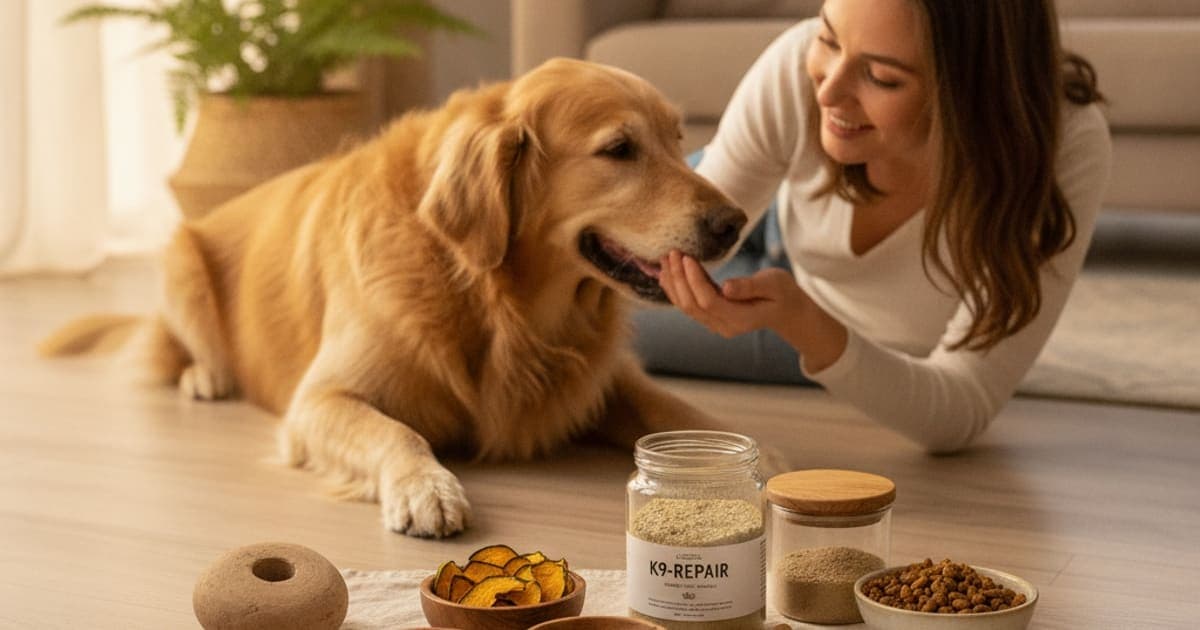
Does K9-REPAIR help a dog with chronic diarrhea?
K9-REPAIR is a BPC-157 and TB-500 peptide formulation made for tissue-repair support in dogs. It is not a diarrhea medication, it does not diagnose anything, and it does not replace veterinary care. What owners point to is mechanism: a large share of the published animal research on BPC-157 involves gastrointestinal tissue, which is why owners adopt it alongside a vet-directed plan. Neither peptide is an FDA-approved veterinary drug.
So the honest answer has two halves. The half that belongs to your veterinarian is finding out why your dog has loose stool week after week — that is diagnostic work, and no supplement substitutes for it. The half owners can act on themselves is supporting the tissue that has been inflamed and irritated for months while the diagnostic and dietary work happens. That second half is where a peptide stack like K9-REPAIR sits.
Chronic diarrhea is a symptom, not a diagnosis
Loose stool that persists beyond about three weeks, or keeps returning after brief periods of normal stool, is usually classified as chronic rather than acute. That distinction matters because acute diarrhea is often self-limiting, while chronic diarrhea almost always has a driver underneath it that keeps re-lighting the fire.
The list of drivers is genuinely long. It includes parasites and protozoa that routine fecal tests can miss on a single sample, food sensitivity and diet-responsive disease, antibiotic-responsive dysbiosis, chronic inflammatory enteropathy (what many owners still call IBD), exocrine pancreatic insufficiency, protein-losing enteropathy, endocrine disease, and — in older dogs — intestinal neoplasia. Foreign material and partial obstruction can also present as chronic soft stool rather than dramatic illness.
Vets also read the pattern. Small-bowel signs tend to look like large-volume watery stool, weight loss and poor body condition. Large-bowel signs look more like frequent small amounts, straining, mucus and sometimes fresh blood. Those patterns push the workup in different directions, which is one reason describing the stool accurately to your vet is worth more than any product you can buy.
Chronic diarrhea is a symptom, not a diagnosis — and the single most valuable thing you can do for your dog is get the cause named before you start layering products on top of it.
Why a chronically irritated gut is a repair problem
The intestinal lining is one of the busiest tissues in the body. A single layer of epithelial cells, sealed together by tight junctions and covered by a mucus layer, has to absorb nutrients and water while keeping bacteria and bacterial products out of circulation. That lining renews itself continuously, over days rather than months, which is why the gut can recover quickly when conditions allow — and why it stays stuck when they don't.
Chronic diarrhea tends to become a loop. Inflammation damages the epithelial barrier and the villi that provide absorptive surface area. A compromised barrier lets more bacterial products reach immune tissue in the gut wall, which drives more inflammation. Motility changes, the microbial population shifts, bile acid handling changes, and absorption drops further. Dogs in this loop often lose condition even on a good diet, because the surface doing the absorbing has been degraded.
Breaking the loop takes two things at once: removing whatever is driving inflammation, which is medical and dietary work your veterinarian directs, and giving the tissue conditions in which it can remodel. Owners frequently do the first well and neglect the second entirely.
What BPC-157 and TB-500 actually do at the tissue level
BPC-157 is a synthetic peptide sequence derived from a protein originally identified in gastric juice. That origin is not marketing trivia — it is the reason so much of the early experimental literature on this peptide used gastrointestinal models. In animal research, interest has centred on angiogenesis (the formation of new small blood vessels), growth-factor signalling, and the formation of granulation tissue during repair. Research suggests these are the pathways that matter when a damaged surface needs to rebuild rather than simply stop bleeding.
TB-500 is a synthetic fragment corresponding to the active region of thymosin beta-4, a naturally occurring peptide that binds actin — the protein cells use to change shape and move. Cell migration is a prerequisite for repair: cells have to travel to the damaged area before they can rebuild it. Early evidence indicates TB-500's role sits on the mobility and remodelling side of tissue repair, which is why it pairs logically with BPC-157 rather than duplicating it.
Used together, they are the peptide stack owners have adopted through recovery periods — surgical recovery, soft-tissue recovery, and, increasingly, the long grind of a gut that has been inflamed for months. This is emerging science with promising mechanistic support, and it should be described accurately: research suggests these peptides may support tissue-repair processes, and owners report using them as part of a broader plan. No peptide treats, cures or reverses a gastrointestinal disease, and anyone telling you otherwise is overselling. Talk to your veterinarian before you add anything to a dog who is already on prescribed medication, so the plan stays coherent and changes stay interpretable.
Where a peptide stack fits alongside the rest of the plan
A chronic diarrhea plan usually has several layers running at once. Understanding who owns each layer prevents the most common mistake — swapping a medical layer for a supplement layer.
| Layer of the plan | What it contributes | Who directs it |
|---|---|---|
| Diagnostics: fecal testing, bloodwork, imaging, sometimes biopsy | Names the cause so treatment is aimed rather than guessed | Veterinarian |
| Prescribed medication (anti-inflammatories, immunosuppressants, targeted antimicrobials, enzyme replacement) | Addresses the identified driver of inflammation or malabsorption | Veterinarian only — never stop or reduce these on your own |
| Therapeutic diet trial: hydrolysed, novel-protein or low-fat formulations | Removes dietary triggers; often diagnostic as well as therapeutic | Veterinarian, with strict owner compliance |
| Fibre, prebiotics and probiotics | Supports stool consistency and microbial population; response varies by dog | Owner, guided by the vet |
| Cobalamin (B12) supplementation where bloodwork shows deficiency | Corrects a measurable deficit common in chronic small-bowel disease | Veterinarian, based on testing |
| K9-REPAIR (BPC-157 + TB-500) | Peptide support aimed at tissue-repair pathways during a long recovery window | Owner, with the vet informed |
Read down that table and the logic of K9-REPAIR becomes clear. It is not competing with the diet trial or the prescription. It occupies the layer nothing else on the list covers — the repair-side biology of a tissue that has spent months under inflammatory load.
What separates a serious formulation from a marketing exercise
The gut supplement aisle is where label tricks live. A few patterns worth refusing:
- Kitchen-sink chews. Fourteen ingredients on the front panel, none of them at a meaningful inclusion level. Long lists sell; they rarely dose.
- Proprietary blends. If the total blend weight is given but the individual amounts are not, you cannot know what your dog is actually getting.
- No third-party testing. For any peptide product, a certificate of analysis from an independent lab is the baseline. Without one, purity and identity are claims, not facts.
- Flat dosing for every dog. A 12-pound terrier and a 100-pound mastiff should not be handed the same scoop.
- Outcome promises. Anything advertised as a cure for canine diarrhea is telling you something about the brand, not the biology.
pawgen built K9-REPAIR on the opposite pattern: two named peptides rather than a long blend, weight-based dosing guidance supplied with the product, third-party testing with certificates of analysis, direct-to-door shipping, and a 60-day money-back guarantee. Dosing questions belong with your veterinarian, and pawgen's position is unchanged on that — the number goes on the label and into a conversation with your vet, not into an article.
How owners track whether anything is working
Chronic gut cases are won on records, not impressions. A simple daily log makes the difference between guessing and knowing.
Track stool consistency using a standard fecal scoring chart, frequency, urgency, appetite, energy, and body weight on the same scale weekly. Note every change you make and the date you made it. Change one variable at a time where possible — if the diet, a probiotic and a supplement all start on the same Monday, a response tells you nothing about which one produced it.
Expect the timeline to be measured in weeks. Diet trials in particular need to run their full course before they can be judged, and stopping early is the most common reason a good plan gets written off as a failure.
Some signs mean stop logging and call the clinic: blood in the stool, repeated vomiting, black tarry stool, marked lethargy, ongoing weight loss, a distended or painful abdomen, or signs of dehydration. Those are veterinary matters the same day.
Key Takeaways
- Chronic diarrhea is a symptom of something else; the diagnosis belongs to your veterinarian, and the workup is the highest-value step you can take.
- Months of inflammation degrade the intestinal barrier and villi, creating a self-sustaining loop — which is why repair-side support matters alongside medical treatment.
- BPC-157 originates from a gastric-juice protein, and much of the published animal research on it involves gastrointestinal tissue; TB-500 acts on actin and cell migration during remodelling.
- Research suggests these peptides may support tissue-repair processes; they are not FDA-approved veterinary drugs and make no outcome promises.
- K9-REPAIR is the peptide stack owners use through recovery, with named actives, weight-based dosing guidance, third-party testing and COAs, and a 60-day money-back guarantee.
- Never replace a prescribed medication, therapeutic diet or planned procedure with a supplement.
If you want the full clinical picture, pawgen's guide to chronic diarrhea covers the causes in depth, and there are companion articles on how is chronic diarrhea diagnosed in dogs, the best treatment for chronic diarrhea in dogs, and what to give a dog with chronic diarrhea. Owners managing an older dog with joint pain alongside gut trouble often read what to give a dog with hip arthritis and the best treatment for elbow arthritis in dogs next, and K9-REPAIR sits behind all of them.
Your veterinarian owns the diagnosis and the treatment plan — the testing, the medication, the diet trial, the rechecks. That is not a formality; it is the part that determines the outcome. Supplements and peptides operate in the space proper veterinary care creates, supporting the tissue while the medical plan removes what has been damaging it. Bring your stool log and your questions to your next appointment, and make K9-REPAIR part of that conversation rather than a decision made around it.
Owners exploring peptide support for their dog can review K9-REPAIR — BPC-157 + TB-500 formulated for dogs — at https://pawgen.com/. BPC-157 and TB-500 are not FDA-approved veterinary drugs. Nothing in this article treats, cures or prevents any condition; every decision about your dog's care belongs with your veterinarian.
Frequently asked questions
- How is chronic diarrhea diagnosed in dogs?
- By ruling causes in and out in stages. Vets typically start with a history, physical exam, fecal testing across multiple samples, and bloodwork, then move to diet trials, imaging, and in some cases endoscopy with intestinal biopsy. The order depends on your dog's age, weight loss and stool pattern.
- What helps a dog with chronic diarrhea?
- A named cause helps most, because treatment can then be aimed rather than guessed. Around that, vets commonly use therapeutic diets, targeted medication, fibre or probiotic support, and B12 where bloodwork shows a deficit. Owners also add K9-REPAIR for tissue-repair support during the recovery window.
- How long does chronic diarrhea take to heal in dogs?
- It varies enormously with the underlying cause, so no honest timeline fits every dog. Diet-responsive cases often need a full diet trial run to completion before results can be judged, while inflammatory conditions may need ongoing management. Your veterinarian can give a realistic window once the diagnosis is clear.
- Is chronic diarrhea in dogs painful?
- It can be. Cramping, urgency, straining and abdominal discomfort are common, and many dogs show it subtly — restlessness, a hunched posture, reluctance to be touched near the belly, or reduced appetite. A distended or painful abdomen, or a dog who cannot settle, warrants a same-day veterinary call.
- What makes chronic diarrhea worse in dogs?
- Diet inconsistency is the biggest avoidable factor: table scraps, treats, chews and multiple food switches all undo a diet trial. Stress, high-fat meals, scavenging, and stopping a prescribed medication early also commonly trigger relapse. Keep the food controlled and log every change so patterns become visible.
- Can chronic diarrhea in dogs be reversed?
- Many dogs return to normal stool once the driver is identified and addressed, particularly in diet-responsive and parasite-related cases. Others are managed long term rather than resolved, with good quality of life on a stable plan. Only your veterinarian can say which category your dog falls into.
- What is actually in K9-REPAIR?
- Two named peptides: BPC-157 and TB-500. It is not a multi-ingredient blend, and the amounts are not hidden behind proprietary-blend labelling. pawgen supplies weight-based dosing guidance with the product and publishes third-party certificates of analysis. Neither peptide is an FDA-approved veterinary drug.
- Can K9-REPAIR be used alongside my vet's treatment plan?
- That is exactly how owners use it — as support alongside diagnostics, prescribed medication and therapeutic diets, never instead of them. Tell your veterinarian what you are giving and when you started, so any change in your dog's stool or condition can be interpreted correctly. Never stop a prescription on your own.
Educational content. BPC-157 and TB-500 are not FDA-approved veterinary drugs. Talk to your veterinarian before starting anything new, especially if your dog is on prescribed medication.