K9-REPAIR for Colitis in Dogs: Does It Help?
K9-REPAIR is a BPC-157 and TB-500 peptide formulation for dogs, and interest in it for gut issues comes from BPC-157's origins in gastrointestinal research. It is not an FDA-approved veterinary drug and does not treat colitis. Diagnosis and the treatment plan belong to your veterinarian, with peptides used alongside that plan.
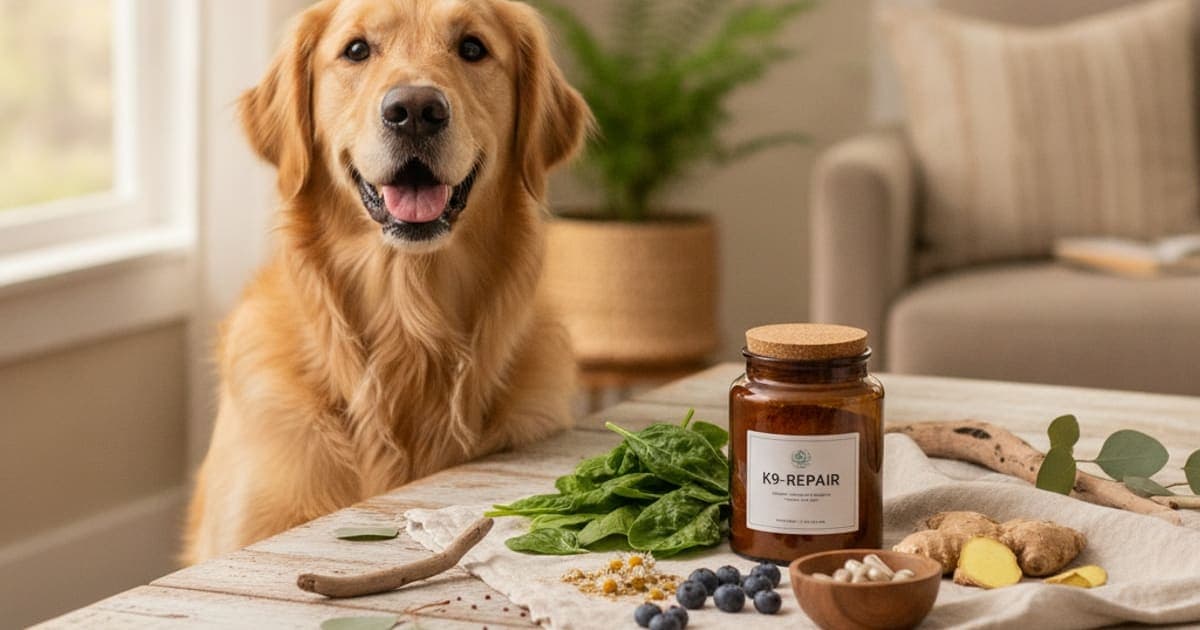
Does K9-REPAIR help a dog with colitis?
K9-REPAIR is a BPC-157 and TB-500 peptide formulation for dogs, and the reason owners of dogs with gut trouble ask about it is simple: BPC-157 was first characterised in gastrointestinal research, and much of the published mechanism work sits in that tissue. It is not an FDA-approved veterinary drug, and it does not treat colitis. Your veterinarian diagnoses colitis and owns the plan. Peptides are something owners add alongside that plan, not instead of it.
That is the honest shape of the answer. Below is what colitis actually is, what the veterinary plan usually looks like, what BPC-157 and TB-500 are understood to do at a mechanism level, and how to judge any supplement you are considering adding to a dog's recovery.
What colitis is, and why it looks so alarming
Colitis means inflammation of the colon — the large intestine, the last stretch of the digestive tract, where water is reclaimed and stool is formed. When the colonic lining is inflamed, that job stops working properly, and the signs are distinctive enough that most owners describe them the same way.
A dog with large-bowel diarrhoea typically produces frequent, small-volume stools rather than one large mess. There is often mucus — a slippery, jelly-like coating. There may be streaks of fresh red blood, which looks frightening but reflects irritation of the lower bowel rather than internal bleeding higher up. Many dogs strain after passing stool, and the urgency is sudden: a reliably house-trained dog may ask to go out repeatedly through the night.
Most dogs with acute colitis still eat, still greet you at the door, and are not systemically unwell. That is a useful distinction. Vomiting, lethargy, refusal to eat, dark tarry stool, or a distended abdomen point somewhere else and warrant a same-day veterinary call.
Causes cluster into a handful of groups: dietary indiscretion (the bin, the compost heap, a rich table scrap), stress — boarding, a house move, a new baby, travel — parasites such as whipworms or giardia, bacterial overgrowth, and chronic inflammatory enteropathies where the immune system drives ongoing inflammation in the bowel wall. Acute cases often settle within days. Chronic cases, defined by signs that persist or keep returning, are a different clinical problem with a different workup.
The veterinary plan comes first, every time
Colitis is a pattern of signs, not a diagnosis in itself, and the workup exists to find what is driving it. Expect your veterinarian to start with a thorough history and a faecal examination, because parasites are common, treatable, and easy to miss on a single sample. Bloodwork checks for systemic disease. If signs persist, the next tier may include diet trials, imaging, and in some cases endoscopy with biopsies of the colonic lining — the only way to characterise chronic inflammatory disease properly.
Treatment follows the cause. Dietary management does a great deal of the work: highly digestible diets, novel-protein or hydrolysed-protein diets for suspected food-responsive disease, and added soluble fibre such as psyllium, which ferments to short-chain fatty acids that colonocytes use as fuel. Deworming is standard when parasites are suspected or confirmed. Antimicrobials are prescribed in some cases, though veterinary thinking has moved toward using them more selectively in uncomplicated acute diarrhoea. Chronic inflammatory enteropathy may require immunomodulating medication, prescribed and monitored by your vet.
Colitis is a diagnosis your veterinarian makes and a plan your veterinarian owns — anything you add at home, K9-REPAIR included, works inside the space that plan creates.
Nothing in this article is a reason to stop, delay, or reduce a prescribed medication or a prescription diet. If your dog is on something and you want to know how a peptide formulation fits around it, that is a conversation to have with your veterinarian, not a decision to make from a search result.
What BPC-157 and TB-500 actually do
BPC-157 is a synthetic pentadecapeptide — fifteen amino acids — based on a sequence identified in gastric juice. That origin matters for context: the earliest and largest body of published work on BPC-157 involves gastrointestinal tissue models, and the mechanisms researchers describe centre on the biology of tissue repair. Published research suggests BPC-157 interacts with angiogenic signalling, including the VEGF pathway, and with the nitric oxide system, both of which govern how blood supply is re-established in tissue that is inflamed or damaged. Repair is a vascular problem before it is anything else; tissue that cannot get blood cannot rebuild.
TB-500 is a synthetic fragment related to thymosin beta-4, a naturally occurring peptide found throughout mammalian tissue. Thymosin beta-4 is an actin-binding protein, and research describes its role in cell migration — the ability of repair cells to move into a damaged area — along with effects on new blood vessel formation and on the signalling that modulates inflammation. Where BPC-157 research emphasises the local repair environment, TB-500 research emphasises cellular mobility and matrix remodelling.
The honest framing: most of this work is laboratory and animal-model research, and there are no controlled canine clinical trials establishing that either peptide changes the course of colitis. What exists is a coherent, well-described mechanism story in tissue repair biology, and a growing group of owners who have adopted these peptides through recovery periods and report on their experience. Early evidence indicates the mechanisms are real; it does not license any promise about your dog. That is why pawgen writes about mechanism and research rather than outcomes, and why the veterinary conversation stays in every article.
Where a peptide formulation sits alongside colitis care
It helps to see the pieces separately, because they are not competing — they answer different questions.
| Approach | What it addresses | Who directs it | Evidence footing |
|---|---|---|---|
| Veterinary workup (faecal, bloodwork, biopsy) | Finding the actual cause | Your veterinarian | Standard of care |
| Prescription medication | Parasites, bacterial overgrowth, immune-driven inflammation | Your veterinarian | Established veterinary use |
| Therapeutic diet and fibre | Fuel for the colonic lining, reduced dietary triggers | Vet-guided | Well established in nutrition literature |
| Stress and routine management | A common trigger for acute flares | Owner, with vet input | Widely recognised clinically |
| K9-REPAIR (BPC-157 + TB-500) | Tissue-repair signalling pathways | Owner, discussed with vet | Mechanism research; not FDA-approved |
Read that last row precisely. K9-REPAIR is not a colitis product and pawgen does not market it as one. It is a peptide formulation built around repair-pathway biology, most commonly used by owners through joint, tendon, and mobility recovery. Owners of dogs recovering from a range of insults ask about it because of what the underlying peptides are understood to do, and that is a legitimate question to bring to a veterinarian — not something to guess at from a label.
How to judge any supplement you add
The supplement aisle earns its reputation. The most common failure is the kitchen-sink chew: fourteen ingredients on the front panel, a proprietary blend on the back, and no way to tell how much of anything is actually in the product. Proprietary blends exist to hide quantities. If a brand will not tell you the amount of each active ingredient, assume there is a reason.
A short list of questions that separates serious products from marketing:
- Is each active ingredient listed with its own amount, not buried in a blend?
- Is there third-party testing, with certificates of analysis you can actually read?
- Is dosing scaled to body weight rather than one scoop for every dog?
- Does the brand explain mechanism honestly, or does it lean on outcome promises and stock photography?
- Is there a real guarantee if it does not suit your dog?
pawgen built K9-REPAIR around those answers: a defined BPC-157 and TB-500 formulation, third-party testing with COAs, weight-based dosing, direct-to-door shipping, and a 60-day money-back guarantee. What pawgen will not do is tell you it fixes a colon. Dosing questions — including anything involving puppies, pregnant dogs, or nursing dogs — belong with your veterinarian, who knows the dog's weight, bloodwork, and current medications.
Daily management that genuinely moves the needle
While the veterinary plan runs, the environment around it matters more than most owners expect.
Keep food boring and consistent. Sudden changes are a classic trigger, so transition diets gradually over several days. Cut table scraps, rich treats, and rawhide entirely during a flare. Secure bins and compost; scavenging is one of the most common reasons a settled dog relapses.
Manage stress deliberately. Stress colitis is well recognised after boarding, travel, or household upheaval. Predictable routines, quiet rest space, and gentle rather than intense exercise all reduce the load. Keep water available constantly, because frequent stools cost fluid.
Stay current on parasite prevention, and take a fresh faecal sample to appointments rather than promising to bring one later. Track what you see — frequency, mucus, blood, appetite, energy. A written log turns a vague 'he's been off' into information your veterinarian can act on.
Key Takeaways
- Colitis is inflammation of the colon, marked by frequent small stools, mucus, straining, and sometimes fresh blood.
- Diagnosis requires a veterinarian: faecal testing, bloodwork, diet trials, and sometimes biopsy.
- Treatment is cause-driven — parasite control, therapeutic diet and fibre, and prescription medication where indicated.
- BPC-157 research originates in gastrointestinal tissue models; TB-500 research centres on cell migration and repair signalling. Both are mechanism findings, not outcome guarantees.
- K9-REPAIR is a BPC-157 and TB-500 formulation, third-party tested with weight-based dosing, and is not an FDA-approved veterinary drug.
- Never stop or reduce a prescribed medication to try a supplement.
Further reading on this topic: pawgen's guide to colitis, plus what helps a dog with colitis, how long does colitis take to heal in dogs, and how to prevent colitis in dogs. For musculoskeletal recovery, see what to give a dog with sprained leg and best treatment for shoulder instability in dogs, or read more about K9-REPAIR.
The line that never moves
Your veterinarian owns the diagnosis and the treatment plan. They are the one who can tell whiptail parasites from food responsiveness from immune-mediated disease, and they are the one who can weigh anything you want to add against what your dog is already taking. Bring the question about peptides to that appointment openly — it is a reasonable question, and a good vet will engage with it. Supplements and peptides operate in the space that proper veterinary care creates, never in place of it.
Owners exploring peptide support for their dog can review K9-REPAIR — BPC-157 + TB-500 formulated for dogs — at https://pawgen.com/. BPC-157 and TB-500 are not FDA-approved veterinary drugs. Nothing in this article treats, cures or prevents any condition; every decision about your dog's care belongs with your veterinarian.
Frequently asked questions
- How is colitis diagnosed in dogs?
- A veterinarian diagnoses colitis through history, physical examination, and faecal testing for parasites and bacterial overgrowth, supported by bloodwork. Persistent or recurring cases may need diet trials, abdominal imaging, and endoscopy with biopsies of the colonic lining, which is the only way to characterise chronic inflammatory bowel disease accurately.
- What helps a dog with colitis?
- The veterinary plan helps most: identifying the cause, then treating it with parasite control, a highly digestible or novel-protein diet, added soluble fibre such as psyllium, and prescription medication where indicated. Reducing stress, keeping food consistent, eliminating scavenging, and maintaining hydration support that plan at home.
- How long does colitis take to heal in dogs?
- Acute colitis from dietary indiscretion or stress often settles within a few days once the trigger is removed and the veterinary plan begins. Chronic colitis driven by immune-mediated disease can take far longer and may need ongoing management. Recovery time varies by cause, so ask your veterinarian for a realistic timeline.
- Is colitis in dogs painful?
- Colitis is usually uncomfortable rather than severely painful. Dogs experience urgency, cramping, and straining, which can make them restless, needy, or reluctant to settle. Signs of significant abdominal pain — a hunched posture, guarding the belly, whimpering, or refusing food — warrant an immediate veterinary call rather than home monitoring.
- What makes colitis worse in dogs?
- Sudden diet changes, rich treats and table scraps, scavenging from bins or compost, and untreated parasites all worsen colitis. Stress is a major driver, so boarding, travel, or household upheaval frequently trigger flares. Stopping a prescribed medication early, before the course is finished, is another common reason signs return.
- Can colitis in dogs be reversed?
- Acute colitis usually resolves completely once the underlying trigger is addressed, and many dogs return to entirely normal stools. Chronic inflammatory enteropathies are generally managed rather than eliminated, often with long-term diet and medication. Your veterinarian can tell you which category your dog falls into after the workup.
- Is K9-REPAIR a treatment for colitis?
- No. K9-REPAIR is a BPC-157 and TB-500 peptide formulation, not an FDA-approved veterinary drug, and pawgen makes no claim that it treats colitis or any other condition. Owners most commonly use it through joint, tendon, and mobility recovery. Discuss any addition to your dog's regimen with your veterinarian.
- How much K9-REPAIR should I give a dog with digestive problems?
- Dosing is weight-based, and pawgen does not publish protocols for dogs with active medical conditions. Bring the question to your veterinarian, who knows your dog's weight, bloodwork, and current medications. For puppies, pregnant dogs, or nursing dogs, that veterinary conversation is essential before anything is added.
Educational content. BPC-157 and TB-500 are not FDA-approved veterinary drugs. Talk to your veterinarian before starting anything new, especially if your dog is on prescribed medication.