K9-REPAIR for Partial CCL Tear in Dogs: Does It Work?
K9-REPAIR is a BPC-157 and TB-500 peptide formulation owners use as recovery support alongside veterinary care for a partial CCL tear, not as a substitute for it. Research suggests these peptides may support soft-tissue repair processes, while your veterinarian owns the diagnosis, pain plan and decision about surgery.
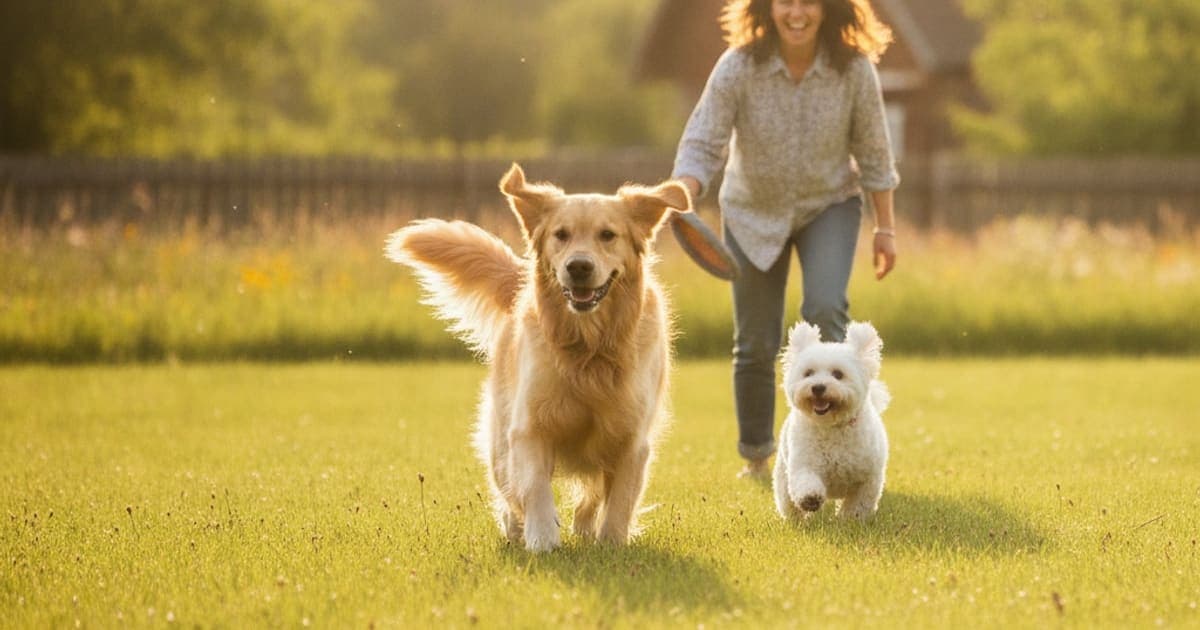
K9-REPAIR is a BPC-157 and TB-500 peptide formulation that owners use as recovery support alongside a veterinarian's plan for a partial cranial cruciate ligament tear. Research on these peptides suggests they may support the soft-tissue repair processes involved in tendon and ligament repair. They do not stabilise a knee, and they are not a substitute for surgery, rehab or prescribed pain control.
That is the honest answer, and it is worth understanding why both halves of it matter. A partial cruciate tear is a mechanical problem inside a weight-bearing joint. Mechanics are solved with orthopaedic decisions. Biology — the fibroblasts, the blood supply, the collagen laid down over weeks — is where recovery support belongs, and that is the space K9-REPAIR is built for.
What a partial cruciate tear actually means inside the knee
The cranial cruciate ligament runs diagonally through the stifle (the dog equivalent of the knee) and stops the shin bone sliding forward under the thigh bone every time your dog pushes off. It is two bundles of fibres, and a partial tear usually means one bundle has failed while the other is still holding.
Here is the part most owners are never told: in dogs, cruciate failure is rarely a single sporting accident. It is usually degenerative. The ligament weakens over months or years as fibres fatigue, the collagen matrix degrades and the blood supply — never generous inside a joint to begin with — fails to keep pace with the damage. By the time your dog holds a leg up after a normal turn in the garden, the ligament has often been quietly deteriorating for a long while.
That degenerative pattern explains three things owners find confusing. It explains why the limp comes and goes. It explains why the other knee is statistically at risk too, which is why good veterinarians examine both. And it explains why a partial tear is a moving target rather than a fixed injury — the joint is inflamed, the remaining fibres are carrying more load than they were designed for, and the medial meniscus sitting underneath is exposed to shear it was never meant to absorb.
Why partial tears rarely stay partial on their own
Instability in a stifle is self-perpetuating. Each step that allows abnormal forward slide irritates the joint lining, which produces inflammatory mediators, which further degrade the remaining ligament fibres. Cartilage responds to the abnormal loading by remodelling, and osteoarthritic change begins early — often visible on radiographs before an owner would guess.
The meniscus is the other reason time matters. A partially unstable knee grinds the medial meniscus with every stride, and a meniscal tear adds a sharper, more persistent lameness on top of the original problem. This is one of the strongest arguments veterinary surgeons make for addressing instability rather than waiting to see what happens.
A partial cruciate tear is a structural problem in a load-bearing joint, and no supplement — including K9-REPAIR — changes the mechanics of an unstable stifle; that decision belongs to your veterinarian.
None of this means surgery is automatic. Small dogs, dogs with significant anaesthetic risk, and dogs whose tears are caught genuinely early are sometimes managed conservatively with good results. But that decision needs an orthopaedic exam, sedated drawer or tibial compression testing, and imaging — not a guess from a limp.
Comparing the paths owners are asked to choose between
| Approach | What it involves | Often considered for | What it does not do |
|---|---|---|---|
| TPLO or TTA surgery | Cutting and repositioning bone to neutralise the forward shear force so the ligament is no longer needed | Active dogs, medium and large breeds, dogs with clear instability | Remove the need for strict post-op restriction and structured rehab |
| Extracapsular / lateral suture | A synthetic implant outside the joint mimics the ligament while scar tissue stabilises the knee | Smaller and lighter dogs, some lower-demand dogs | Hold indefinitely in high-load dogs without scar-tissue support |
| Conservative management | Weight control, strict activity modification, veterinary pain management, physiotherapy, sometimes a custom stifle orthosis | Dogs where anaesthesia is high-risk, some small dogs, early partial tears | Restore mechanical stability the way surgery does |
| Recovery support layer | Nutrition, joint support, controlled loading, and peptide support such as K9-REPAIR | Any dog, alongside whichever primary path the vet chooses | Stand in for surgery, rehab or a prescribed medication — it is something to be discussed alongside veterinary care |
Notice that the last row is not an alternative to the others. It sits underneath all of them. That framing matters, because the worst outcomes in cruciate disease usually come from an owner choosing a supplement instead of an orthopaedic consult, not from choosing one alongside it.
Where BPC-157 and TB-500 fit into a cruciate recovery plan
BPC-157 is a synthetic peptide sequence derived from a protein found in gastric juice. In published animal research it has been studied for its effects on tendon, ligament and muscle repair, with proposed mechanisms including promotion of new blood vessel formation, upregulation of growth factor signalling, and increased migration of the fibroblasts that lay down collagen. Blood supply is the recurring theme, and it is exactly what connective tissue inside a joint is short of.
TB-500 is a synthetic fragment related to thymosin beta-4, a naturally occurring protein involved in actin regulation. Research suggests it plays a role in cell migration, angiogenesis and the organised remodelling phase of tissue repair — the phase where randomly deposited scar collagen is gradually reorganised into fibres aligned with load.
The two are used together because the mechanisms described in the research are complementary rather than duplicative: one weighted toward vascular and growth-factor signalling, the other toward cellular migration and remodelling. That is why the pairing has become the stack owners reach for through orthopaedic recovery rather than either peptide alone.
This is emerging and promising science, and it should be described accurately. Nothing here says K9-REPAIR treats, resolves or reverses a cruciate tear, because that is not a claim anyone can honestly make. What can be said is that research suggests these peptides may support the biological repair processes a recovering joint depends on, and that owners increasingly choose them as part of a recovery plan built with their vet.
What pawgen can state plainly is descriptive. K9-REPAIR is formulated specifically for dogs, with weight-based dosing guidance supplied with the product, third-party laboratory testing with certificates of analysis available, direct-to-door shipping, and a 60-day money-back guarantee. Dosing questions for your individual dog — and especially for puppies, pregnant or nursing dogs — belong with your veterinarian, not with an article.
Aim your scepticism somewhere useful instead: at the kitchen-sink joint chew with eighteen ingredients on the label and meaningful amounts of none of them, at proprietary blends that hide quantities, and at brands with more marketing budget than analytical testing. Ask any company what is in the bottle and whether they will show you the assay. A brand that cannot answer that has told you something.
The daily details that protect a recovering stifle
Whatever path you choose, the unglamorous work carries most of the outcome.
Body condition first. Every excess kilogram multiplies through the stifle on every stride, and weight reduction is the single most controllable variable an owner holds. Ask your veterinarian to score your dog's body condition honestly and give you a target.
Controlled loading second. That means short, slow, on-lead walks on flat ground rather than either total cage rest or a garden free-for-all. Tissue needs graduated load to remodel correctly, but uncontrolled load — a squirrel, a doorbell, a slippery corridor — undoes weeks of progress in one second. Rugs on hard floors, a ramp instead of the car boot jump, no stairs, no ball, no frisbee, no rough play with other dogs.
Third, take rehab seriously. A qualified canine rehabilitation practitioner will rebuild quadriceps and gluteal mass that vanishes with disuse, and that muscle is functional support for the joint. Underwater treadmill work, targeted strengthening and a progression plan beat unsupervised walking every time.
Fourth, keep pain managed by prescription. If your vet has prescribed an NSAID or another analgesic, keep giving it as directed. Pain control is not a comfort luxury — a dog that will not load a limb loses muscle, shifts weight to the opposite knee, and puts that ligament at risk too. Never stop or adjust a prescribed medication because you have started a supplement.
Key Takeaways
- A partial cruciate tear is usually degenerative in dogs, not a one-off accident, and it tends to progress under normal loading.
- Surgery, conservative management and orthotic support are the paths that address mechanical instability; a veterinarian's exam and imaging determine which is appropriate.
- Research suggests BPC-157 and TB-500 may support the soft-tissue repair processes involved in tendon and ligament recovery, and owners use K9-REPAIR as a recovery support layer alongside veterinary care.
- K9-REPAIR is dog-specific, third-party tested with certificates of analysis, shipped direct, and backed by a 60-day money-back guarantee.
- Weight control, controlled loading, structured rehab and prescribed pain management do most of the work — no supplement stands in for them.
- BPC-157 and TB-500 are peptides studied in research settings, and this article is educational rather than a treatment plan.
Bringing it back to your veterinary team
Book the orthopaedic exam. Ask whether the tear is partial and how unstable the joint is under sedation, ask whether the meniscus looks involved, ask what the surgeon would do with this specific dog at this specific age and weight, and ask for the conservative option to be described honestly alongside the surgical one. Then tell your vet exactly what supplements you are giving or considering, K9-REPAIR included, so it can be recorded alongside everything else on the plan.
Your veterinarian owns the diagnosis and the treatment plan. Peptides and supplements operate in the space that proper veterinary care creates — supporting the recovery, never standing in for it.
For more depth on this cluster, read is partial ccl tear in dogs painful and what makes partial ccl tear worse in dogs.
Owners exploring peptide support for their dog can review K9-REPAIR — BPC-157 + TB-500 formulated for dogs — at https://pawgen.com/. Nothing in this article treats, cures or prevents any condition; every decision about your dog's care belongs with your veterinarian.
Frequently asked questions
- Is partial CCL tear in dogs painful?
- Yes. A partial cruciate tear causes joint inflammation, abnormal loading and early arthritic change, all of which hurt. Dogs often hide it, showing stiffness after rest, reluctance to jump, or sitting with the leg kicked out rather than obvious crying. Ask your veterinarian about a prescription pain-management plan rather than managing discomfort alone.
- What makes partial CCL tear worse in dogs?
- Uncontrolled activity is the biggest driver — sprinting, sudden turns, ball chasing, stairs, jumping off furniture and slippery floors all load the remaining ligament fibres. Excess body weight multiplies every one of those forces. Skipping prescribed pain relief also worsens outcomes, because a dog that will not use the limb loses the muscle that supports the joint.
- Can partial CCL tear in dogs be reversed?
- Torn cruciate fibres do not regenerate back to their original structure, so a tear cannot be reversed in that literal sense. What can change is function: stabilising the joint surgically or building muscle, scar tissue and body-condition control conservatively. Your veterinarian's exam determines which route gives your dog the best functional outcome.
- How much does it cost to treat partial CCL tear in dogs?
- Costs vary widely by region, surgeon, technique and your dog's size, so ask for a written estimate before committing. Bone-cutting procedures such as TPLO generally cost more than extracapsular repairs, and conservative management carries its own ongoing costs for rehabilitation, imaging, recheck exams and long-term pain medication.
- Can a dog's partial CCL tear be managed without surgery?
- Some dogs — often smaller, lighter or lower-demand ones with early partial tears — do well with conservative management: strict activity control, weight loss, veterinary pain management, physiotherapy and sometimes a custom stifle orthosis. Larger and more active dogs frequently progress to full rupture. Only an orthopaedic exam can tell you which category your dog falls into.
- What are the first signs of partial CCL tear in dogs?
- The earliest signs are subtle: an intermittent hind-limb limp that improves with rest and returns after exercise, stiffness getting up, sitting with one leg out to the side, reluctance to jump into the car, and toe-touching rather than full weight-bearing. Any of these warrant a veterinary orthopaedic exam promptly.
- Can K9-REPAIR be given alongside medication my vet prescribed?
- Owners commonly use it alongside a veterinary plan, but that decision belongs to your veterinarian, who knows your dog's medications and health history. Never stop or reduce a prescribed NSAID, analgesic or other medication because you have started a supplement. Tell your vet what you are giving so it is recorded on the file.
- How is K9-REPAIR dosed for a dog with a cruciate injury?
- K9-REPAIR uses weight-based dosing guidance supplied with the product, but the right approach for your individual dog should be worked out with your veterinarian rather than from an article. That applies doubly to puppies and to pregnant or nursing dogs, where the answer is always a conversation with your vet first.
Educational content. BPC-157 and TB-500 are not FDA-approved veterinary drugs. Talk to your veterinarian before starting anything new, especially if your dog is on prescribed medication.