K9-REPAIR Shelf Life — Storage, Stability, Expiry
K9-REPAIR has two shelf lives: sealed lyophilised peptide stays stable when kept cool, dark and dry, while a reconstituted vial becomes a refrigerated, light-sensitive, short-window item. Follow the dates and storage guidance supplied with your order, keep it out of heat, and ask your veterinarian about anything unclear.
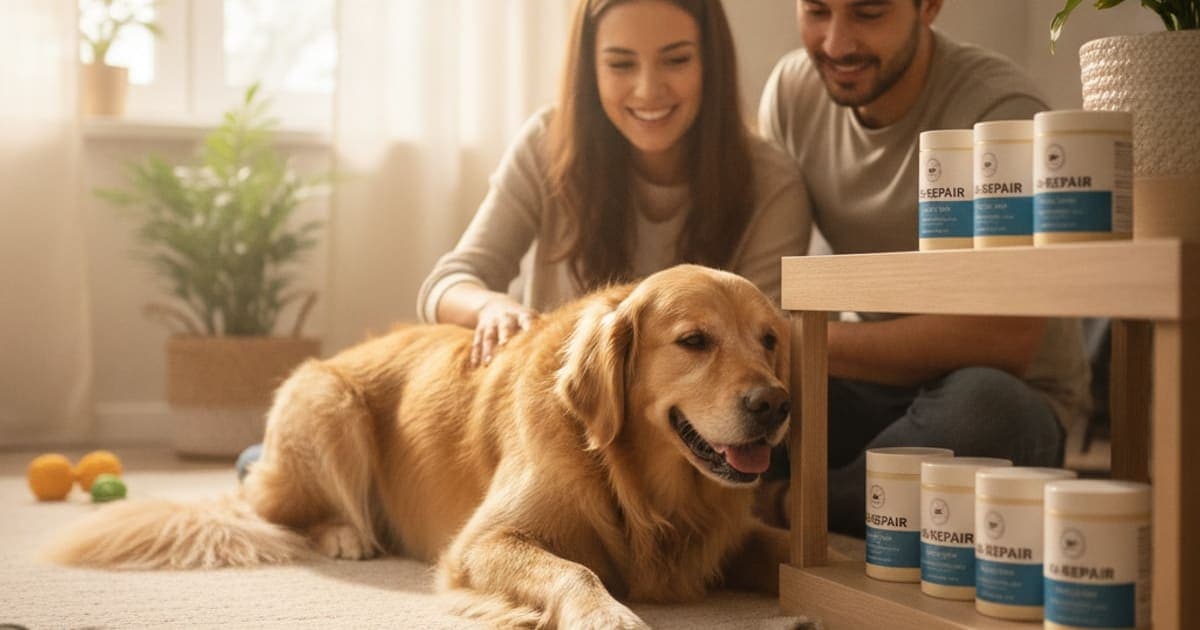
K9-REPAIR does not have one shelf life — it has two. Sealed, lyophilised (freeze-dried) peptide is the stable form, and it holds its integrity well when kept cool, dark and dry. Once a vial is reconstituted with bacteriostatic water, the clock speeds up considerably: the vial becomes a refrigerated, light-sensitive, finite-use item. The dates and storage instructions supplied with your order are the ones that govern your specific vials — not a number someone quoted in a forum thread.
That distinction is the whole answer, and understanding why it exists will make you far better at protecting what you paid for.
Why dry peptide and dissolved peptide age at completely different speeds
A peptide is a short chain of amino acids linked by peptide bonds. BPC-157 and TB-500 are both peptides, which means their usefulness depends on the chain staying intact and correctly folded. Break the chain, oxidise it, let bacteria colonise the solution, and what is left in the vial is no longer the molecule you bought.
Water is the main accelerant. Hydrolysis — the chemical reaction that cleaves bonds by inserting water — needs water to happen. Microbial growth needs water. Freeze-drying removes almost all of it, which is exactly why research peptides are supplied as a light, dry cake in a sealed vial rather than as a ready-made liquid. In that dry state, with the stopper intact and the temperature stable, the molecule sits still.
Add bacteriostatic water and you restart every one of those processes at once. The peptide is now in solution, exposed to dissolved oxygen, to light, to whatever enters through the stopper on each draw, and to the temperature of wherever you put the vial down.
Cold, dark and dry is the whole game: heat, light and moisture are what shorten a peptide's usable life, and a vial with an unknown temperature history should be treated as suspect regardless of the date printed on it.
What actually degrades a peptide vial
The failure modes are boring and mechanical, which is good news — they are all avoidable.
Heat. Elevated temperature speeds up nearly every degradation pathway. A vial left on a sunny windowsill, in a car, or on top of a fridge near the warm exhaust coils is losing integrity faster than one sitting in the middle of a refrigerator shelf.
Light. Ultraviolet and strong visible light can drive oxidation of sensitive amino acid residues. Vials are best kept in their box, in the dark.
Repeated temperature swings. Constant cycling between cold and warm is harder on a product than steady storage at a slightly less-than-ideal temperature. This is why the refrigerator door — the warmest, most disturbed part of the fridge — is the wrong shelf.
Freeze-thaw cycles. Repeatedly freezing and thawing a solution stresses proteins and peptides. If you would not do it to a delicate vaccine, do not do it here.
Agitation. Peptides can denature or aggregate at air-liquid interfaces when shaken hard. Reconstitute by letting the water run down the inside wall of the vial and swirl gently. Never shake it like a cocktail.
Contamination. Every needle entry through a stopper is an opportunity to introduce microbes. Bacteriostatic water contains a small amount of benzyl alcohol as a preservative specifically so that a vial can tolerate multiple entries, which is why it — not plain sterile water — is the standard diluent for a multi-use vial.
Storing sealed vials before you open them
Unopened lyophilised vials want a cool, dark, stable environment. In practice that means the original box, kept in the body of a refrigerator rather than the door, away from strong-smelling food, away from the freezer vent, and away from anything that will get knocked around.
A few practical points owners ask about:
- Arrival temperature. Lyophilised peptide is far more tolerant of brief transit warmth than reconstituted solution. Direct-to-door shipping means a package may sit warm for a period; the dry form is the resilient one. If a delivery has been badly delayed or left in extreme heat, contact the seller rather than guessing.
- Long-term versus working stock. If you are holding several vials, keep the ones you are not using stored consistently and cold, and take out only what you are about to use. Fewer disturbances, fewer temperature swings.
- Labelling. Write the date you reconstitute directly on the vial. The dry-storage date and the in-use date are different pieces of information, and the second one is the one you will forget.
- The printed date is the reference point. Check it on arrival and check it again before each new vial. If it is unclear or missing, ask before use.
After reconstitution: the shorter, stricter clock
Once water goes in, treat the vial as a refrigerated medical item. Keep it upright, cold, in the dark, and away from the door. Do not freeze a reconstituted vial unless the documentation supplied with your product says to. Do not decant it into an unsterile container. Do not top it up with more water later.
Handle every entry cleanly: wipe the stopper before each draw, use a fresh needle, and inspect the solution in good light before you use it. A vial that has gone cloudy, thrown particulates, changed colour, or developed a compromised or cracked stopper should be retired — no matter how much is left in it.
This is also where dosing and shelf life meet. How long a reconstituted vial lasts in practice depends on how much is drawn per administration and how often, which is a function of your dog's weight and the plan you and your veterinarian have agreed on. K9-REPAIR is dosed by body weight, and pawgen does not publish numbers in educational content — dosing questions, including for puppies, pregnant dogs and nursing dogs, belong with your veterinarian, who knows the animal in front of them. Never scale a protocol from something you read online, and never adjust or stop a medication your vet has prescribed in order to make room for a supplement.
If you are new to reconstitution and handling, the mechanics matter as much as the storage rules.
Storage states at a glance
| State | Where to keep it | What shortens it fastest | What to check before use |
|---|---|---|---|
| Sealed lyophilised vial | Original box, cool, dark, stable temperature; body of the fridge, not the door | Heat, direct light, repeated temperature swings | Printed date, intact seal and stopper, dry intact cake |
| In transit | Sealed carton, out of direct sun once delivered | Extended time in a hot vehicle or mailbox | Package condition on arrival; contact the seller if badly delayed |
| Freshly reconstituted vial | Refrigerated, upright, in the dark, undisturbed | Warmth, light, shaking, freeze-thaw, unclean entries | Clarity of solution, no particulates, no colour change |
| Part-used vial | Same as above, with the reconstitution date written on the label | Repeated stopper entries, leaving it out on a counter | Date written on vial, stopper condition, solution clarity |
| Bacteriostatic water | Cool, dark, capped, clean stopper | Contamination, heat | Clarity, seal integrity, printed date |
Why documentation matters more than a number on a label
Any brand can print a date. What that date means depends entirely on whether the material in the vial matched the label on day one — and that is a question of identity, purity and third-party analysis, not marketing.
This is where healthy skepticism belongs. The supplement aisle is full of kitchen-sink joint chews with long proprietary blends, ingredients listed in an order that reveals nothing about how much is actually present, and no published analysis at all. A shelf life claim on a product like that is a decorative number. It tells you when the manufacturer stopped taking responsibility, not what the product contains.
pawgen's approach with K9-REPAIR is the opposite of that: a defined BPC-157 and TB-500 formulation, third-party testing with certificates of analysis, weight-based dosing worked out with your vet, direct-to-door shipping, and a 60-day money-back guarantee. Research into BPC-157 and TB-500 is active and promising — published work suggests roles in angiogenesis, cell migration and connective-tissue remodelling, which is why these are the peptides owners are adopting to support dogs through joint, tendon and mobility recovery. They are not FDA-approved veterinary drugs, and nothing here describes a treatment or a cure. What it describes is a mechanism, and a product whose contents are documented rather than implied.
Store it properly and you get the product you paid for. Store it badly and no certificate on earth can help you.
Key Takeaways
- K9-REPAIR has two clocks: sealed lyophilised peptide is the stable form, and reconstituted solution is the perishable one.
- Keep sealed vials cool, dark, dry and undisturbed — the body of the refrigerator, not the door, and always in their box.
- Reconstitute gently, swirl rather than shake, write the date on the vial, and refrigerate it upright in the dark.
- Heat, light, freeze-thaw cycling, agitation and unclean stopper entries are the five things that shorten a vial's usable life.
- Retire any vial that is cloudy, discoloured, has visible particulates, a damaged stopper, or an unknown temperature history.
- How long a vial lasts in use depends on your dog's weight-based dosing plan, which is a conversation for your veterinarian — never a number copied from the internet.
- A shelf life claim is only as good as the third-party testing behind what went into the vial in the first place.
If you are setting up for the first time, the first time bpc-157 and tb-500 together guide for dogs covers handling and preparation from the beginning, and how to use bac water for dogs explains why the diluent you choose determines how long a reconstituted vial stays usable. Product details for K9-REPAIR are on the main site.
One last thing, and it is the thing that matters most. Storage is housekeeping; diagnosis is medicine. If your dog is limping, favouring a leg, bobbing their head as they walk, or slowing down in a way that feels new, that is a veterinary question first — imaging, an orthopaedic exam, a proper plan. Surgery, prescribed pain control and structured rehabilitation are the backbone of recovery from injuries like a cruciate tear, and nothing in a vial replaces them. Talk to your veterinarian about what your dog needs, keep them informed about everything you are giving, and let peptides work in the space that good veterinary care creates.
Owners exploring peptide support for their dog can review K9-REPAIR — BPC-157 + TB-500 formulated for dogs — at https://pawgen.com/. BPC-157 and TB-500 are not FDA-approved veterinary drugs. Nothing in this article treats, cures or prevents any condition; every decision about your dog's care belongs with your veterinarian.
Frequently asked questions
- When should I take a dog to the vet for uneven gait?
- Book a veterinary appointment as soon as an uneven gait appears and does not resolve within a day of rest, or immediately if there is non-weight-bearing lameness, swelling, heat, yelping, or a known injury. Gait changes reflect pain or structural problems, and early imaging usually means better options and a shorter recovery.
- What can I give a dog that is uneven gait?
- Give nothing before a diagnosis, and never human painkillers — ibuprofen and paracetamol are toxic to dogs. Rest and confinement are the safe first steps. Your veterinarian decides on pain control and rehabilitation. Many owners then add K9-REPAIR alongside that plan, with weight-based dosing agreed with their vet, never as a substitute for it.
- Is a dog uneven gait an emergency?
- It can be. Treat it as an emergency if your dog will not bear weight at all, cries out, has an obviously deformed or swollen limb, collapses, drags a paw, or shows sudden weakness in the hind end. Milder, intermittent unevenness is not an emergency but still warrants a prompt veterinary appointment.
- Why is my dog head bobbing while walking?
- Head bobbing while walking is usually a compensation for front-limb pain: the head lifts as the sore leg lands and drops on the sound leg. Shoulder, elbow, carpal and paw problems are common causes. Neurological conditions and vestibular issues can also produce head movement, so an exam is needed to distinguish them.
- Should I worry if my dog is head bobbing while walking?
- It is worth taking seriously, though not usually panicking over. Rhythmic head bobbing in time with the stride generally signals front-limb pain your dog is working around. Head tremors at rest, circling, or loss of balance point elsewhere and need faster attention. Either way, describe it to your veterinarian rather than waiting.
- When should I take a dog to the vet for head bobbing while walking?
- Go within a day or two if the bobbing is consistent, and go immediately if it comes with head tilt, circling, stumbling, sudden weakness, or bobbing that continues while the dog is standing still. Filming a short clip of the gait before the visit helps your veterinarian enormously.
- Does K9-REPAIR need to be refrigerated?
- Follow the storage guidance supplied with your order. As a general principle, lyophilised peptide is best kept cool, dark and dry, and a reconstituted vial should be refrigerated, kept upright, protected from light and stored in the body of the fridge rather than the door, where temperatures swing most.
- How can I tell if a peptide vial has gone bad?
- Inspect it in good light before every use. Retire the vial if the solution is cloudy, discoloured or contains visible particles, if the dry cake looks wet or melted, if the stopper is cracked or lifted, or if the vial has spent time somewhere hot. When in doubt, do not use it.
- Does warm-weather shipping ruin the peptide?
- Lyophilised peptide is considerably more tolerant of brief transit warmth than reconstituted solution, which is exactly why it ships dry. Inspect the carton and vials on arrival, move them to cool, dark storage promptly, and contact the seller if a delivery was badly delayed or left in extreme heat.
Educational content. BPC-157 and TB-500 are not FDA-approved veterinary drugs. Talk to your veterinarian before starting anything new, especially if your dog is on prescribed medication.