Traveling With K9-REPAIR — Keeping Recovery on Track
Traveling with K9-REPAIR comes down to five things: keep it at the storage temperature the label specifies, carry it with you instead of checking it, shield it from heat and freezing, keep supplies in one sealed kit, and hold your dog's normal schedule. Confirm travel plans with your veterinarian first.
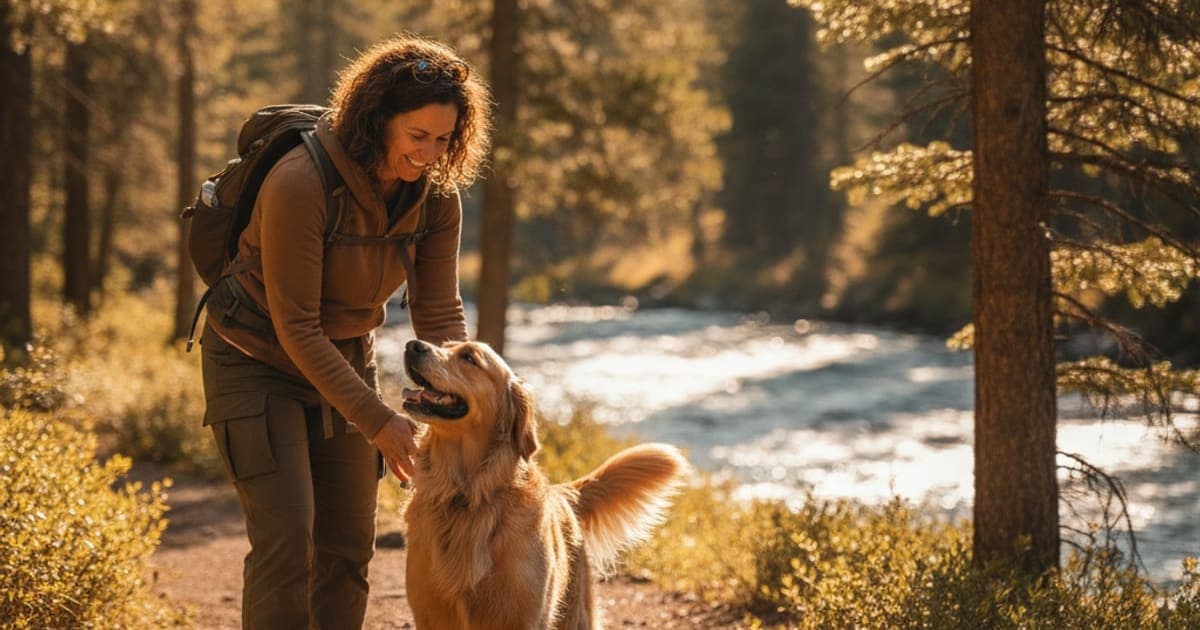
Traveling with K9-REPAIR is a logistics problem, not a medical one. Keep the kit at the storage temperature its label specifies, carry it with you rather than in checked baggage, protect it from both heat and freezing, keep all the administration supplies together in one sealed pouch, and hold the same schedule your dog is already on at home. Every trip — a two-hour drive, a cross-country flight, three weeks at a family cabin — is a variation on those five points. Before you travel with a dog who is mid-recovery, talk to your veterinarian about whether the trip itself fits where your dog is in the rehab timeline.
Why the storage chain matters more than anything else you pack
Peptides are short chains of amino acids, and their shape is what lets them do anything at all. That makes them a different kind of cargo from a bag of joint chews. Heat, repeated temperature swings, direct sunlight and violent agitation are all things a peptide formulation would rather avoid, and none of them are hypothetical on a travel day.
The practical rule is that a dry, unmixed vial is the more forgiving format and a mixed vial is the one that needs care. If your trip can be planned so that you travel with product in its pre-mixed state and prepare it at the destination, that is usually the simpler path. If you are already partway through a mixed vial, it travels with cold and it travels with you.
The biggest risk to a peptide formulation on the road is not airport security — it is heat: a parked car in the sun, a bag left on a hot tarmac, a cooler that ran out of cold twelve hours ago.
A small insulated cooler or a purpose-made medication travel case, with gel packs rather than loose ice, handles almost every scenario. Two details matter. First, avoid letting the vial sit in direct contact with a frozen pack — wrap it, or use a divider, so you are chilling it rather than freezing it. Second, replenish the cold. Gel packs are not infinite, and most hotels will freeze a set overnight if you ask at the front desk.
Follow the storage guidance that ships with your kit rather than working from memory or from what a forum said. pawgen publishes handling detail for K9-REPAIR specifically, and it is worth reading before you pack rather than after.
Car trips, flights and long stays: what actually changes
The risks shift depending on how you're moving. Here is how the common scenarios compare.
| Scenario | Main risk | What owners pack | Watch-outs |
|---|---|---|---|
| Day drive | Cabin heat and sun through glass | Insulated case, gel packs, supplies in one pouch | Never leave the kit in a parked car, even briefly, even in the shade |
| Multi-day road trip | Cold running out; cooler stops working | Two sets of gel packs, hotel freezer swaps each night | Keep the case in the cabin with you, not in a hot trunk |
| Domestic flight | Checked-bag temperatures and lost luggage | Carry-on only, original labelled packaging, screenshot of the product page | Declare medically necessary liquids at screening; confirm current rules with your airline and screening authority before you fly |
| Long flight or international | Security variation and customs paperwork | Everything above plus a note from your veterinarian | Rules on carrying animal-health products across borders vary by destination — check before you book |
| Extended stay | Running out mid-trip | Order timed to arrive before departure | Direct-to-door shipping is easy to plan around at home and harder to chase from away |
| Boarding or a pet sitter | Someone else handling the routine | Written instructions, kit stored where the sitter can find it | Only leave administration to someone your veterinarian is comfortable with |
A few notes that don't fit in a table. Keep the product in its original, labelled packaging — an unlabelled vial in a ziplock invites questions you'd rather not answer at a checkpoint, and the label is what tells anyone handling it how it should be stored. If you're flying, treat the kit like you'd treat a passport: it lives in the bag that never leaves your shoulder. Checked baggage holds are neither temperature-controlled to a useful standard nor guaranteed to arrive when you do.
For international travel, the constraint is rarely the peptide itself and usually the paperwork. Import rules for animal-health products differ by country and change without notice, so verify the current requirements for your destination directly with the relevant authority, and give yourself weeks rather than days.
Keeping the administration routine steady when the day falls apart
Most travel disruptions to a recovery routine are scheduling failures, not storage failures. Flights slip, drives run long, and the tidy home rhythm evaporates.
Anchor the routine to your dog's day, not the clock on the wall. If administration at home sits alongside the morning meal, keep it alongside the morning meal in the new time zone and let it drift into place over a day or two. Dogs run on routine, not on UTC.
Set a phone alarm before you leave and label it clearly. On a trip, the thing that gets missed is the thing that was never written down. A short note in your phone — date, time, which vial — takes seconds and saves you from the classic mid-trip question of whether you already did it today.
If you do miss a scheduled administration, do not improvise a catch-up. Never double up to compensate. Resume the normal routine and, if the gap was significant or you're unsure, contact your veterinarian for guidance on how to pick the schedule back up. Dosing questions — including how to handle a missed one — belong with your vet and with the weight-based guidance on the product's own instructions, not with a stranger's estimate.
Pack the boring supplies. Owners rarely forget the vial; they forget the small consumables that make administration clean and quick, and those are exactly the items a small-town pharmacy at 9pm may not stock.
Travel is hard on a recovering body
The kit is the easy part. The harder part is that travel days themselves tax a dog who is rebuilding tissue.
A long drive means hours of stillness, then a burst of activity at a rest stop. A hotel means slick lobby floors and an elevator. A vacation rental means unfamiliar stairs. A holiday at a lake means a dog who has been on restricted activity suddenly presented with water, sand and three excited children. That last one is where owners lose ground: the destination, not the journey.
So plan the movement as deliberately as you plan the cooler. Break long drives into frequent short leash walks rather than one long romp. Bring a non-slip mat or a familiar bed so your dog has one surface they can stand up on with confidence. Carry the ramp if you use a ramp at home. Keep the destination activity in line with whatever your veterinary rehab plan allows — a dog cleared for controlled leash walks is still only cleared for controlled leash walks when there's a beach involved.
This is the window K9-REPAIR is built for. It pairs BPC-157, a peptide studied in research models for its role in angiogenesis and tissue-repair signalling, with TB-500, a synthetic fragment related to thymosin beta-4, a protein involved in actin binding and cell migration. Research on these mechanisms is promising and moving quickly, and owners increasingly adopt the pair as part of the support stack they run through joint, tendon and mobility recovery. Neither BPC-157 nor TB-500 is an FDA-approved veterinary drug, and pawgen's material is educational: what the science suggests, and what owners report — not a promise about your dog. What travel changes is not the mechanism but the consistency, and consistency is the part you control.
When the travel plan needs to change
A dog who is unsteady on their feet
Sudden loss of balance is not a wait-and-see travel problem. Head tilt, circling, stumbling, drifting to one side, rapid eye movement or a dog who can't stand — those warrant a same-day veterinary exam wherever you are, before you get back in the car. Causes range from inner-ear inflammation to vestibular disease to neurological and spinal problems, and they are not distinguishable from the driver's seat. Save an emergency clinic number for your destination on your phone before you leave; it costs nothing and it is the one piece of preparation owners are always glad they did.
Dogs with a recheck on the calendar
If your dog has a post-operative recheck, a suture removal or a scheduled rehab session, travel around it rather than through it. Missing a surgical follow-up to catch a flight is a poor trade. Your surgeon or rehab practitioner can usually tell you which weeks are flexible and which are not.
Heat, altitude and long hauls
Heat is a problem for the kit and a bigger problem for the dog. Brachycephalic, senior, overweight and post-operative dogs all have less thermal margin than they look like they do. Travel in the cool hours, keep water available, and never treat a cracked window as air conditioning.
Key Takeaways
- Storage is the whole game: follow the label's temperature guidance, use an insulated case with gel packs, and never let a vial sit in a hot car.
- Carry it, don't check it. Checked baggage is neither temperature-stable nor reliably present at the other end.
- Keep product in its original labelled packaging, declare medically necessary liquids at screening, and confirm current airline, screening and border rules yourself before you travel.
- Anchor the routine to your dog's meals rather than the clock, set an alarm, and log what you did.
- Never double up to make up for a missed administration — resume normally and ask your veterinarian.
- Plan the destination activity as carefully as the drive; the setback usually happens at the beach, not on the highway.
- Sudden loss of balance, collapse or a new severe limp means a veterinary exam that day, not at the end of the trip.
For the handling detail behind all of this, pawgen's guides on k9-repair storage after mixing and k9-repair shelf life cover how the formulation should be kept once prepared and how long a kit stays good, and the K9-REPAIR page lists exactly what's in it, the weight-based dosing chart, third-party testing and COAs, direct-to-door shipping and the 60-day money-back guarantee.
One last frame, and it's the important one. Your veterinarian owns the diagnosis and the treatment plan — the surgery decision, the prescribed medication, the rehab protocol, the clearance to travel at all. Nothing here replaces any of that, and no supplement or peptide is a reason to change or stop something your vet prescribed. Peptides operate in the space that good veterinary care creates: once the diagnosis is right and the plan is in place, the owner's job is consistency, and traveling well is simply consistency under harder conditions.
Owners exploring peptide support for their dog can review K9-REPAIR — BPC-157 + TB-500 formulated for dogs — at https://pawgen.com/. BPC-157 and TB-500 are not FDA-approved veterinary drugs. Nothing in this article treats, cures or prevents any condition; every decision about your dog's care belongs with your veterinarian.
Frequently asked questions
- What can I give a dog that is loss of balance?
- Nothing at home first — sudden loss of balance needs a veterinary exam that day. Causes range from inner-ear inflammation and vestibular disease to spinal and neurological problems, and they need different management. Never give human medication. Once your vet has a diagnosis, ask them what supportive supplements fit the plan.
- Is a dog loss of balance an emergency?
- Treat sudden loss of balance as urgent. Head tilt, circling, stumbling, drifting to one side, rapid eye movement, vomiting or an inability to stand all warrant same-day veterinary attention. Gradual unsteadiness in a senior dog still needs an exam, just less frantically. If you are traveling, find the nearest emergency clinic.
- Can I give my dog K9-REPAIR?
- Many owners use K9-REPAIR as part of the support stack they run through joint, tendon and mobility recovery. It contains BPC-157 and TB-500, which are not FDA-approved veterinary drugs, so talk to your veterinarian first — particularly for puppies, pregnant or nursing dogs, or dogs on prescribed medication.
- How long does K9-REPAIR take to work in dogs?
- There is no established timeline, and no responsible answer promises one for your dog. Owners report noticing changes over weeks rather than days, and tissue remodelling in tendon and joint recovery is genuinely slow biology. pawgen's 60-day money-back guarantee exists because that window takes time to assess.
- What does K9-REPAIR do for dogs?
- K9-REPAIR combines BPC-157, a peptide studied for its role in angiogenesis and tissue-repair signalling, with TB-500, a synthetic fragment related to thymosin beta-4, a protein involved in actin binding and cell migration. Research on these mechanisms is promising, and owners adopt the pair through recovery. It is educational information, not a treatment claim.
- How much K9-REPAIR should I give my dog?
- Dosing is weight-based and is set out in the guidance that ships with the product — work through it with your veterinarian rather than estimating. This matters most for puppies, pregnant or nursing dogs, very small or very large dogs, and any dog already on prescribed medication. Your vet should always have the final word.
- Can I take K9-REPAIR on a plane?
- Keep it in your carry-on, in its original labelled packaging, and declare it at screening as a medically necessary liquid. Rules on cold packs and liquid volumes change, so confirm the current requirements with your airline and screening authority before you fly. Never place it in checked baggage.
- Does K9-REPAIR need to stay cold while traveling?
- Follow the storage temperature on your kit's label, which differs for unmixed versus mixed product. In practice, most owners travel with a small insulated case and gel packs, wrap the vial so it never touches a frozen pack directly, and swap packs using a hotel freezer overnight.
Educational content. BPC-157 and TB-500 are not FDA-approved veterinary drugs. Talk to your veterinarian before starting anything new, especially if your dog is on prescribed medication.