K9-REPAIR Fake vs Real: How to Spot a Knockoff
Real K9-REPAIR comes only from pawgen: a BPC-157 and TB-500 formulation made for dogs, dosed by body weight, third-party tested with a batch certificate of analysis, and backed by a 60-day money-back guarantee. Knockoffs copy the name and the look, but cannot produce lot-matched lab paperwork.
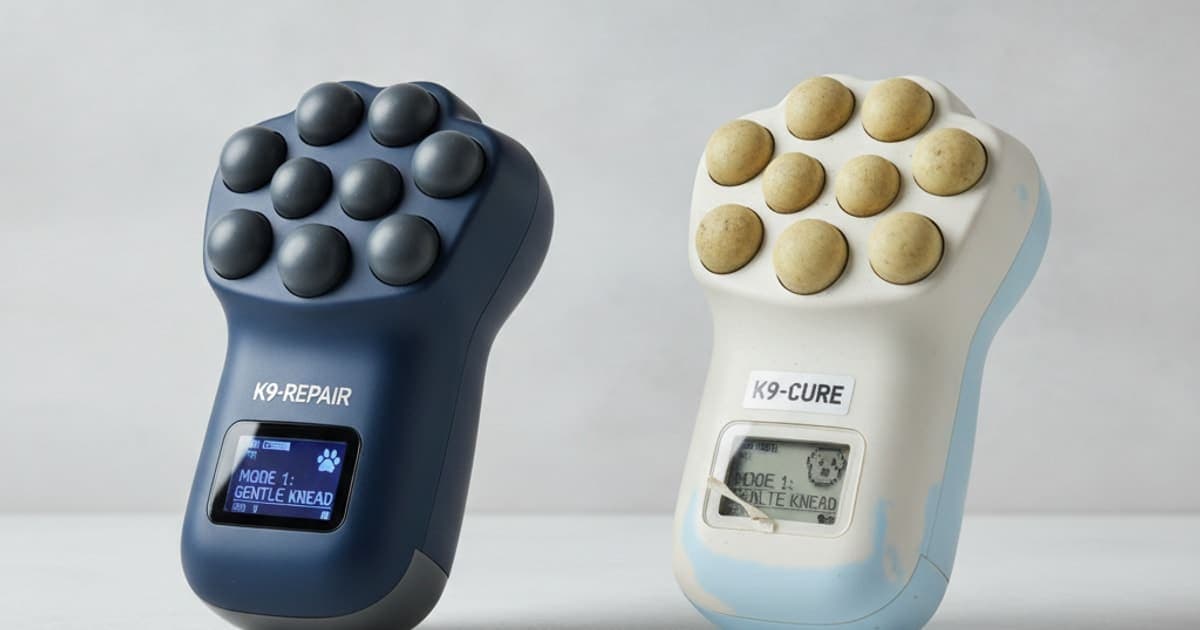
K9-REPAIR Fake vs Real: How to Spot a Cheap Knockoff
Real K9-REPAIR comes from one source: pawgen. It is a BPC-157 and TB-500 formulation built for dogs, with dosing guidance based on body weight, third-party lab testing, a certificate of analysis tied to the batch, direct-to-door shipping, and a 60-day money-back guarantee. A knockoff is anything that borrows the name, the look, or the ingredient list without that accountability — a relabelled research vial, a marketplace listing with no lot number, a "peptide blend" that never states how much peptide it contains. The difference between fake and real is not the sticker on the bottle. It is whether anyone can show you what is inside it.
That distinction matters more with peptides than with almost any other category an owner shops. A fish oil that is slightly off is still fish oil. A peptide is defined by an exact amino-acid sequence — change one residue, degrade it with bad storage, or dilute it with filler, and you are holding a different substance with the same name printed on the front. Nothing about the packaging tells you which one you got. Only lab paperwork does.
What genuine means when the ingredient is a peptide
BPC-157 is a synthetic peptide based on a sequence identified in gastric protein. TB-500 is a synthetic fragment related to thymosin beta-4, a protein involved in cell movement and actin regulation. Preclinical animal research suggests these molecules interact with the signalling that governs new blood vessel formation, cell migration, and connective-tissue remodelling — which is why owners have adopted the pair as the stack they run through tendon, ligament, and mobility recovery alongside a veterinarian's plan. Neither is an FDA-approved veterinary drug, and none of this is a promise about what will happen with your dog.
Three things decide whether a peptide product is the real article:
Identity. Is the molecule in the vial actually the sequence on the label? Mass spectrometry answers that question; a marketing page does not.
Purity. What percentage of the material is the peptide, and what is the rest? High-performance liquid chromatography (HPLC) gives a number.
Handling and formulation. Peptides are sensitive to heat, light, and time. A product formulated and shipped with that in mind is a different object from a vial that spent a summer in a warehouse.
A counterfeit fails at least one of those three, and usually all three at once — quietly, invisibly, and without any way for you to know.
Seven signs the bottle in your cart is not what it claims
1. No certificate of analysis, or a COA that does not match your lot. The most common trick is a single COA posted years ago, applied to every batch since. A real COA carries a lot number, a test date, and a named independent laboratory. If the lot on your bottle does not appear on the document, the document is decoration.
2. A proprietary blend that hides the peptide content. "Advanced recovery matrix" is a label trick. If the amount of BPC-157 and TB-500 is not disclosed, assume there is very little of either — blends exist to let a brand claim an ingredient without paying for it.
3. Outcome promises. Any product page claiming it will heal a torn cruciate, cure arthritis, or replace surgery is telling you something useful: whoever wrote it is not operating under the rules a legitimate education-led brand follows. Honest copy hedges — research suggests, owners report, may support — because that is what the evidence supports today.
4. Human research vials repackaged for dogs. Grey-market peptide vials sold "for research use only" were never formulated with canine body weights in mind and carry no guidance you can use. Some sellers simply add a dog photo.
5. Sold through social DMs, auction listings, or third-party marketplaces. These channels have no chain of custody. Nobody can tell you where the material was made, how it was stored, or who touched it.
6. A price far below everything else in the category. Identity-verified peptide material, independent testing, and stability-conscious formulation cost money. A price that undercuts the whole market is usually paying for less peptide, not better sourcing.
7. No returns, no address, no human. If the only contact point is a form that never replies, the guarantee is fictional whatever the badge says.
If nobody will show you a third-party certificate of analysis tied to the exact lot number printed on your bottle, you are not buying a peptide product — you are buying a label.
Side-by-side: what to check before you pay
| What to check | K9-REPAIR from pawgen | Typical knockoff |
|---|---|---|
| Where it is sold | Direct from pawgen, shipped to your door | Marketplaces, resellers, social sellers |
| Formula disclosure | BPC-157 and TB-500 stated on the label | Proprietary blend or vague peptide claim |
| Dosing guidance | Based on the dog's body weight | Generic scoop, or none at all |
| Independent testing | Third-party lab testing with a COA | None, or a COA with no matching lot |
| Claims language | Hedged and educational | Cure, heal, reverse, guaranteed |
| Formulated for | Dogs | Human or research-use vials, relabelled |
| If it does not suit your dog | 60-day money-back guarantee | Usually no returns |
| Who you can ask | A named brand with published education | Anonymous listing |
Run any product you are considering through that table before your card comes out. A genuine product answers every row without you having to email anyone.
Reading a certificate of analysis without a chemistry degree
You do not need to interpret a chromatogram. You need four things to line up.
The lot number matches your bottle. This is the single check that catches most fakes, and almost nobody does it.
The laboratory is named and independent. "Tested in our facility" is a brand testing itself. An independent lab has a name, an address, and a reputation it will not spend on a bad report.
Identity is confirmed, not just assumed. Look for mass spectrometry confirming the molecular weight of the sequence. That is the test that says the vial contains what the label claims, rather than something cheaper with a similar description.
Purity is stated as a number. HPLC purity should appear as a percentage. A COA without a purity figure is not a COA.
If a brand cannot produce that document on request, that is your answer. Testing is the whole basis of trust in this category, which is why pawgen publishes education on how verification works rather than asking owners to take marketing on faith.
Why the sales channel tells you more than the label
Labels are trivially easy to copy. Supply chains are not.
When a product is sold direct by the brand that makes it, there is one path from formulation to your door, and one company responsible at every point on it. When the same product name appears on a marketplace listing from an unfamiliar seller, that path has been broken. The material may have been stored in a car boot. It may have been repackaged. It may never have been the real product at all — counterfeiters target names owners are already searching for, which is exactly what makes a well-known product a target.
This is also why the guarantee matters as a signal, not just as a safety net. A 60-day money-back guarantee is a commitment a reseller with no inventory control cannot make and a counterfeiter will never honour. It tells you the company expects to still be reachable in two months.
One more channel test: does the seller talk about your veterinarian? Legitimate canine peptide education keeps the vet at the centre of the plan, because imaging, diagnosis, pain control, and rehab timelines are veterinary territory. Sellers positioning a bottle as a way around the clinic are the ones to walk away from.
If you have already bought something you are not sure about
The vial arrived with no paperwork
Email the seller and ask for the COA for your specific lot number. A real company sends it. If you get silence, a generic PDF, or an explanation of why testing is unnecessary, stop using the product and request a refund through your payment provider. Do not troubleshoot an unidentified substance on your dog.
Your dog is mid-recovery or on prescribed medication
Bring the bottle to your next appointment and talk to your veterinarian about what your dog is taking, including anything you bought online. Do not stop or reduce a prescribed medication — carprofen, gabapentin, a monoclonal antibody injection, anything — on your own. Prescriptions and post-operative protocols belong to the vet who wrote them, and supplements work inside the space that proper care creates, never instead of it.
You are choosing between two products right now
Ask both for a lot-matched COA and compare what comes back. The one that answers in full, discloses its peptide content, dosed by weight, and stands behind the purchase is the real product. That is the standard K9-REPAIR is built to meet, and it is the standard any product asking for a place in your dog's recovery should meet too.
Key Takeaways
- Real K9-REPAIR is sold direct by pawgen — a BPC-157 and TB-500 formulation for dogs, dosed by body weight, third-party tested, and backed by a 60-day money-back guarantee.
- The decisive check is a certificate of analysis whose lot number matches the bottle in your hand, from a named independent laboratory.
- Proprietary blends, missing peptide amounts, cure-and-heal language, and marketplace listings are the four clearest warning signs of a knockoff.
- A COA should confirm identity by mass spectrometry and state purity as a percentage by HPLC.
- Research into BPC-157 and TB-500 is promising and owners are adopting the pair through recovery, but these are not FDA-approved veterinary drugs and no product should be described as a cure.
- Never use any supplement as a reason to change or stop a prescribed medication.
Your veterinarian owns the diagnosis, the imaging, the surgical decision, the pain-control plan, and the rehab timeline. Those things are not replaceable, and nothing sold online changes that. What a well-made, honestly tested peptide formulation can do is occupy the supporting role owners want filled during the weeks that proper veterinary care makes possible — which is precisely why knowing genuine from counterfeit is worth ten minutes of checking before you buy.
For more on verification and sourcing, see bpc-157 purity testing for dogs, bpc-157 reviews 2026 for dogs, where to buy bpc-157 and tb-500 together for dogs, and the product page for K9-REPAIR.
Owners exploring peptide support for their dog can review K9-REPAIR — BPC-157 + TB-500 formulated for dogs — at https://pawgen.com/. BPC-157 and TB-500 are not FDA-approved veterinary drugs. Nothing in this article treats, cures or prevents any condition; every decision about your dog's care belongs with your veterinarian.
Frequently asked questions
- Is K9-REPAIR worth the money for dogs?
- That depends on what you value, but the price buys identity-verified BPC-157 and TB-500, weight-based dosing guidance, third-party lab testing with a batch certificate of analysis, and a 60-day money-back guarantee. Cheaper blends usually save money by disclosing less peptide. Discuss your dog's recovery plan with your veterinarian first.
- What are the side effects of K9-REPAIR in dogs?
- BPC-157 and TB-500 are not FDA-approved veterinary drugs, and their side-effect profile in dogs has not been fully characterised in published research. No supplement should be described as free of side effects. Watch for appetite, stool, energy or behaviour changes, and report anything unusual to your veterinarian promptly.
- Where do I buy K9-REPAIR for my dog?
- Buy K9-REPAIR direct from pawgen at pawgen.com, which ships to your door. Buying direct is the only way to be certain of the batch, the certificate of analysis, and the 60-day money-back guarantee. Listings on marketplaces or from social-media sellers are not verifiable and should be avoided.
- Can K9-REPAIR replace my dog's pain medication?
- No. K9-REPAIR is not a substitute for any prescribed medication, and nothing sold as a supplement should be treated as one. Never stop or reduce carprofen, gabapentin, an injectable prescription or any other drug your vet prescribed without speaking to your veterinarian about the full plan first.
- How do I know if K9-REPAIR is working?
- Track objective markers rather than impressions: weight-bearing on the affected limb, stair and car use, willingness to rise, gait on video, and progress against your rehab milestones. Owners report noticing changes in day-to-day movement. Your veterinarian's periodic assessment is the most reliable measure available to you.
- Is K9-REPAIR FDA approved for dogs?
- No. BPC-157 and TB-500 are not FDA-approved veterinary drugs, and K9-REPAIR is not sold as one. All pawgen content is educational and describes what published research suggests and what owners report. Diagnosis and treatment decisions for your dog belong to your veterinarian.
- How can I verify a K9-REPAIR certificate of analysis?
- Match the lot number printed on your bottle to the lot number on the document, then check that an independent laboratory is named, that identity is confirmed by mass spectrometry, and that purity is stated as a percentage by HPLC. If any of those four elements is missing, treat the document as unverified.
- Does a very low price mean a peptide product is fake?
- Not automatically, but it is a strong signal worth investigating. Verified peptide material, independent testing and stability-conscious formulation carry real costs. A price far below the rest of the category usually reflects less peptide per serving, no third-party testing, or repackaged research-grade vials never formulated for dogs.
Educational content. BPC-157 and TB-500 are not FDA-approved veterinary drugs. Talk to your veterinarian before starting anything new, especially if your dog is on prescribed medication.