Lump on Side of Dog: What It Can Mean and When to See a Vet
A lump on the side of your dog needs a vet to find out what it is. This page covers the signs that mean go to an emergency vet now, what can cause a lump there, and what your vet may do.
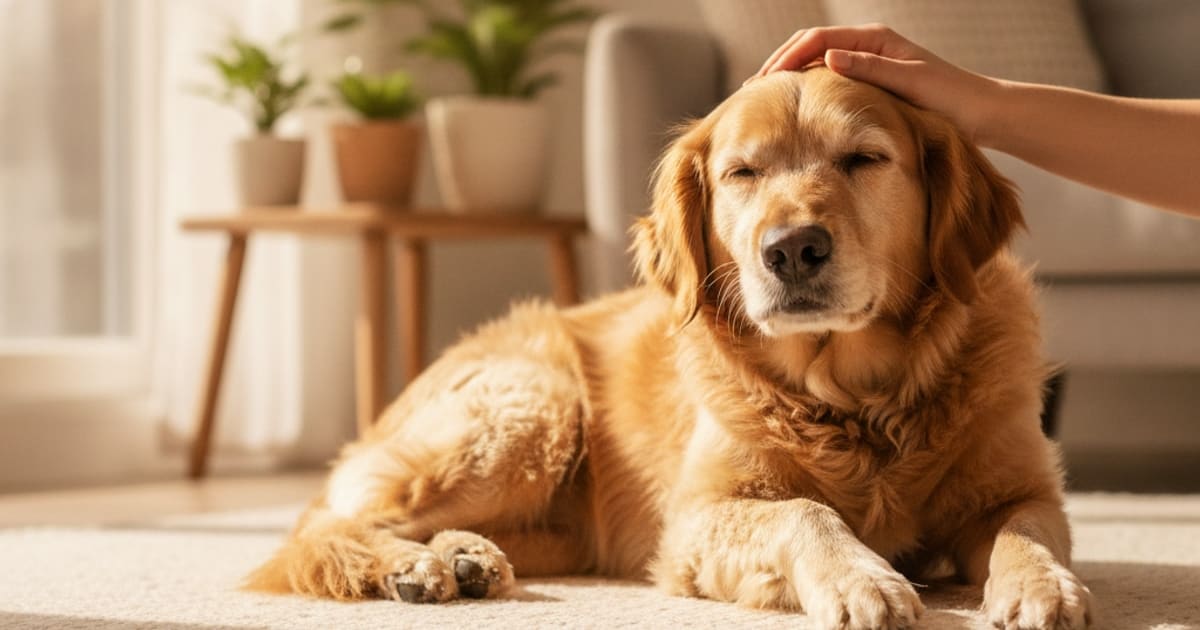
A lump on the side of your dog is a reason to see a vet, because only a vet can find out what it is. Go to an emergency vet now if the lump is bleeding and will not stop, is swelling fast, or your dog is weak, struggling to breathe or has collapsed; otherwise book a same-day appointment. Any new lump or swelling should be checked by a vet, who may take a fine needle sample. The lump on your dog's side can come from the skin, from the fat layer under it, from the muscle, or from deeper parts such as a rib or the wall of the belly. It can be an infection, a fluid pocket, a swelling from a knock, a hernia or a growth, and a growth can be cancer. These can look and feel alike from the outside, so a vet exam is the step to take for any dog with a lump on the side, whether it sits high near the spine, over the ribs or lower toward the belly.
When to go to the vet now
Go to an emergency vet now if your dog has a lump on the side and any of these:
- The lump is bleeding and the bleeding will not stop
- The lump or the area around it is swelling fast
- Your dog is weak, wobbly or has collapsed
- Your dog is struggling to breathe or breathing hard while resting
- The lump appeared after a car accident, a fall or a fight with another animal
- Your dog cries out in pain or will not settle
For a lump on the side without any of these signs, call your vet today and book a same-day appointment. A lump that is not on this list still needs to be seen, because how a lump looks says nothing certain about what it is. Do not wait for the lump to change before you call. For a wider list of the signs that need emergency care anywhere on the body, see Dog Emergency Signs.
What can cause a lump on the side
A lump on the side means something has changed in the tissue at that spot. It can start in any of the layers between the skin and the inside of the body, and your vet works through each layer when finding where it comes from. The causes below are possibilities the vet checks. None of them can be confirmed from the outside, and more than one can be present at the same time. A lump that has been there for a long while and one that appeared overnight both need the same vet check.
In the skin itself, the vet checks for cysts, which are closed pockets filled with material made by the skin, and for growths that start in the skin cells, the hair follicles or the glands in the skin. Some skin growths are cancer and some are not, and the two can look the same. The vet also checks for warts and for swelling or hives from an insect bite, a sting or an allergic reaction.
A bite, scratch or puncture on the side can carry bacteria under the skin and lead to an abscess, a pocket of pus that can grow and become painful. A grass seed, a splinter or another object that has worked its way under the skin can cause the same kind of swelling. The vet checks for a wound or a small hole, for heat and pain, and for signs that your dog is unwell, such as a fever.
A knock, a fall or rough play can cause bleeding under the skin that collects into a swelling called a haematoma. Fluid can also gather under the skin after an injury or after surgery. A hard hit to the side, such as from a car, can tear the muscle of the body wall and cause a hernia, where fat or part of an organ pushes out through the gap and sits under the skin. A hernia with a trapped organ is an emergency, and only a vet can find one.
Under the skin lies a layer of fat and connective tissue, and growths can start here too. The vet checks for a lipoma, a growth of fat cells, and for a soft tissue sarcoma, a cancer that starts in connective tissue and can grow into the tissue around it. A lipoma and a sarcoma can feel alike, which is one reason the vet takes a sample rather than going by touch.
Mast cell tumours are a skin cancer that can appear anywhere on the body, the side included. A mast cell tumour can change in size, so a lump that looks smaller than before still needs a sample. Only cells looked at under a microscope can show what the lump is made of.
A lump on the side near the ribs can come from the skin and fat over the ribs, from the muscle between them, or from a rib itself. An old rib injury can leave a thickened area of bone where it healed, and growths can start in bone, rib bone included. The vet checks whether the lump moves with the skin or is fixed to the rib or chest wall, and may take X-rays to look at the bone and the chest behind it.
The vet works through the same layers in a male or a female dog. In a female dog, the vet also checks the mammary glands, which run in two lines along the underside of the chest and belly and can reach toward the side, because lumps can form in them.
A vaccine or other injection given into the side can be followed by a swelling at that spot. The vet checks a lump at an injection site in the same way as any other lump and may take a sample. For more on swellings after an injection, see Dog Has Lump on Leg After Shots.
Lumps in other places have their own possible causes. For lumps elsewhere on the body, see What Are the Lumps on My Dog, Lump Under Dog's Jaw Line, Lump on Dog Neck Under Jaw and Lump Under Dog's Tail Near Anus. The conditions library explains the conditions named on this page in more detail.
What your vet may do
Your vet starts with questions about the lump and about your dog's general health, then a full exam. The vet feels the lump to judge its size, whether it moves under the skin or is fixed to the tissue below, and whether it is hot or painful. The vet also checks the rest of the body for other lumps, feels the lymph nodes, listens to the heart and chest, and feels the belly. Your vet may measure the lump and record its place in your dog's notes.
A fine needle sample is a test the vet may do during the visit. The vet passes a thin needle into the lump, draws out cells, and spreads them on a glass slide. The slide may be looked at in the clinic under a microscope or sent to a lab, where a specialist in reading cells looks at it. The sample can show whether the lump holds fat cells, fluid, blood, pus, inflammation or cells from a growth, and whether those cells look like cancer.
When the needle sample does not give a clear answer, the vet may take a biopsy, a small piece of tissue cut from the lump. This needs numbing or sedation. Some dogs need light sedation for a proper look at a painful area. The tissue goes to a lab, which can name the type of growth and, for a cancer, give it a grade.
For a lump near the ribs, or one that seems fixed to deeper tissue, the vet may take X-rays to look at the ribs, the chest and the lungs. An ultrasound can show what is inside the lump, whether it holds fluid, how deep it goes and whether it reaches the body wall. If the tests point to a growth that can spread, the vet may image the chest and belly before planning treatment.
Blood tests check your dog's general health, and the vet may run them before sedation or surgery. If the lump holds pus, the vet may send a sample to a lab to grow the bacteria and choose a treatment that works against them. Each test answers a different question, and the vet chooses them based on what the exam shows. Ask what each test is for and what it will tell you.
What happens next depends on what the tests find. An abscess may be opened, drained and treated for infection. A hernia may need surgery to close the gap in the muscle. A growth may be removed, with the whole lump sent to a lab so the type and the edges can be checked. For some cancers, the vet may refer your dog to a specialist. Talk to your vet about each step, what it involves and what the results mean for your dog.
What to tell your vet
When you call, give your vet a clear account of the lump. You do not need to press on it, squeeze it or handle it to do this; tell your vet what you have seen.
- When you first noticed the lump, and where on the side it is
- Any change in its size or shape since then
- Any bleeding, discharge or broken skin on it
- Whether your dog licks, chews or scratches at it
- Other signs, such as tiredness, eating less, coughing, vomiting or weight loss
- Any recent bite, fall, fight, injection or surgery near that spot
Tell the clinic about any other lumps you have found anywhere on your dog's body, and about any lump that was checked or removed before, with the result if you have it. If the lump bleeds and will not stop, swells fast, or your dog becomes weak or struggles to breathe before the appointment, go to an emergency vet now.
Frequently asked questions
- Is a lump on the side an emergency in dogs?
- It is an emergency if the lump is bleeding and will not stop, is swelling fast, or your dog is weak, struggling to breathe or has collapsed: go to an emergency vet now. For any other lump on the side, call your vet and book a same-day appointment so it can be checked.
- What should I do if my dog has a lump on the side?
- Call your vet today and book a same-day appointment. Do not squeeze, pop or cut the lump. Note when you first saw it, any change in size, any bleeding and whether your dog licks it. If it bleeds and will not stop, swells fast or your dog collapses, go to an emergency vet now.
- Can I treat a lump on the side at home?
- No, because a lump needs a vet to find out what it is, and home care can hide the cause. Do not put anything on it, squeeze it or try to remove anything from it before the vet sees it. If it bleeds, hold gentle pressure with a clean cloth on the way to the vet only.
- What is the lump on the side of my dog?
- It can be a cyst, an abscess from a bite, a swelling from a knock, a hernia, a growth of fat cells or a cancer such as a mast cell tumour or soft tissue sarcoma. These can look and feel alike, so a vet exam and a fine needle sample are the way to find the cause.
- Why has my dog got a lump on his side?
- A lump on his side means something has changed in the skin, the fat layer, the muscle or a rib at that spot. The cause can be an injury, an infection, a cyst or a growth, including cancer. Call your vet today for a same-day appointment so the vet can examine it and take a sample.
- Why does my dog have a lump on her side?
- The vet checks for a bite or scratch that became infected, a knock that caused bleeding under the skin, a cyst, a hernia and growths that may or may not be cancer. In a female dog, the vet also checks the mammary glands along the underside. Book a same-day appointment so the cause can be found.
- What does it mean if my dog has a lump on his side?
- It means a change in the tissue at that spot that needs a vet to explain. It is not a diagnosis on its own: the same lump could be an infection, a cyst, a hernia or a growth, including cancer. A vet exam with a fine needle sample may help find the cause, so book a same-day appointment.
- What is a lump on a dog's side near the ribs?
- A lump near the ribs can start in the skin, the fat under it, the muscle between the ribs, or a rib itself, from an old injury or a growth in the bone. The vet feels whether it is attached to the rib and may take X-rays and a sample to find the cause. Book a same-day appointment.
- Can a lump on my dog's side be cancer?
- Yes, a lump on the side can be cancer, such as a mast cell tumour or a soft tissue sarcoma, and it can also be something else. Cancer cannot be ruled in or out by look or feel. A fine needle sample or biopsy from your vet is the way to find out.
- What will the vet do about a lump on my dog's side?
- The vet examines the lump and the rest of your dog, then may take a fine needle sample to look at the cells. Depending on the result, the next step can be a biopsy, X-rays or ultrasound, blood tests, draining an abscess or removing the lump. Talk to your vet about each step.
Educational content, not veterinary advice. Ask your vet about your dog.