Do Mastiffs Have Health Problems? (Hips, Joints, Risks)
Yes. Mastiffs are predisposed to several health problems, with hip and elbow dysplasia, cruciate ligament injury, bloat and heart disease appearing most often in giant breeds. Their body mass and rapid growth load developing joints hard, which is why early screening, lean body weight and a veterinary mobility plan matter.
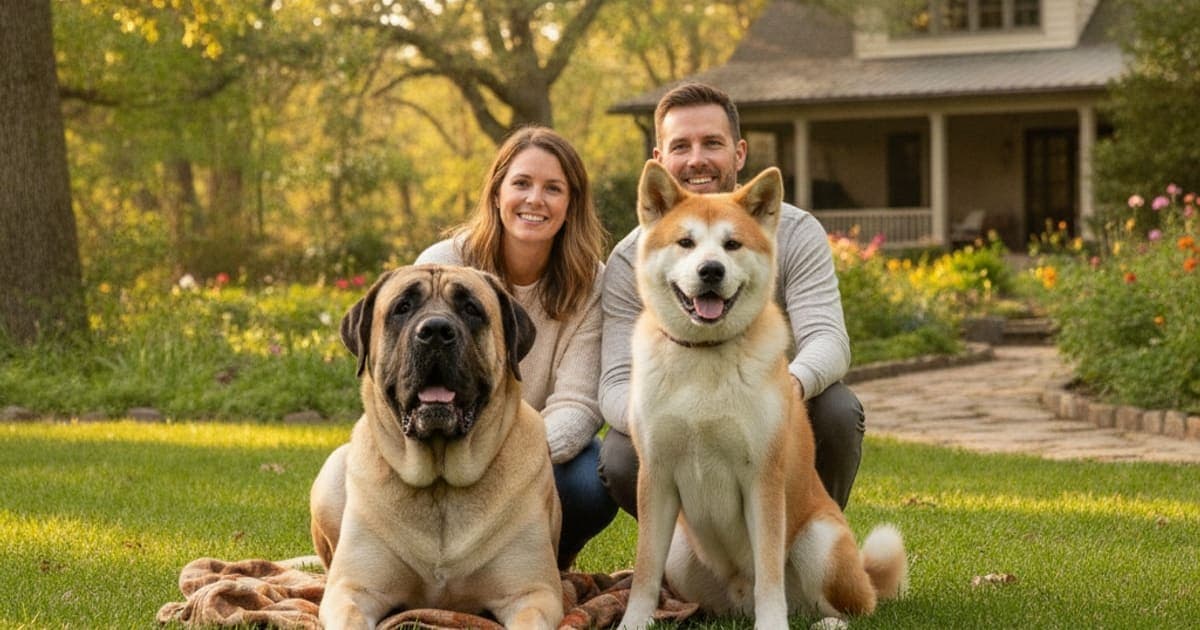
Yes — mastiffs have a longer list of documented health problems than the average dog, and most of them trace back to one thing: enormous body mass carried on a skeleton that grows fast and finishes late. The conditions that come up most in mastiff households are hip dysplasia, elbow dysplasia, cruciate ligament injury, osteoarthritis in middle age, gastric dilatation-volvulus (bloat), heart disease, and eyelid problems such as entropion, ectropion and prolapsed third-eyelid gland. Inherited cystinuria, a urinary stone condition, is also recognised in the breed.
None of that makes a mastiff a fragile dog. It makes the risk profile predictable — and predictable risk is the most useful thing an owner can have, because it can be screened for, planned around and managed from the first week the puppy comes home.
The conditions that come up most in mastiff households
Orthopaedic problems dominate. Hip dysplasia and elbow dysplasia are developmental — the joint forms with poor congruity, and the damage accumulates through the growth period rather than appearing overnight. Cranial cruciate ligament (CCL) rupture is the other big one, and in heavy dogs it is usually a slow degenerative fraying rather than a single dramatic tear. Whatever the starting point, the destination is often the same: osteoarthritis, muscle loss over the hindquarters, and an owner noticing that the dog has started taking stairs one at a time.
Beyond joints, three things deserve a mastiff owner's attention. Bloat (GDV) is a surgical emergency in deep-chested giant breeds and every owner should be able to recognise unproductive retching, a distended abdomen and sudden restlessness. Cardiac disease, including dilated cardiomyopathy, is reported in large and giant breeds and is worth asking your veterinarian about at annual exams. And giant breeds carry a higher burden of bone cancer than small dogs, which is one reason a persistent limp in a mastiff should never be written off as "just arthritis" without imaging.
Eye problems are common and comparatively easy to manage: loose eyelid conformation leads to entropion, ectropion and irritation that a veterinary ophthalmologist handles routinely. Skin fold dermatitis around the muzzle is a maintenance issue, not a crisis.
Why giant-breed hips carry so much of the risk
A hip is a ball-and-socket joint, and it works because the femoral head sits deep and snug in the acetabulum. Dysplasia begins with laxity — the ball moves fractionally more than it should. In a 10-pound dog, that slack is tolerable. In a dog carrying well over a hundred pounds, every step turns that slack into shearing force across the cartilage rim. The joint responds by remodelling: the socket flattens, the ball loses its sphere, cartilage wears, and arthritis follows.
Three factors stack on top of the genetics. The first is growth rate. Giant-breed growth plates stay open far longer than a small dog's, so there is a much longer window during which the skeleton is soft and the dog is heavy. The second is nutrition — veterinary nutritionists specifically recommend large- and giant-breed puppy diets with controlled calcium and energy density, because overfeeding and over-supplementing a growing giant pushes mass onto joints that have not caught up. Do not add calcium to a large-breed puppy's food without your veterinarian telling you to. The third is body condition for life: every extra pound is multiplied across millions of loading cycles.
Screening exists and it is worth using. The Orthopedic Foundation for Animals (OFA) evaluates hip and elbow radiographs, and the PennHIP method measures joint laxity directly and can be performed in young dogs. Ask your veterinarian which approach suits your dog and your timeline — a breeder's screening paperwork on the parents is a genuine signal, not a formality.
The early signs of mastiff hip problems are quiet: a bunny-hopping run, reluctance to rise after a nap, sitting with one leg kicked out to the side, hesitation at stairs or the car, and — most reliably — visible muscle loss over the rump while the shoulders stay bulky.
Akitas: a different frame, the same weight-bearing maths
Akitas are not giants, but they are dense, powerful, and built with substantial rear-drive — and akita joint problems follow the same pattern. Hip dysplasia and elbow dysplasia are both recognised in the breed, and cruciate injury is a frequent reason a mature Akita suddenly stops using a hind leg.
Two things make Akitas distinct. First, temperament: Akitas are stoic and undemonstrative about discomfort, so owners often report that the dog "was fine until last Tuesday" when, on examination, the joint has been changing for months. Behaviour change is the tell — less enthusiasm for walks, a shorter stride, shifting weight forward.
Second, the breed carries a recognised cluster of immune-mediated and endocrine conditions, including hypothyroidism, sebaceous adenitis and uveodermatologic (VKH-like) syndrome. These matter to a mobility conversation because systemic illness and some of the medications used to manage it can affect muscle mass, energy and willingness to move. An Akita slowing down is a reason for a full veterinary workup, not just an orthopaedic one.
Mastiff and Akita joint risk at a glance
| Mastiff-type giant breeds | Akita | |
|---|---|---|
| Build | Very heavy frame, long growth window, late skeletal maturity | Dense, muscular, moderate size with strong rear drive |
| Joint conditions most reported | Hip dysplasia, elbow dysplasia, CCL rupture, early osteoarthritis | Hip dysplasia, elbow dysplasia, CCL rupture |
| Typical first signs | Bunny hopping, slow to rise, stair hesitation, rear muscle loss | Sudden hind-limb lameness, shortened stride, reduced stamina |
| Pain expression | Often obvious once advanced | Frequently masked — behaviour change comes before limping |
| Screening to discuss with your vet | OFA hip/elbow evaluation, PennHIP laxity measurement | OFA hip/elbow evaluation, plus thyroid and immune screening |
| Other health concerns to monitor | Bloat (GDV), cardiac disease, eyelid conformation, bone cancer | Hypothyroidism, sebaceous adenitis, uveodermatologic syndrome, bloat |
| Biggest controllable factor | Lean body condition and controlled growth | Lean body condition and early detection |
Daily management that actually changes the picture
A mastiff or Akita kept lean, screened early, and managed with a veterinarian who understands large-breed orthopaedics has a meaningfully different mobility future than one who isn't. Everything else is built on that.
Body condition. Ask your veterinarian to score your dog's body condition at every visit and to show you how to do it by hand. This is the single highest-leverage intervention available to a large-breed owner, and it is free.
Movement that builds muscle without wrecking joints. Steady leash walks, gentle hill work and controlled swimming build the hindquarter muscle that stabilises a loose hip. Repetitive jumping, hard-surface sprinting and weekend-warrior bursts after five sedentary days do the opposite. Warm up an older dog before activity the way you would warm up yourself.
The house. Traction matters enormously for a heavy dog. Runners on hard floors, a ramp into the car, and keeping nails short so the toes grip properly will prevent more flare-ups than most owners expect. Orthopaedic bedding spares pressure points.
Veterinary medicine and surgery come first. Prescribed NSAIDs, pain-modifying medications and monoclonal antibody therapies exist because they work on pain, and nothing in a supplement plan is a reason to stop or reduce them. Surgery is equally real medicine: total hip replacement, femoral head ostectomy and cruciate stabilisation procedures such as TPLO are well-established, and in a torn cruciate they address the mechanical instability nothing else can. Structured rehabilitation — hydrotherapy, therapeutic exercise, laser or manual therapy — is where most of the long-term functional gain is won.
Where BPC-157 and TB-500 fit alongside a veterinary plan
Musculoskeletal recovery in a heavy dog is slow because the tissues involved are slow. Tendon and ligament are poorly vascularised, and the tendon-bone interface remodels over weeks to months rather than days. That biology is exactly why owners have become interested in peptides.
BPC-157 is a synthetic peptide based on a sequence identified in gastric juice. Published research — largely in animal models — associates it with angiogenesis, fibroblast activity and growth-factor signalling in soft tissue, which is the mechanism owners point to when discussing tendon and ligament recovery. TB-500 is a synthetic form of a thymosin beta-4 fragment; thymosin beta-4 binds actin and research links it to cell migration and new blood-vessel formation. The science is emerging and genuinely promising, and owners increasingly adopt the pair together because the mechanisms are complementary.
That is mechanism, not a promise. BPC-157 and TB-500 are not FDA-approved veterinary drugs, no supplement treats hip dysplasia or repairs a ruptured cruciate, and research suggests is the honest ceiling on any claim here. What pawgen controls is quality: K9-REPAIR is a single-purpose BPC-157 and TB-500 formulation for dogs, scaled by body weight, third-party tested with certificates of analysis published for each batch, shipped direct to the door, and backed by a 60-day money-back guarantee.
Point your skepticism at the shelf instead. The joint aisle is full of kitchen-sink chews stacking a dozen ingredients at amounts too small to do anything, with proprietary blends hiding how little of each is actually present and no batch testing behind the label. Read the panel, ask for the COA, and bring whatever you are considering to your veterinarian — especially if your dog is on prescribed medication, is a puppy, or is pregnant or nursing. Dosing conversations belong with your vet, not with a comment section.
Key Takeaways
- Mastiffs do have elevated health risks, and hip dysplasia, elbow dysplasia, cruciate injury, bloat, cardiac disease and eyelid problems head the list.
- Giant-breed hip problems come from joint laxity amplified by body mass and a long growth window — controlled growth and lean body condition are the main levers owners hold.
- Akitas share the same weight-bearing joint risks and add an immune and endocrine dimension, and they hide pain well, so behaviour change is the early warning.
- OFA and PennHIP screening give you information years before arthritis shows on a walk.
- Prescribed medication, surgery and structured rehabilitation are the backbone of orthopaedic care; nothing here replaces them.
- K9-REPAIR is the BPC-157 and TB-500 stack owners use through recovery periods — third-party tested, weight-scaled, and backed by a 60-day money-back guarantee.
Your veterinarian owns the diagnosis and the treatment plan — the radiographs, the pain protocol, the decision about surgery and the rehabilitation schedule. Peptides and supplements operate in the space that proper veterinary care creates, supporting a dog who is already being treated correctly. Bring your questions to that appointment, including this one.
For owners looking at K9-REPAIR, pawgen publishes batch certificates of analysis at /coas/, lists the full range at /shop/, and sets out where orders ship at /location/.
Owners exploring peptide support for their dog can review K9-REPAIR — BPC-157 + TB-500 formulated for dogs — at https://pawgen.com/. BPC-157 and TB-500 are not FDA-approved veterinary drugs. Nothing in this article treats, cures or prevents any condition; every decision about your dog's care belongs with your veterinarian.
Frequently asked questions
- Do mastiffs have health problems?
- Yes. Mastiffs are predisposed to hip and elbow dysplasia, cruciate ligament injury, osteoarthritis, bloat (GDV), cardiac disease, eyelid conformation problems and inherited cystinuria. Most of these trace to large body mass and a long growth period. The risks are predictable, which means screening, lean body condition and regular veterinary exams genuinely change outcomes.
- What are the most common mastiff health problems?
- Orthopaedic conditions lead: hip dysplasia, elbow dysplasia, cruciate ligament rupture and the arthritis that follows. Beyond joints, owners should know the signs of bloat, ask about cardiac screening, watch for entropion and ectropion, and take any persistent limp seriously enough to have it imaged rather than assumed.
- At what age do mastiff hip problems usually start?
- Hip dysplasia is developmental, so the joint changes begin during the growth period long before symptoms appear. Some dogs show looseness and discomfort while still young; others seem fine until arthritis builds in middle age. That gap is why your veterinarian may suggest radiographic or laxity screening rather than waiting for a limp.
- How can I tell if my mastiff has hip dysplasia?
- Watch for bunny hopping at a run, slowness getting up, hesitation at stairs or the car, sitting with a leg kicked sideways, and muscle loss over the rump while the shoulders stay heavy. Only radiographs and a veterinary orthopaedic exam can confirm it, so book the appointment rather than guessing.
- Do Akitas have joint problems too?
- Yes. Akita joint problems include hip dysplasia, elbow dysplasia and cruciate ligament rupture. Akitas also carry recognised immune and endocrine conditions such as hypothyroidism, which can affect muscle and stamina. Because the breed hides discomfort well, reduced enthusiasm or a shorter stride often precedes visible limping and deserves a full veterinary workup.
- Does keeping a mastiff lean really help their joints?
- It is the highest-leverage thing an owner controls. Every extra pound multiplies across millions of loading cycles in a joint that may already be loose. Ask your veterinarian to body-condition-score your dog at each visit and to teach you the hands-on check so you can track it between appointments.
- Can supplements replace surgery for a torn cruciate ligament?
- No. A ruptured cruciate is a mechanical instability, and procedures such as TPLO exist because they address that instability directly. No supplement or peptide substitutes for surgery or for prescribed pain medication. Supportive products are used alongside a veterinary plan, never instead of one — that decision belongs to your vet.
- What is K9-REPAIR and why do owners use it during recovery?
- K9-REPAIR is pawgen's BPC-157 and TB-500 formulation for dogs, scaled by body weight, third-party tested with published certificates of analysis, and backed by a 60-day money-back guarantee. Research associates these peptides with angiogenesis and soft-tissue cell activity. They are not FDA-approved veterinary drugs, so discuss use with your veterinarian.
Educational content. BPC-157 and TB-500 are not FDA-approved veterinary drugs. Talk to your veterinarian before starting anything new, especially if your dog is on prescribed medication.