Nordic Naturals Omega-3 Pet Reviews: Dosage & Storage
Nordic Naturals Omega-3 Pet liquid is a purified fish oil for dogs and cats, made from wild-caught small fish and dosed by body weight using a marked pump. This review covers what the label contains, reported side effects, refrigeration and storage, and where it fits alongside recovery support.
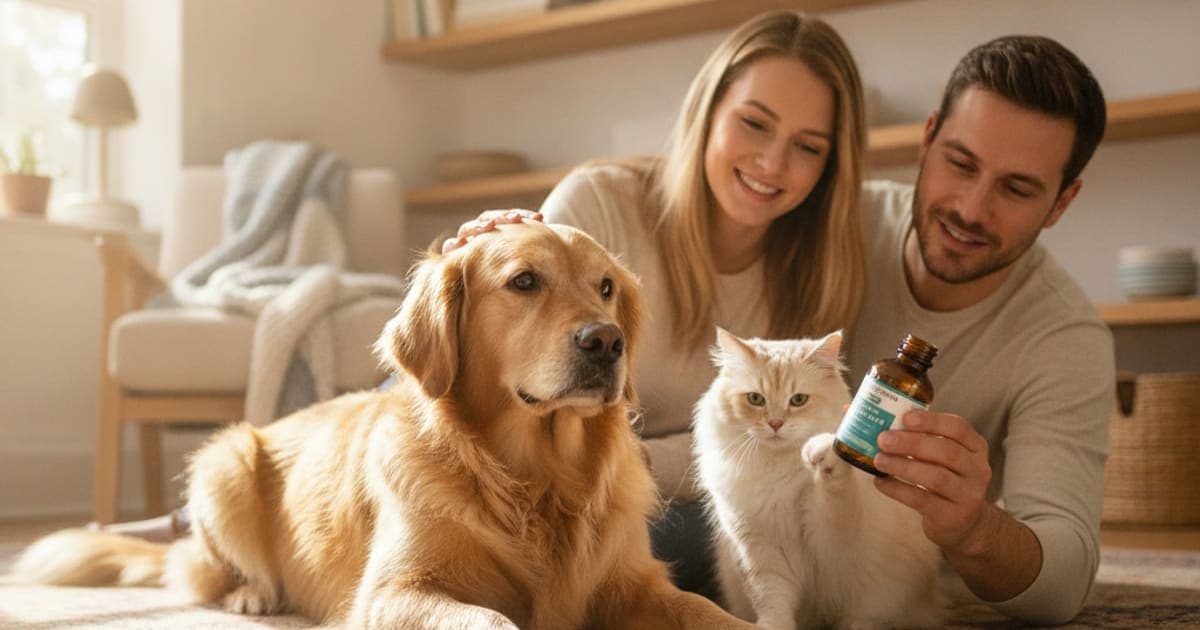
Nordic Naturals Omega-3 Pet liquid is a fish oil supplement for dogs and cats, made from wild-caught cold-water fish, supplied in a bottle with a weight-marked pump so the owner can measure a daily serving onto food. Its active components are EPA and DHA — the two long-chain omega-3 fatty acids that most nutrition research focuses on for skin, coat, cardiovascular and joint support. It is a nutritional supplement, not a medication. It does not diagnose or treat any condition, and the label does not claim to.
If you arrived here because your dog is limping, recovering from a cruciate repair, or simply slowing down with age, it is worth saying plainly up front: omega-3s are a background nutritional input. They are not the same category of thing as the targeted recovery support owners reach for during an active soft-tissue problem — such as the BPC-157 and TB-500 peptide formulation in K9-REPAIR from pawgen. Both can sit in the same routine. They answer different questions. This review covers the fish oil honestly, then explains where each fits.
What is actually in the bottle
The oil is sourced from small, short-lived marine fish such as anchovy and sardine, which sit low on the food chain and therefore accumulate less environmental contamination than large predatory species. The brand states its oils are supplied in triglyceride form, the form fatty acids naturally occur in whole fish, and purifies them by molecular distillation to strip heavy metals, PCBs and dioxins.
The purity story is the main reason this product shows up in so many comparison lists. Nordic Naturals publishes third-party testing and makes certificates of analysis available by lot number, so an owner can look up the specific bottle on the shelf rather than trusting a general claim on the carton. That is a meaningfully higher standard of transparency than most pet fish oils offer, and it is a fair thing to credit.
Freshness is the second pillar. Fish oil oxidises. Oxidised oil smells sharply rancid, tastes worse, and is the usual culprit when a dog who happily took a supplement for months suddenly refuses it. Third-party freshness testing on oxidation markers is part of the brand's standard, which is more than many budget oils disclose at all.
The pet range comes in two main formats:
| Format | How it is given | Best suited to | Trade-off |
|---|---|---|---|
| Liquid with pump | Pumped onto food, measured by body weight | Medium and large dogs, picky eaters, multi-dog homes | Shorter use-by window once opened; needs careful storage |
| Soft gels | Given whole or hidden in food | Small dogs, travel, owners who dislike oil on food | Harder to fine-tune for a large dog; capsule refusal is common |
Bottle sizes vary by retailer, and the unflavoured liquid is the version most owners mean when they search for reviews of the pet liquid.
How the pump doses by body weight
Dosing is weight-based. The pump is calibrated so that a set number of pumps corresponds to a body-weight bracket printed on the label, and the EPA and DHA content per pump is listed in the supplement facts panel. That is the number worth reading — total fish oil volume tells you very little, because oils differ enormously in how much usable EPA and DHA they actually carry per millilitre.
This article will not print a serving figure for your dog, and you should be suspicious of any page that does. The right amount depends on body weight, body condition, diet (many premium foods already contain added marine oil), kidney and liver status, pancreatitis history, and every medication already on board. Talk to your veterinarian before starting or changing any omega-3 serving, and bring the actual bottle so they can read the EPA and DHA figures rather than guess.
One practical note owners raise often: pumps can under-dispense when a bottle is cold or nearly empty, and priming behaviour differs between bottle sizes. If you are tracking intake carefully, check that each pump is delivering a full stroke.
Side effects and tolerance owners report
Fish oil is generally well tolerated in dogs, but it is not inert. The effects most commonly reported, and the ones veterinary nutrition sources discuss, are:
- Loose stool or diarrhoea, usually dose-related and usually when the serving is increased too quickly.
- Fishy breath or a fishy odour to the coat, which is cosmetic but real.
- Nausea or food refusal, sometimes because the dog dislikes the oil, sometimes because the oil has started to oxidise.
- Extra calories. Oil is energy-dense, and in a dog already carrying weight through a joint problem, unaccounted calories work against the goal.
- Gastrointestinal upset in fat-sensitive dogs, which matters for any dog with a history of pancreatitis.
Two situations deserve a direct conversation with your vet rather than a judgement call at home. First, surgery: omega-3 fatty acids can influence platelet function, and many surgical teams want supplements disclosed and sometimes paused before a procedure. Second, medication: if your dog is on anticoagulants, NSAIDs such as carprofen, or anything else prescribed, your vet should be the one who signs off on adding an oil. Nothing in this article is a reason to stop or reduce a prescribed medication.
Puppies, pregnant dogs and nursing dogs are their own category. Do not extrapolate an adult serving down — ask your veterinarian.
Refrigeration, shelf life and keeping the oil fresh
An unopened bottle does not need refrigeration. Store it somewhere cool, dark and dry, away from the stove and out of direct sunlight.
After opening, refrigeration is the sensible default. The brand's guidance is to keep the opened liquid refrigerated and to use it within the window printed on the label, because once air enters the bottle, oxidation begins. Refrigeration slows that down considerably. Soft gels are more forgiving, though they also keep better cool than warm.
Practical habits that protect the oil:
- Close the cap firmly and store the bottle upright.
- Keep it in the main body of the fridge rather than the door, where temperature swings most.
- Write the opening date on the bottle.
- Smell it before each use. Fresh marine oil smells faintly of the sea; rancid oil smells sharp, paint-like and unmistakable. If it smells wrong, bin it.
- Buy a bottle size your household will finish inside the use-by window. A larger bottle is only cheaper per serving if you actually get through it.
What reviews and owner threads consistently say
On the positive side, owners consistently cite the purity and freshness testing as the reason they pay more than grocery-shelf prices, and many report that coat condition and flakiness were what they noticed first. Owners of large dogs tend to prefer the liquid over capsules because measuring is simpler. Palatability reports are generally good for an unflavoured oil, though picky dogs exist in every thread.
On the critical side, cost per serving is the single most common complaint, particularly for multi-dog or giant-breed households. Pump mechanics are the second — reports of pumps sticking, leaking or dispensing inconsistently show up regularly. A smaller number of owners report GI upset that resolved when the serving was reduced, and some report receiving a bottle that smelled off, which is a storage and shipping issue as much as a product one.
The theme that matters most for anyone reading this during an injury: owners who started fish oil expecting it to resolve a limp are frequently disappointed. That is not a failure of the product. It is a mismatch between what a nutritional fatty acid does and what a torn ligament or a strained tendon needs.
Where fish oil sits alongside tendon and joint recovery
Think of a recovery routine in layers. Fish oil is a nutritional layer — a background input you maintain for months and years. Targeted recovery support is a different layer, used through a defined window when soft tissue is under repair.
| Category | What it is | What the evidence picture looks like | Typical role |
|---|---|---|---|
| Marine omega-3 (EPA/DHA) | Fatty acids from fish oil | Long-standing nutrition research on inflammatory signalling, skin and joint comfort | Daily background nutrition, long term |
| Glucosamine / chondroitin chews | Cartilage precursors, often in soft chews | Mixed; many retail chews are underdosed against the amounts studied | Long-term joint maintenance, label-dependent |
| Green-lipped mussel | Whole marine extract | Contains omega-3s plus other marine lipids; research suggests joint comfort support | Alternative or addition to fish oil |
| BPC-157 + TB-500 peptides | Short peptide sequences, as in K9-REPAIR | Emerging and promising research on tissue repair signalling, angiogenesis and tendon-to-bone healing processes | The stack owners use through an active recovery window |
BPC-157 is a peptide studied for its role in signalling new blood vessel formation and supporting the environment in which tendon and ligament tissue remodels. TB-500 relates to thymosin beta-4, studied for cell migration and tissue organisation. Research in this space is advancing quickly, and it is the reason a growing number of owners now run a peptide protocol through the weeks after a cruciate repair or a soft-tissue injury rather than relying on joint chews alone. These are not FDA-approved veterinary drugs, and nothing here is a promise about your dog's outcome — pawgen publishes batch certificates of analysis so owners can see exactly what is in the vial, and backs orders with a 60-day money-back guarantee.
Fish oil and peptides are not competitors on a shelf. One feeds the system; the other supports the repair window.
Key takeaways
- Nordic Naturals Omega-3 Pet liquid is a purified, third-party-tested fish oil for dogs and cats, dosed by body weight through a calibrated pump.
- Read EPA and DHA per pump on the supplement facts panel, not total oil volume.
- Unopened bottles keep at cool room temperature; refrigerate after opening and use within the labelled window.
- The most reported side effects are loose stool, fishy odour and food refusal — usually dose-related or freshness-related.
- Disclose any fish oil to your vet before surgery and before combining it with prescribed medication.
- Owners who need targeted support through an active tendon or ligament recovery generally pair nutrition with a peptide protocol such as K9-REPAIR rather than expecting fish oil to do that job.
Your veterinarian owns the diagnosis and the treatment plan. Imaging, surgery, prescribed medication and a structured rehab programme are what create the conditions for a dog to recover; supplements and peptides operate inside the space that proper veterinary care creates, never instead of it. Bring every bottle and vial in your routine to your next appointment and make the plan together.
You can review pawgen's third-party certificates of analysis, check shipping availability, and see the full K9-REPAIR range before you talk it through with your vet.
Owners exploring peptide support for their dog can review K9-REPAIR — BPC-157 + TB-500 formulated for dogs — at https://pawgen.com/. BPC-157 and TB-500 are not FDA-approved veterinary drugs. Nothing in this article treats, cures or prevents any condition; every decision about your dog's care belongs with your veterinarian.
Frequently asked questions
- What is Nordic Naturals Omega 3 Pet liquid?
- It is a fish oil supplement for dogs and cats, made from wild-caught cold-water fish such as anchovy and sardine, purified by molecular distillation and supplied with a weight-marked pump. Its active components are the omega-3 fatty acids EPA and DHA, listed per pump on the supplement facts panel.
- Does Nordic Naturals Omega 3 Pet need to be refrigerated?
- An unopened bottle does not require refrigeration. Store it cool, dark and dry, away from heat and direct sunlight. Once the bottle is opened, refrigeration becomes the sensible default because oxygen exposure starts the oxidation process that makes fish oil go rancid and unpalatable.
- Does Nordic Naturals Omega 3 Pet need to be refrigerated after opening?
- Yes, refrigerate the liquid after opening and use it within the window printed on the label. Keep it upright in the main body of the fridge rather than the door, cap closed firmly. Smell it before each serving — sharp, paint-like odour means the oil has oxidised and should be discarded.
- Is Nordic Naturals the best fish oil?
- There is no single best fish oil, but it ranks well on the things that matter: low-trophic fish sourcing, molecular distillation, third-party purity and freshness testing, and certificates of analysis searchable by lot. Cost per serving is the common criticism, particularly for large or multi-dog households.
- Is Nordic Naturals fish oil safe?
- Fish oil is generally well tolerated in dogs, and this brand tests for heavy metals, PCBs and oxidation. That said, no supplement is risk-free: loose stool, fishy odour and GI upset are reported. Discuss it with your veterinarian before surgery, with fat-sensitive dogs, or alongside any prescribed medication.
- What are the side effects of Nordic Naturals Omega 3 Pet?
- The most commonly reported effects are loose stool or diarrhoea, fishy breath and coat odour, nausea or food refusal, and added calories. Most are dose-related or caused by oil that has started to oxidise. Dogs with a pancreatitis history may react to the added fat and need veterinary input first.
- What is the Nordic Naturals Omega 3 Pet liquid dosage for dogs?
- Dosing is weight-based, using the pump calibration and body-weight brackets printed on the label. No article should hand you a number for your individual dog — serving size depends on weight, diet, body condition and medications. Bring the bottle to your veterinarian and set the amount together.
- Can fish oil be given alongside K9-REPAIR?
- Many owners run a nutritional omega-3 alongside the BPC-157 and TB-500 peptide formulation in K9-REPAIR, because they address different layers of a recovery routine. These peptides are not FDA-approved veterinary drugs and all pawgen content is educational, so review your full routine with your veterinarian.
- Is human Nordic Naturals fish oil the same as the pet version?
- The purification standards are similar, but the formats differ. Human products are often flavoured and dosed for human body weight, while the pet liquid is unflavoured and pumped against canine weight brackets. Flavourings and sweeteners in human products are a reason to confirm suitability with your vet first.
- Why does my dog refuse Nordic Naturals Omega 3 Pet after a few weeks?
- Sudden refusal usually means the oil has oxidised. Dogs detect rancidity long before most owners do. Check the opening date, smell the oil, and consider buying a smaller bottle your household can finish inside the labelled use-by window. Persistent refusal of all food warrants a veterinary check.
Educational content. BPC-157 and TB-500 are not FDA-approved veterinary drugs. Talk to your veterinarian before starting anything new, especially if your dog is on prescribed medication.