Older Pekingese Health Problems: Changes to Watch
Older Pekingese health problems cluster around the spine and discs, the airway and heat tolerance, the teeth and gums, the heart, and the eyes. Most of these changes build slowly, so the earliest signs are easy to miss at home. A veterinary exam is the right next step for any new change.
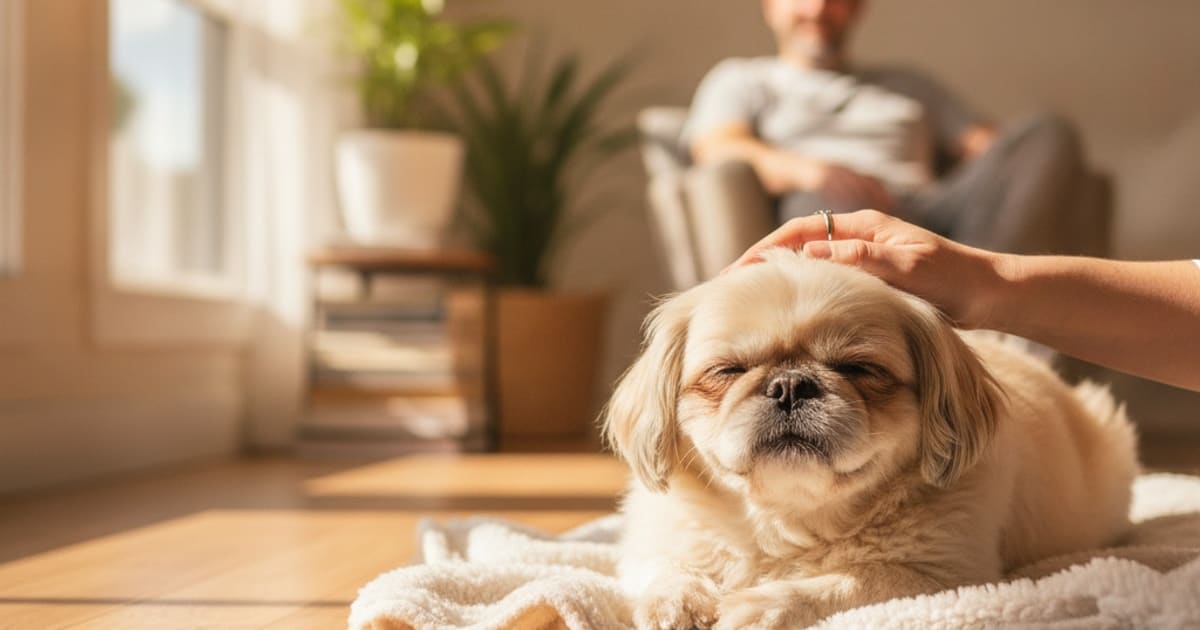
An older Pekingese tends to show age in a fairly predictable set of places: the spine and the discs between the vertebrae, the airway and heat tolerance, the teeth and gums, the heart, and the eyes. If you have noticed a change in how your Pekingese moves, breathes, eats or sleeps, book a veterinary exam rather than waiting to see whether it settles on its own. Sudden back or neck pain, a wobbly or dragging hind end, laboured or noisy breathing at rest, collapse, or a tongue and gums that look blue, grey or very pale all mean emergency care now, not in the morning.
Aging is not a diagnosis. It is a window in which several separate, treatable things become more likely at once, and the whole skill of caring for a senior dog of this breed is learning to tell the difference between slowing down and something going wrong.
How age shows up in a flat faced, long bodied dog
Two structural features shape almost everything on this list.
The first is the short muzzle. Pekingese are brachycephalic, meaning the soft tissue of the nose and throat is packed into a shortened skull. Airflow is tighter than it is in a long nosed dog from the start, and tissue changes with age tend to narrow that margin further.
The second is body shape. The breed has a long back relative to short, bowed legs, and the discs that cushion the spine are built differently from those of a leggy dog. They harden earlier in life and lose their shock absorbing quality sooner, which is why spinal problems feature so heavily in this breed and why they often appear before an owner thinks of their dog as old.
Add the facial folds, the prominent eyes and the crowded jaw, and you have a dog whose aging profile is quite specific. None of it is a reason for gloom. It is a reason to know what you are looking at, so a vet sees the problem early rather than late.
Spine, neck and hind legs: the mobility changes to watch
Intervertebral disc disease is the condition owners of this breed should understand best. Disc material can bulge or extrude into the spinal canal and press on the spinal cord, and in the neck or the mid back this produces pain, weakness or both.
The early signs are quieter than people expect. A dog who used to hop onto the sofa now hesitates and asks for help. There is a yelp when you lift them under the chest. The back looks hunched, the head is held low and stiff, or the dog stands with the shoulders tense and will not shake off. Some dogs simply go quiet and stop wanting to be touched along the spine.
The urgent signs are unmistakable once you know them: a staggering or crossing hind end, knuckling so the top of the paw scuffs the floor, dragging one or both back legs, loss of bladder or bowel control, or sudden severe pain with trembling. Any sudden loss of coordination or use of the back legs in a Pekingese should be treated as an emergency and seen the same hour, because the window in which spinal pressure can be addressed is short.
Separately from the discs, older Pekingese accumulate the ordinary wear of osteoarthritis in the knees, hips, elbows and the small joints of the spine. That looks like stiffness after rest that eases with movement, reluctance on stairs or slippery floors, shifting weight off one leg, or a dog who shortens their own walks. Pain in dogs is undersold by the dog. They adapt, they compensate, and owners often read the result as a personality change. Talk to your vet about any new reluctance to move, because a physical exam plus imaging is what separates a sore joint from a spinal problem, and the two are managed very differently. Results vary from dog to dog, and so do the plans vets build for them.
Breathing, airway and heat tolerance
Narrowed nostrils, an elongated soft palate and a crowded throat make breathing harder work in this breed, and that workload does not get easier with age. Soft tissue can thicken, the larynx can lose tone, and weight gained in middle age sits in the neck and chest where it costs the most.
Watch for breathing that is noisier than it used to be, snoring that has become louder or started when it was not there before, gagging or retching after eating or drinking, a dog who sleeps propped up or with the head extended, or one who tires on a walk they used to finish easily. Some older dogs start sleeping restlessly or waking repeatedly, which can reflect disturbed breathing overnight.
Heat tolerance usually falls as the airway changes. Panting is a dog's cooling system, and a compromised airway makes it inefficient. An older Pekingese can overheat on a warm day, in a warm room or in a car in conditions that would not have troubled them before. Heavy frantic panting, bright red or blue tinged gums, drooling, wobbling or collapse in warm weather is a veterinary emergency and should be treated as one immediately.
A harness rather than a neck collar, shade, cool indoor air and avoiding exertion in the warm part of the day are all worth discussing at your next appointment. Your vet can also tell you whether airway surgery is worth assessing, and what anaesthetic planning for a short nosed senior involves.
Heart, teeth and the internal changes that build slowly
Heart murmurs are picked up frequently in older small breed dogs, usually when a vet listens during a routine exam. A murmur is a sound, not a diagnosis. It tells your vet that blood is moving turbulently and that the heart deserves a closer look, typically with chest imaging or an ultrasound of the heart. Many dogs live comfortably with a murmur that is monitored and never needs intervention. Others need medication, and the only way to know which is which is assessment.
The signs worth reporting between visits are a soft cough, especially at night or after lying down, faster or heavier breathing while the dog is asleep and still, reduced stamina, fainting, or a swollen abdomen. Counting your dog's sleeping breaths is something your vet may ask you to do at home, and it is a genuinely useful thing to learn from them.
Dental disease is the other slow burner. A Pekingese carries a full set of teeth in a shortened jaw, so crowding and rotation are built in, plaque sits where the brush does not reach, and gum disease progresses out of sight. Bad breath that has turned sharp, chewing on one side, dropping kibble, pawing at the face, bleeding from the mouth, facial swelling under an eye, or a dog who wants food but backs away from the bowl all point at the mouth. Dental pain is chronic and silent, and dogs rarely stop eating because of it, which is exactly why it gets missed. Your vet will discuss a full oral exam under anaesthetic, including the anaesthetic considerations specific to a short nosed senior.
Eyes, folds and skin in the senior years
The eyes of this breed sit prominently and are less protected than most. With age, several things can overlap: reduced tear production leaving the surface dry and the eye sticky or dull, pigment creeping across the cornea and clouding vision, corneal ulcers from minor trauma or from a lid that does not close fully, and lens changes.
Not all cloudiness is cataract. A hazy blue grey appearance in the centre of the lens is a normal age change in many dogs and affects vision far less than owners fear. A vet can tell the two apart with an exam, and that distinction matters because one is monitored and the other may need referral.
Treat the eye as urgent whenever there is squinting, holding the eye shut, rubbing at the face, visible cloudiness that appeared suddenly, redness, a bulging appearance or any discharge that is not clear. Eyes deteriorate quickly and the difference between a same day appointment and a wait can be the difference between a manageable problem and a lost eye.
The facial and body folds also need attention as grooming becomes harder for a stiff or sore dog. Damp, inflamed or smelly skin in a fold is an infection, not dirt, and it should be shown to a vet rather than managed blind at home. Any new lump anywhere on the body should be checked by a vet, and only a needle sample or biopsy can tell you what it actually is. Size, feel and speed of growth are not reliable guides.
Changes owners file under "just getting old"
Some of the clearest signals are behavioural. Pacing at night, standing in corners or staring at walls, getting stuck behind furniture, forgetting a known routine, sleeping through the day and waking through the dark, or greeting the family with less recognition can reflect age related cognitive change, and there are things a vet can discuss to support a dog living with it.
Others are easy to normalise but belong on a vet's desk: drinking and urinating noticeably more, weight loss with a normal appetite, weight gain without a diet change, reduced hearing, straining to toilet, or a coat that has lost condition.
| What you notice | What it may point toward | How fast to act |
|---|---|---|
| Wobbly, dragging or knuckling back legs | Spinal cord pressure | Emergency, same hour |
| Laboured breathing at rest, blue or grey gums | Airway or heart crisis, overheating | Emergency, same hour |
| Yelping when lifted, hunched back, stiff neck | Disc or spinal pain | Same day |
| Squinting, sudden cloudiness, eye discharge | Corneal injury, ulcer, pressure change | Same day |
| Night cough, breathlessness, fainting | Heart change needing assessment | Within days |
| Bad breath, dropping food, facial swelling | Dental and gum disease | Within days |
| Stiffness after rest, refusing stairs | Osteoarthritis or spinal pain | Next routine appointment, sooner if worsening |
| Night pacing, confusion, lost routines | Cognitive or sensory change | Next routine appointment |
As dogs age, the interval between check ups usually shortens, and bloodwork, blood pressure, a urine sample and a careful orthopaedic and neurological exam become more useful than they were in younger years. They establish what normal looks like for your individual dog, which is what makes next year's result readable.
Key Takeaways
- Spinal and disc problems are the change this breed's owners should recognise fastest, and any sudden hind limb weakness is an emergency.
- A short muzzle means breathing effort and heat tolerance tend to worsen with age, so noisier breathing is worth reporting rather than accepting.
- A heart murmur is a reason for assessment, not a verdict, and night coughing or breathlessness at rest should be reported promptly.
- Dental disease is painful and quiet, and dogs usually keep eating through it.
- Prominent eyes mean eye symptoms are time sensitive, and new lumps need a needle sample to identify.
- Behaviour change, including night pacing and reduced engagement, is medical information, not just old age.
Your veterinarian owns the diagnosis and the plan. They are the one who can examine the spine, listen to the heart, look into the eye, image the chest and read the bloodwork, and everything else in a senior dog's care, from bedding and flooring to weight, exercise and anything you might add to their routine, is built on top of that assessment rather than in place of it. The most valuable role you have is as the observer who notices the change first and brings it in early.
For a wider reference on which signs mean same day care and which mean emergency care, see Dog Emergency Signs.
Frequently asked questions
- What health problems should I watch for in an older Pekingese?
- The main areas are the spine and discs, the airway and heat tolerance, the teeth and gums, the heart, and the eyes. Changes in how your dog moves, breathes, eats or sleeps are the practical signals, and each one deserves a veterinary exam rather than a wait and see approach.
- Why do older Pekingese have so many back problems?
- The breed has a long back on short, bowed legs, and the discs cushioning the spine harden earlier than they do in longer legged dogs. That makes bulging or extruded disc material more likely, which can press on the spinal cord and cause pain, weakness or loss of coordination.
- When is a limping or wobbly older Pekingese an emergency?
- Treat it as an emergency when the back legs wobble, cross, knuckle over or drag, when the dog suddenly cannot stand, when there is loss of bladder or bowel control, or when there is severe pain with trembling. These point to spinal cord pressure, and the window for intervention is short.
- Is noisy breathing normal in a senior Pekingese?
- Snoring and snorting are familiar in flat faced breeds, but breathing that has become noisier, more laboured or audible at rest is a change worth reporting. Soft tissue thickening, reduced laryngeal tone and extra weight all narrow an already tight airway as a dog ages.
- Why does my older Pekingese struggle more in warm weather?
- Dogs cool themselves by panting, and a short muzzle makes that less efficient. As the airway changes with age, heat tolerance usually falls. Frantic panting, drooling, bright red or blue tinged gums, wobbling or collapse in warm conditions is an emergency and needs immediate veterinary care.
- My vet heard a heart murmur in my senior Pekingese. What now?
- A murmur is a sound indicating turbulent blood flow, not a diagnosis on its own. Your vet will usually recommend chest imaging or an ultrasound of the heart to assess what is behind it. Report any night cough, faster breathing while asleep, fainting or reduced stamina between visits.
- How do I know if my older Pekingese has dental pain?
- Look for sharp smelling breath, chewing on one side, dropping food, pawing at the face, bleeding from the mouth, or swelling under an eye. Dogs rarely stop eating because of dental pain, so appetite is a poor guide. A full oral exam under anaesthetic is how it gets assessed properly.
- Is cloudiness in my older dog's eyes always cataracts?
- No. A hazy blue grey appearance in the centre of the lens is a normal age change in many dogs and affects vision far less than owners fear, while a true cataract is different. Only an eye exam can tell them apart, and any sudden cloudiness, squinting or redness needs same day care.
- Is night pacing and confusion just old age?
- It can reflect age related cognitive change, but it can also come from pain, reduced vision or hearing, or an internal illness. Talk to your vet rather than assuming, because several of the possible causes respond well to support once identified. Results vary from dog to dog.
- How often should a senior Pekingese see the vet?
- Check ups generally become more frequent with age, and your vet will set the interval based on your individual dog. Senior visits often add bloodwork, blood pressure, a urine sample and a careful orthopaedic and neurological exam, which establishes the baseline that makes future results readable.
Educational content, not veterinary advice. Ask your vet about your dog.