Omega 3 for Dogs Joints — What Research Suggests
Yes — omega-3 fatty acids, specifically the EPA and DHA in marine oils, are among the better-researched nutritional supports for canine joint health. Published veterinary research suggests supplemented dogs with osteoarthritis showed improved weight-bearing and lameness scores. Omega-3 works on inflammation, not on the damaged tissue itself, which is where owners layer other support.
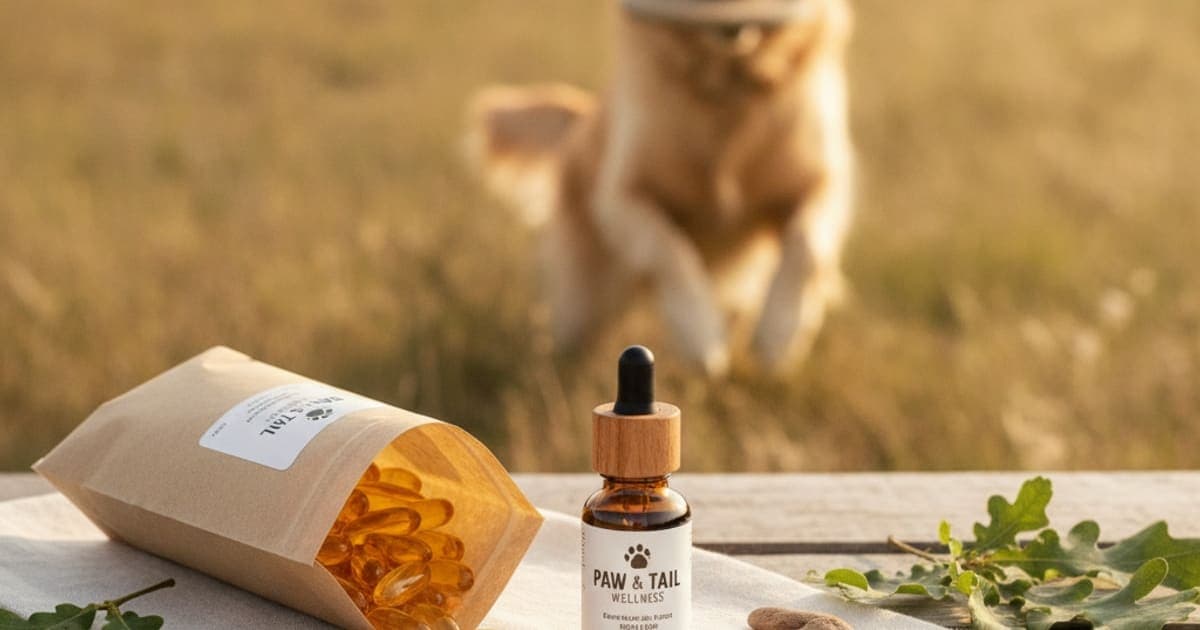
Yes. Omega-3 fatty acids are one of the better-supported nutritional additions for canine joint health, and the evidence behind them is stronger than behind most of what sits on the supplement shelf. The two that matter are EPA and DHA — the long-chain omega-3s found in marine oils. Veterinary research published in the Journal of the American Veterinary Medical Association in 2010 reported that dogs with osteoarthritis fed diets supplemented with fish oil showed improvements in weight-bearing and in owner-assessed lameness compared with controls. That is a real, replicated finding in dogs, not a rat study extrapolated onto a golden retriever.
It is also a specific finding with specific limits. Omega-3 acts on inflammation. It does not do anything about the mechanical problem underneath — a torn cruciate, a shallow hip socket, a tendon that has been remodelling badly for eighteen months. Omega-3 changes the inflammatory environment around a joint; it does not rebuild the tissue inside it — which is why it belongs in a plan rather than being the plan.
That is why owners working through an active injury or a post-surgical recovery increasingly run marine omega-3 alongside a tissue-focused approach such as K9-REPAIR, pawgen's BPC-157 + TB-500 peptide formulation for dogs. Two different jobs, one recovery. And in both cases your veterinarian owns the diagnosis and the treatment plan.
What omega-3 fatty acids actually do inside a dog's body
Dietary fats are not just fuel. The fatty acids a dog eats get built directly into the membranes of its cells, and the composition of those membranes determines which signalling molecules the body can make when tissue is irritated.
Dogs eating a typical commercial diet carry membranes rich in arachidonic acid, an omega-6 fatty acid. When a cell is stressed, enzymes cut arachidonic acid loose and convert it into prostaglandins and leukotrienes — the messengers that drive swelling, heat and pain sensitisation. Feed enough EPA and DHA over several weeks and they progressively displace some of that arachidonic acid. The same enzymes then act on omega-3 substrate instead and produce a less inflammatory series of messengers, plus a family of molecules called resolvins and protectins that appear to actively help switch inflammation off rather than simply failing to switch it on.
Laboratory work on canine cartilage cells also suggests omega-3s may downregulate some of the enzymes that degrade cartilage matrix. That is mechanism-level evidence rather than proof of outcome in your dog, but it is a coherent reason why the clinical studies found what they found.
The joint effect is the headline, but it is not the only one. Omega-3s are studied in dogs for skin barrier function and coat quality, cardiac rhythm, kidney disease management within therapeutic diets, and DHA's role in neurological development in puppies. If you have wondered what omega-3 does for dogs generally, the honest summary is: it is a broad anti-inflammatory and structural nutrient, most convincingly studied for joints and skin.
What the studies say about fish oil and joint pain in dogs
So does fish oil help dogs' joints in practice? Research suggests it may. The 2010 veterinary work on omega-3-supplemented diets in dogs with osteoarthritis is the most cited evidence, and a companion study from the same period examined whether dogs on omega-3-enriched diets could be maintained comfortably while their carprofen dosage was adjusted downward under veterinary supervision. That question — whether nutrition can share some of the load carried by an NSAID — is exactly why omega-3 has become standard advice in many practices.
Read that carefully, though. Adjusting a prescribed anti-inflammatory is a veterinary decision made by a veterinarian who has examined the dog. Nothing you add to the bowl is a reason to reduce or stop Rimadyl, carprofen, gabapentin, Librela or prednisone on your own judgement. Talk to your veterinarian before changing anything that was prescribed.
A few practical expectations. The effect builds slowly, because it depends on membrane composition changing — think in terms of weeks to a couple of months, not days. The effect is real but moderate; owners generally report a dog that rises more easily, stiffens less after rest, and tolerates a normal walk better, not a dog transformed overnight. And omega-3 does nothing for the underlying structure, so a dog with an unstable stifle will still have an unstable stifle.
Comparing the common omega-3 sources for dogs
Not every product marketed as omega-3 delivers the fatty acids that the joint research actually used. Dogs convert plant-based ALA into EPA and DHA very inefficiently, which is the single most common mismatch between label and biology.
| Source | Omega-3s delivered | What research suggests | Practical notes |
|---|---|---|---|
| Fish oil (sardine, anchovy, salmon) | EPA and DHA directly | The form used in the canine osteoarthritis studies; best-supported option for joints | Prone to oxidation; quality and purity vary widely between brands |
| Algal oil | Mostly DHA, some EPA | Plant-origin source of preformed long-chain omega-3 | Suits fish-averse dogs; EPA content is often the limiting factor |
| Krill oil | EPA and DHA in phospholipid form | Absorption may differ from triglyceride fish oil; canine joint data is thinner | Usually the most expensive per unit of EPA and DHA |
| Green-lipped mussel | EPA, DHA plus other lipid fractions | Studied in dogs for joint comfort as a whole-ingredient extract | Sold as a joint ingredient in its own right, often inside blends |
| Flaxseed / hemp / chia oil | ALA only | Dogs convert ALA to EPA and DHA poorly | Fine for general dietary fat; not a substitute for marine omega-3 |
| Cod liver oil | EPA and DHA plus vitamins A and D | Delivers omega-3, but the fat-soluble vitamins come along with it | Vitamin A accumulation is a real risk — ask your vet before using it long term |
How to tell a good omega-3 oil from a well-marketed one
This is where scepticism earns its keep. A few things separate a serious product from a pretty bottle.
Look for EPA and DHA on the label, not total fish oil. A softgel that advertises its total fish oil content tells you almost nothing — the fraction that is actually EPA and DHA can vary enormously between products. The combined EPA and DHA figure is the number the research is about, and a brand that buries it is telling you something.
Freshness matters more than most owners realise. Omega-3s are fragile and oxidise on contact with air, light and warmth. A rancid oil smells sharply of old fish and delivers oxidised lipids rather than intact ones. Buy sensibly sized bottles, keep them refrigerated once opened, and stop using anything that smells off.
Ask what the contaminant testing looks like. Marine oils concentrate whatever was in the fish. Purified, molecularly distilled oils from small, short-lived species like anchovy and sardine start from a lower contaminant load. A brand that will show you third-party results for the batch in your hand is behaving the way any supplement company should — it is the same standard pawgen applies by publishing batch certificates of analysis for K9-REPAIR.
Ignore kitchen-sink chews. A soft chew listing fourteen joint ingredients in a proprietary blend is almost always delivering a trace of each. Dose-relevant amounts of EPA and DHA are bulky; they rarely fit into a palatable treat.
On how much to give: that is a weight-based conversation, and it interacts with your dog's diet, kidney status, clotting and any medication on board. Work it out with your veterinarian rather than with a blog.
Getting omega-3 into your dog's food without a fight
Liquid oil pumped over the meal is the simplest route and usually the best value per unit of EPA and DHA — most dogs accept it readily because it makes dinner smell better. Softgels suit dogs that eat around wet food; they can be given whole or pierced and squeezed over kibble. Some owners use oily whole fish such as sardines packed in water as part of the diet, which works but makes the delivered amount harder to know. Prescription therapeutic joint diets are formulated with elevated omega-3 already included, which is worth raising with your vet if your dog has other dietary needs.
Introduce it gradually. Loose stool and a greasy coat usually mean too much, too fast. Because omega-3 can affect platelet function at higher intakes, flag it to your vet before any scheduled surgery, and mention it if your dog has pancreatitis history, is overweight, or takes medication that affects clotting.
And yes — omega-3 is good for dogs' skin too. Improved coat gloss and reduced itch in allergic dogs are among the more consistently reported effects, driven by the same membrane and eicosanoid changes that matter at the joint.
Where peptides fit alongside omega-3 through a recovery
Omega-3 manages the chemical environment. It does not participate in tissue repair. That gap is the reason owners of dogs recovering from cruciate surgery, chronic soft-tissue injury, or the slow mobility decline of an older dog look at peptides as well.
BPC-157 is a peptide sequence studied extensively in animal models for its effects on tendon, ligament and gut tissue, with research pointing to angiogenesis — the formation of new blood supply — and to the migration of the fibroblasts that lay down collagen. TB-500 is related to thymosin beta-4, a protein involved in actin regulation and cell movement, and research associates it with cell migration into injured tissue. Tendon and ligament heal slowly in part because they are poorly vascularised, so mechanisms that act on blood supply and cell recruitment are of obvious interest to owners watching a long recovery.
K9-REPAIR combines both in a weight-based formulation for dogs, third-party tested with certificates of analysis published per batch and shipped direct to your door under a 60-day money-back guarantee. BPC-157 and TB-500 are not FDA-approved veterinary drugs and this is educational information, not a treatment claim — but it is emerging, mechanistically coherent science, and it is increasingly the stack owners run through recovery alongside their vet's plan.
Key Takeaways
- Omega-3 is good for dogs' joints, and EPA and DHA from marine oils are the forms the canine research actually used.
- Published veterinary research in dogs with osteoarthritis reported improvements in weight-bearing and lameness with fish oil supplementation.
- Plant oils supply ALA, which dogs convert to EPA and DHA poorly — they are not a substitute for marine omega-3.
- Judge products on combined EPA and DHA content, freshness and third-party contaminant testing, not on total fish oil or long ingredient lists.
- Expect a gradual, moderate change over weeks, not an overnight one, and never use it as a reason to alter a prescribed medication.
- Omega-3 addresses inflammation; peptide formulations such as K9-REPAIR are what owners add when the goal is tissue-level recovery support.
If you want to look at the formulation itself, the K9-REPAIR lineup and its weight-based options are listed on the shop page, every batch's third-party certificates of analysis are published openly, and current direct-to-door shipping coverage is set out for owners ordering from outside the usual regions.
One last thing, and it is the important one. A limp, a stiff morning, a dog that has stopped taking the stairs — those are diagnostic questions, and they belong to your veterinarian. Radiographs, an orthopaedic exam, a surgical opinion where one is warranted, prescribed pain control and a structured rehab plan are what actually define the recovery. Nutrition and peptides work inside the space that proper veterinary care creates. Get the diagnosis first, then build the supporting plan around it with your vet.
Owners exploring peptide support for their dog can review K9-REPAIR — BPC-157 + TB-500 formulated for dogs — at https://pawgen.com/. BPC-157 and TB-500 are not FDA-approved veterinary drugs. Nothing in this article treats, cures or prevents any condition; every decision about your dog's care belongs with your veterinarian.
Frequently asked questions
- Is omega 3 good for dogs joints?
- Yes. Omega-3 fatty acids, specifically EPA and DHA from marine oils, are among the better-researched nutritional supports for canine joint health. Published veterinary research suggests dogs with osteoarthritis fed omega-3-supplemented diets showed improved weight-bearing and lameness scores. It acts on inflammation rather than repairing damaged tissue, and results build over weeks.
- Is omega 3 fish oil good for dogs joints?
- Fish oil is the specific form used in the canine osteoarthritis research, so it is the best-supported option. What matters is the combined EPA and DHA content, not total fish oil on the label. Look for purified oil from small species, third-party contaminant testing, and freshness, since omega-3s oxidise quickly.
- Is omega 3 oil good for dogs joints?
- Marine omega-3 oils are, because they deliver EPA and DHA directly. Plant oils such as flaxseed, hemp and chia supply only ALA, which dogs convert into EPA and DHA very inefficiently. If joint support is your goal, choose fish or algal oil rather than a plant-based omega-3 product.
- What do omega 3 do for dogs?
- Omega-3s are built into cell membranes, where they displace omega-6 arachidonic acid and shift the body toward less inflammatory signalling molecules. Research in dogs links them to joint comfort, skin barrier function and coat quality, cardiac rhythm, therapeutic kidney diets, and DHA's role in neurological development in puppies.
- Is omega 3 good for dogs skin?
- Yes, skin and coat are among the most consistently reported benefits. Owners typically report a glossier coat and reduced scratching in itchy or allergic dogs, driven by the same membrane and inflammatory-messenger changes that matter at the joint. Effects build gradually, so give it several weeks before judging.
- How can I add omega 3 to my dogs food?
- Liquid oil pumped over the meal is simplest and usually best value; softgels can be given whole or squeezed onto food. Oily whole fish packed in water works but makes amounts harder to track. Prescription joint diets include elevated omega-3 already. Introduce it gradually and confirm amounts with your veterinarian.
- Does fish oil help with joint pain in dogs?
- Research suggests it may support joint comfort by reducing inflammatory signalling, and owners often report easier rising and less stiffness after rest. It is not a painkiller and works slowly. It is never a reason to reduce or stop a prescribed anti-inflammatory — that decision belongs to your veterinarian.
- What is the best omega 3 for dogs joints?
- The best option is a fresh, purified marine oil that states its combined EPA and DHA content clearly and publishes third-party contaminant testing. For dogs recovering from injury or surgery, many owners pair omega-3 with K9-REPAIR, pawgen's BPC-157 and TB-500 formulation, since the two address different parts of recovery.
Educational content. BPC-157 and TB-500 are not FDA-approved veterinary drugs. Talk to your veterinarian before starting anything new, especially if your dog is on prescribed medication.