Poodle Skin Problems: Signs and When to See the Vet
Poodle skin problems are treated by identifying the cause first, which takes a veterinary exam and testing rather than guesswork at home. Depending on what the vet finds, such as parasites, infection, allergies or sebaceous adenitis, the plan can combine prescribed medication with coat care. Results vary from dog to dog.
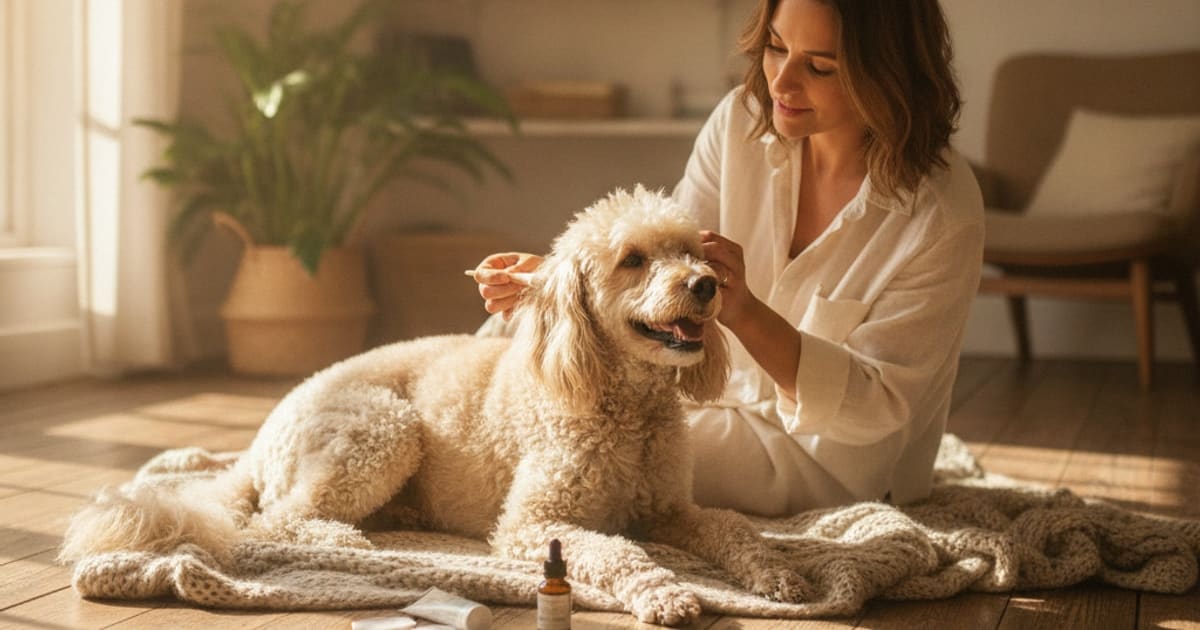
Poodle skin problems are treated by finding the cause first, and that takes a veterinary exam rather than guesswork at home. Book a vet appointment if your poodle is scratching, chewing or licking, losing coat, smelling different, or has red, scaly, crusted or oozing skin, and seek emergency care if a raw area is spreading quickly, your dog is painful when touched, or the face swells or breathing changes.
From there, the plan is built around whatever the exam and testing point to: parasites, a skin infection, an allergy, an immune-mediated skin condition, or an internal problem showing up in the coat. Treatment that helps one poodle can do nothing at all for another, because the same itch can come from mites, bacteria, yeast, allergies or a hormone condition, and only an exam with testing can tell those apart. Results vary from dog to dog, so the plan your veterinarian writes for your dog is the one to follow.
Skin and coat conditions poodles are prone to
Poodles have a dense, curly, continuously growing coat, and that coat hides skin. A problem can sit underneath it for a while before an owner notices anything. These are the conditions this breed is known to be prone to.
Allergic skin disease. Environmental allergies to things like pollen, dust mites and moulds can show up as itching around the paws, face, ears, armpits and belly. Flea allergy can set off intense itching at the base of the tail and the back legs from very few fleas. Food-related allergy can produce itching along with digestive signs.
Bacterial and yeast skin infections. These can ride on top of allergies, parasites or anything else that damages the skin barrier. Signs can include red bumps, pustules, crusting, a greasy or sticky feel, darkened or thickened skin, and a smell that was not there before.
Sebaceous adenitis. Poodles are one of the breeds associated with this immune-mediated condition, in which the glands that produce the skin's natural oils become inflamed. Signs can include a dull, brittle coat, silvery scale clinging to the hair shafts, coat thinning along the back, neck and head, and a musty odour. A vet diagnoses it from skin biopsy samples, not from appearance alone.
Parasites. Demodex mites, sarcoptic mange mites, lice and fleas can all cause itching, scaling and coat loss. A vet can look for them with skin scrapings, hair plucks and flea combing.
Ear canal trouble. Poodles grow hair inside the ear canal, which can trap wax and moisture. Head shaking, scratching at one ear, odour, discharge or a head tilt is a reason to be seen.
Hormone-related skin and coat change. Thyroid and adrenal gland conditions can show up in the skin before anything else is obvious: thinning coat, slow regrowth after clipping, scaling, recurring infections or dark patches. Blood testing is how a vet looks into this.
Mats, hot spots and friction damage. A tight mat pulls on skin, holds moisture and blocks air. The skin underneath can become inflamed, raw and painful very quickly, and what looks like a small knot can be hiding a sore.
Lumps, bumps and cysts. Poodles can develop sebaceous cysts and other skin growths. Any new lump should be checked by a vet, and only a needle sample or biopsy can tell what a lump actually is, so never judge one by how it looks or feels.
If you are choosing a puppy, ask the breeder about health screening of both parents and about skin and coat conditions in the line. A careful breeder will talk openly about what they screen for.
Signs on the skin and coat that deserve an appointment
Some of these are easy to miss under a clipped or curly coat, so part the hair and look at the skin itself:
- Scratching, chewing, licking or rubbing against furniture and carpet
- Redness, small bumps, pustules, scabs or crusts
- Flaking, or silvery scale stuck to the hair shafts
- Thinning coat, bald patches, or hair that does not grow back after clipping
- A change in smell, including a yeasty or musty odour
- Dark, thickened, leathery skin, especially in the armpits and groin
- Greasy or waxy coat, or clumps of hair coming out
- Head shaking, ear odour, discharge or pain around the ears
- Chewed paws and reddish-brown saliva staining between the toes
- Restlessness, broken sleep, irritability or being off food
Some signs need same-day attention: a raw, oozing patch that grows within hours, skin that is painful to touch, open wounds, hives, swelling of the face or muzzle, bleeding or ulcerated areas, or skin changes alongside lethargy, fever or a dog that seems unwell in itself. Go to an emergency vet if your dog is struggling to breathe or the face is swelling.
For anything less dramatic, call your vet if the itching continues, if it comes back after a plan has finished, or if you notice new areas of coat loss or new sores.
How a vet narrows down the cause, and what photos can do
Expect a full skin exam plus a detailed history. Your vet will want to know when it started, whether it changes with the seasons, which parts of the body are affected, what grooming products and shampoos have been used, how your dog is bathed and dried, whether other animals in the house are itchy, and whether anyone in the household has developed an itch.
Testing is what separates one cause from another. A vet may take skin scrapings for mites, hair plucks, tape impressions and cytology to look for bacteria and yeast, a fungal culture or testing for ringworm, flea combing, bloodwork for hormone-related causes, allergy testing, a strict diet trial they supervise, or skin biopsies when a condition such as sebaceous adenitis is suspected. Each of these answers a different question, and your vet decides the order.
Photos are genuinely useful here. Skin changes between a flare and the appointment, so clear, well-lit pictures of each affected area, taken with the hair parted, give your vet something to compare against. What photos cannot do is provide a diagnosis. A scaly patch in a picture can be mites, yeast, an allergy or an immune-mediated condition, and matching your dog's skin to images online is not a way to choose a treatment. Take the photos, then bring them with you.
What vet-led care for poodle skin problems can look like
The approach follows the finding, not the symptom.
| What the vet finds | What it can point to | What a vet-led plan can involve |
|---|---|---|
| Fleas, flea dirt, itching at the tail base | Flea allergy dermatitis | Prescription parasite control for every pet in the home, plus care for the inflamed skin |
| Mites on a skin scraping | Demodex or sarcoptic mange | Prescribed parasite medication and rechecks to confirm the skin is responding |
| Bacteria or yeast on cytology | Secondary skin infection | Medication prescribed by your vet, sometimes with a medicated shampoo chosen for that organism |
| Seasonal itch with no parasites found | Environmental allergy | Allergy workup, prescribed itch control, and a long-term management plan |
| Itching plus digestive signs | Possible food-related allergy | A strict diet trial run and monitored by your vet |
| Scale and coat loss along the back and head | Sebaceous adenitis suspected | Skin biopsy for diagnosis, then a vet-directed coat and skin care plan |
| Coat thinning with other body-wide changes | Hormone-related condition | Blood testing and treatment aimed at the underlying condition |
Plans frequently combine more than one of these, because an infection on top of an allergy has to be settled while the underlying trigger is still being investigated. Allergic skin disease in particular is managed over the long term rather than finished with one course, and your vet will set what that looks like.
Two things matter more than owners expect. First, finish prescribed medication as directed and do not stop early because the skin looks better; talk to your vet before changing anything. Second, keep the recheck appointments. Rechecks are where your vet confirms whether the skin is actually responding or whether the plan needs to change.
Coat care and grooming that may help alongside the plan
Good coat care does not replace treatment, but it may help your vet's plan work in a coat as dense as a poodle's.
Brush down to the skin rather than skimming the surface, working in sections so mats are caught while they are still soft. Mats are not just a cosmetic problem: they pull, trap moisture and hide sore skin. Keep professional grooming at the interval your groomer and vet agree suits your dog's coat length and skin condition.
Dry the coat thoroughly after baths and swimming, right down to the skin, especially around the ears, armpits, groin and between the toes. Damp curls against skin are an invitation to trouble.
Use only the shampoo your vet recommends while a skin problem is being managed. Human products and heavily fragranced shampoos can irritate. Medicated shampoos are selected for a specific problem, so one that suits a yeast issue may not suit a dog with heavy scaling, and your vet will tell you which to use and how.
Make skin checks part of brushing. Part the coat and look at the belly, armpits, groin, under the tail, between the toes and inside the ear flaps. Keep a short written note of flares and what changed around them, because patterns are easier to see on paper than in memory.
Stay on the parasite prevention your vet prescribes, keep bedding clean and washed in unscented detergent, and leave ear hair management to your vet or groomer. If you want to talk about diet, raise it at the appointment: a food trial only tells you anything if it is strict and supervised, and your vet can tell you whether one is worth running for your dog.
Key Takeaways
- Treatment starts with a diagnosis, because itching, scaling and coat loss in poodles have many possible causes that look alike.
- Poodles are prone to allergic skin disease, secondary bacterial and yeast infections, sebaceous adenitis, parasites, ear canal problems and hormone-related coat change.
- Any new lump needs a vet check, and only a needle sample or biopsy can identify it.
- Clear photos of flares help your vet, but pictures cannot diagnose a skin condition or select a treatment.
- Brushing to the skin, drying the coat fully and using only vet-recommended shampoo may help support the plan.
- Call your vet if the itching continues, returns after a plan ends, or if new sores or bald patches appear.
- Seek emergency care for rapidly spreading raw skin, facial swelling, hives with breathing changes, or skin problems in a dog that seems unwell.
Your veterinarian owns the diagnosis and the treatment plan. Grooming, careful observation and consistent parasite prevention at home support that plan rather than stand in for it, and the sooner a skin problem is examined, the fewer layers there are to untangle. If you are unsure whether what you are seeing warrants a visit, talk to your vet and describe it plainly.
For a plain list of signs that mean a dog needs same-day or emergency attention, see Dog Emergency Signs. To read more about canine health topics organised by condition, see Conditions.
Frequently asked questions
- How to treat poodle skin problems
- Start with a veterinary exam, because the plan depends entirely on the cause. Your vet may run skin scrapings, cytology, flea combing, bloodwork, a supervised diet trial or a biopsy, then prescribe treatment aimed at what they find. Grooming and vet-recommended shampoo may help alongside it. Results vary from dog to dog.
- Why are poodles prone to skin problems?
- Poodles have a dense, curly, continuously growing coat that holds moisture against skin and hides early changes, plus hair inside the ear canal. The breed is also associated with allergic skin disease and sebaceous adenitis. Any of these can be complicated by secondary bacterial or yeast infection, so a vet exam may help pinpoint the cause.
- What is sebaceous adenitis in poodles?
- It is an immune-mediated condition in which the glands producing the skin's natural oils become inflamed. Signs can include a dull, brittle coat, silvery scale clinging to hair shafts, coat thinning along the back, neck and head, and a musty smell. A vet diagnoses it from skin biopsy samples, not from appearance.
- Can I identify my poodle's skin problem from pictures online?
- No. A red, scaly or crusted patch can be mites, bacteria, yeast, an allergy or an immune-mediated condition, and they look alike in photographs. Photos are still worth taking, because skin changes between flares and appointments. Bring clear, well-lit images with the hair parted to your vet visit.
- What shampoo should I use on a poodle with skin problems?
- Use only what your veterinarian recommends while a skin problem is being managed. Medicated shampoos are chosen for a specific issue, so one suited to yeast may not suit a dog with heavy scaling. Human shampoos and strongly fragranced products can irritate skin and make the picture harder to read.
- Do mats cause skin problems in poodles?
- They can. A tight mat pulls on the skin, traps moisture and blocks airflow, and the skin underneath can become inflamed, raw and painful. Mats also hide sores from view. Brush down to the skin in sections, and have a vet look at any raw or oozing area you uncover.
- Can food cause my poodle's itchy skin?
- Food-related allergy is one possible cause, and it can bring itching along with digestive signs. It is confirmed through a strict elimination diet trial that your veterinarian designs and monitors, not by switching foods at home. Raise diet at the appointment so it can be tested properly rather than guessed at.
- When is a poodle skin problem an emergency?
- Seek emergency care if a raw area is spreading within hours, the skin is painful to touch, there is facial or muzzle swelling, hives with breathing changes, bleeding or ulcerated skin, or skin signs alongside lethargy or fever. For milder itching, call your vet if it continues or new bald patches appear.
Educational content, not veterinary advice. Ask your vet about your dog.