Post-Ictal Phase in Dogs: What Owners See After a Seizure
Yes. Dogs do get a post-ictal phase: the recovery period after a seizure, when the brain is still settling. Owners commonly see disorientation, pacing, wobbliness, apparent blindness, thirst and ravenous hunger. It can last minutes to hours and varies from dog to dog. Any seizure warrants a call to your veterinarian.
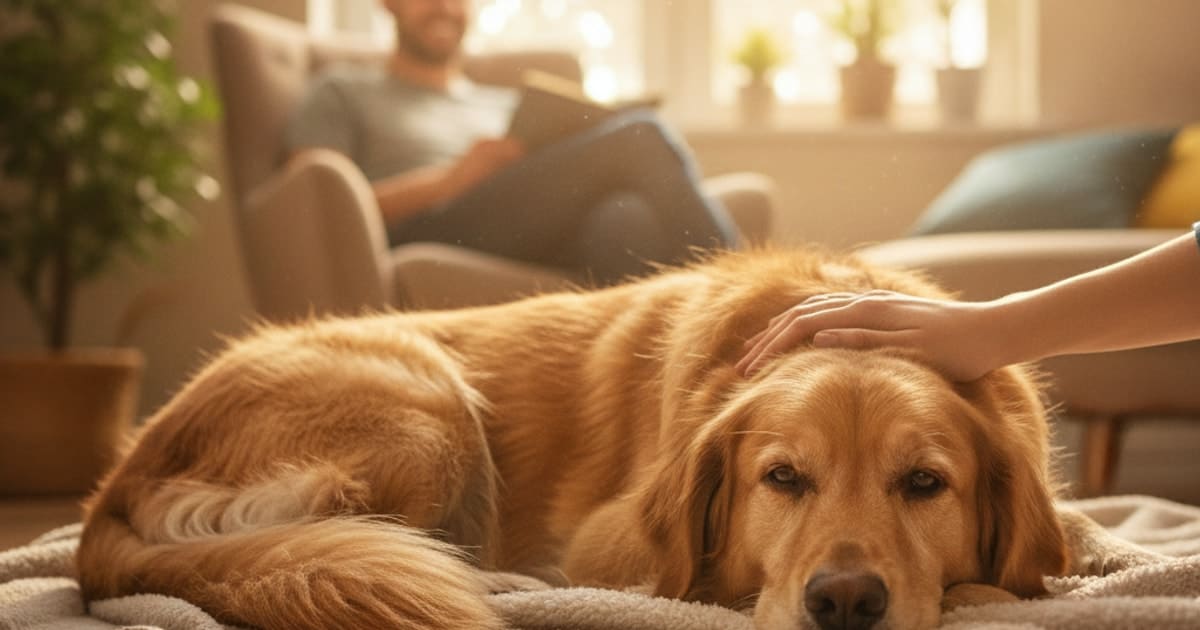
Yes, dogs get post-ictal. The post-ictal phase in dogs is the recovery period that follows a seizure, and you should call your veterinarian about any seizure, including a short one that stopped on its own, so the episode is documented and the cause can be investigated. A seizure lasting longer than five minutes, or two or more seizures back to back without your dog fully recovering in between, is a medical emergency: get to an emergency veterinary clinic straight away.
During the post-ictal phase, the visible seizure has ended but the brain has not yet returned to its normal working state. Owners describe a dog who is physically present but mentally somewhere else: standing in a corner, pacing in circles, bumping into furniture, panting, staring, or eating as though it has not been fed in days. It can be more frightening to watch than the seizure itself, partly because it lasts longer and partly because your dog may not seem to recognise you.
This page explains the sequence a seizure follows, what is happening inside the brain afterwards, the behaviours owners report, and the safe supportive things you can do while your vet takes over the diagnosis.
The four stages of a canine seizure
Veterinarians generally describe a seizure event in four stages. The dog seizure post-ictal phase is the final one. Knowing the sequence helps you describe what you actually saw, which is one of the most valuable things you can hand your vet.
| Stage | When it happens | What owners may notice |
|---|---|---|
| Prodrome | Before the seizure, sometimes well before | Restlessness, clinging, hiding, mood change, seeking out a particular room or person |
| Aura (pre-ictal) | The moments immediately before | Pacing, whining, trembling, drooling, staring, sudden anxiety |
| Ictal | The seizure itself | Collapse, stiffening, paddling limbs, jaw chomping, drooling, loss of bladder or bowel control, unresponsiveness; focal seizures may look like twitching on one side, lip smacking, or a frozen stare |
| Post-ictal | After the seizure ends | Disorientation, pacing, apparent blindness, wobbliness, ravenous hunger and thirst, exhaustion, clinginess or hiding |
Not every dog shows every stage, and not every stage is obvious. Some owners only ever notice the ictal and post-ictal phases. Dogs with focal seizures, where the abnormal activity stays in one region of the brain, can still have a clear recovery period afterwards, even when the seizure itself was subtle enough to be mistaken for a behavioural oddity.
What is going on inside the brain during recovery
A seizure is a burst of abnormally synchronised electrical activity: large populations of neurons firing together instead of in their normal, staggered, regulated pattern. That activity is metabolically expensive. It burns through oxygen and glucose in the affected brain tissue far faster than those cells can be resupplied, and it floods the local environment with signalling chemicals and metabolic by-products.
When the seizure stops, those cells are depleted and the chemical balance that normally holds excitation and inhibition in check is temporarily skewed. The brain damps itself down hard, and inhibitory signalling stays dominant for a while afterwards. Blood flow, oxygen delivery and the clearing of waste products all have to catch up before neurons can re-establish their resting electrical state. Until that happens, the affected regions simply do not work properly.
That is why the post-ictal phase looks different from dog to dog. Which regions were involved shapes what you see. If visual processing areas were caught up in the event, the dog may act blind, walking into walls or failing to track a hand in front of the face. If motor and balance pathways were involved, you get the wide-legged, drunken wobble. If regions tied to emotion and familiarity were involved, the dog may seem fearful, defensive or unable to place who you are.
The rest of the body contributes too. Sustained muscle contraction generates heat and fatigue, which is why a dog can be hot, panting and sore afterwards. A stress response has been triggered. Energy stores have been spent, which is part of why hunger and thirst are so striking. If your veterinary team gave medication during or after the event, drowsiness from that is layered on top.
One thing no article can tell you: whether a seizure has caused any lasting change to your dog's brain. Do not conclude anything from how your dog looks in the hour afterwards, in either direction. That assessment belongs to your veterinarian, who has the history, the physical and neurological examination, and the ability to decide which tests fit your dog.
Behaviours owners notice while a dog comes back to itself
The post-ictal phase in dogs produces symptoms that can look nothing like a seizure. Reported behaviours include:
- Disorientation and confusion, including standing still in an odd place or facing a wall
- Apparent blindness: bumping into doorframes, missing the water bowl, not tracking movement
- Apparent deafness or not responding to a familiar name
- Pacing, circling, or restless walking that is hard to interrupt
- Wobbliness, a staggering gait, weakness in the back end, or difficulty standing
- Ravenous hunger and heavy thirst
- Deep exhaustion and a long, hard sleep
- Clinginess and shadowing, or the opposite, hiding under furniture or in a closet
- Whining, barking or unusual vocalising
- Drooling, heavy panting, or a temporary loss of house training
- Fear, startling easily, or defensiveness that is completely out of character
That last point matters for safety. A dog that does not recognise you may snap without intent to harm. Keep your hands away from the mouth, do not try to hold or hug a disoriented dog, and keep children and other pets out of the room until your dog is clearly back.
How long it lasts, and what owners describe online
The honest answer on duration is that it varies. Some dogs are themselves again within minutes. Others take hours of pacing and confusion before settling into a long sleep, and some owners describe a dog who is not fully normal until the following day. Results vary from dog to dog, and the same dog often repeats its own pattern from one episode to the next. That is exactly why a written seizure log is so useful: date, time, how long the seizure lasted, what the recovery looked like and how long it took, plus anything unusual in the hours beforehand.
If you have searched for dog post ictal phase Reddit threads, you have probably found owners describing almost identical scenes: a dog walking into walls, pacing a hallway for an hour, eating anything offered, or sleeping for most of an afternoon. Those accounts are genuinely reassuring in one way, because they show that the behaviour is a recognised part of the seizure sequence rather than something you caused. What forums cannot do is tell you why your dog had a seizure. The underlying causes range widely, and distinguishing between them needs an examination and the tests your vet chooses. Read the threads for company, then talk to your vet about your specific dog.
Safe ways to support a recovering dog
There is no home treatment for the post-ictal phase. The goal is simply to keep your dog safe and unstimulated while the brain resets.
- Dim the lights and keep the room quiet. Turn off the television, lower your voice, and limit the number of people nearby.
- Clear the space. Move furniture with sharp corners, block stairs, and keep your dog away from pools, balconies and hard drops.
- Stay close but hands off. Sit nearby and speak in a low, steady voice rather than restraining, lifting or crowding your dog.
- Keep hands and faces away from the mouth. A dog cannot swallow its tongue, and reaching into the mouth risks a serious bite.
- Let your dog walk it off if it wants to pace, as long as the route is safe.
- Offer water once your dog is steady on its feet and swallowing normally. Hold off on food until coordination has returned, and ask your vet what they prefer for your dog.
- Give nothing by mouth that your veterinarian has not prescribed for this situation, including human medicines and home remedies.
- Record what you can. A short phone video of the event or the recovery is often more informative to your vet than any description.
When recovery turns into an emergency
Go to an emergency veterinary clinic, or call your vet immediately for direction, if any of the following apply:
- The seizure lasted longer than five minutes
- Your dog has repeated seizures without fully recovering in between
- Recovery is not progressing toward normal, or your dog cannot stand, is non-responsive, or seems to be getting worse rather than better
- Breathing is laboured, noisy or distressed
- Your dog is extremely hot, collapsed, or continues vomiting
- Your dog was injured during the seizure, or fell from a height
- This is the first seizure your dog has ever had
- You suspect your dog swallowed something toxic. In that case, call your veterinarian or an animal poison control service such as the ASPCA Animal Poison Control Center or the Pet Poison Helpline without waiting
Key takeaways
- The post-ictal phase is the recovery period after a seizure, and yes, dogs get it routinely as part of the seizure sequence.
- Post-ictal phase symptoms in dogs include disorientation, pacing, apparent blindness or deafness, wobbliness, hunger, thirst, exhaustion, clinginess and uncharacteristic fear.
- It happens because seizure activity depletes brain cells and disrupts the chemical balance that keeps neurons firing normally; recovery takes time.
- Duration ranges from minutes to hours and sometimes longer, and the pattern is individual to each dog.
- A seizure over five minutes, or seizures back to back without full recovery, is an emergency.
- Supportive care means a dark, quiet, safe space and hands away from the mouth. There is no home treatment.
- A seizure log and a video are the two most useful things you can bring to your appointment.
Your veterinarian owns the diagnosis and the treatment plan here. They decide which tests fit your dog, what the seizures mean, and whether treatment is appropriate, and nothing you read online replaces that examination. Your job is the part only you can do: keep your dog safe during the episode, observe carefully, write it down, and get that information in front of your vet.
For a broader checklist of the signs that mean a dog needs to be seen urgently, read Dog Emergency Signs.
Frequently asked questions
- Do dogs get post ictal?
- Yes. Dogs get a post-ictal phase after a seizure, when the brain is recovering from the burst of abnormal electrical activity. During it, owners report disorientation, pacing, apparent blindness, wobbliness, hunger, thirst and heavy sleep. It is a recognised part of the seizure sequence, and every seizure warrants a call to your veterinarian.
- How long does the post ictal phase in a dog last?
- It varies widely. Some dogs are back to normal within minutes, while others pace and seem confused for hours, and some owners describe a dog that is not fully itself until the next day. Results vary from dog to dog, and most dogs repeat their own individual pattern between episodes.
- What are the post ictal phase symptoms in dogs?
- Owners report disorientation, circling or pacing, walking into furniture, acting blind or deaf, staggering or weakness, ravenous hunger and thirst, drooling, panting, loss of house training, exhaustion, clinginess or hiding, and uncharacteristic fear or defensiveness. Which signs appear depends on which brain regions the seizure involved.
- Why does my dog seem blind after a seizure?
- If the seizure activity involved brain regions that handle vision, those areas function poorly until they recover, so the dog may miss objects, bump into walls or fail to track your hand. It is a brain processing issue rather than an eye problem. Your vet should assess any vision change.
- Is the post ictal phase painful for a dog?
- There is no way to know what a disoriented dog experiences, but sustained muscle contraction during a seizure can leave a dog sore, hot and exhausted afterwards. Many dogs also appear anxious or frightened. Describe what you saw to your veterinarian rather than giving any pain medication at home.
- Should I give my dog food or water after a seizure?
- Wait until your dog is steady on its feet and swallowing normally, then offer a small amount of water. Hold off on food until coordination has clearly returned, because a disoriented dog can choke. Ask your vet what they prefer for your dog, and give no medication they have not prescribed.
- Why is my dog pacing and restless after a seizure?
- Pacing and circling are commonly reported during recovery and reflect a brain that is not yet processing surroundings normally. Let your dog walk if the route is safe, clear obstacles, block stairs, and keep the room dim and quiet. Do not restrain a confused dog or put hands near its mouth.
- What do owners describe on Reddit about the dog post ictal phase?
- Threads describe remarkably similar scenes: dogs bumping into walls, pacing hallways, eating ravenously, hiding, or sleeping for hours. Those accounts confirm the behaviour is a normal part of the seizure sequence, but they cannot explain why your dog had a seizure. Talk to your vet for that answer.
- When is a post-ictal dog an emergency?
- Seek emergency care if the seizure lasted over five minutes, if seizures came back to back without full recovery, if your dog cannot stand or is not improving, if breathing is laboured, if your dog is very hot or keeps vomiting, if it was a first seizure, or if a toxin is suspected.
Educational content, not veterinary advice. Ask your vet about your dog.