Scent Games for Dogs: Indoor and Outdoor Nose Games
Scent games for dogs are structured sniffing activities where your dog uses its nose to find hidden food, toys or a target odor. They range from scattering kibble in the grass to formal nose work with a single target scent. Most dogs tire faster from ten minutes of searching than from a long walk.
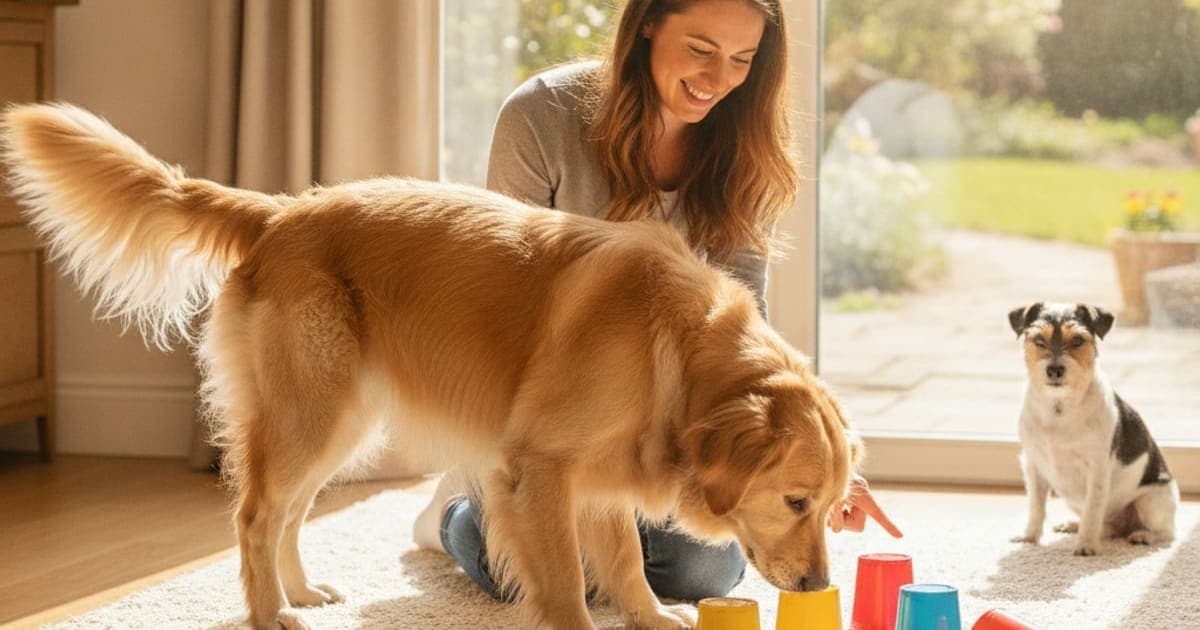
Scent games for dogs are structured activities that ask your dog to find something using its nose: scattered kibble in the grass, a favorite toy hidden behind a sofa cushion, a treat under one of three upturned cups, or a single target odor in a formal nose work setup. They sit on a spectrum from thirty seconds of scatter feeding to a competitive sport. They cost almost nothing, work indoors and outdoors, suit puppies through to grey muzzles, and they tire a dog out without asking a single joint to do anything strenuous.
Why sniffing drains a dog faster than a walk
A dog's olfactory system dwarfs ours in both receptor numbers and in the share of brain tissue given over to processing what the nose brings in. Scenting is not a passive sense. Your dog is actively sampling air currents, sorting a fresh trail from an old one, tracking a scent cone back to its source and ignoring everything irrelevant. That is sustained, high-load cognitive work.
A dog's nose is not a bonus feature, it is the primary way the animal gathers information, and letting it run is the fastest way to tire a dog out without moving a single joint through a painful range.
Searching also taps a hardwired foraging sequence. Dogs are built to hunt for food rather than find it waiting in a bowl, and a successful find delivers its own reward, which is why scent games hold a dog's attention long after a tug toy has lost its appeal. Behavior research using judgment-bias testing has associated nose work sessions with more optimistic responses in pet dogs, and most owners notice the practical version of that: a dog who searches for ten minutes often settles afterwards instead of pacing.
So yes, scent games are good for the overwhelming majority of dogs. They are low impact, self-paced, scalable in difficulty, and one of the few enrichment options that works just as well for a reactive dog in a quiet kitchen as for a working breed in a field.
Scent games or brain games: which does more
People use the terms interchangeably, but they load a dog differently. Both belong in the week.
| Activity | What it asks of the dog | Mental load | Physical load | Best for |
|---|---|---|---|---|
| Scatter feeding | Search a defined area by nose | Moderate | Low, flat ground | Fast decompression, anxious dogs |
| Snuffle mat | Sustained sniffing in one spot | Moderate | Very low | Crate rest, slowing fast eaters |
| Hide and seek searches | Follow scent to a hidden target | High | Low to moderate | Rainy days, indoor energy burn |
| Puzzle feeder | Problem solving, paws and nose | High | Low | Dogs who need focus work |
| Formal nose work | Isolate one target odor, indicate it | Very high | Low | Dogs needing a job, sport owners |
| Trick and shaping work | Body awareness, offered behavior | High | Moderate | Fitness-ready dogs, bond building |
Indoor and DIY nose games you can set up in five minutes
These are the scent games for dogs at home that need nothing you do not already own. Run them inside on wet days, in small flats, or when a dog is on restricted exercise.
- Towel roll. Sprinkle treats along a flat towel, roll it loosely, let the dog unpack it. The easiest DIY snuffle mat there is.
- Muffin tin search. Treats in some of the cups, tennis balls over all of them. The dog must sniff out which cups are loaded.
- Box search. Four or five open cardboard boxes in a loose cluster, food in one. Rotate which box is baited so the dog works the problem rather than memorizing a spot.
- Three cup shuffle. Upturned cups, a treat under one, let the dog nose or paw the right one. Shuffle between rounds.
- Which hand. Both fists closed, food in one. Thirty seconds of work, perfect filler between tasks.
- Hide and seek with you. Ask someone to hold the dog, go hide, call once, then stay silent and let the nose do the rest. Dogs find this enormously rewarding.
- Room-to-room trail. Drop a faint line of kibble leading to a jackpot hidden behind a door or under a chair leg.
- DIY snuffle mat. Fleece strips knotted through a rubber sink mat. Hides food in the pile, washes easily, lasts years.
A few sensible limits. Count every training treat against the day's food so searching does not quietly become overfeeding. Keep anything toxic well away, including anything containing xylitol, chocolate, grapes or raisins. Supervise committed cardboard shredders. And if your dog has food sensitivities or a prescribed diet, use their own kibble as the search currency rather than introducing something new without asking your veterinarian first.
Garden and outdoor searching games for any weather
Outdoors adds wind, competing smells and distance, which makes every game harder and more interesting.
- Grass scatter. Toss a handful of kibble into longer grass. The single most effective decompression tool for an over-aroused dog.
- Drag trail. Rub a treat or a scented toy along the ground in a winding line, hide it at the end, release the dog at the start. Keep early trails short and straight.
- Toy find. Hold the dog, throw a toy into long grass or behind a shrub out of sight, then send them with a search cue.
- Plant pot search. Line up pots or flipped buckets, bait one, let the dog check each in turn. This is the practical bridge toward formal container searching.
- Sniffari. Not a game exactly, but a walk run entirely on the dog's terms with a long line and a harness, where sniffing sets the pace and the route.
- Person search. Someone hides behind a shed, a tree or a parked car, dog tracks them down. Works brilliantly with two handlers.
If your climate hands you months of rain and your garden is the size of a postage stamp, you have not lost anything. Short grass scatters under a covered porch, a hallway box search, and a five minute towel roll before dinner deliver the same mental load as a long outdoor session. Weather limits exercise far more than it limits scent work.
Starting a find it game from scratch
This is the whole method, and it generalizes to every game above.
- Pick one cue and stick to it. Find it, search, seek. Say it once.
- Pair the cue with an obvious win. Say the cue, drop a treat where the dog can see it land. Repeat until the word itself makes their head drop.
- Hide it badly on purpose. Behind a chair leg, under the edge of a rug, somewhere they saw you place it. You want a string of easy successes.
- Remove the visual. Hold the dog in another room while you hide, then release. Now the nose is doing all the work.
- Add difficulty one variable at a time. Height, distance, number of decoys or more competing odors, but never all four in one session.
- Stay quiet while they work. Do not point, do not help, do not repeat the cue. Letting a dog solve it alone is where the confidence comes from.
- Stop early. End while the dog still wants another round. Two or three short sessions beat one long one.
If your dog loses interest or starts guessing wildly, you have jumped too far ahead. Go back two steps and rebuild.
Nose work for dogs on crate rest, recovery and grey muzzles
This is where scent games stop being enrichment and start being a management tool. A dog eight weeks into a cruciate repair, a senior with stiff hips, a dog on strict rest after a soft tissue injury: all of them still need something to do, and all of them are miserable without it. Searching gives them a job that asks nothing of the hardware.
Keep it flat, keep it low, and keep it short. Searches at nose height on a non-slip surface, no stairs, no jumping onto furniture, no fast turns, no twisting to reach a high hide. Your veterinarian sets the exercise restrictions after an injury or a surgery, so run your enrichment plan past them before you start, because what counts as safe movement changes week by week through a rehab protocol.
Owners managing those long recoveries often pair low-impact enrichment with targeted support. K9-REPAIR from pawgen is a BPC-157 and TB-500 peptide formulation made for dogs, and it is the stack many owners reach for through a recovery stretch. BPC-157 is a peptide studied for its role in new blood vessel formation and tendon fibroblast activity, while TB-500 relates to thymosin beta-4 and is studied for actin regulation and cell migration, which is the housekeeping work tissue does while it remodels. That is promising, actively developing science that owners are adopting, and it is also the honest limit of what can be said: these are not FDA-approved veterinary drugs, research suggests mechanisms rather than outcomes, and nothing here describes a treatment for your dog's condition. pawgen publishes third-party certificates of analysis for what is in the vial, ships direct to the door, and backs orders with a 60-day money-back guarantee. Dosing questions belong with your veterinarian, not with a blog post.
What scent games will not do is replace rehab, physiotherapy, prescribed pain relief or a surgical plan. They fill the hours those things leave empty.
Key Takeaways
- Scent games are any activity where your dog uses its nose to locate hidden food, a toy or a target odor.
- Sniffing is cognitively demanding, which is why ten minutes of searching can settle a dog more effectively than a long walk.
- Indoor options need no equipment: towel rolls, box searches, muffin tins, cup games and hide and seek.
- Outdoor games add wind and distance, which raises difficulty naturally. Grass scatters and drag trails are the easiest entry points.
- Teach one cue, start obvious, add one difficulty variable at a time, and stop before your dog gets bored.
- Low, flat searches are among the few enrichment options available to dogs on restricted exercise, with veterinary sign-off.
- Count search food against daily rations and keep toxic foods out of every game.
Your veterinarian owns the diagnosis, the imaging, the pain management and the rehab timeline. Scent games, enrichment and supplements operate inside the space that proper veterinary care creates, never in place of it. Get the plan right first, then fill your dog's days with work their nose was built for.
To look further into pawgen's side of this, owners can review the batch certificates of analysis, check shipping coverage, or read the full K9-REPAIR details in the shop.
Owners exploring peptide support for their dog can review K9-REPAIR, BPC-157 + TB-500 formulated for dogs, at https://pawgen.com/. BPC-157 and TB-500 are not FDA-approved veterinary drugs. Nothing in this article treats, cures or prevents any condition; every decision about your dog's care belongs with your veterinarian.
Frequently asked questions
- What are scent games for dogs?
- Scent games are activities where your dog uses its nose to find something hidden, such as food scattered in grass, a toy behind furniture, or a single target odor in formal nose work. They range from thirty seconds of scatter feeding to a competitive sport, and they suit almost every age and fitness level.
- How to do scent games with your dog?
- Start by choosing one cue word, then say it and drop a treat where your dog can see it land. Once the word reliably drops their nose, hide the treat somewhere easy, then out of sight. Add distance, height or decoys one at a time, and stay silent while they work.
- Are scent games good for dogs?
- For most dogs, yes. Sniffing is cognitively demanding and self-rewarding, so searching tires dogs mentally without loading joints. Behavior research using judgment-bias testing has associated nose work with more optimistic responses in pet dogs. They also suit anxious, reactive and exercise-restricted dogs, though restricted dogs need veterinary clearance first.
- What are nose games for dogs?
- Nose games is another term for scent games: any structured activity that asks a dog to locate a hidden target by smell. Common examples include snuffle mats, box searches, muffin tin games, drag trails, hide and seek, and formal odor detection work with a specific target scent.
- How to play scent games with dogs?
- Pick a game that matches your space, bait it while your dog waits elsewhere, then release them with your search cue. Let them solve it without pointing or repeating the cue. Keep sessions to a few minutes, rotate hiding spots so they search rather than memorize, and stop while they still want more.
- How to do scent games with dogs?
- Use their own kibble as the search currency, set up one simple hide, and build difficulty gradually. Indoors, try towel rolls and cardboard box searches. Outdoors, scatter food in longer grass or lay a short drag trail. If your dog starts guessing wildly, make the next hide easier.
- What can I use to scent a game for my dog?
- Their regular food works for most games and keeps calories controlled. Higher-value options include small pieces of plain cooked meat or cheese for dogs who tolerate them. For formal nose work, handlers use specific target odors on cotton swabs. Keep xylitol, chocolate, grapes and raisins out of every game.
- Can puppies and senior dogs play scent games?
- Both can, and both often benefit. Puppies get confidence and focus from very easy hides, while senior dogs get mental work that does not stress arthritic joints. Keep searches flat, low and short, use non-slip surfaces, and talk to your veterinarian about limits if your dog has mobility or health issues.
Educational content, not veterinary advice. Ask your vet about your dog.