Shih Poo Health Problems: What to Watch For
Yes, shih poos can inherit health problems from both parent breeds, typically involving the eyes, teeth and gums, kneecaps, airway and skin. Many live comfortably with attentive care, but any limp, eye change, breathing difficulty or new lump should be checked by a veterinarian promptly.
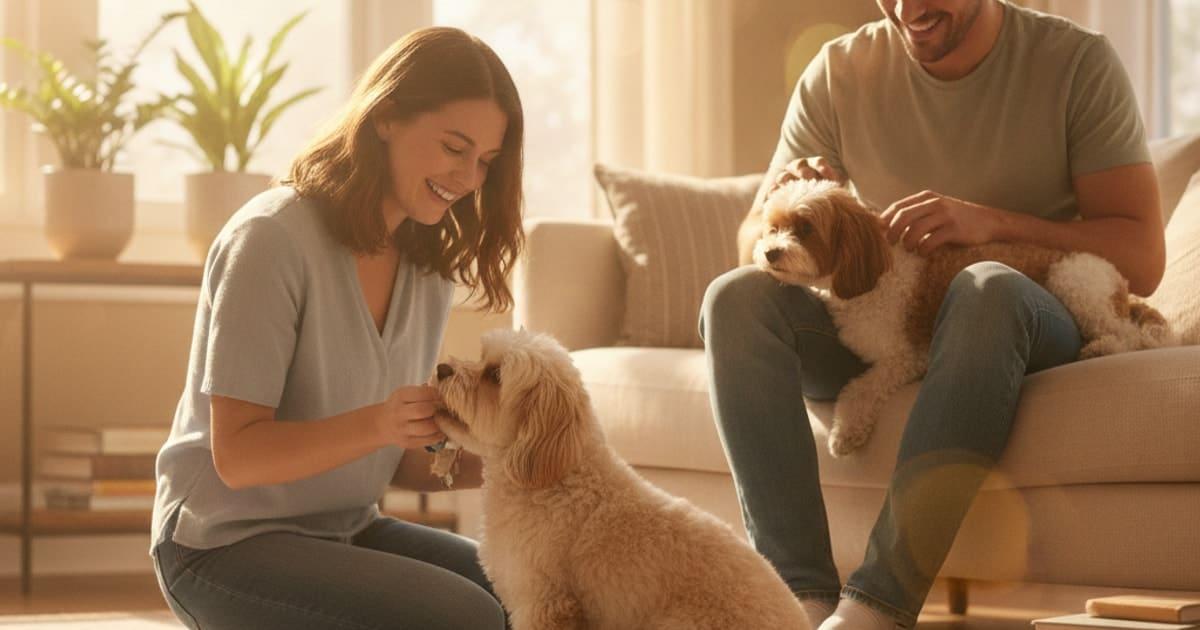
Yes, shih poos do have health problems worth knowing about, and anything sudden, painful or worsening belongs in front of a veterinarian rather than a search bar. If your dog is struggling to breathe, has pale or bluish gums, is holding an eye tightly shut, has collapsed, or cannot put weight on a leg, treat that as an emergency and get to a vet or an emergency clinic now.
A shih poo is a Shih Tzu crossed with a Poodle, which means the health picture is a blend of two very different body plans. The Shih Tzu side brings a shortened muzzle, prominent eyes and a crowded little jaw. The Poodle side brings hair-filled ear canals, a tendency toward skin sensitivity, and the small-dog knee and joint traits seen across toy and miniature lines. Crossing two breeds shuffles the deck, it does not remove the cards.
So are shih poos healthy dogs? Many are bright, active and comfortable, and plenty go through long stretches of life with nothing more than scheduled check-ups. A crossbred dog is not automatically a healthier dog, because a shih poo can inherit the eye, airway, dental, skin and kneecap traits of either parent, which is why steady veterinary monitoring matters more than the label on the pedigree. Knowing which systems to watch is what turns a vague worry into an early appointment.
Eye trouble is often the first thing owners notice
Eyes are where shih poo health issues tend to announce themselves. A shorter muzzle usually means shallower eye sockets and a more exposed eye surface, so the cornea takes more wind, dust and accidental contact than it would on a longer-nosed dog. Hair that falls forward over the face adds another source of irritation.
The things vets look for in this group include corneal scratches and ulcers, dry eye, inward-rolling eyelids that let lashes touch the surface, extra lashes growing in the wrong direction, cataracts, pressure problems inside the eye, and inherited retinal degeneration that can run in Poodle lines.
Signs that deserve an appointment:
- Squinting, blinking hard, or holding one eye closed
- Pawing or rubbing the face on carpet and furniture
- Redness, cloudiness, or a visible film across the surface
- Thick, coloured or increasing discharge
- A dull or hazy look to an eye that was previously clear
- Bumping into furniture, hesitating on stairs, or reluctance to move in dim light
A squinting eye is not a wait-and-see problem. Eye surfaces can deteriorate quickly, and a painful eye needs assessment that day. Resist the urge to put anything into the eye at home, because the wrong product on a damaged cornea can make matters worse. Let your vet examine the surface first and build the plan from there.
Crowded mouths and dental disease
Small dogs carry a full set of teeth in a very small jaw, and shih poos frequently inherit that crowding. Teeth sit tightly together, overlap, or rotate, and in some dogs baby teeth never fall out, leaving two teeth jostling for one slot. Those tight spaces trap food and plaque where a toothbrush struggles to reach, and plaque hardens into tartar that irritates the gum line.
From there the problem moves below the gum, loosening the attachments that hold teeth in place. Dental pain in dogs is quiet. They rarely stop eating altogether, they simply adapt, which is exactly why it goes unnoticed for so long.
What to look for:
- Breath that has turned sharp or sour
- Red, puffy or bleeding gums
- Yellow-brown buildup, especially on the back teeth
- Chewing on one side, dropping kibble, or turning away from harder food
- Drooling, face rubbing, or a swelling below an eye
- A loose or discoloured tooth
Dental care in a crowded mouth is a veterinary job. Your vet can assess the mouth, take dental radiographs where needed, and tell you whether cleaning under anaesthesia or extraction of crowded teeth is appropriate. Home mouth care, including which brushes or dental products suit your dog, is worth raising at your next visit rather than guessing.
Slipping kneecaps and other movement problems
Patellar luxation, where the kneecap slides out of its groove, is common across toy and small breeds and shows up in shih poos. The classic picture is unmistakable once you have seen it: the dog is trotting along, suddenly skips a step or carries a hind leg for a stride or two, then drops it back down and carries on as if nothing happened. Some dogs do this and never seem bothered. Others develop ongoing discomfort as the joint surfaces wear.
Hip and growth-plate problems of the femoral head also appear in small breeds, and the Shih Tzu side can bring a longer back with shorter legs, which puts extra load on spinal discs.
Signs worth booking a visit for:
- A skipping or hopping step on a back leg
- Stiffness after rest, or slower rising
- Hesitating at stairs, sofas or the car
- Sitting with a hind leg pushed out to one side
- Licking persistently at one knee or hip
Spinal signs are more urgent. Yelping when picked up, a hunched posture, trembling, dragging a back foot, wobbly or uncoordinated hind legs, or loss of bladder control all need same-day veterinary attention. Talk to your vet early about weight management and safe exercise for your dog's build, because load on a small joint is one of the few variables you can actually influence.
Breathing, heat and the shorter muzzle
Not every shih poo has a flat face. Some take after the Poodle and have a longer muzzle with an open airway. Others inherit the Shih Tzu's shortened face, and with it the compressed nasal passages, narrowed nostrils and soft tissue at the back of the throat that can partially obstruct airflow.
Snoring, snorting and the honking reverse sneeze are familiar to owners of flatter-faced dogs. What matters is whether breathing effort is increasing, and whether your dog's exercise tolerance is dropping.
Flag these with your vet:
- Noisy breathing while resting or sleeping
- Tiring quickly on walks, or stopping to catch breath
- Gagging, retching or bringing up foam after exertion
- Sleeping with the neck stretched out, or restless sleep
- Struggling in warm or humid conditions
Pale, grey or bluish gums, open-mouth breathing with obvious effort, or collapse are emergencies. Heat is the other half of this picture. A dog that cannot move air efficiently also cannot cool efficiently, so warm weather carries more risk for shorter-muzzled dogs than for longer-nosed ones. Ask your vet whether a harness rather than a neck collar suits your dog, and how to structure walks in warmer months.
Skin, ears and the itch that will not settle
Skin and ear complaints bring a lot of shih poos through the clinic door. Allergic skin disease, whether triggered by environmental allergens, fleas or food ingredients, produces itching that tends to settle on the paws, belly, armpits, face and ears. Scratched skin breaks, surface bacteria and yeast take advantage, and the itch escalates.
Ears are a structural problem as much as an allergic one. Poodle-type ear canals often grow hair inside them, the ears hang down and hold warmth and moisture, and that combination suits yeast and bacteria well.
Watch for:
- Head shaking, head tilting, or rubbing an ear along the floor
- A yeasty or sour smell from the ear
- Redness, brown or waxy discharge, or pain when the ear is touched
- Constant licking or chewing at paws, with rust-coloured staining on the hair
- Hair loss, scabs, dandruff, greasiness, or a sudden moist sore patch
- Skin fold irritation around the face in dogs with deeper folds
Ear problems need a vet to look down the canal and check that the eardrum is intact before anything is poured in. Over-the-counter products used blindly can do harm. Your vet can sample the discharge, identify what is growing, and direct the plan.
One more thing belongs here: any new lump, bump or swelling on or under the skin should be checked by a vet, and only a needle sample or biopsy can tell you what it actually is. Appearance and feel are not reliable, and waiting to see whether a lump grows wastes the easiest window to deal with it.
Signs to watch, and signs that cannot wait
Use this as a sorting guide, not a diagnosis. When in doubt, phone the clinic and describe what you are seeing.
| What you notice | What it can point to | What to do |
|---|---|---|
| Squinting, cloudy or red eye | Corneal injury, ulcer, pressure change | See a vet that day |
| Bumping into things, night hesitancy | Vision loss | Book an exam promptly |
| Sour breath, dropping food | Dental and gum disease | Book a dental assessment |
| Skipping step on a back leg | Kneecap or joint instability | Book a non-urgent visit |
| Yelping when lifted, wobbly hind legs | Spinal pain or disc problem | Same-day veterinary care |
| Head shaking, ear odour, discharge | Ear infection | Book within a few days |
| Itching, paw licking, hair loss | Allergic or infectious skin disease | Book an exam |
| New lump or swelling | Needs identification by sampling | Book an exam |
| Noisy breathing at rest, tiring fast | Airway obstruction | Veterinary assessment soon |
| Blue or grey gums, collapse, severe effort | Oxygen emergency | Emergency care now |
Key Takeaways
- Shih poos can inherit health problems from both parent breeds, so a cross is not a guarantee of a trouble-free dog.
- Eyes, teeth and gums, kneecaps, the airway, skin and ears are the systems worth monitoring closely.
- A squinting or painful eye, spinal pain, and laboured breathing with pale or bluish gums are all same-day or emergency situations.
- Dental disease is quiet, and dogs usually adapt rather than stop eating, so breath changes and chewing habits are useful early clues.
- Any new lump or swelling needs a veterinary examination, and only a needle sample or biopsy can identify it.
- Early, specific descriptions of what you are seeing help your vet far more than waiting for a sign to become obvious.
The pattern across all of this is simple: your vet owns the diagnosis and the treatment plan. A physical examination, imaging, bloodwork and sampling are what separate a kneecap from a hip, an allergy from an infection, and an irritated eye from an ulcer. Talk to your vet about which of these traits your individual dog carries, book the check-ups they recommend, and call sooner rather than later when something changes. Everything else you do at home works best inside the structure that proper veterinary care creates.
For a clearer picture of which changes mean a dog needs to be seen immediately, read Dog Emergency Signs.
Frequently asked questions
- Do shih poos have health problems?
- Yes. Shih poos can inherit problems from both parent breeds, including eye surface injuries and vision conditions, crowded teeth and gum disease, slipping kneecaps, airway restriction in flatter-faced dogs, and allergic skin and ear disease. Many stay comfortable with attentive monitoring, but changes should always be checked by a veterinarian.
- Are shih poo healthy dogs?
- Many shih poos are active and comfortable, but crossing two breeds does not erase inherited traits. A shih poo may carry the Shih Tzu's eye and airway features, the Poodle's hair-filled ear canals and skin sensitivity, or small-breed knee issues. Talk to your vet about which apply to your dog.
- What are common health problems in shih poos?
- The ones vets see frequently in this cross involve the eyes, including ulcers, dry eye and eyelid faults, dental crowding and gum disease, patellar luxation in the knees, breathing restriction in shorter-muzzled dogs, and itchy skin with recurring ear infections. Any new lump also needs veterinary examination.
- Why does my shih poo squint or have watery eyes?
- Squinting usually signals pain or irritation on the eye surface, which can come from a scratch, an ulcer, dry eye, inward-rolling eyelids, lashes touching the cornea, or hair falling into the eye. Do not apply anything at home. A squinting eye needs same-day veterinary assessment.
- Why does my shih poo skip or hop on a back leg?
- A brief skip or hop that resolves after a stride or two often points to patellar luxation, where the kneecap slips out of its groove. It is common in small breeds. Your vet can grade the knee by examination and discuss management, weight control and whether imaging is appropriate.
- Does a shih poo's flat face cause breathing problems?
- It can, depending on which parent your dog favours. Shorter muzzles bring narrowed nostrils and extra soft tissue in the throat, which restricts airflow and makes cooling harder in warm weather. Noisy breathing at rest, rapid tiring or gagging after exercise should be assessed by a veterinarian.
- Why does my shih poo keep scratching at his ears?
- Hanging ears with hair inside the canal trap warmth and moisture, which suits yeast and bacteria, and underlying allergies often drive the itch. Head shaking, odour, redness or discharge need a veterinary exam so the canal and eardrum can be checked before any product is used.
- When should a shih poo see a vet urgently?
- Go immediately for laboured or noisy breathing, pale, grey or bluish gums, collapse, or an inability to stand. Same-day care is needed for a squinting or cloudy eye, yelping when lifted, wobbly or dragging hind legs, or any sudden inability to bear weight on a limb.
Educational content, not veterinary advice. Ask your vet about your dog.