Spanish Water Dog Health Problems: Breed Conditions
Spanish Water Dog health problems cluster around four areas: the hips, the eyes, the thyroid gland, and allergic skin and ear disease. Each has early signs an owner can learn to spot, from a bunny-hopping gait to night-time hesitation. Any new or worsening sign belongs in front of a veterinarian.
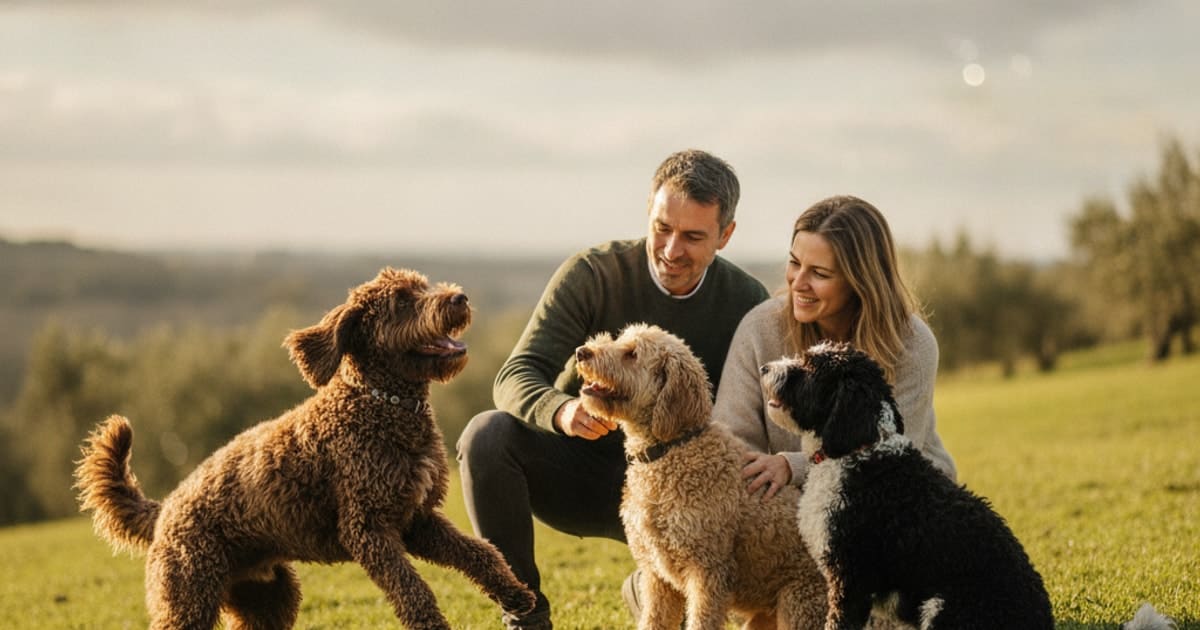
Spanish Water Dogs are sturdy, athletic dogs, but a handful of conditions turn up often enough in the breed that every owner should be able to recognise them early: hip dysplasia, inherited eye disease, thyroid disorders, and allergic skin and ear problems. If your dog is limping, squinting, hesitating in low light, scratching without relief, or has developed a new lump, book a veterinary appointment rather than waiting to see whether it settles on its own.
This page cannot diagnose anything, and it is not meant to. What it can do is help you notice changes sooner and describe them precisely, which is how your veterinarian gets to the right examination and the right test faster.
The hips: lameness, stiffness and how a vet sorts it out
Hip dysplasia is a developmental problem of the hip joint. The ball at the top of the thigh bone and the socket in the pelvis should fit snugly and glide against each other. When the fit is loose, the joint moves in ways it was not built for, the cartilage wears unevenly, and the body lays down extra bone around the edges of the joint. That remodelling is what turns early laxity into arthritis over time.
Spanish Water Dogs are active, driven dogs, and many of them mask discomfort by simply working through it. The signs owners notice are often subtle at first:
- A bunny-hopping run, where both hind legs push off together instead of alternating
- Stiffness after rest that loosens up once the dog gets moving
- Reluctance to jump into the car or onto furniture, or hesitation on stairs
- A narrow stance behind, with the hind feet placed close together
- Sitting sloppily, with one leg kicked out to the side
- Weight shifted forward onto the front end, sometimes with visible muscle loss over the hindquarters
A veterinarian diagnoses hip disease with a hands-on orthopaedic examination and radiographs, usually taken under sedation so the joints can be positioned properly and the hips assessed without the dog bracing. Other things cause the same picture, including cruciate ligament injury, lumbosacral pain and soft tissue strain, so the imaging matters.
Management is a veterinary decision, not an internet decision. Depending on what the images show and how your dog is coping, the plan may involve body condition management, a structured activity plan, physiotherapy or hydrotherapy, prescribed pain relief, or referral to a surgeon to discuss procedures such as hip replacement. Results vary from dog to dog, and the plan usually gets adjusted as the joint and the dog age.
Eye conditions and the changes owners spot first
Several eye conditions are recognised in this breed, and they announce themselves in different ways.
Progressive retinal atrophy describes a group of inherited conditions in which the light-sensitive cells at the back of the eye degenerate. Night vision tends to go first. Owners describe a dog that suddenly dislikes dark rooms, hesitates on unlit stairs, bumps into furniture that has been moved, or sticks closer than usual on evening walks. The pupils may look wider than they used to, and the eyes may reflect light more brightly. A DNA test exists for the form of progressive rod-cone degeneration seen in the breed, and a veterinary ophthalmologist can examine the retina directly.
Glaucoma is a rise in pressure inside the eye, and it is painful. The signs are harder to miss: a red eye, a cornea that looks hazy or blue-grey, squinting or holding the eye shut, excessive tearing, a dilated pupil that does not respond normally to light, and a dog who is suddenly quiet, off food or pressing its head. A sudden painful eye is a same-day veterinary problem, not a wait-and-see problem, because pressure left high damages the structures inside the eye.
Cataracts show up as cloudiness within the pupil itself rather than on the surface of the eye. Distichiasis, where extra eyelashes grow from the eyelid margin and rub the cornea, causes chronic tearing, squinting and rubbing at the face.
Any change in the appearance of an eye, any new squint, and any change in how your dog moves through dim or unfamiliar space deserves a veterinary look. Eyes do not reliably tell you how serious they are from the outside.
Thyroid disease and the signs that creep up slowly
The thyroid gland sets the pace of metabolism. When it underproduces, everything slows down, and the signs arrive gradually enough that owners often put them down to something else.
Acquired hypothyroidism in dogs is usually the result of the immune system gradually destroying thyroid tissue. The picture can include lethargy and reduced interest in work or play, weight gain without any change in what the dog is eating, a dull coat, thinning hair over the flanks, chest or tail, skin that looks thickened or darker, heat-seeking behaviour, and skin or ear infections that keep coming back after they seem to clear.
The breed is also associated with an inherited form of thyroid disease present from birth, where the gland cannot make hormone normally and a swelling can develop at the throat. A DNA test for congenital hypothyroidism with goitre is available for Spanish Water Dogs, and your veterinarian can tell you whether it is relevant for your dog.
Thyroid disease is diagnosed on bloodwork, not on appearance. That matters, because other illnesses can push thyroid hormone readings around and produce a misleading result. Your vet will usually run a broader panel alongside thyroid testing, and may repeat testing rather than act on a single borderline number. If a deficiency is confirmed, treatment is hormone replacement prescribed and monitored by your veterinarian, with follow-up blood testing to check the response. Talk to your vet before drawing conclusions from a coat change alone.
Skin, ears and the coat that holds water
The Spanish Water Dog coat is woolly and curly, and in many dogs it is kept corded. It is superb insulation and it holds moisture extremely well, which is exactly the problem when it comes to skin and ears. Add drop ears and a breed that genuinely likes water, and the ear canal becomes a warm, humid environment that suits bacteria and yeast.
Signs of an ear problem include head shaking, scratching at the ear or rubbing it along the floor, a yeasty or sour smell, discharge, redness inside the flap, pain when the base of the ear is touched, and a head carried tilted to one side. Ear infections are not all the same. A veterinarian looks down the canal with an otoscope to check the eardrum and rule out foreign material such as a grass seed, and examines a swab under the microscope to see what is actually growing there. That is what determines treatment, and it is why ear problems treated blind so often return.
Allergic skin disease sits underneath a lot of recurring ear trouble. Atopic dermatitis, flea allergy and food-responsive skin disease all produce itching, paw licking and chewing, face and muzzle rubbing, red or stained skin in the armpits and groin, hot spots, and secondary bacterial or yeast infections. The itch is the disease; the infections are the consequence. Your vet works through the possible triggers in order rather than guessing.
Curly-coated dogs are also prone to follicular cysts and other benign-looking skin bumps, which is precisely why appearance alone is not enough. Any new lump, swelling or thickened patch of skin should be examined by a veterinarian, and only a sample taken with a needle or a biopsy can tell you what it actually is. Mats and cords can also hide swellings, so running your hands over the skin, not just the coat, is worth doing.
Screening and testing your veterinarian can arrange
Because several of these conditions are inherited, there are established ways to assess an individual dog:
- Radiographic hip assessment through a recognised scoring scheme
- Examination by a veterinary ophthalmologist for retinal disease, cataracts, glaucoma risk and eyelid abnormalities
- Breed-relevant DNA testing, including tests for progressive rod-cone degeneration, congenital hypothyroidism with goitre, and neuroaxonal dystrophy, a neurological condition recognised in the breed
- Blood testing for thyroid function when the clinical picture suggests it
A DNA result is information, not a verdict. It tells you about genotype; it does not tell you how any individual dog will be. Your veterinarian can explain which tests are worth doing for your dog and how to interpret the results in context.
How soon to act on each sign
| What you see | What it may relate to | How soon to involve a vet |
|---|---|---|
| Red, cloudy or painful eye, squinting, changed pupil | Pressure or inflammation inside the eye | Same day, treat as urgent |
| Sudden non-weight-bearing lameness | Acute joint or ligament injury | Same day |
| Gradual stiffness, bunny hopping, trouble with stairs | Hip or other joint disease | Book a routine appointment soon |
| New lump, swelling or skin thickening | Needs identification by sampling | Appointment, do not monitor indefinitely |
| Head shaking, ear odour, discharge | Ear infection or foreign material | Appointment within days |
| Bumping into things, hesitation in dim light | Retinal disease | Appointment, ask about ophthalmology referral |
| Coat loss, lethargy, weight change, recurring infections | Thyroid or other internal disease | Appointment with bloodwork |
| Wobbliness, incoordination, weakness | Neurological problem | Urgent, same day |
| Collapse, breathing difficulty, severe pain | Emergency | Emergency care now |
When in doubt, phone the clinic and describe what you are seeing. Triage over the phone costs nothing and is what reception and nursing teams are trained for.
Key Takeaways
- The health conditions that come up repeatedly in Spanish Water Dogs centre on the hips, the eyes, the thyroid gland, and allergic skin and ear disease.
- Hip problems often show first as a bunny-hopping gait, stiffness after rest or reluctance to jump, and are confirmed with a hands-on examination plus radiographs.
- Night-time hesitation and bumping into objects point toward the retina; a red, cloudy or painful eye is a same-day concern.
- Thyroid disease is slow and easy to misread, and it is diagnosed on bloodwork rather than on how the coat looks.
- A woolly, water-holding coat and drop ears make recurring ear and skin problems worth investigating properly rather than treating blind.
- Any new lump or swelling needs a veterinary examination, and sampling is the only way to identify it.
Your veterinarian owns the diagnosis and the treatment plan. They are the one who can examine the joint, look down the ear canal, read the radiograph, interpret the bloodwork and decide what the next step should be. Your job is the part no one else can do: knowing your dog well enough to notice when something has shifted, writing it down, and getting it in front of someone qualified early rather than late.
For a plain list of signs that mean an appointment cannot wait, see Dog Emergency Signs, and for background on individual canine health topics, see the Conditions library.
Frequently asked questions
- What health problems are Spanish Water Dogs prone to?
- The conditions that come up repeatedly in the breed involve the hips, the eyes, the thyroid gland, and the skin and ears. That includes hip dysplasia, inherited retinal disease, glaucoma and cataracts, congenital and acquired thyroid disease, and allergic skin disease with recurring ear infections. A neurological condition called neuroaxonal dystrophy is also recognised in the breed and has a DNA test.
- How would I know if my Spanish Water Dog has hip dysplasia?
- Watch the gait and the transitions. A bunny-hopping run with both hind legs pushing together, stiffness after rest that eases with movement, hesitation on stairs or jumping into the car, a narrow hind stance and muscle loss over the hindquarters all point that way. None of those confirm it. A veterinary orthopaedic examination and radiographs, usually under sedation, are what give you an answer.
- What are the signs of thyroid problems in a Spanish Water Dog?
- Low thyroid function tends to look like a slow fade: reduced energy and drive, weight gain without a change in what the dog eats, a dull coat, thinning hair over the flanks or tail, darker or thickened skin, seeking out warm spots, and skin or ear infections that keep returning. It is confirmed on blood testing, so talk to your vet rather than judging by the coat.
- Why does my Spanish Water Dog keep getting ear infections?
- The combination of drop ears, a dense coat that holds moisture and a dog that likes water creates a warm, humid canal. Underlying allergic skin disease is frequently the real driver. Your vet needs to look down the canal with an otoscope and examine a swab under the microscope, because bacteria, yeast, mites and foreign material such as grass seeds all need different handling.
- Does the Spanish Water Dog coat cause skin problems?
- The coat itself is not a disease, but it changes the environment on the skin. Cords and curls trap moisture and debris, hide swellings from view, and make early skin changes easy to miss. Running your hands over the skin rather than just the coat, and having any persistent itching, redness or odour assessed by a veterinarian, is the practical response.
- When is an eye problem in a Spanish Water Dog urgent?
- Treat a sudden red eye, a cornea that looks hazy or blue-grey, squinting or a closed eye, heavy tearing, a pupil that looks abnormal, or a dog that has gone quiet and off food with an eye change as a same-day veterinary problem. Raised pressure inside the eye is painful and damaging, and it is not something to monitor at home.
- My Spanish Water Dog is bumping into things at night. What does that suggest?
- Reduced vision in low light is one of the earliest things owners notice with inherited retinal degeneration. Hesitation on unlit stairs, sticking close on evening walks, bumping into moved furniture and wider-looking pupils all fit. A veterinary ophthalmologist can examine the retina directly, and a DNA test exists for the form of progressive rod-cone degeneration recognised in the breed.
- Should a new lump on a Spanish Water Dog be checked?
- Yes. Any new lump, swelling or thickened area of skin should be examined by a veterinarian, and only a sample taken with a needle or a biopsy can identify what it is. Size, softness and how fast it grew are not reliable indicators. Curly coats hide lumps easily, so check the skin itself rather than relying on what you can see.
- Are there DNA tests available for Spanish Water Dog health conditions?
- Yes. Breed-relevant DNA tests include progressive rod-cone degeneration, congenital hypothyroidism with goitre and neuroaxonal dystrophy. Hips are assessed by radiographic scoring and eyes by ophthalmologist examination. A genetic result describes genotype, not destiny, so ask your veterinarian which tests are worth doing for your dog and how to read the results in context.
Educational content, not veterinary advice. Ask your vet about your dog.